Lava, Lāva: 36 definitions
Introduction:
Lava means something in Buddhism, Pali, Hinduism, Sanskrit, Jainism, Prakrit, the history of ancient India, Marathi, Hindi. If you want to know the exact meaning, history, etymology or English translation of this term then check out the descriptions on this page. Add your comment or reference to a book if you want to contribute to this summary article.
Alternative spellings of this word include Lav.
Images (photo gallery)

In Hinduism
Ayurveda (science of life)
Dietetics and Culinary Art (such as household cooking)
Lāva (लाव) refers to a type of Pakṣiṇa meat and is mentioned as being beneficial (hita) to the body according to the 17th century Bhojanakutūhala (dravyaguṇāguṇa-kathana), and is commonly found in literature dealing with the topics of dietetics and culinary art, also known as Pākaśāstra or Pākakalā.—The dravyaguṇāguṇa section contains the discussions on different food articles and their dietetic effects according to the prominent Ayurvedic treatises. Here In the māṃsa (meats) group Lāva is mentioned as beneficial to the body (hita). [...] The meats of [viz., lāva] cooked in the fire of castor plant or in castor oil will instantaneously lead to death.
Veterinary Medicine (The study and treatment of Animals)
Lava (लव) refers to the Common or Grag Quail (Coturnix Coromandelica), according to scientific texts such as the Mṛgapakṣiśāstra (Mriga-pakshi-shastra) or “the ancient Indian science of animals and birds” by Hamsadeva, containing the varieties and descriptions of the animals and birds seen in the Sanskrit Epics such as the Ramayana and Mahabharata.
Unclassified Ayurveda definitions
Lāva (लाव) is a Sanskrit word referring to the animal “common quail”. The meat of this animal is part of the māṃsavarga (‘group of flesh’), which is used throughout Ayurvedic literature. The animal Lāva is part of the group of birds named Lāvādi, which is a sub-group of Viṣkira, refering to “birds similar to common quail who eat while scattering the gains”. It was classified by Caraka in his Carakasaṃhitā sūtrasthāna (chapter 27), a classical Ayurvedic work. Caraka defined such groups (vargas) based on the dietic properties of the substance.
The meat of the common quail (lāva) is astringent-sweet and light. It is a stimulant of agni and alleviates sannipāta. It is also kaṭuvipāka.
Lāva (लाव)—Sanskrit word for a bird, corresponding to “quail”, “patridge” or “Perdicula asiatica”. This animal is from the group called Viṣkira (which scatter). Viṣkira itself is a sub-group of the group of animals known as Jāṅghala (living in high ground and in a jungle).
The flesh of the Lava is light, has a sweet and astringent taste, is pungent of digestion, and possessed of astringent and appetising properties. It is highly efficacious in diseases due to the concerted humours of the body.

Āyurveda (आयुर्वेद, ayurveda) is a branch of Indian science dealing with medicine, herbalism, taxology, anatomy, surgery, alchemy and related topics. Traditional practice of Āyurveda in ancient India dates back to at least the first millenium BC. Literature is commonly written in Sanskrit using various poetic metres.
Dharmashastra (religious law)
Lava (लव) refers to “wool of the sheep, hair of the Camarī and so forth” (the etymological meaning being ‘what is shorn’). The word is used throughout Dharmaśāstra literature such as the Manusmṛti. (See the Manubhāṣya 8.151)
Dharmashastra (धर्मशास्त्र, dharmaśāstra) contains the instructions (shastra) regarding religious conduct of livelihood (dharma), ceremonies, jurisprudence (study of law) and more. It is categorized as smriti, an important and authoritative selection of books dealing with the Hindu lifestyle.
Purana and Itihasa (epic history)
Lava (लव).—A son of Sītā. (See under Kuśa II for more details).
1a) Lava (लव).—A son of Rāma, born and brought up in Vālmīki's āśrama;1 ruled over Uttara Kośala with Śrāvasti as capital.2
- 1) Bhāgavata-purāṇa IX. 11. 11; Matsya-purāṇa 12. 51; Vāyu-purāṇa 88. 198.
- 2) Brahmāṇḍa-purāṇa III. 63. 198; Vāyu-purāṇa 88. 200.
1b) A measurement of five kṣaṇas.*
- * Brahmāṇḍa-purāṇa II. 7. 19; Vāyu-purāṇa 100. 214.
Lava (लव) refers to one of the two sons of Rāma: one of the four sons of Daśaratha, according to the Vaṃśānucarita section of the 10th century Saurapurāṇa: one of the various Upapurāṇas depicting Śaivism.—Accordingly, [...] The son of Raghu was very famous from whom Daśaratha was born. Daśaratha had four sons who were religious and famous in the world. They were Rāma, Bharata, Lakṣmaṇa and Śatrughna. All of them were devoted to Lord Mahādeva. [...] Lava and Kuśa were two sons of Rāma. From Kuśa was born Atithi and from Atithi was born Niṣadha.

The Purana (पुराण, purāṇas) refers to Sanskrit literature preserving ancient India’s vast cultural history, including historical legends, religious ceremonies, various arts and sciences. The eighteen mahapuranas total over 400,000 shlokas (metrical couplets) and date to at least several centuries BCE.
Kavya (poetry)
Lava (लव) is the son of king Rāma and Sītā, according to in the Kathāsaritsāgara, chapter 51. Accordingly, “... the hermits, pleased with that conduct of hers [Sītā], gave her a blessing which enabled her to give birth to a son, and she, while dwelling there, in good time did give birth to a son, and the hermit Vālmīki gave him the name of Lava”.
Also, “Sītā brought up those two sons, Kuśa and Lava, for whom Vālmīki performed the sacraments. And those two young princes of the Kṣatriya race, even when children, learned the use of all heavenly weapons and all sciences from the hermit Vālmīki”.
The story of Lava was narrated by the Vidyādharī Kāñcanaprabhā to Naravāhanadatta while in a Svayambhū temple of Śiva, in order to demonstrate that “people who possess firmness endure for a long time mutual separation to which no termination is assigned”, in other words, that “heroic souls endure separation for so long a time”.
The Kathāsaritsāgara (‘ocean of streams of story’), mentioning Lava, is a famous Sanskrit epic story revolving around prince Naravāhanadatta and his quest to become the emperor of the vidyādharas (celestial beings). The work is said to have been an adaptation of Guṇāḍhya’s Bṛhatkathā consisting of 100,000 verses, which in turn is part of a larger work containing 700,000 verses.
Lava (लव) refers to “drops (of blood)”, according to Bāṇa’s Kādambarī (p. 224-228).—Accordingly, “[Then he notices the dvārapāla (guardian of the gate), about which it is said that] [Caṇḍikā] had protected her entrance with an iron buffalo installed in front, which, because of the fact that it had been marked by palms [dyed with] red-sandalwood, seemed to have been stamped by Yama’s hand-prints red with blood, the red eyes of which were being licked by jackals greedy for drops of blood (śoṇita-lava)”.
Kavya (काव्य, kavya) refers to Sanskrit poetry, a popular ancient Indian tradition of literature. There have been many Sanskrit poets over the ages, hailing from ancient India and beyond. This topic includes mahakavya, or ‘epic poetry’ and natya, or ‘dramatic poetry’.
Shaktism
Lava (लव) refers to a “drop (of grace)”, according to the King Vatsarāja’s Pūjāstuti called the Kāmasiddhistuti (also Vāmakeśvarīstuti), guiding one through the worship of the Goddess Nityā.—Accordingly, “[...] O mother! Even the kings of gods bow to the feet of those men who have acquired a drop of the grace (prasāda-lava) of seeing you. Kings of all the rich lands extending to the four oceans [bow to them] all the more, illuminating their footrests with the studded jewels of their elevated crowns”.
Shakta (शाक्त, śākta) or Shaktism (śāktism) represents a tradition of Hinduism where the Goddess (Devi) is revered and worshipped. Shakta literature includes a range of scriptures, including various Agamas and Tantras, although its roots may be traced back to the Vedas.
Natyashastra (theatrics and dramaturgy)
Lava (लव) refers to a unit of Kāla (time-measurement) equal to eight Kṣaṇas, according to the Tālalakṣaṇa, an ancient work supposedly ascribed to Kohala—a celebrated authority of the ancient period along with others such as Bharata, Yāṣṭika, Śārdūla, Kāśyapa etc. Kohala gives the units of measuring kāla, in relation to kṣaṇa:
Kṣaṇa = the time taken for a needle to pierce through hundred lotus petals stacked one on top of the other.
Lava = 8 Kṣaṇas;
Kāṣṭa = 8 Lavas;
Nimeṣā = 8 Kāṣṭas;
Kalā = 8 Nimeṣa;
2 Kalā = Caturbhāga;
2 Caturbhāga = Anudruta;
2 Anudruta = Laghu;
2 laghu = Guru;
3 Laghu = Pluta;
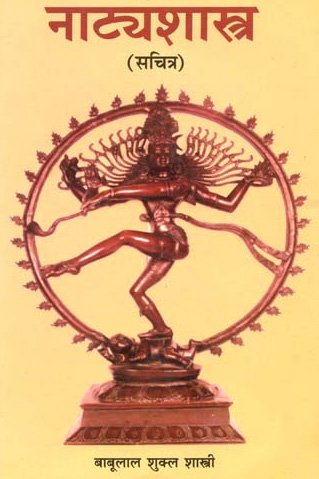
Natyashastra (नाट्यशास्त्र, nāṭyaśāstra) refers to both the ancient Indian tradition (shastra) of performing arts, (natya—theatrics, drama, dance, music), as well as the name of a Sanskrit work dealing with these subjects. It also teaches the rules for composing Dramatic plays (nataka), construction and performance of Theater, and Poetic works (kavya).
Ganitashastra (Mathematics and Algebra)
Lava (लव) refers to a “measure of time”, and represents a technical term occurring in the Gaṇitasāra-saṅgraha—an ancient Sanskrit text dealing with ancient Indian algebra and mathematical problems written by Mahāvīra (Mahāvīrācārya) in the 9th century.
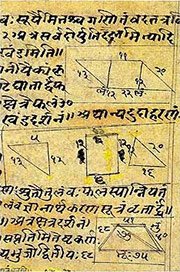
Ganita (गणित) or Ganitashastra refers to the ancient Indian science of mathematics, algebra, number theory, arithmetic, etc. Closely allied with astronomy, both were commonly taught and studied in universities, even since the 1st millennium BCE. Ganita-shastra also includes ritualistic math-books such as the Shulba-sutras.
General definition (in Hinduism)
Lava (लव): Kusa and Lava were sons of Rama and Sita.
In Buddhism
Mahayana (major branch of Buddhism)
Lava (लव) refers to an “instant” (i.e., ‘a very short time’), according to the Vajratuṇḍasamayakalparāja, an ancient Buddhist ritual manual on agriculture from the 5th-century (or earlier), containing various instructions for the Sangha to provide agriculture-related services to laypeople including rain-making, weather control and crop protection.—Accordingly, “Now there lived a Brahmin called Viṣṇudatta in Navanagara. [...] He enchanted an iron stake and placed it on the head of that Nāga. The head of the Nāga burst and it felt great pain. The Nāga became extremely angry with great fury. Then in a moment (kṣaṇa), an instant (lava), a short time (muhūrta), the Nāga’s body was overcome with great pain by the intensity of swaying. Then because of this rays came forth from its body and the fields of the Brahmin were burnt. [...]”.
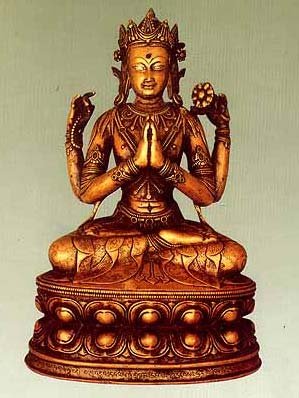
Mahayana (महायान, mahāyāna) is a major branch of Buddhism focusing on the path of a Bodhisattva (spiritual aspirants/ enlightened beings). Extant literature is vast and primarely composed in the Sanskrit language. There are many sūtras of which some of the earliest are the various Prajñāpāramitā sūtras.
In Jainism
General definition (in Jainism)
Lava (लव) refers to a unit of time according to the 2nd-century Tattvārthasūtra 5.40.—What is the duration of one stoka? Seven breathes constitute one stoka. What is the duration of lava? It is seven stokas. What is the duration of one nādi? It consists of 38.5 lava.

Jainism is an Indian religion of Dharma whose doctrine revolves around harmlessness (ahimsa) towards every living being. The two major branches (Digambara and Svetambara) of Jainism stimulate self-control (or, shramana, ‘self-reliance’) and spiritual development through a path of peace for the soul to progess to the ultimate goal.
India history and geography
Lava (लव) refers to the “slightest (distress)”, according to the Velūrpālaiyam plates of Nandivarman (II : S. I. I., Vol. II, p. 507. l.8).—Accordingly, “Thence came into existence the race of the Pallavas, who by the Law of Protection (they had adopted) removed even the slightest distress (vipad-lava) (of their subjects,) [...]”.
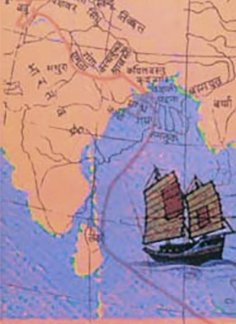
The history of India traces the identification of countries, villages, towns and other regions of India, as well as mythology, zoology, royal dynasties, rulers, tribes, local festivities and traditions and regional languages. Ancient India enjoyed religious freedom and encourages the path of Dharma, a concept common to Buddhism, Hinduism, and Jainism.
Languages of India and abroad
Pali-English dictionary
lava : (m.) a drop.
Lava, (fr. lū) a small particle, a drop VvA. 253 (lavaṅka a small mark); Sdhp. 105 (°odaka). (Page 582)
lava (လဝ) [(pu) (ပု)]—
[ū+a.lū chedane,lavanaṃlavo.rū.568.lū chedane,luyateti lavo,a.,ṭī.7va4-6.lava-saṃ,prā,addhamāgadhī.]
[လူ+အ။ လူ ဆေဒနေ၊ လဝနံလဝေါ။ ရူ။ ၅၆၈။ လူ ဆေဒနေ၊ လုယတေတိ လဝေါ၊ အ။ ဓာန်၊ ဋီ။ ၇ဝ၄-၆။ လဝ-သံ၊ ပြာ၊ အဒ္ဓမာဂဓီ။]
[Pali to Burmese]
lava—
(Burmese text): (၁) စုတ်ပြတ်-ပျက်စီး-ခြင်း။ (၂) အစက် အပေါက်၊ အပြောက်။ (၃) အနည်း၊ အနည်းငယ်။ (၄) ရိတ်-ဖြတ်-ရိတ်ဖြတ်-ခြင်း။ (၅) မျက်တောင်တစ်ခတ်၏ ကာလ (အက်ပတေး)။ စက္ကန့်ဝက်ကာလ (ဝီလျှံ)။ လဝတုဋိခဏ-ကြည့်။ (၆) ဖြတ်-ပယ်ရှား-တတ်သော။ လဝင်္ဂ-ကြည့်။
(Auto-Translation): (1) Breakage - Destruction. (2) Defect, Flaw. (3) Few, A little. (4) Cut - Sever - Cutting. (5) The duration of a blink (Apetay). The duration of a second (William). Lunar time - Watch. (6) Capable of cutting off - Discarding. Lunar observation.

Pali is the language of the Tipiṭaka, which is the sacred canon of Theravāda Buddhism and contains much of the Buddha’s speech. Closeley related to Sanskrit, both languages are used interchangeably between religions.
Marathi-English dictionary
lava (लव).—m The name of a tree and its fruit.
--- OR ---
lava (लव).—m S A particle. 2 In astrology &c. A portion or part. 3 The numerator of a fraction.
--- OR ---
lava (लव) [or लंव, laṃva].—f (lōma S) The hair of the body or limbs, down. 2 The hair of animals, wool. 3 The hair and sordes which the currycomb detaches from the coat of a horse. laṃvalaṃva bōlaṇēṃ g. of s. (To have all the hairs of one's body bristling and chattering). To talk much and rapidly.
--- OR ---
lavā (लवा).—m Commonly lavhā, both the grass and the bird.
--- OR ---
lāvā (लावा).—m (Poetry. lāvaṇēṃ) Matter added to dress up and trick out, or to enhance or to qualify the sense of (some simple fact &c.); embellishment, varnish, drapery, garniture.
lava (लव).—f The hair of the body, down. Wool.
--- OR ---
lāvā (लावा).—m Embellishment, varnish, dra- pery. A kind of quail.
Marathi is an Indo-European language having over 70 million native speakers people in (predominantly) Maharashtra India. Marathi, like many other Indo-Aryan languages, evolved from early forms of Prakrit, which itself is a subset of Sanskrit, one of the most ancient languages of the world.
Sanskrit dictionary
Lava (लव).—[l-ap]
1) Plucking, mowing.
2) Reaping, gathering (of corn).
3) A section, piece, fragment, bit; कुशमुष्टिमुपादाय लवं चैव तु स द्विजः (kuśamuṣṭimupādāya lavaṃ caiva tu sa dvijaḥ) Rām.7.66.6.
4) A particle, drop, small quantity; a little; oft. at the end of comp. in this sense; जललवमुचः (jalalavamucaḥ) Meghadūta 21,72; आचामति स्वेदलवान् मुखे ते (ācāmati svedalavān mukhe te) R.13.2;6.57;16.66; अश्रु° (aśru°) 15.97; अमृत° (amṛta°) Kirātārjunīya 5.44; भ्रूक्षेपलक्ष्मीलवक्रीते दास इव (bhrūkṣepalakṣmīlavakrīte dāsa iva) Gītagovinda 11; so तृण°, अपराध°, ज्ञान°, सुख°, धन° (tṛṇa°, aparādha°, jñāna°, sukha°, dhana°) &c. &c.
5) Wool, hair; धान्ये सदे लवे वाह्ये नातिक्रामति पञ्चताम् (dhānye sade lave vāhye nātikrāmati pañcatām) Manusmṛti 8.151.
6) Sport.
7) A minute division of time (= the sixth part of a twinkling); त्वं मुहूर्तस्तिथिस्त्वं च त्वं लवस्त्वं पुनः क्षणः (tvaṃ muhūrtastithistvaṃ ca tvaṃ lavastvaṃ punaḥ kṣaṇaḥ) Mahābhārata (Bombay) 1.25.14.
8) The numerator of a fraction.
9) A degree (in astr.).
10) Loss, destruction.
11) Name of a son of Rāma, one of the twins, the other being Kuśa q. v. He with his brother was brought up by the sage Vālmīki, and they were taught by the poet to repeat his Rāmāyaṇa at assemblies &c.; (the derivation of his name, is given as-sa tau kuśalavonmṛṣṭagarbhakledau tadākhyayā | kaviḥ kuśalavāveva cakāra kila nāmataḥ || R.15.32).
12) A kind of quail.
-vam 1 Cloves.
2) Nutmeg.
-vam ind. [see under lavam].
Derivable forms: lavaḥ (लवः).
--- OR ---
Lāva (लाव).—a. (-vī f.) [लू कर्तरि घञ् (lū kartari ghañ) Uṇādi-sūtra 1.141]
1) Cutting, lopping, cutting off; कुशसूचिलावम् (kuśasūcilāvam) R.13.43.
2) Plucking, gathering.
3) Cutting down, killing, destroying; स शत्रुलावौ मन्वानः (sa śatrulāvau manvānaḥ) Bhaṭṭikāvya 6.87.
-vaḥ 1 Cutting.
2) A quail.
3) A bird.
Lava (लव).—m.
(-vaḥ) 1. Cutting. 2. Loss, destruction. 3. Reaping. 4. Small, little; (according to some authorities, this when used attributively changes its gender, making lavaḥ-lavā-lavaṃ; according to others it is invariably masc.) 5. Smallness, littleness. 6. A minute division of time, the sixtieth part of the twinkling of an eye. 7. A larger division of time, two Kashthas or 36 twinkling of the eye, or about (1/2) a second. 8. One of the twin sons of Ramachandra, by Sita, born after she had been abandoned by her husband and brought up at the hermitage of Valmiki 9. A kind of quail. 10. Hair, wool, &c.; that which is cut or shorn from domestic animals. 11. (In arithmetic,) The numerator of a fraction. 12. A degree, (in astronomy.) 13. Sport. 14. Plucking. mowing. 15. A section, a fragment. n.
(-vaṃ) 1. The nutmeg. 2. Cloves. E. lū to cut, aff. ap .
--- OR ---
Lāva (लाव).—mfn.
(-vaḥ-vī-vaṃ) 1. Cutting down. 2. Killing. 3. Plucking, gathering. mf.
(-vaḥ-vā) A sort of quail, (Perdix chinensis.) E. lū to cut, to eat, (corn), causal form, aff. ghañ; also with kan added, lāvaka m. (-kaḥ) .
Lava (लव).—i. e. lū + a, I. m. 1. Cutting, [Daśakumāracarita] in
--- OR ---
Lāva (लाव).—i. e. lū + a, I. adj. 1. Cutting. 2. Plucking, [Raghuvaṃśa, (ed. Stenzler.)] 13, 43. Ii. m., and f. vā, A sort of quail, Perdix chinensis, [Rāmāyaṇa] 3, 53, 57.
Lava (लव).—[masculine] cutting, plucking, gathering etc.; what is cut, as wool, hair, etc.; fragment, piece, particle, bit, drop.
--- OR ---
Lāva (लाव).—[feminine] ī cutting, severing, killing.
1) Lava (लव):—a m. (√1. lū) the act of cutting, reaping (of corn), mowing, plucking or gathering (of flowers etc.), Das, [Nalôd.]
2) that which is cut or shorn off, a shorn fleece, wool, hair, [Manu-smṛti; Raghuvaṃśa]
3) anything cut off, a section, fragment, piece, particle, bit, little piece (am ind. a little; lavam api, even a little), [Mahābhārata; Kāvya literature] etc. (cf. padāti-l)
4) a minute division of time, the 60th of a twinkling, half a second, a moment ([according to] to others 1/4000 or 1/5400 or 1/20250 of a Muhūrta), [ib.]
5) (in [astronomy]) a degree, [Golādhyāya]
6) (in [algebra]) the numerator of a fraction, [Colebrooke]
7) the space of 2 Kāṣṭhās, [cf. Lexicographers, esp. such as amarasiṃha, halāyudha, hemacandra, etc.]
8) loss, destruction, [cf. Lexicographers, esp. such as amarasiṃha, halāyudha, hemacandra, etc.]
9) sport, [cf. Lexicographers, esp. such as amarasiṃha, halāyudha, hemacandra, etc.] (cf. lala)
10) Perdix Chinensis, [Horace H. Wilson]
11) Name of a son of Rāmacandra and Sītā (he and his twin-brother Kuśa were brought up by the sage Vālmīki and taught by him to repeat his Rāmāyaṇa at assemblies; cf. kuśī-lava), [Rāmāyaṇa; Raghuvaṃśa; Uttararāma-carita; Purāṇa]
12) of a king of Kaśmīra (father of Kuśa), [Rājataraṅgiṇī]
13) n. (only [cf. Lexicographers, esp. such as amarasiṃha, halāyudha, hemacandra, etc.]) nutmeg
14) cloves
15) the root of Andropogon Muricatus
16) a little (cf. m.).
17) Lāva (लाव):—1. lāva lāva, lāvaka etc. See p.905, [column] 2.
18) 2. lāva lāva, lāvaka [wrong reading] for lāba, lābaka.
19) Lava (लव):—[from lū] b etc. See p.898, [columns] 2, 3.
20) Lāva (लाव):—[from lū] a mf(ī)n. (ifc.) cutting, cutting off, plucking, reaping, gathering, [Raghuvaṃśa; Sāhitya-darpaṇa]
21) [v.s. ...] cutting to pieces, destroying, killing, [Bhaṭṭi-kāvya]
1) Lava (लव):—(vaḥ) 1. m. Cutting; loss; little; three vedhas of time; a quail; hair, wool; numerator of a fraction. n. Nutmeg; cloves.
2) Lāva (लाव):—[(vaḥ-vā)] 1. m. f. A sort of quail; cutting down, reaping.
Lava (लव):—(von lū)
1) m. a) das Schneiden (von Korn) [Pāṇini’s acht Bücher 3, 3, 28,] [Scholiast] [Amarakoṣa 3, 3, 24.] [Trikāṇḍaśeṣa 3, 3, 420.] [Hemacandra’s Abhidhānacintāmaṇi 1521.] [Anekārthasaṃgraha 2, 535.] [Medinīkoṣa v. 22.] das Abschneiden, Abpflücken (von Blumen) [NALOD. 2, 30.] kusumalavacchurita so v. a. gepflückte Blumen [Daśakumāracarita 90, 9.] — b) Schur, Wolle (nach [Kullūka]) [Manu’s Gesetzbuch 8, 151.] Haar (einer Kuh) [Raghuvaṃśa 15, 32.] — c) Abschnitt, Stück, eine Partikel von, ein Minimum, ein Bischen (nach [Rājanirghaṇṭa im Śabdakalpadruma] auch n.) [Amarakoṣa 3, 2, 11.] [Trikāṇḍaśeṣa] [Hemacandra’s Abhidhānacintāmaṇi 1427.] [Hemacandra’s Anekārthasaṃgraha] [Medinīkoṣa] [Halāyudha 4, 3.] [The Śatapathabrāhmaṇa 11, 2, 7, 19.] kaccillavaṃ ca muṣṭiṃ ca pararāṣṭre paraṃtapa . avihāya mahārāja nihaṃsi samare ripūn .. [Mahābhārata 2, 198.] kuśamuṣṭimupādāya lavaṃ caiva tu [Rāmāyaṇa 7, 66, 6.] āmiṣa Fleischstück [Vikramorvaśī 125.] dhṛtajaratkanthālava [Spr. 2588.] kṣiti [1802.] mṛttikā [Raghuvaṃśa 3, 3, v. l.] beim Schol. in der ed. Calc. tṛṇa [Spr. 965.] kuśalājaśamīlavaiḥ . abhiṣiktasya [Mahābhārata 3, 16078. 14, 2805.] jala Tropfen [Meghadūta 21. 71. 91.] [Raghuvaṃśa 16, 66.] [Spr. 2543.] [Rājataraṅgiṇī 3, 266.] sveda [Raghuvaṃśa 6, 57] (am Ende eines adj. comp. f. ā) [8, 50. 13, 20.] aśru [15, 97.] amṛta [Kirātārjunīya 5, 44.] sphāranīhāra [Rājataraṅgiṇī 3, 168.] asṛglava [Bhāgavatapurāṇa 7, 8, 30.] madhu [9, 25. 5, 14, 22.] dhana [Spr. 1429.] svalpavitta [Rājataraṅgiṇī 4, 628.] lakṣmī [Spr. 967.] bhrūkṣepalakṣmī [Gītagovinda 11, 22.] jñāna [Spr. 39.] sukha [Varāhamihira’s Bṛhajjātaka S. 74, 3.] [Spr. 3265, v. l.] aparādha [Vikramorvaśī 118.] śreyo [Rājataraṅgiṇī 3, 35.] [PAÑCAR. 3, 2, 29.] kāma [Bhāgavatapurāṇa 3, 21, 14. 4, 29, 25. 54.] prekṣā [3, 16, 7. 10, 61, 4.] bhāvānāṃ lavaiḥ [DAŚAR. 2, 47.] āśīrbhiralaṃlavātmabhiḥ [Bhāgavatapurāṇa 3, 13, 48.] lālitya Inschr. in [Journ. of the Am. Or. S. 6, 503,] [Śloka 6.] [Sāhityadarpana 40, 11.] madhulavaleśa [Spr. 3520.] lavam adv. ein wenig: lavamapi lavaṅge na ramate [SARASVATĪK. 1] [?(nach AUFRECHT).] — d) ein best. Zeittheil (= (1/4000) Muhūrta nach [PARĀŚARA] bei [UTPALA] zu [Varāhamihira’s Bṛhajjātaka S. 2]; nach Andern (1/5400 1/20250) Muh.); häufig personif. [Trikāṇḍaśeṣa] [Hemacandra’s Abhidhānacintāmaṇi 136.] [Hemacandra’s Anekārthasaṃgraha] [Medinīkoṣa] [WEBER, Jyotiṣa 41. fgg. 90. fg. 105.] [Nakṣ. 2, 287.] [Weber’s Indische Studien 9, 461. 464. fgg.] [Mahābhārata 1, 1292. 6443. 13, 627. 776. 7385.] [Harivaṃśa 9529. 14079.] [Varāhamihira’s Bṛhajjātaka S. 48, 59.] [Bhāgavatapurāṇa 1, 18, 13. 3, 11, 6. 7. 4, 30, 34. 7, 3, 31.] [Mārkāṇḍeyapurāṇa 99, 50.] [Viṣṇupurāṇa 22, Nalopākhyāna 3.] [Hiouen-Thsang I, 61.] — e) bei den Astronomen = aṃśa, bhāga Grad [GOLĀDHY.] [TRIPRAŚNAV. 32. fgg.] [GAṆITĀDHY.] [BHĀGRAHAYUTYADHY. 7.] [TRIPRAŚNĀDHY. 32.] — f) Zähler eines Bruchs [Algebra 13.] — g) = vināśa Untergang [Medinīkoṣa] = vilāsa Ausgelassenheit u.s.w. [Hemacandra’s Anekārthasaṃgraha] und [VIŚVA im Śabdakalpadruma] — h) Nomen proprium α) eines Sohnes des Rāma und der Sītā (neben kuśa) [Trikāṇḍaśeṣa 2, 8, 4.] [Hemacandra’s Abhidhānacintāmaṇi 704.] [Hemacandra’s Anekārthasaṃgraha] [Medinīkoṣa] [Raghuvaṃśa 15, 32.] [Weber’s Verzeichniss 115] [?(XLIV). UTTARAR. 66, 8 (85, 8). Viṣṇupurāṇa 385. 386, Nalopākhyāna 17. Bhāgavatapurāṇa 9, 11, 11]; vgl. kuśīlava
3) — β) eines Fürsten von Kāśmīra, Vaters des Kuśa, [Rājataraṅgiṇī 1, 18. 84.] —
2) n. a) Muskatnuss [Śabdacandrikā im Śabdakalpadruma] — b) = lavaṅga Gewürznelke. — c) die Wurzel von Andropogon muricatus [Rājanirghaṇṭa im Śabdakalpadruma]
--- OR ---
Lāva (लाव):—1. (von lū) adj. (f. ī) schneidend, abschneidend, pflückend: kuśasūci [Raghuvaṃśa 13, 43.] kusumalāvī f. Blumenleserin [Spr. 1575.] śatru Feinde zerhauend, tödtend [Bhaṭṭikavya 6, 87.] — Vgl. kāṇḍa, puṣpa .
--- OR ---
Lāva (लाव):—2. s. lāba .
Lava (लव):——
1) m. — a) das Schneiden , Abschneiden , Abpflücken (von Blumen). kusuma so v.a. gepflückte Blumen. — b) Schur , Wolle ; Haar (einer Kuh). — c) Abschnitt , Stück , eine Partikel von , ein Minimum , ein Bischen , Tropfen. Zum Ueberfluss kann noch leśa angehängt werden. lavam Adv. ein wenig. Angeblich auch n. Am Ende eines adj. Comp. f. ā. Vgl. padāti. — d) ein best. sehr kleiner Zeittheil. Häufig personificirt. — e) bei den Astronomen Grad. — f) Zähler eines Bruchs. — g) *Untergang. — h) *Ausgelassenheit. — i) Nomen proprium — α) eines Sohnes des Rāma und der Sītā. — β) eines Fürsten von Kāśmīra. —
2) *n. — a) Muskatnuss. — b) Gewürznelke [Rājan 12,85.] — c) die Wurzel von Andropogon muricatus [Rājan 12,151.]
--- OR ---
Lāva (लाव):—1. Adj. (f. ī) am Ende eines Comp. —
1) schneidend , abschneidend , pflückend. —
2) zerhauend , tödtend.
--- OR ---
Lāva (लाव):—2. m. schlechte Schreibart für lāba.
Lava (लव) in the Sanskrit language is related to the Prakrit words: Lava, Lāya.
Sanskrit, also spelled संस्कृतम् (saṃskṛtam), is an ancient language of India commonly seen as the grandmother of the Indo-European language family (even English!). Closely allied with Prakrit and Pali, Sanskrit is more exhaustive in both grammar and terms and has the most extensive collection of literature in the world, greatly surpassing its sister-languages Greek and Latin.
Hindi dictionary
1) Lava (लव) [Also spelled love]:—(nm) a very small division of time; whit, particle; see [lau; ~līna] absorbed, engrossed (as in thought).
2) Lavā (लवा):—(nm) a kind of bird, lark; parched rice.
3) Lāva (लाव) [Also spelled lav]:—(nm); -[laśkara] an array of followers/companions, large paraphernalia, goods and chattels.
4) Lāvā (लावा):—(nm) lava; puffed paddy, parched rice.
...
Prakrit-English dictionary
1) Lava (लव) in the Prakrit language is related to the Sanskrit word: Lap.
2) Lava (लव) also relates to the Sanskrit word: Pravartarya.
3) Lava (लव) also relates to the Sanskrit word: Lapa.
4) Lava (लव) also relates to the Sanskrit word: Lava.
5) Lāva (लाव) also relates to the Sanskrit word: Lāpa.
6) Lāva (लाव) also relates to the Sanskrit word: Lāsa.
Prakrit is an ancient language closely associated with both Pali and Sanskrit. Jain literature is often composed in this language or sub-dialects, such as the Agamas and their commentaries which are written in Ardhamagadhi and Maharashtri Prakrit. The earliest extant texts can be dated to as early as the 4th century BCE although core portions might be older.
Kannada-English dictionary
Lava (ಲವ):—
1) [noun] the act of plucking (as leaves, flowers, etc. from a plant).
2) [noun] the act of cutting, reaping, etc.
3) [noun] the act of gathering, collecting; collection.
4) [noun] a very small quantity.
5) [noun] a very small drop of water; a droplet.
6) [noun] a piece or fragment cut or broken from a whole.
7) [noun] the soft, curly or crisped hair of sheep; wool.
8) [noun] a sport; a game.
9) [noun] a very small period of time.
10) [noun] name of one of the two sons of Rāma, in Rāmāyaṇa, the Great epic.
11) [noun] the quail Perdicula asiatica of Phasianidae family, with brown body and wings, black and grey stripes on the breast, short grey beak, short tail, that nests on the ground; jungle bush-quail.
12) [noun] the dried flower bud of a tropical evergreen tree (Eugenia aromatica) of the myrtle family; a clove.
13) [noun] hard, aromatic seed of the medium-sized, evergreen tree Myristica fragrans of Myristiaceae family, used as a spice and whose covering yields the spice mace; nutmeg.
14) [noun] the fragrant roots of the grass Vetiveria zizaniodes ( = Andropogon muricatus) of Poaceae family.
15) [noun] (rhet.) a kind of figure of speech.
--- OR ---
Lāva (ಲಾವ):—[adjective] cutting; severing; separating by cutting.
--- OR ---
Lāva (ಲಾವ):—[noun] = ಲಾವಕ - [lavaka -] 4.
--- OR ---
Lāvā (ಲಾವಾ):—[noun] melted rock issuing from a volcano; lava.
Kannada is a Dravidian language (as opposed to the Indo-European language family) mainly spoken in the southwestern region of India.
Nepali dictionary
1) Lava (लव):—n. 1. small portion; piece; 2. little quantity; amount; 3. ounce of time; 4. loss; 5. game; play; 6. wool; fiber; 7. Mythol. the name of one of the sons of Ram;
2) Lāvā (लावा):—n. lava;
3) Lāvā (लावा):—n. parched rice;
Nepali is the primary language of the Nepalese people counting almost 20 million native speakers. The country of Nepal is situated in the Himalaya mountain range to the north of India.
See also (Relevant definitions)
Partial matches (+0): U, Ou, A.
Starts with (+15): Avadhi, Lava plato, Lava-lavaenal, Lava-pratos, Lavaa, Lavaanga patra, Lavabaja, Lavacika, Lavacikapana, Lavada, Lavadaru, Lavadasavadi, Lavadeluta, Lavadhan, Lavadhana, Lavadhata, Lavai, Lavajama, Lavakuta, Lavalava.
Full-text (+806): Lavam, Pushpalava, Lavani, Abhilava, Kushilava, Udaharana, Alava, Lavalava, Lavashas, Kulava, Avadhi, Udahara, Kandalava, Pralava, Pankajalavam, Kushalava, Lavepsu, Shatrulava, Trinalava, Lakshmiputra.
Relevant text
Search found 199 books and stories containing Lava, Lāva, Lavā, Lāvā, Lavas, U-a, Ū-a; (plurals include: Lavas, Lāvas, Lavās, Lāvās, Lavases, as). You can also click to the full overview containing English textual excerpts. Below are direct links for the most relevant articles:
Samyuta Nikaya (Linked Discourses)
Discourse 47.6: Sakuṇagghi-sutta < [47.1. Ambapāli-vagga: Ambapālī the Courtesan]
Kathasaritsagara [Sanskrit/English] (by C. H. Tawney)
Shiva Purana [sanskrit/english]
Verse 5.25.38 < [Chapter 25]
Yavanajataka by Sphujidhvaja [Sanskrit/English] (by Michael D Neely)
Ganitatilaka (Sanskrit text and English introduction) (by H. R. Kapadia)
Page 97 < [Sanskrit Text of the Ganitatilaka]
Part 17 - Four kinds of Pramana (measure) < [Introduction]
Page 129 < [Sanskrit Text of the Ganitatilaka]