Madana, Mādana, Madanā: 43 definitions
Introduction:
Madana means something in Buddhism, Pali, Hinduism, Sanskrit, Jainism, Prakrit, Marathi, Hindi, biology. If you want to know the exact meaning, history, etymology or English translation of this term then check out the descriptions on this page. Add your comment or reference to a book if you want to contribute to this summary article.
Images (photo gallery)
In Hinduism
Ayurveda (science of life)
Kalpa (Formulas, Drug prescriptions and other Medicinal preparations)
Madana (मदन) refers to the medicinal plant known as “Catunaregum spinosa (Thunb.) Tirvengadum” and is dealt with in the 15th-century Yogasārasaṅgraha (Yogasara-saṅgraha) by Vāsudeva: an unpublished Keralite work representing an Ayurvedic compendium of medicinal recipes. The Yogasārasaṃgraha [mentioning madana] deals with entire recipes in the route of administration, and thus deals with the knowledge of pharmacy (bhaiṣajya-kalpanā) which is a branch of pharmacology (dravyaguṇa).
Gandha-Shastra (science of cosmetics, skin care, etc.)
Madana (मदन) (Emetic Nut) is an ingredient used in cakes/soap (khali) used for massages and baths, according to the 12th century Mānasollasa, an encyclopedic Sanskrit text of which certain chapters deal with bhogas (enjoyoments of life) such as perfumery, massage and bathing.—King Someśvara lays down detailed instructions about the royal bath in his work. For removing the grease from the king’s person a Cake (khali) should be used. The composition of this cake or soap (khali) should be as follows:—Take a quantity of very fine wheat flour. Mix it with fermented rice-gruel (aranāla) and powdered roots of madana (Emetic Nut, Randia dumetorum) and piśuna (Saffron). The king should then take his bath with the help of beautiful female attendants. The water used for the bath should contain clean waters brought from different holy places and capable of removing dirt.
Unclassified Ayurveda definitions
Madana (मदन).—The Sanskrit name for an important Ayurvedic drug.—The thorny trees of Madana are found in the hills of Vindhya range etc. It is regarded as the best among the emetics.

Āyurveda (आयुर्वेद, ayurveda) is a branch of Indian science dealing with medicine, herbalism, taxology, anatomy, surgery, alchemy and related topics. Traditional practice of Āyurveda in ancient India dates back to at least the first millenium BC. Literature is commonly written in Sanskrit using various poetic metres.
Vaishnavism (Vaishava dharma)
Mādana (मादन).—A category of highly advanced ecstasy in which the lovers meet together and there is kissing and many other symptoms.
Mādana (मादन) or Mādanākhya refers to:—See Adhirūḍha-mahābhāva. (cf. Glossary page from Bhajana-Rahasya).
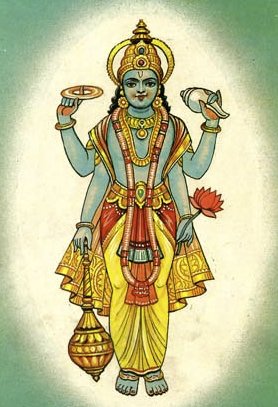
Vaishnava (वैष्णव, vaiṣṇava) or vaishnavism (vaiṣṇavism) represents a tradition of Hinduism worshipping Vishnu as the supreme Lord. Similar to the Shaktism and Shaivism traditions, Vaishnavism also developed as an individual movement, famous for its exposition of the dashavatara (‘ten avatars of Vishnu’).
Purana and Itihasa (epic history)
Madana (मदन) is the name of a mountain situated at lake Aruṇoda and mount Mandara, according to the Varāhapurāṇa chapter 75. The Mandara mountain lies on the eastern side of mount Meru, which is one of the seven mountains located in Jambūdvīpa, ruled over by Āgnīdhra, a grandson of Svāyambhuva Manu, who was created by Brahmā, who was in turn created by Nārāyaṇa, the unknowable all-pervasive primordial being.
1) Madana (मदन) is the name of a leader of Gaṇas (Gaṇapa or Gaṇeśvara or Gaṇādhipa) who came to Kailāsa, according to the Śivapurāṇa 2.1.20. Accordingly, after Śiva decided to become the friend of Kubera:—“[...] The leaders of Gaṇas revered by the whole world and of high fortune arrived there. [...] Jālaṅka, the chief leader of Gaṇas, with twelve crores; the glorious Madana and Vikṛtānana with seven crores each. [...]”.
These [viz., Madana] and other leaders of Gaṇas [viz., Gaṇapas] were all powerful (mahābala) and innumerable (asaṃkhyāta). [...] The Gaṇa chiefs and other noble souls of spotless splendour eagerly reached there desirous of seeing Śiva. Reaching the spot they saw Śiva, bowed to and eulogised him.
2) Madana (मदन) is the one of the names of Kāma, according to the Śivapurāṇa 2.2.3.—“[...] The Brahmins Marīci and others, my sons, decided on suitable names for the Being and said thus”. The sages said:—“[...] Causing elation in others you will be known as Madana. Since you were haughty even as you were born you will be Darpaka and your name Kandarpa will also become popular in the world”.
1a) Madana (मदन).—A name of Kāma, God of Love: also Makaradhvaja (s.v.);1 created by Brahmā when he looked at Mahālakṣmī after praying to Janārdana; was given the flower dart and the sugarcane bow; Hari blessed him with all conquest and no defeat;2 performed saubhāgya—śayana;3 at the request of the Devas and persecuted by Tāraka, Madana took courage and secretly entered Śiva's abode; the latter grew angry and burnt him with his third eye;4 remembered by Indra, went to him and was ordered to create sexual desire in Śiva; he got frightened at Śiva's third eye, but pressed by Indra he agreed to meet the Lord and sent his arrow of Mohana when Siva's third eye burnt him down; Rati wept with Madhu or Spring and both went to Śiva; Rati praised him for grace; Śiva replied that Madana would attain fame as Ananga in the world sometime hence.5
- 1) Bhāgavata-purāṇa XI. 4. 8.
- 2) Brahmāṇḍa-purāṇa IV. 8. 24-9; 11. 7.
- 3) Matsya-purāṇa 60. 49.
- 4) Brahmāṇḍa-purāṇa IV. 11. 28.
- 5) Matsya-purāṇa 154. 212-51, 260-70.
1b) The seventh son of Devakī.*
- * Matsya-purāṇa 46. 19.
1c) A commander of Bhaṇḍa sent to aid Viṣanga.*
- * Brahmāṇḍa-purāṇa IV. 21. 78; 25. 27.
2) Madanā (मदना).—A Śakti.*
- * Brahmāṇḍa-purāṇa IV. 36. 76.

The Purana (पुराण, purāṇas) refers to Sanskrit literature preserving ancient India’s vast cultural history, including historical legends, religious ceremonies, various arts and sciences. The eighteen mahapuranas total over 400,000 shlokas (metrical couplets) and date to at least several centuries BCE.
Kavya (poetry)
Madana (मदन).—Madana is the handsome god of love. He has a flower-bow having a string of bees and five flowery arrows. He shrewdly awaits the proper opportunity to strike Śiva. Unfortunately the pride of his bow is humbled by Śiva’s fortitude and he is immediately burnt to ashes. Rati is a consort of Madana.
Soḍḍhala has alluded to Madana and Rati in his work. His attributes and functions can be understood by the epithets given by the author. They are as under:—Minadhvaja, Manobhava, Manmatha, Kusumapatrin, Kusumasāyaka, Cetobhū, Jhaṣaketana, Pañceṣu, Puṣpāyudha, Puṣpadhanvan, Manobhu, Manasija, Madana, Kandarpa, Anaṅga, Saṅkalpajanman, Makardhvaja, Kusumakārmukapāṇi, Smara, Makaraketu, Karmukapāṇi.

Kavya (काव्य, kavya) refers to Sanskrit poetry, a popular ancient Indian tradition of literature. There have been many Sanskrit poets over the ages, hailing from ancient India and beyond. This topic includes mahakavya, or ‘epic poetry’ and natya, or ‘dramatic poetry’.
Chandas (prosody, study of Sanskrit metres)
Madana (मदन) is the alternative name of a Sanskrit metre (chandas) mentioned by Hemacandra (1088-1173 C.E.) in his auto-commentary on the second chapter of the Chandonuśāsana. Madana corresponds to Rajanī (according to Bharata). Hemacandra gives these alternative names for the metres by other authorities (like Bharata), even though the number of gaṇas or letters do not differ.
Chandas (छन्दस्) refers to Sanskrit prosody and represents one of the six Vedangas (auxiliary disciplines belonging to the study of the Vedas). The science of prosody (chandas-shastra) focusses on the study of the poetic meters such as the commonly known twenty-six metres mentioned by Pingalas.
Shaivism
Madanā (मदना) is the name of one of the thirty-six Yakṣiṇīs mentioned in the Uḍḍāmareśvaratantra. In the yakṣiṇī-sādhana, the Yakṣiṇī is regarded as the guardian spirit who provides worldly benefits to the practitioner. The Yakṣiṇī (e.g., Madanā) provides, inter alia, daily food, clothing and money, tells the future, and bestows a long life, but she seldom becomes a partner in sexual practices.
Madana (मदन) refers to “passion”, according to the 13th-century Matsyendrasaṃhitā: a Kubjikā-Tripurā oriented Tantric Yoga text of the Ṣaḍanvayaśāmbhava tradition from South India.—Accordingly, “[Visualisation of Śakti]:—[...] Her feet are embellished with anklets. She wears divine garlands and [has been anointed] with divine ointments. She is delighted by the wine she is enjoying. Her body is filled with passion (madana-āviṣṭa-vigrahā). She is restless with wantonness. [This is how the Yogin] should visualise his lover as Śakti, O Maheśvarī”.

Shaiva (शैव, śaiva) or Shaivism (śaivism) represents a tradition of Hinduism worshiping Shiva as the supreme being. Closely related to Shaktism, Shaiva literature includes a range of scriptures, including Tantras, while the root of this tradition may be traced back to the ancient Vedas.
Shaktism
1) Madana (मदन) refers to “passion”, according to the Manthānabhairavatantra, a vast sprawling work that belongs to a corpus of Tantric texts concerned with the worship of the goddess Kubjikā.—Accordingly, “In the centre, in the sacred seat called Kāma, passion (madana) gives rise to passion (madayati) and is the seat of Uḍa within power (kalā). The venerable (seat) Pūrṇa is in the wheel on the left and emanates the energy of the Moon in the seat of the Moon in front of that. [...]”.
2) Madanā (मदना) or Madanāvvā is the name of the Mother (avvā) associated with the sacred seat of Kāmarūpa, according to the Manthānabhairavatantra, a vast sprawling work that belongs to a corpus of Tantric texts concerned with the worship of the goddess Kubjikā.
Madana (मदन) refers to the “Love-god”, according to the King Vatsarāja’s Pūjāstuti called the Kāmasiddhistuti (also Vāmakeśvarīstuti), guiding one through the worship of the Goddess Nityā.—Accordingly, “[...] Her body is beautiful and bears the hue of vermillion. Its middle part is slim, [and] she is the repository of beauty. She is slightly bent like a young elephant because of her pitcher-like breasts, resembling the temples of a young elephant. Her eyes are moving and wide like those of a deer. She is moon-faced, her smiles are gentle, and she serves as the felicitous banner of the Love-god (madana). [...]”.
Shakta (शाक्त, śākta) or Shaktism (śāktism) represents a tradition of Hinduism where the Goddess (Devi) is revered and worshipped. Shakta literature includes a range of scriptures, including various Agamas and Tantras, although its roots may be traced back to the Vedas.
Vastushastra (architecture)
Madana (मदन) is used as an ingredient of a mixture of Vajralepa (“a special kind of hard cement”) which was used in the construction of a Temple and as a binding agent for joining bricks, according to the Viṣṇudharmottarapurāṇa, an ancient Sanskrit text which (being encyclopedic in nature) deals with a variety of cultural topics such as arts, architecture, music, grammar and astronomy. In the Viṣṇudharmottarapurāṇa, five procedures of preparing the vajralepa are suggested.—In the second variety, the mixture of lākṣā, kunduru, gṛhadhūma the middle portion of kapittha and bilva, nāgaphala, balā, madhuka, kiñjāpa, madana, mañjīṣṭhā, āmalaka and sarja should be taken.
Vastushastra (वास्तुशास्त्र, vāstuśāstra) refers to the ancient Indian science (shastra) of architecture (vastu), dealing with topics such architecture, sculpture, town-building, fort building and various other constructions. Vastu also deals with the philosophy of the architectural relation with the cosmic universe.
Shyanika-shastra (the science of Hawking and Hunting)
Madana (मदन) refers to “Vangueria spinosa” (and is used in the treatment of Hawks), according to the Śyainika-śāstra: a Sanskrit treatise dealing with the divisions and benefits of Hunting and Hawking, written by Rājā Rudradeva (or Candradeva) in possibly the 13th century.—Accordingly, [while discussing the treatment of hawks]: “If a hawk is found to be losing strength and colour owing to any hurt, the following medicine is to be applied with care. Two kinds of turmeric, blue vitriol, Siphonanthus Indica, Vangueria spinosa [e.g., madana], exudation of Calotropis gigantea—these are to be mixed up in equal quantities and should be administered with meat for three weeks, the dose being varied according to circumstances. [...]”.
Shyanika-shastra (श्यैनिकशास्त्र, śyainikaśāstra) deals with ancient Indian skill of hawking/falconry (one of the ways of hunting) which were laid down in a systematic manner in various Sanskrit treatises. It also explains the philosophy behind how the pleasures derived from sense-experience could lead the way to liberation.
In Buddhism
Tibetan Buddhism (Vajrayana or tantric Buddhism)
Madanā (मदना) is the name of a Ḍākinī who, together with the Vīra (hero) named Madana forms one of the 36 pairs situated in the Jñānacakra, according to the 10th century Ḍākārṇava chapter 15. Accordingly, the jñānacakra refers to one of the three divisions of the saṃbhoga-puṭa (‘enjoyment layer’), situated in the Herukamaṇḍala. The 36 pairs of Ḍākinīs [viz., Madanā] and Vīras are white in color; the shapes of their faces are in accordance with their names; they have four arms; they hold a skull bowl, a skull staff, a small drum, and a knife.
Madana (मदन) refers to “excitement”, according to Kuladatta’s Kriyāsaṃgrahapañjikā, a text within Tantric Buddhism representing a construction manual for monasteries.—Accordingly, [vanayātrā in chapter 5]—“When the wood [to be used for the construction of a monastery] or the stones [to be used for the construction of a caitya] are brought into the city, [the Ācārya] should send a message [that these materials are being brought into the city] to the king or the citizens. He should make people with joyful minds whose bodies quiver with excitement (madana-sphūrti-mūrti) carry [these materials]”.
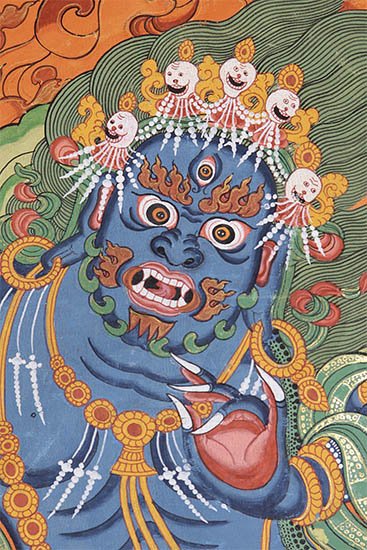
Tibetan Buddhism includes schools such as Nyingma, Kadampa, Kagyu and Gelug. Their primary canon of literature is divided in two broad categories: The Kangyur, which consists of Buddha’s words, and the Tengyur, which includes commentaries from various sources. Esotericism and tantra techniques (vajrayāna) are collected indepently.
In Jainism
General definition (in Jainism)
Madana (मदन) refers to one of the Kapis fighting in Rāma’s army, according to the Jain Ramayana and chapter 7.7 [The killing of Rāvaṇa] of Hemacandra’s 11th century Triṣaṣṭiśalākāpuruṣacaritra: an ancient Sanskrit epic poem narrating the history and legends of sixty-three illustrious persons in Jainism.—Accordingly, “[...] When the battle had been going on for a long time, the army of the Rākṣasas was broken by the Vānaras like a forest by winds. [...] [Madana, ...] and other Kapis fought with Rākṣasas separately, leaping up and falling down, like cocks fighting with cocks. [...] Then the soldiers of Rāma and Rāvaṇa returned, purifying their own men, killed and unkilled”.
Madana (मदन) refers to a type of festival celebrated in ancient India, according to the 8th-century Kuvalayamālā written by Uddyotanasūri, a Prakrit Campū (similar to Kāvya poetry) narrating the love-story between Prince Candrāpīḍa and the Apsaras Kādambarī.—There is a reference to Madana Mahotsava on the madana-trayodaśī day in the bāhyodyāna where there was a temple at which the festival was held.

Jainism is an Indian religion of Dharma whose doctrine revolves around harmlessness (ahimsa) towards every living being. The two major branches (Digambara and Svetambara) of Jainism stimulate self-control (or, shramana, ‘self-reliance’) and spiritual development through a path of peace for the soul to progess to the ultimate goal.
Biology (plants and animals)
Madana [మదన] in the Telugu language is the name of a plant identified with Spermacoce articularis L.f. from the Rubiaceae (Coffee) family having the following synonyms: Spermacoce scabra, Borreria articularis, Spermacoce flexuosa. For the possible medicinal usage of madana, you can check this page for potential sources and references, although be aware that any some or none of the side-effects may not be mentioned here, wether they be harmful or beneficial to health.
1) Madana in India is the name of a plant defined with Alangium salviifolium in various botanical sources. This page contains potential references in Ayurveda, modern medicine, and other folk traditions or local practices It has the synonym Karangolum mohillae (Tul.) Kuntze (among others).
2) Madana is also identified with Catunaregam spinosa It has the synonym Xeromphis obovata (Hochst.) Keay (etc.).
3) Madana is also identified with Dactyloctenium aegyptium It has the synonym Eleusine aegyptiaca (L.) Desf. (etc.).
4) Madana is also identified with Spermacoce hispida It has the synonym Spermacoce avana R.Br. ex G. Don (etc.).
Example references for further research on medicinal uses or toxicity (see latin names for full list):
· Journal of Ethnopharmacology (1984)
· Flora de Filipinas, ed. 2 (1845)
· Chloris Aetnensis (1813)
· Plantae Europeae (1870)
· Bull. Jard. Bot. État (1958)
· Boll. Reale Orto Bot. Giardino Colon. Palermo (1910)
If you are looking for specific details regarding Madana, for example health benefits, diet and recipes, extract dosage, chemical composition, pregnancy safety, side effects, have a look at these references.

This sections includes definitions from the five kingdoms of living things: Animals, Plants, Fungi, Protists and Monera. It will include both the official binomial nomenclature (scientific names usually in Latin) as well as regional spellings and variants.
Languages of India and abroad
Pali-English dictionary
madana : (m.) the God of love. (nt.), intoxication.
Madana, (nt.) (fr. mad) lit. making drunk, intoxication Nd2 540 C. (in formula davāya madāya madanāya, instead of maṇḍanāya: see under mada 1); in cpd. °yuta intoxicated, a name for the Yakkhas J. I, 204. ‹-› Cp. nimmadana. (Page 518)
madana (မဒန) [(ti) (တိ)]—
[mada+yu.,ṭī.567.]
[မဒ+ယု။ ဓာန်၊ ဋီ။၅၆၇။]
[Pali to Burmese]
madana—
(Burmese text): (၁) မာန်ယစ်ကြောင်း၊ မာန်ယစ်စေတတ်သော။ (ထီ) (၂) သေရည်။ (ပု) (၃) ကာမနတ် (ကိလေသမာရ်)။ (၄) သမင်စာပင်။ (၅) ပန်းတိုင်း (ပဒိုင်း)။ (န) (၆) ယစ်မူးခြင်း၊ မာန်ယစ်ခြင်း။ (၇) မူးယစ်စေခြင်း။ မဒနကိစ္စ-ကြည့်။
(Auto-Translation): (1) Pride, can cause pride. (2) Spiritual essence. (3) Deity of desire (Kilesa Mara). (4) Elephant rider. (5) All flowers (Padain). (6) Intoxication, causing pride. (7) Causing intoxication. Refer to the matter of Mara.

Pali is the language of the Tipiṭaka, which is the sacred canon of Theravāda Buddhism and contains much of the Buddha’s speech. Closeley related to Sanskrit, both languages are used interchangeably between religions.
Marathi-English dictionary
madana (मदन).—m (S) The name of the Hindu Cupid. 2 The sexual passion, love or lust. ma0 ōvāḷaṇēṃ or ōvāḷūna ṭākaṇēṃ (mukhāvarūna or tōṇḍāvarūna or svarūpāvarūna) Expresses the incomparable inferiority in beauty of Cupid himself to such a person.
--- OR ---
madana (मदन).—n The corn arising from the first treading of the ears; the corn and chaff together: also called pahilēṃ madana. Of the second treading the produce is called dusarēṃ madana or ākaṇācēṃ madana. Of the third treading tisarēṃ madana or nikaṇācēṃ madana. ākaṇa is the name of the ears that have been trodden once: nikaṇa, of the ears that have been trodden twice. Great pains have been taken to determine these words; and careful inquiries have been made respecting them of farmers from different parts of the country. The above may be relied on as the sense in some districts: in others, according to the proverb pahilī rāsa dusarēṃ ākaṇa tisarēṃ nikaṇa caithā maṇī tyāsa balutā dhaṇī, rāsa is explained to be The heap of corn and chaff the produce of the first treading of the ears, ākaṇa the produce of the second treading, nikaṇa the produce of the third treading, and maṇī the scanty and light grains which fall during the winnowing of nikaṇa; and the word madana either is unknown or is explained as equivalent with rāsa. These words, however, are but three amongst many hundreds which different districts, and, not unfrequently, different villages understand differently. Varying acceptation even of the commonest words is a fact so familiar to the Natives that it precludes their contesting applications and uses howsoever devious from their own; according to their hourlyuttered proverb bārā bārā kōśāṃvara bhāṣā phiratī. The four following words are, in some parts, used to designate The trodden out mass and the states or forms into which it is separated through winnowing--rāsa, kāṇḍēṃ, mātērēṃ, phañjaṭa or varaḷēṃ The heap; the stalks and ears subjected to a second treading and winnowing; the mass of corn and dirt; the light grains and remaining chaff.
madana (मदन).—m The god of love. Lust.
Marathi is an Indo-European language having over 70 million native speakers people in (predominantly) Maharashtra India. Marathi, like many other Indo-Aryan languages, evolved from early forms of Prakrit, which itself is a subset of Sanskrit, one of the most ancient languages of the world.
Sanskrit dictionary
Madana (मदन).—a. (-nī f.) [माद्यति अनेन, मद्-करणे ल्युट् (mādyati anena, mad-karaṇe lyuṭ)]
1) Intoxicating, maddening.
2) Delighting, exhilarating.
-naḥ 1 The god of love, Cupid; व्यापाररोधि मदनस्य निषेवितव्यम् (vyāpārarodhi madanasya niṣevitavyam) Ś.1.27; हतमपि निहन्त्येव मदनः (hatamapi nihantyeva madanaḥ) Bhartṛhari 3.18.
2) Love, passion, sexual love, lust; विनयवारितवृत्तिरतस्तया न विवृतो मदनो न च संवृतः (vinayavāritavṛttiratastayā na vivṛto madano na ca saṃvṛtaḥ) Ś.2.11; सतन्त्रिगीतं मदनस्य दीपकम् (satantrigītaṃ madanasya dīpakam) Ṛtusaṃhāra 1.3; R.5.63; so मदनातुर, मदनपीडित (madanātura, madanapīḍita) &c.
3) The spring season.
4) A bee.
5) Bees'-wax.
6) A kind of embrace.
7) The Dhattūra plant.
8) The Khadira tree.
9) The Bakula tree.
1) Name of the 7th mansion (in astrol.).
11) A kind of measure (in music).
-nā, -nī 1 Spirituous liquor.
2) Musk.
3) The atimukta creeper. (nī only in these two senses).
-nam 1 Intoxicating.
2) Gladdening, delighting.
--- OR ---
Mādana (मादन).—a. (-nī f.) [मद्-णिच् ल्यु-ल्युट् वा (mad-ṇic lyu-lyuṭ vā)] Intoxicating &c.; see मादक (mādaka).
-naḥ 1 The god of love.
2) The thorn-apple.
-nam 1 Intoxication.
2) Delighting, exhilaration.
3) Cloves.
Madana (मदन).—name of a maharṣi: Mahā-Māyūrī 256.25.
--- OR ---
Madanā (मदना).—name of a piśācī: Mahā-Māyūrī 239.5.
--- OR ---
Mādana (मादन).—[, see Gandhamādana 2.].
Madana (मदन).—m.
(-naḥ) 1. Kamadeva, the Hindu Cupid. 2. The season of spring. 3. A plant commonly Mayana, (Vangueria spinosa.) 4. Thorn-apple, (Dhutura metel.) 5. A bee. 6. A sort of bean, (Phaseolus radiatus.) 7. Bee's wax. 8. A tree, (Mimosa eatechu.) 9. A kind of embrace. f. (-nā-nī) 1. Spirituous or vinous liquor. 2. Delighting, E. mad to exhilarate or rejoice, aff. lyuṭ, fem. aff. ṭāp, or ṅīṣ .
--- OR ---
Mādana (मादन).—n.
(-naṃ) 1. Cloves. 2. Delighting, inebriating. 3. Exhilaration. 4. Intoxication. m.
(-naḥ) 1. Kama. 2. The thorn apple. E. mad to be pleased, in the causal form, to please, &c., aff. lyuṭa .
Madana (मदन).—[mad + ana] 1., I. m. 1. Love, [Vikramorvaśī, (ed. Bollensen.)] 22, 8; Kāmadeva, the god of love, [Vikramorvaśī, (ed. Bollensen.)] [distich] 9. 2. The season of spring. 3. Thorn apple, Datura metel. 4. A bee. 5. Beeswax. Ii. f. na and nī, Spirituous liquor.
--- OR ---
Mādana (मादन).—i. e. mad, [Causal.], + ana, n. 1. Delighting. 2. Cloves.
Madana (मदन).—[masculine] love or the god of love.
--- OR ---
Mādana (मादन).—[adjective] inebriating.
1) Madana (मदन) as mentioned in Aufrecht’s Catalogus Catalogorum:—See Madanapāla.
2) Madana (मदन):—poet. Śp. p. 70. Mentioned in Bhojaprabandha Oxf. 150^b.
3) Madana (मदन):—called also bālasarasvatī author of Bālasarasvatīya. He is quoted by Arjunavarmadeva on Amaruśataka 1.
4) Madana (मदन):—Kṛṣṇalīlā kāvya.
5) Madana (मदन):—king, patron of Utprekṣāvallabha (Sundarīśataka).
6) Madana (मदन):—king of Kirāta, patron of Govinda (Rasahṛdaya).
7) Madana (मदन):—king, son of Hammīra, grandson of Siṃhaṇadeva, was patron of Raṇahastin (Raṇavijaya jy.). Peters. Extr. 4, 57.
8) Madana (मदन):—son of Kṛṣṇa. Kṛṣṇalīlā kāvya.
1) Madana (मदन):—[from mad] m. (ifc. f(ā). ) passion, love or the god of love, [Mahābhārata; Kāvya literature] etc.
2) [v.s. ...] a kind of embrace, [cf. Lexicographers, esp. such as amarasiṃha, halāyudha, hemacandra, etc.]
3) [v.s. ...] the season of spring, [cf. Lexicographers, esp. such as amarasiṃha, halāyudha, hemacandra, etc.]
4) [v.s. ...] a bee, [cf. Lexicographers, esp. such as amarasiṃha, halāyudha, hemacandra, etc.]
5) [v.s. ...] (?) bees-wax (See paṭṭikā)
6) [v.s. ...] Vanguiera Spinosa, [Suśruta]
7) [v.s. ...] a thorn-apple and various other plants (e.g. Phaseolus Radiatus, Acacia Catechu etc.), [cf. Lexicographers, esp. such as amarasiṃha, halāyudha, hemacandra, etc.]
8) [v.s. ...] a bird, [cf. Lexicographers, esp. such as amarasiṃha, halāyudha, hemacandra, etc.]
9) [v.s. ...] (in music) a kind of measure, [Saṃgīta-sārasaṃgraha]
10) [v.s. ...] (in [astrology]) Name of the 7th mansion, [Varāha-mihira]
11) [v.s. ...] Name of various men and authors (also with ācārya, bhaṭṭa, sarasvatī etc.; cf. below), [Rājataraṅgiṇī; Inscriptions; Catalogue(s)]
12) Madanā (मदना):—[from madana > mad] f. any intoxicating drink, spirituous liquor, [cf. Lexicographers, esp. such as amarasiṃha, halāyudha, hemacandra, etc.]
13) Madana (मदन):—[from mad] n. the act of intoxicating or exhilarating, [Monier-Williams’ Sanskrit-English Dictionary]
14) [v.s. ...] ([scilicet] astra), Name of a mythical weapon, [Rāmāyaṇa] ([varia lectio] mādana)
15) [v.s. ...] bees-wax, [cf. Lexicographers, esp. such as amarasiṃha, halāyudha, hemacandra, etc.]
16) [v.s. ...] mfn. = mandra, [Nirukta, by Yāska]
17) Mādana (मादन):—[from māda] mfn. exhilarating, delighting, [Ṛg-veda]
18) [v.s. ...] maddening. intoxicating, [Suśruta]
19) [v.s. ...] m. the god of love, [cf. Lexicographers, esp. such as amarasiṃha, halāyudha, hemacandra, etc.]
20) [v.s. ...] Vanguiera Spinosa, [cf. Lexicographers, esp. such as amarasiṃha, halāyudha, hemacandra, etc.]
21) [v.s. ...] the thorn-apple, [cf. Lexicographers, esp. such as amarasiṃha, halāyudha, hemacandra, etc.]
22) [from māda] n. intoxication, exhilaration, [cf. Lexicographers, esp. such as amarasiṃha, halāyudha, hemacandra, etc.]
23) [v.s. ...] ‘stupefier’, Name of a mythical weapon, [Rāmāyaṇa] ([varia lectio] madana).
1) Madana (मदन):—(naḥ) 1. m. Kāmadeva; spring; a bee. f. (nā-nī) Wine.
2) Mādana (मादन):—(naṃ) 1. n. Inebriating cloves.
Madana (मदन):—(vom caus. von 1. mad), proparox. saṃjñāyām gaṇa nandyādi zu [Pāṇini’s acht Bücher 3, 1, 134.]
1) adj. zur Erklärung von mandra [Yāska’s Nirukta 11, 28. 29.] —
2) m. a) Geschlechtsliebe, das Gefühl der Wollust; der Liebesgott [Amarakoṣa 1, 1, 1, 20.] [Trikāṇḍaśeṣa 3, 3, 252.] [Hemacandra’s Abhidhānacintāmaṇi 227.] [Anekārthasaṃgraha 3, 397] (wo smare st. smare zu lesen ist). [Medinīkoṣa Nalopākhyāna 103.] [Halāyudha 1, 32.] naiva tvāṃ madano jahyānmṛte pi (jahyādamṛte die neuere Ausg.) mayi māmakaḥ [Harivaṃśa 7086.] [Ṛtusaṃhāra 1, 3.] [Śākuntala 26. 44. 65.] [Mahābhārata 3, 1829.10324.] hatamapi nihantyeva madanaḥ [Spr. 729. 2461.] [Kathāsaritsāgara 43, 268.] rajanyā saha vijṛmbhate bādhā [Vikramorvaśī 41, 15.] [Śākuntala 32, 5.] [Sāhityadarpana 99.] madanena vimohitaḥ [Rāmāyaṇa 1, 63, 7.] madanāturā [Raghuvaṃśa 12, 32.] [Vetālapañcaviṃśati] in [Lassen’s Anthologie (II) 16, 14.] kliṣṭā [Śākuntala 58.] madanotsuka [Vikramorvaśī 22, 8.] vahniśikhāvalī [Spr. 117.] śikhipīḍā [2840.] jajvāla cāgnimadanaḥ (= madanāgniḥ [Scholiast]) [Mahābhārata 4, 396.] śṛṅgāraikarasaḥ svayaṃ nu madanaḥ [Vikramorvaśī 9.] [Mṛcchakaṭikā 59, 14.] [Raghuvaṃśa 5, 63.] [Kumārasaṃbhava 3, 22.] [Varāhamihira’s Bṛhajjātaka S. 19, 18.] [Mārkāṇḍeyapurāṇa 21, 20.] samadanā [Mṛcchakaṭikā 86, 19.] a Beiname Śiva’s [Bhāgavatapurāṇa 1, 11, 37.] — b) eine Art von Umarmung, die im [KĀMAŚĀSTRA] nach [Śabdakalpadruma] folgendermaassen beschrieben wird: nāyako nāyikāyāḥ kaṇṭhe hastaṃ dattvā dvitīyahastaṃ tasyā madhyadeśe dattvā yadāśliṣati . — c) der Frühling [Hemacandra’s Anekārthasaṃgraha] [Medinīkoṣa] — d) Biene [Jaṭādhara im Śabdakalpadruma] — e) Wachs [Trikāṇḍaśeṣa] [Hemacandra’s Anekārthasaṃgraha] [Medinīkoṣa] Hierher viell. paṭṭikā [Oxforder Handschriften 151,a,3. fgg.] — f) Name verschiedener Pflanzen: Vanguiera spinosa Roxb. (vgl. madanakaṇṭaka) [Amarakoṣa 2, 4, 2, 33.] [Ratnamālā 29.] [Suśruta 1, 137, 9. 138, 21. 144, 12. 158, 8. 159, 7. 367, 14.] madanaphalaṃ vāmayati [2, 559, 1. 280, 17.] = tarubhid, drubhid [Trikāṇḍaśeṣa] [Medinīkoṣa] = rāḍha(?) [Hemacandra’s Anekārthasaṃgraha] Stechapfel [Amarakoṣa 2, 4, 2, 58.] [Trikāṇḍaśeṣa] [Hemacandra’s Anekārthasaṃgraha] [Medinīkoṣa] Phaseolus radiatus [Hemacandra’s Abhidhānacintāmaṇi 1171.] Acacia Catechu Willd. [Śabdacandrikā im Śabdakalpadruma] = maṅkoṭha d. i. wohl aṅkoṭha Alangium hexapetalum; Mimusops Elengi [Rājanirghaṇṭa im Śabdakalpadruma] — g) Nomen proprium verschiedener Männer [Weber’s Verzeichniss 117] [?(LXX). Oxforder Handschriften 124,a,50. 127,a, No. 228. 150,b,32. 275,a,17. 276,a,15. 323,a, No. 765. HALL in der Einl. zu VĀSAVAD. S. 7. Rājataraṅgiṇī.7,301. 580. 888. 924. 1130. 1206. 1213. ŚUK. in Lassen’s Anthologie (II) 32,9.] Inschr. in Journ. of the Am. Or. [?S. 7, 29, 3. 33, 8. WILSON, Sel. Works I, 211] (wohl fehlerhaft für damana; vgl. die Note ebend.). Vgl. bhaṭṭa, madananṛpa, madanapāla, madanarāja . —
3) f. ā ein berauschendes Getränk [Hemacandra’s Abhidhānacintāmaṇi 903.] —
4) f. ī a) dass. [Hārāvalī 63.] — b) Moschus. — c) eine best. Pflanze, = atimuktaka [Rājanirghaṇṭa im Śabdakalpadruma] —
5) n. (sc. astra) Bez. einer mythischen Waffe (die Berauschende) [Rāmāyaṇa 1, 29, 16 (30, 15 Gorresio).] — Vgl. unmadana .
--- OR ---
Mādana (मादन):—
--- OR ---
Madana (मदन):—
5) mādana [Rāmāyaṇa ed. Bomb. 1, 27, 16.]
Madana (मदन):——
1) *Adj. zur Erklärung von mandra. —
2) m. — a) Geschlechtsliebe , das Gefühl der Wollust ; personificirt als Liebesgott. Am Ende eines adj. Comp. f. ā. — b) eine Art von Umarmung. — c) *Frühling. — d) *Biene. — e) Wachs ; vielleicht in paṭṭikā. — f) Vanguiera spinosa. — g) *Stechapfel. — h) *Phaseolus radiatus. — i) *Acacia Catechu. — k) *Alangu hexapetalum. — l) *Mimusops Elengi. — m) ein best. Tact. [Saṃgitasārasaṃgraha 212.] — n) das 7te astrol. Haus [Varāhamihira’s Bṛhajjātaka 6,11.23 (21) ,6.] — o) Nomen proprium verschiedener Männer. —
3) *f. ā ein berauschendes Getränk. —
4) *f. ī — a) ein berauschendes Getränk. — b) Moschus. — c) eine best. Pflanze , = atimuktaka. —
5) n. — a) eine best. mythische Waffe. mādana v.l. — b) *Wachs [Rājan 13,75.]
--- OR ---
Mādana (मादन):——
1) Adj. — a) ergötzend. — b) berauschend. —
2) *m. — a) der Liebesgott. — b) Vanguiera spinosa. — c) Stechapfel. —
3) *f. mādanī Name zweier Pflanzen , = mākandī ([Rājan 7,42]) und vijayā (dieses ist mmādinī). —
4) n. — a) *das Berauschen. — b) *Gewürznelken. — c) eine best. mythische Waffe.
Madana (मदन) in the Sanskrit language is related to the Prakrit words: Mayaṇa, Mayaṇā.
Madana (in Sanskrit) can be associated with the following Chinese terms:
1) 摩達那 [mó dá nà]: “madana”.
2) 摩陀那 [mó tuó nà]: “madana”.
Sanskrit, also spelled संस्कृतम् (saṃskṛtam), is an ancient language of India commonly seen as the grandmother of the Indo-European language family (even English!). Closely allied with Prakrit and Pali, Sanskrit is more exhaustive in both grammar and terms and has the most extensive collection of literature in the world, greatly surpassing its sister-languages Greek and Latin.
Hindi dictionary
Madana (मदन) [Also spelled madan]:—(nm) see [kāmadeva; ~dahana ripu] an epithet of Lord Shiv; ~[mohana] Lord Krishna.
...
Kannada-English dictionary
Madana (ಮದನ):—
1) [noun] an intoxicating drink, as an alcoholic liquor.
2) [noun] a substance with a strong, penetrating odour, obtained from a small sac (musk bag) under the skin of the abdomen in the male musk deer; musk.
--- OR ---
Madana (ಮದನ):—
1) [adjective] causing inebriation; intoxicating.
2) [adjective] exciting with joy.
--- OR ---
Madana (ಮದನ):—
1) [noun] Manmatha, the Love-God.
2) [noun] compelling or strong love; passion.
3) [noun] the spring season (being the first two months of Hindu calendar).
4) [noun] a honey-bee.
5) [noun] a plastic, dull-yellow substance secreted by bees for building cells; bees-wax.
6) [noun] the plant Datura metel of Solanaceae family.
7) [noun] the acacia tree Acacia catechu of Mimosae family.
8) [noun] the large, evergreen tree Manilkara hexandra ( = Mimusops hexandra) of Sapotaceae family.
9) [noun] the plant Xeromphis spinosa ( =Gardenia floribunda, = Randia dumetoum) of Rubiaceae family.
10) [noun] a kind of embrace as prescribed in erotica.
11) [noun] (pros.) a metrical foot having three (in which the first is long) or four (in which the first two are short '-uu') syllables.
12) [noun] (astrol.) the seventh house from the birth house in the zodiac diagram.
Kannada is a Dravidian language (as opposed to the Indo-European language family) mainly spoken in the southwestern region of India.
Nepali dictionary
1) Madana (मदन):—n. 1. eros; love; 2. Mythol. Cupid; the god of love; 3. bumble bee; 4. mynah (bird); 5. the dhattura plant;
2) Mādana (मादन):—n. 1. intoxication; 2. delighting; exhilaration; 3. Mythol. the god of love; Cupid;
Nepali is the primary language of the Nepalese people counting almost 20 million native speakers. The country of Nepal is situated in the Himalaya mountain range to the north of India.
See also (Relevant definitions)
Partial matches (+0): Ao, Yu, Yu, Mada, Mata.
Starts with (+20): Madana acarya, Madana anapa chettu, Madana bheda, Madana ghanti, Madana kaamaeshvari, Madana masthi hoo, Madana pancanana, Madana-anapakaya, Madana-banta-katu, Madanabadha, Madanabadhe, Madanabhavana, Madanabhaya, Madanabhushana, Madanabudume, Madanacaturdashi, Madanaceshte, Madanadahana, Madanadahanashana, Madanadamana.
Full-text (+373): Gandhamadana, Unmadana, Samadana, Madaniya, Madanaphala, Madanapathaka, Madanankusha, Nrimadana, Madanotsava, Madanatura, Ummada, Madanagopala, Indramadana, Madanavastha, Madanayudha, Madanasarika, Madanashalaka, Madanalekha, Madanagriha, Madanalaya.
Relevant text
Search found 172 books and stories containing Madana, Mada-yu, Mādana, Madanā, Madaṇa, Madaṇā; (plurals include: Madanas, yus, Mādanas, Madanās, Madaṇas, Madaṇās). You can also click to the full overview containing English textual excerpts. Below are direct links for the most relevant articles:
Rig Veda (translation and commentary) (by H. H. Wilson)
Brihat Jataka by Varahamihira [Sanskrit/English] (by Michael D Neely)
Verse 2.1 < [Chapter 2 - Planets]
Verse 6.11 < [Chapter 6 - Early Death]
Verse 24.7 < [Chapter 24 - Horoscope of the Female]
Shiva Purana [sanskrit/english]
Kathasaritsagara [Sanskrit/English] (by C. H. Tawney)
Krishna Sandarbha of Jiva Goswami (by Kusakratha Prabhu)
Abhijnana Sakuntala (with Katayavema commentary) (by C. Sankara Rama Sastri)
Chapter 3 - Notes and Analysis of Third Act < [Abhijnana Sakuntalam, text and commentary]
Chapter 2 - Notes and Analysis of Second Act < [Abhijnana Sakuntalam, text and commentary]