Shatanika, Satanika, Śatānīka, Shata-anika: 14 definitions
Introduction:
Shatanika means something in Hinduism, Sanskrit, Jainism, Prakrit. If you want to know the exact meaning, history, etymology or English translation of this term then check out the descriptions on this page. Add your comment or reference to a book if you want to contribute to this summary article.
The Sanskrit term Śatānīka can be transliterated into English as Satanika or Shatanika, using the IAST transliteration scheme (?).
In Hinduism
Purana and Itihasa (epic history)
Śatānīka (शतानीक):—Son of Nakula (one of the sons of Pāṇḍu) and Draupadī. (see Bhāgavata Purāṇa 9.22.27-30)
1) Śatānīka (शतानीक).—A King born in the dynasty of Yayāti. He was the son of Bṛhadratha and father of Durdama. (Bhāgavata, 9th Skandha).
2) Śatānīka (शतानीक).—Son of Nakula. The Mahābhārata contains the following information about this Śatānīka.
2) (i) To Nakula was born of Draupadī a son called Śatānīka. (Ādi Parva, Chapter 63, Verse 123).
2) (ii) This Śatānīka was born from an aspect of Viśvadeva. (Ādi Parva, Chapter 67, Verse 127).
2) (iii) Once upon a time there was in the Kaurava dynasty a Rājarṣi called Śatānīka and it was to perpetuate that name that Nakula named his son 'Śatānīka'. (Ādi Parva, Chapter 220, Verse 84).
2) (iv) This Śatānīka defeated in the great war Jayatsena, Duṣkarṇa and Citrasena. (Bhīṣma Parva, Chapter 79, Verse 42; Chapter 79, Verse 46 and Droṇa Parva, Chapter 168, Verse 12).
2) (v) Śatānīka fought with Vṛṣasena, Śrutakarmā, the son of Dhṛtarāṣṭra and Aśvatthāmā. (Droṇa Parva, Chapter 167, Verse 7; Karṇa Parva, Chapter 25, Verse 13 and Chapter 85, Verse 14).
2) (vi) He killed Bhūtakarman and the prince of Kaliṅga in the great war. (Droṇa Parva, Chapter 25, Verse 23; Karṇa Parva, Chapter 85, Verse 21).
2) (vii) He died in the great war hit by the arrow of Aśvatthāmā. (Sauptika Parva, Chapter 8, Verse 57).
2) (viii) He is referred to by the following names also in the Mahābhārata, viz. Nakulaputra, Nakuladāyāda, Nākuli.
3) Śatānīka (शतानीक).—A prince born as the son of Janamejaya (Parīkṣit’s son) of his wife called Vapuṣṭamā. He married the princess of Videha and to the couple was born a son called Aśvameghadatta. (Ādi Parva, Chapter 96, Verse 88). He had also another son named Sahasrānīka. (Kathāsaritsāgara). (See under Udayana).
4) Śatānīka (शतानीक).—A well-known Rājarṣi born in the Kuru dynasty. It was to perpetuate his name that Nakula called his son Śatānīka. (Vana Parva, Chapter 220, Verse 84).
5) Śatānīka (शतानीक).—A brother of Virāṭa, the King of Matsya. He was called Sūryadatta too. Further he was the commander-in-chief of the army of Virāṭa. When Virāṭa’s cows were lifted by the Kauravas, Śatānīka went to war against them along with the Trigartas, who wore golden helmets on their heads. (Virāta Parva, Chapter 31). He was an ally of the Pāṇḍavas in the great war. He was wounded in the war by Bhīṣma and killed by Śalya. (Droṇa Parva, Chapter 167, Verse 30; Bhīṣma Parva, Chapter 118, Verse 27).
6) Śatānīka (शतानीक).—Younger brother of the Virāṭa king. He was killed by Droṇa. (Droṇa Parva, Chapter 21, Verse 18).
1a) Śatānīka (शतानीक).—A son of Nakula and Draupadī.*
- * Bhāgavata-purāṇa IX. 22. 29; Matsya-purāṇa 50. 53.
1b) A son of Janamejaya, versed in Trayī, and a pupil of Yājñavalkya, and also of Śaunaka; learnt the science of arms from Kṛpa; father of Sahasrānīka (Aśvamedhadatta, Viṣṇu-purāṇa);1 performed Aśvamedha;2 asked Śaunaka about Yayāti and his reply;3 anointed by Brahmans;4 realised ātmajñāna from Śaunaka and attained nirvāṇa.5
- 1) Bhāgavata-purāṇa IX. 22. 38-39.
- 2) Matsya-purāṇa 50. 65-6.
- 3) Ib. 25. 3.
- 4) Vāyu-purāṇa 99. 256.
- 5) Viṣṇu-purāṇa IV. 21. 3-5.
1c) A son of Sudāsa and father of Durdamana.*
- * Bhāgavata-purāṇa IX. 22. 43.
1d) A son of the second Sāvarṇa Manu.*
- * Brahmāṇḍa-purāṇa IV. 1. 72.
1e) A son of Vasudāma.*
- * Matsya-purāṇa 50. 86.
1f) A son of Bṛhadratha.*
- * Viṣṇu-purāṇa IV. 21. 14.
Śatānīka (शतानीक) is a name mentioned in the Mahābhārata (cf. I.90.82) and represents one of the many proper names used for people and places. Note: The Mahābhārata (mentioning Śatānīka) is a Sanskrit epic poem consisting of 100,000 ślokas (metrical verses) and is over 2000 years old.

The Purana (पुराण, purāṇas) refers to Sanskrit literature preserving ancient India’s vast cultural history, including historical legends, religious ceremonies, various arts and sciences. The eighteen mahapuranas total over 400,000 shlokas (metrical couplets) and date to at least several centuries BCE.
Vaishnavism (Vaishava dharma)
Śatānīka (शतानीक).—The son of Nakula who was killed by Aśvatthāmā while awaking from sleep in his tent; the brother of King Virāṭa. He was killed by Droṇa during the Kurukṣetra war.
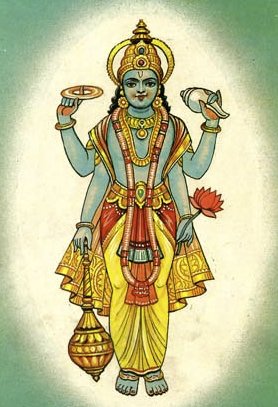
Vaishnava (वैष्णव, vaiṣṇava) or vaishnavism (vaiṣṇavism) represents a tradition of Hinduism worshipping Vishnu as the supreme Lord. Similar to the Shaktism and Shaivism traditions, Vaishnavism also developed as an individual movement, famous for its exposition of the dashavatara (‘ten avatars of Vishnu’).
Kavya (poetry)
1) Śatānīka (शतानीक) is the name of the King from the Pāṇḍava family, who was the son of Janamejaya, and the grandson of King Parīkṣit, who was the great-grandson of Abhimanyu, according to the Kathāsaritsāgara, chapter 9. The name of his wife was Viṣṇumatī, and they had a son named Sahasrānīka. The favorite dwelling place of King Śatānīka was Kauśāmbī, a great city in the land Vatsa.
2) Śatānīka (शतानीक) was a soldier in Sunītha and Sūryaprabha’s and a lord of a host of great warriors (mahāratha), according to the Kathāsaritsāgara, chapter 47. Accordingly, as the Asura Maya explained the arrangement of warriors in Sunītha’s army: “... this Śatānīka is lord of a host of great warriors”.
The story of Śatānīka was narrated by the Vidyādhara king Vajraprabha to prince Naravāhanadatta in order to relate how “Sūryaprabha, being a man, obtain of old time the sovereignty over the Vidyādharas”.
The Kathāsaritsāgara (‘ocean of streams of story’), mentioning Śatānīka, is a famous Sanskrit epic story revolving around prince Naravāhanadatta and his quest to become the emperor of the vidyādharas (celestial beings). The work is said to have been an adaptation of Guṇāḍhya’s Bṛhatkathā consisting of 100,000 verses, which in turn is part of a larger work containing 700,000 verses.
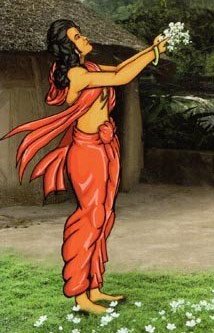
Kavya (काव्य, kavya) refers to Sanskrit poetry, a popular ancient Indian tradition of literature. There have been many Sanskrit poets over the ages, hailing from ancient India and beyond. This topic includes mahakavya, or ‘epic poetry’ and natya, or ‘dramatic poetry’.
General definition (in Hinduism)
Satanika (सतनिक): Virata's son whose bead was severed by Drona.
In Jainism
General definition (in Jainism)
Śatānīka (शतानीक) is the name of an ancient king, according to the Candanabālāsajjhāya by Ajitadevasūri (dealing with the lives of Jain female heroes), which is included in the collection of manuscripts at the ‘Vincenzo Joppi’ library, collected by Luigi Pio Tessitori during his visit to Rajasthan between 1914 and 1919.—Accordingly, “After king Śatānīka’s attack on king Dadhivāhana of Kosambī, the latter’s daughter was in a tragic situation and lived almost as a slave (dāsī) with her feet in chains but she observed Jain ethics. When ‘the lord of the three worlds arrived’ she was thrilled. the gift was praised by the various marvels typical of such events. She became the head nun. among her disciples was Mṛgāvatī”.

Jainism is an Indian religion of Dharma whose doctrine revolves around harmlessness (ahimsa) towards every living being. The two major branches (Digambara and Svetambara) of Jainism stimulate self-control (or, shramana, ‘self-reliance’) and spiritual development through a path of peace for the soul to progess to the ultimate goal.
Languages of India and abroad
Sanskrit dictionary
Śatānīka (शतानीक).—
1) an old man.
2) an army officer possessing a hundred footmen; (śatānāṃ tu śatānīkaḥ Śukra.2.14. -abdam a century. -aram, -āram the thunderbolt of Indra. -arus n., -aruṣī a leprous disease of the skin. -avaraḥ a fine of a hundred.
Derivable forms: śatānīkaḥ (शतानीकः).
Śatānīka is a Sanskrit compound consisting of the terms śata and anīka (अनीक).
Śatānīka (शतानीक).—m.
(-kaḥ) 1. An old man. 2. The name of a sovereign, the son and successor of Janamejaya. 3. The name of a saint, the pupil of Vyasa. E. śata a hundred, āṅ before nī to obtain, kap aff.
Śatānīka (शतानीक).—[adjective] having a hundred fronts or points.
1) Śatānīka (शतानीक):—[from śata] mf(ā)n. having a h° forms of array, [Ṛg-veda]
2) [v.s. ...] containing or possessing a h° hosts, [Monier-Williams’ Sanskrit-English Dictionary]
3) [v.s. ...] m. an old man, [cf. Lexicographers, esp. such as amarasiṃha, halāyudha, hemacandra, etc.]
4) [v.s. ...] a father-in-law, [cf. Lexicographers, esp. such as amarasiṃha, halāyudha, hemacandra, etc.]
5) [v.s. ...] Name of various men, [Atharva-veda; Vājasaneyi-saṃhitā; Brāhmaṇa] etc.
6) [v.s. ...] of an Asura, [Kathāsaritsāgara]
Śatānīka (शतानीक):—[śatā+nīka] (kaḥ) 1. m. An old man; name of a king and of a sage.
Śatānīka (शतानीक):—(1. śata + a)
1) adj. hundert Fronten —, hundert Spitzen darbietend [Vālakhilya 1, 2.] he.ayaḥ [2, 2.] —
2) m. a) ein alter Mann [Trikāṇḍaśeṣa 2, 6, 9.] [Hemacandra’s Anekārthasaṃgraha 4, 37.] [Medinīkoṣa k. 216] (vṛnde fehlerhaft für vṛddhe). — b) Nomen proprium verschiedener Männer [Hemacandra’s Anekārthasaṃgraha] [Medinīkoṣa] (maṇi fehlerhaft für muni). [Vājasaneyisaṃhitā 34, 52] [?= Atharvavedasaṃhitā 1, 35, 1.] Sāttrājita [Aitareyabrāhmaṇa 8, 21.] [The Śatapathabrāhmaṇa 13, 5, 4, 19.] ein Sohn Janamejayas [Weber’s Verzeichniss 13, 11.] [Mahābhārata 1, 3838.] [Kathāsaritsāgara 9, 6. 18, 64. 30, 42.] [Viṣṇupurāṇa 461.] [Bhāgavatapurāṇa 9, 22, 37.] [Oxforder Handschriften 17], b, [No. 63.] [Lebensbeschreibung Śākyamuni’s 234 (4).] Nakula's [Mahābhārata 1, 2451. 2763. 3827. 8039. 8044. 7, 625. 8, 3813.] [Viṣṇupurāṇa 459.] [Bhāgavatapurāṇa 9, 22, 28.] Sudāsa’s [41. 42.] Vasudāna’s [Viṣṇupurāṇa 462.] Vasudāman’s [Oxforder Handschriften 40], b, 20. ein Bruder Virāṭa’s [Mahābhārata 4, 1011.] ein Sohn des 10ten Manu [Harivaṃśa 475.] [Mārkāṇḍeyapurāṇa 94, 15.] Nomen proprium eines Asura [Kathāsaritsāgara 47, 23. 48, 102.]
Sanskrit, also spelled संस्कृतम् (saṃskṛtam), is an ancient language of India commonly seen as the grandmother of the Indo-European language family (even English!). Closely allied with Prakrit and Pali, Sanskrit is more exhaustive in both grammar and terms and has the most extensive collection of literature in the world, greatly surpassing its sister-languages Greek and Latin.
See also (Relevant definitions)
Partial matches (+0): Anika, Shata.
Full-text (+47): Madiraksha, Sahasranika, Nakuli, Udayana, Durdamana, Ashvamedhadatta, Vishnumati, Satrajita, Yogandhara, Nakula, Rupati, Yayaticarita, Dadhivahana, Vahinara, Dushkarna, Catanikan, Bhutakarma, Bahinara, Adhisomakrishna, Jahnuvamsha.
Relevant text
Search found 45 books and stories containing Shatanika, Śata-anīka, Sata-anika, Satanika, Śatānīka, Satāṇika, Shata-anika; (plurals include: Shatanikas, anīkas, anikas, Satanikas, Śatānīkas, Satāṇikas). You can also click to the full overview containing English textual excerpts. Below are direct links for the most relevant articles:
Kathasaritsagara [Sanskrit/English] (by C. H. Tawney)
Shiva Purana [sanskrit/english]
Verse 5.34.49 < [Chapter 34]
Garuda Purana (by Manmatha Nath Dutt)
Chapter CXLI - descriptions of kings who came after Janamejaya < [Brihaspati (Nitisara) Samhita]
Chapter CXL - Description of the race of puru < [Brihaspati (Nitisara) Samhita]
Chapter LXXXVII - Enumeration of the names of fourteen Manus and of the Devas and Saptarsis < [Agastya Samhita]
Mahabharata (English) (by Kisari Mohan Ganguli)
Section LXXX < [Bhagavat-Gita Parva]
Section XXXI < [Goharana Parva]
Section CLXVII < [Ghatotkacha-badha Parva]
Trishashti Shalaka Purusha Caritra (by Helen M. Johnson)
Part 4: Mṛgāvatī and Pradyota < [Chapter VIII - Initiation of ṛṣabhadatta and devānandā]
Part 7: The story of Candanā < [Chapter IV - Mahāvīra’s second period of more than six years]
Part 3: Story of the Yakṣa and painter < [Chapter VIII - Initiation of ṛṣabhadatta and devānandā]
List of Mahabharata people and places (by Laxman Burdak)