Mrigi, Mṛgi: 18 definitions
Introduction:
Mrigi means something in Buddhism, Pali, Hinduism, Sanskrit, Marathi, Hindi, biology. If you want to know the exact meaning, history, etymology or English translation of this term then check out the descriptions on this page. Add your comment or reference to a book if you want to contribute to this summary article.
The Sanskrit term Mṛgi can be transliterated into English as Mrgi or Mrigi, using the IAST transliteration scheme (?).
Alternative spellings of this word include Mragi.
Images (photo gallery)
In Hinduism
Purana and Itihasa (epic history)
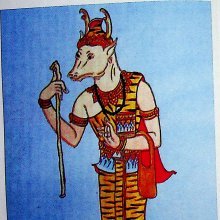
Mṛgī (मृगी).—The mother of all types of deer. (See under Mṛgas).
Mṛgi (मृगि).—A daughter of Krodhavaśa and wife of Pulaha; deer and other animals like hare were born of her.*
- * Brahmāṇḍa-purāṇa III. 7. 172-73; Vāyu-purāṇa 69. 205, 206.
Mṛgī (मृगी) refers to the name of a Lady mentioned in the Mahābhārata (cf. I.60.58). Note: The Mahābhārata (mentioning Mṛgī) is a Sanskrit epic poem consisting of 100,000 ślokas (metrical verses) and is over 2000 years old.

The Purana (पुराण, purāṇas) refers to Sanskrit literature preserving ancient India’s vast cultural history, including historical legends, religious ceremonies, various arts and sciences. The eighteen mahapuranas total over 400,000 shlokas (metrical couplets) and date to at least several centuries BCE.
Chandas (prosody, study of Sanskrit metres)
Mṛgī (मृगी) is the alternative name of a Sanskrit metre (chandas) mentioned by Hemacandra (1088-1173 C.E.) in his auto-commentary on the second chapter of the Chandonuśāsana. Mṛgī corresponds to Taḍit (according to Bharata). Hemacandra gives these alternative names for the metres by other authorities (like Bharata), even though the number of gaṇas or letters do not differ.
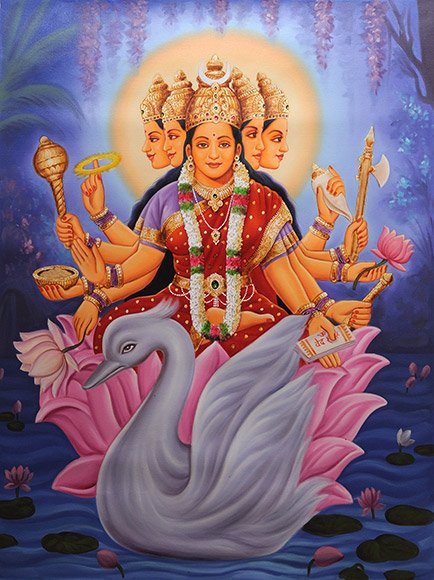
Chandas (छन्दस्) refers to Sanskrit prosody and represents one of the six Vedangas (auxiliary disciplines belonging to the study of the Vedas). The science of prosody (chandas-shastra) focusses on the study of the poetic meters such as the commonly known twenty-six metres mentioned by Pingalas.
Pancaratra (worship of Nārāyaṇa)
Mṛgī (मृगी) or Mṛgīmudrā refers to one of the 81 Mudrās (hand-gestures) described in chapter 2 of the Ṛṣirātra section of the Sanatkumārasaṃhitā: an encyclopedic Sanskrit text written in over 3500 verses dealing with a variety of topics such as yoga, temple-building, consecration ceremonies, initiation and dhanurveda (martial arts).—[Cf. the chapter mudrā-lakṣaṇa].
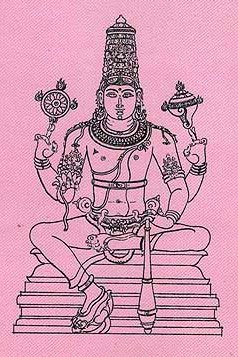
Pancaratra (पाञ्चरात्र, pāñcarātra) represents a tradition of Hinduism where Narayana is revered and worshipped. Closeley related to Vaishnavism, the Pancaratra literature includes various Agamas and tantras incorporating many Vaishnava philosophies.
Kama-shastra (the science of Love-making)
Mṛgī (मृगी) refers to a “female deer” (one of the three classes of a Nāyikā), according to chapter 2.1 of Vātsyāyana’s Kāmasūtra: a Sanskrit text from the 2nd century dealing with eroticism, sexuality and emotional fulfillment in life belonging to Kāmaśāstra (the ancient Indian science of love-making).—Accordingly, “Man (nāyaka) is divided into three classes, viz. the hare man, the bull man, and the horse man, according to the size of his liṅga. Woman (nāyikā) also, according to the depth of her yoni, is either a female deer (mṛgī), a mare, or a female elephant. There are thus three equal unions between persons of corresponding dimensions, and there are six unequal unions, when the dimensions do not correspond, or nine in all”.
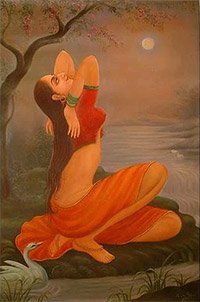
Kamashastra (कामशास्त्र, kāmaśāstra) deals with ancient Indian science of love-making, passion, emotions and other related topics dealing with the pleasures of the senses.
In Buddhism
Tibetan Buddhism (Vajrayana or tantric Buddhism)
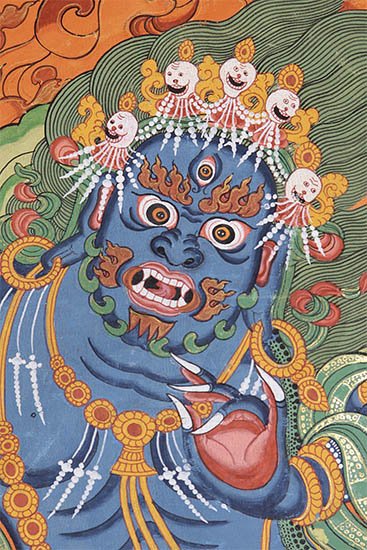
Mṛgī (मृगी) is the name of a Ḍākinī who, together with the Vīra (hero) named Mṛga forms one of the 36 pairs situated in the Medinīcakra, according to the 10th century Ḍākārṇava chapter 15. Accordingly, the medinīcakra refers to one of the three divisions of the dharma-puṭa (‘dharma layer’), situated in the Herukamaṇḍala. The 36 pairs of Ḍākinīs [viz., Mṛgī] and Vīras are yellow in color; the shapes of their faces are in accordance with their names; they have four arms; they hold a skull bowl, a skull staff, a small drum, and a knife.
Tibetan Buddhism includes schools such as Nyingma, Kadampa, Kagyu and Gelug. Their primary canon of literature is divided in two broad categories: The Kangyur, which consists of Buddha’s words, and the Tengyur, which includes commentaries from various sources. Esotericism and tantra techniques (vajrayāna) are collected indepently.
Biology (plants and animals)
Mrigi in Tanzania is the name of a plant defined with Polysphaeria parvifolia in various botanical sources. This page contains potential references in Ayurveda, modern medicine, and other folk traditions or local practices It has the synonym Polysphaeria parvifolia var. glabra Hiern.
Example references for further research on medicinal uses or toxicity (see latin names for full list):
· Prodromus Systematis Naturalis Regni Vegetabilis (1830)
· Genera Plantarum (1873)
· Niger flora, or ‘An enumeration of the plants of western tropical Africa’ (1849)
· Flora of Tropical Africa (1877)
· Kew Bulletin (1980)
· Die Pflanzenwelt Ost-Afrikas (1895)
If you are looking for specific details regarding Mrigi, for example diet and recipes, extract dosage, pregnancy safety, chemical composition, health benefits, side effects, have a look at these references.
This sections includes definitions from the five kingdoms of living things: Animals, Plants, Fungi, Protists and Monera. It will include both the official binomial nomenclature (scientific names usually in Latin) as well as regional spellings and variants.
Languages of India and abroad
Marathi-English dictionary
mṛgī (मृगी).—f S A doe.
mṛgī (मृगी).—f A doe.
Marathi is an Indo-European language having over 70 million native speakers people in (predominantly) Maharashtra India. Marathi, like many other Indo-Aryan languages, evolved from early forms of Prakrit, which itself is a subset of Sanskrit, one of the most ancient languages of the world.
Sanskrit dictionary
Mṛgī (मृगी).—
1) A female deer, doe.
2) Epilepsy.
3) Name of a particular class of women.
Mṛgī (मृगी).—name of a Śākyan woman, mother of Ānanda, to whom is attributed the stanza attributed in Pali (Jātaka (Pali) i.60.30—33) to Kisāgotamī: Mahāvastu ii.157.9, 16; iii.176.16.
1) Mṛgī (मृगी):—[from mṛga > mṛg] a f. a female deer or antelope, doe, [Harivaṃśa; Rāmāyaṇa] etc.
2) [v.s. ...] Name of the mythical progenitress of antelopes, [Mahābhārata; Rāmāyaṇa; Purāṇa]
3) [v.s. ...] a [particular] class of women, [cf. Lexicographers, esp. such as amarasiṃha, halāyudha, hemacandra, etc.]
4) [v.s. ...] a kind of metre, [Colebrooke]
5) [v.s. ...] a [particular] gait of a dancing girl, [Saṃgīta-sārasaṃgraha]
6) [v.s. ...] demoniacal possession, epilepsy, [cf. Lexicographers, esp. such as amarasiṃha, halāyudha, hemacandra, etc.]
7) [from mṛg] b f. (of mṛga above) a female deer, doe.
Mṛgī (मृगी):—s. u. mṛga .
Mṛgī (मृगी) in the Sanskrit language is related to the Prakrit words: Maī, Migī.
Sanskrit, also spelled संस्कृतम् (saṃskṛtam), is an ancient language of India commonly seen as the grandmother of the Indo-European language family (even English!). Closely allied with Prakrit and Pali, Sanskrit is more exhaustive in both grammar and terms and has the most extensive collection of literature in the world, greatly surpassing its sister-languages Greek and Latin.
Hindi dictionary
Mṛgī (मृगी) [Also spelled mragi]:—(nf) a hind.
...
Kannada-English dictionary
Mṛgi (ಮೃಗಿ):—[noun] a female antelope.
Kannada is a Dravidian language (as opposed to the Indo-European language family) mainly spoken in the southwestern region of India.
Nepali dictionary
Mṛgī (मृगी):—n. 1. female deer; doe; 2. epilepsy; epileptic fit; 3. golden gram;
Nepali is the primary language of the Nepalese people counting almost 20 million native speakers. The country of Nepal is situated in the Himalaya mountain range to the north of India.
See also (Relevant definitions)
Starts with (+0): Mrigicarma, Mrigicarma, Mrigidrish, Mrigika, Mrigikshira, Mrigikunda, Mrigila, Mrigilocana, Mrigimudra, Mrigini, Mrigipati, Mrigiroga, Mrigita, Mrigitva.
Full-text (+25): Mrigidrish, Mrigipati, Mrigilocana, Mrigitva, Mrigikunda, Mrigikshira, Kasturikamrigi, Margara, Mrigicarma, Mrigimudra, Migi, Mrigiroga, Mrigakshira, Mriga, Shuddhamrigi, Krishnamriga, Mragi, Millati, Milleti, Mrigas.
Relevant text
Search found 56 books and stories containing Mrigi, Mṛgi, Mrgi, Mṛgī; (plurals include: Mrigis, Mṛgis, Mrgis, Mṛgīs). You can also click to the full overview containing English textual excerpts. Below are direct links for the most relevant articles:
Shiva Purana [sanskrit/english]
Kathasaritsagara [Sanskrit/English] (by C. H. Tawney)
Discussion on the Account of Prajapati and his Daughter < [Purana, Volume 6, Part 1 (1964)]
On the Date of Visnu Purana’s account of Bharata and Bhuvanakosa < [Purana, Volume 8, Part 2 (1966)]
List of Mahabharata people and places (by Laxman Burdak)
Dictionaries of Indian languages (Kosha)
Page 263 < [Hindi-English-Nepali (1 volume)]
Page 649 < [Hindi-Bengali-English Volume 2]
Page 649 < [Hindi-Assamese-English Volume 2]
Animal Kingdom (Tiryak) in Epics (by Saranya P.S)