Sataka, Sātaka, Sāṭaka, Shataka, Śāṭaka: 19 definitions
Introduction:
Sataka means something in Hinduism, Sanskrit, Jainism, Prakrit, Buddhism, Pali, Marathi, Hindi. If you want to know the exact meaning, history, etymology or English translation of this term then check out the descriptions on this page. Add your comment or reference to a book if you want to contribute to this summary article.
The Sanskrit term Śāṭaka can be transliterated into English as Sataka or Shataka, using the IAST transliteration scheme (?).
Alternative spellings of this word include Shatak.
Images (photo gallery)
In Hinduism
Purana and Itihasa (epic history)
1) Śāṭaka (शाटक) refers to a “silk saree” (a typical Indian women’s garment), which is mentioned as an item of wealth in order to demonstrate the wicked nature of gambling (durodara), according to the Śivapurāṇa 2.1.17.—Accordingly, “[...] O mistress! where is that gambling rogue of a son, Guṇanidhi? Or let it be. Why should I ask for him? [...] Where is your silk saree (śāṭaka) red like madder (māñjiṣṭha) which I had presented to you and which used to hang down here in the house always? Tell me the truth. Do not be afraid. [...]”.
2) Śataka (शतक) [=śata?] refers to a “hundred (sons)”, according to the Śivapurāṇa 2.3.34 (“The Story of Anaraṇya”).—Accordingly, as Vasiṣṭha said to Himavat (Himācala): “The king Anaraṇya hailed from the race of the fourteenth Manu Indrasāvarṇi. O Himavat, hundred sons were born to him and a beautiful daughter Padmā who was equal to Lakṣmī. O excellent mountain, he was more fond of his daughter than of his hundred sons (putra-śataka). He had five queens who were endowed with great qualities and fortunes and were loved by him over and above his life. [...]”.

The Purana (पुराण, purāṇas) refers to Sanskrit literature preserving ancient India’s vast cultural history, including historical legends, religious ceremonies, various arts and sciences. The eighteen mahapuranas total over 400,000 shlokas (metrical couplets) and date to at least several centuries BCE.
Vaishnavism (Vaishava dharma)
Ṣaṭaka (षटक) refers to “literally, ‘a group of six’”. (cf. Glossary page from Śrīmad-Bhagavad-Gītā).
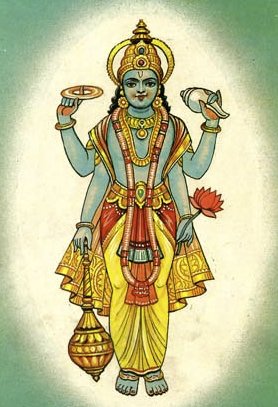
Vaishnava (वैष्णव, vaiṣṇava) or vaishnavism (vaiṣṇavism) represents a tradition of Hinduism worshipping Vishnu as the supreme Lord. Similar to the Shaktism and Shaivism traditions, Vaishnavism also developed as an individual movement, famous for its exposition of the dashavatara (‘ten avatars of Vishnu’).
In Jainism
General definition (in Jainism)
Śataka (शतक) is the name of a Karmagrantha work by Devendrasūri dealing with the Karma section of Jain Canonical literature.—The Śataka (with Gujarati Bālāvabodha by Jayalabdhi Gaṇinī) is included in the collection of manuscripts at the ‘Vincenzo Joppi’ library, collected by Luigi Pio Tessitori during his visit to Rajasthan between 1914 and 1919.—Because of the poor condition of the manuscript, several parts of text at the edges are missing. The commentary is not interlinear. It follows each prakrit verse in turn, often starting with gā°. The last verse of the work has been commented upon, but the verse itself could not be traced in the manuscript

Jainism is an Indian religion of Dharma whose doctrine revolves around harmlessness (ahimsa) towards every living being. The two major branches (Digambara and Svetambara) of Jainism stimulate self-control (or, shramana, ‘self-reliance’) and spiritual development through a path of peace for the soul to progess to the ultimate goal.
Languages of India and abroad
Pali-English dictionary
sataka : (nt.) group of a hundred. || sāṭaka (m.), a clothe; a cloak.
Sātaka, name of a kind of bird J. VI, 539 (koṭṭhapokkhara-°, cp. 540); SnA 359 (id.). (Page 703)
— or —
Sataka, (nt.) (cp. BSk. śataka) a hundred, collection of 100 J. I, 74. (Page 672)
— or —
Sāṭaka, (sāṭa+ka) an outer garment, cloak; cloth ThA. 246; J. I, 89, 138, 195, 373, 426; Vism. 54 (sāṇa°), 275 (alla°); DhA. I, 393 (thūla°). Cp. antara°, alaṃ°.

Pali is the language of the Tipiṭaka, which is the sacred canon of Theravāda Buddhism and contains much of the Buddha’s speech. Closeley related to Sanskrit, both languages are used interchangeably between religions.
Marathi-English dictionary
śataka (शतक).—n (S) An aggregate of a hundred, a century or a cento.
--- OR ---
ṣaṭaka (षटक).—n S An aggregate of six.
--- OR ---
saṭakā (सटका).—m (saṭa!) Properly jhaṭakā q v. A jerk or fling out (of hand or foot or a cloth). v māra, dē, basa. 2 A smart slash, gash, cut, or stroke (with an edged instrument). v māra, dē, basa.
--- OR ---
satakā (सतका).—m A thing offered or devoted for. See sadakā.
saṭakā (सटका).—m A smart slash, cut, stroke. v māra, dē, basa.
Marathi is an Indo-European language having over 70 million native speakers people in (predominantly) Maharashtra India. Marathi, like many other Indo-Aryan languages, evolved from early forms of Prakrit, which itself is a subset of Sanskrit, one of the most ancient languages of the world.
Sanskrit dictionary
Śataka (शतक).—a.
1) A hundred.
2) Containing a hundred.
-kam 1 A century.
2) A collection of one hundred stanzas; as in नीति°, वैराग्य°, शृङ्गार° (nīti°, vairāgya°, śṛṅgāra°) 'a collection of one hundred stanzas on Nīti' &c.
--- OR ---
Śāṭaka (शाटक).—Cloth, garment, petticoat; रक्तोऽभिजायते भोग्यो नारीणां शाटको यथा (rakto'bhijāyate bhogyo nārīṇāṃ śāṭako yathā) Pañcatantra (Bombay) 1.144.
Derivable forms: śāṭakaḥ (शाटकः), śāṭakam (शाटकम्).
Śataka (शतक).—mfn.
(-kaḥ-kā-kaṃ) A hundred. m.
(-kaḥ) A century, a cento, a collection of one hundred stanzas, &c. E. śata a hundred, lan aff.
--- OR ---
Śāṭaka (शाटक).—mn.
(-kaḥ-kaṃ) A pettieoat. E. śaṭ to go, (round the limbs,) ṇvul aff.
Śataka (शतक).—[śata + ka], I. adj. Hundred. Ii. (m.?), n. A century, a collection of a hundred stanzas, [Bhartṛhari, (ed. Bohlen.)] title.
Śataka (शतक).—[feminine] śatikā consisting of hundred or the hundredth; [neuter] a hundred.
1) Śataka (शतक) as mentioned in Aufrecht’s Catalogus Catalogorum:—kāvya, by Nāgarāja q. v.
2) Śataka (शतक):—(a vague title) by Paṇḍitarāja i. e. Jagannātha. B. 2, 92. 102.
3) Śataka (शतक):—by Bhartṛhari. See Bhartṛhariśataka.
4) Śataka (शतक):—[dharma] by Vaidyanātha Dīkṣita. Oppert. 2257.
—[commentary] 814.
1) Śataka (शतक):—[from śata] mf(ikā)n. consisting of a hundred, comprising or amounting to a h°, [Harivaṃśa; Mārkaṇḍeya-purāṇa]
2) [v.s. ...] the hundredth, [Rāmāyaṇa]
3) [v.s. ...] m. Name of Viṣṇu, [cf. Lexicographers, esp. such as amarasiṃha, halāyudha, hemacandra, etc.]
4) [from śata] n. a hundred, a century (construed like śata), [Mahābhārata etc.] ([especially] in titles of works ‘a cento’ or ‘a collection of 100 stanzas’; cf. amaru-, nīti-ś etc.)
5) Śāṭaka (शाटक):—[from śāṭa] m. n. = śāṭa, [Kāvya literature; Kathāsaritsāgara] etc.
6) Śātaka (शातक):—m. [plural] Name of a people, [Varāha-mihira’s Bṛhat-saṃhitā] ([varia lectio])
1) Śataka (शतक):—[(kaḥ-kā-kaṃ) a. Idem. m.] A century; a cento, collection of 100 stanzas.
2) Śāṭaka (शाटक):—[(kaḥ-kaṃ)] 1. m. n. A petticoat.
Śataka (शतक):—(von śata)
1) adj. (f. śatikā) a) aus hundert bestehend, hundert umfassend: saṃgha [Pāṇini’s acht Bücher 5, 1, 21, Scholiast] nidāna [Vārttika von Kātyāyana., Scholiast] saṃdhyā [Harivaṃśa 514.] [Mārkāṇḍeyapurāṇa 46, 30.] — b) der hundertste: kalā [Rāmāyaṇa 7, 36, 13.] —
2) m. Beiname Viṣṇu’s [Hemacandra’s Abhidhānacintāmaṇi 65.] —
3) f. śatikā nach einer kleineren Zahl ein Betrag von hundert [Pāṇini’s acht Bücher 5, 4, 1. 2.] —
4) n. ein Hundert: puṃsām [PAÑCAR. 1, 1, 25. fg. 2, 25.] śatakaiḥ skandhaiḥ [7, 13.] puṣpodyānaiśca śatakaiḥ [17.] ratnakumbhaṃ (kumbha?) śatakam [2, 4, 30.] aṣṭa 108: nāmāṣṭaśatakam [Mahābhārata 3, 158.] — Vgl. amaru, dvi, nīti, bhāva, mayūra, vairāgya, vyāsa, śṛṅgāra u. s. w.
--- OR ---
Śāṭaka (शाटक):—m. n. [Amarakoṣa 3, 6, 4, 33.] dass. [Trikāṇḍaśeṣa 2, 6, 33.] [Hemacandra’s Abhidhānacintāmaṇi 675, Scholiast] [Kāśikīvṛtti] zu [Pāṇini’s acht Bücher 1, 1, 36.] rakto hi jāyate bhogyo nārīṇāṃ śāṭako yathā [Spr. 2581.] [Kathāsaritsāgara 53, 38. 43. 54, 105. 119.] śirassvābaddha [13, 187] (vgl. paṭṭaka [190]). śiraḥ [Rājataraṅgiṇī 6, 100.] yantraṇa [Suśruta 1, 358, 15. 17. 359, 2.] yantra [2, 47, 2. 55, 12.] paṭṭa [Medinīkoṣa ṇ. 102.] śāṭikā f. dass. [Bharata] zu [Amarakoṣa] nach [Śabdakalpadruma] Nach [Bharata im Śabdakalpadruma] ist śāṭaka m. n. auch = nāṭakabheda .
--- OR ---
Śātaka (शातक):—m. pl. Nomen proprium eines Volkes [Mārkāṇḍeyapurāṇa 58, 46.]
Śataka (शतक) in the Sanskrit language is related to the Prakrit words: Sayaya, Sāḍaa, Sāḍaga.
Sanskrit, also spelled संस्कृतम् (saṃskṛtam), is an ancient language of India commonly seen as the grandmother of the Indo-European language family (even English!). Closely allied with Prakrit and Pali, Sanskrit is more exhaustive in both grammar and terms and has the most extensive collection of literature in the world, greatly surpassing its sister-languages Greek and Latin.
Hindi dictionary
1) Śataka (शतक) [Also spelled shatak]:—(nm) a century, one hundred; —[banānā] to score a century.
2) Saṭāka (सटाक):—(nm) the cracking of a whip or thin stick; —[se] with a cracking noise; instantly.
...
Kannada-English dictionary
Śataka (ಶತಕ):—
1) [noun] = ಶತ [shata]2.
2) [noun] a period of one hundred years; a century.
3) [noun] a poetical composition having one hundred (or one hundred and eight) verses.
4) [noun] in cricket, one hundred runs scored by a batsman.
5) [noun] any achievement similar to it.
--- OR ---
Śāṭaka (ಶಾಟಕ):—[noun] = ಶಾಟ [shata]1.
--- OR ---
Saṭaka (ಸಟಕ):—[noun] = ಸಟ್ಟುಗ [sattuga]1.
Kannada is a Dravidian language (as opposed to the Indo-European language family) mainly spoken in the southwestern region of India.
Nepali dictionary
1) Śataka (शतक):—adj. hundred; 100;
2) Saṭaka (सटक):—n. → सडक [saḍaka]
Nepali is the primary language of the Nepalese people counting almost 20 million native speakers. The country of Nepal is situated in the Himalaya mountain range to the north of India.
See also (Relevant definitions)
Starts with (+9): Sa ta ka er ni, Sadagadi, Sataka-sitarama, Satakaku, Satakalakkhana, Satakam, Satakan, Satakana, Satakanem, Satakata, Satakavitaka, Satakayuga, Shatakanda, Shatakantaka, Shatakapalesha, Shatakara, Shatakarma, Shatakarman, Shatakarmi, Shatakarna.
Full-text (+1378): Satakam, Gorakshashataka, Nitishataka, Sthulashataka, Mahashataka, Trishataka, Pattashataka, Thulasataka, Vairagyashataka, Patashataka, Mayurashataka, Modhashataka, Karmashataka, Shivashataka, Antarasataka, Uttarisataka, Bhallatashataka, Jagadishashataka, Candikashataka, Suryashataka.
Relevant text
Search found 116 books and stories containing Sataka, Sātaka, Sāṭaka, Śataka, Ṣaṭaka, Saṭakā, Satakā, Śāṭaka, Śātaka, Saṭāka, Śaṭaka, Saṭaka, Satakas, Shataka, Shatakas; (plurals include: Satakas, Sātakas, Sāṭakas, Śatakas, Ṣaṭakas, Saṭakās, Satakās, Śāṭakas, Śātakas, Saṭākas, Śaṭakas, Saṭakas, Satakases, Shatakas, Shatakases). You can also click to the full overview containing English textual excerpts. Below are direct links for the most relevant articles:
Shiva Purana [sanskrit/english]
Kathasaritsagara [Sanskrit/English] (by C. H. Tawney)
A Descriptive Catalogue of the Sanskrit Manuscripts, Madras (by M. Seshagiri Sastri)
Sumati Satakamu and the Essays of < [October – December, 1997]
‘Kavisamraat’ Viswanatha Satyanarayana < [April - June 1977]
Dr. Viswanatha Satyanarayana's Literary Eminence < [Oct-Dec 1971]
World Journal of Pharmaceutical Research
Arka prakasha – a critical review < [2021: Volume 10, November issue 13]
Review on arkaprakash < [2021: Volume 10, November issue 13]
A review of arka kalpana with the preparation of pathyadi kwath arka < [2021: Volume 10, December issue 14]
Samyuta Nikaya (Linked Discourses)
Discourse 3.11: Sattajaṭila-sutta < [3.2. Dutiya-vagga: Chapter Two]