Sattamah, Sattamaḥ: 1 definition
Introduction:
Sattamah means something in Hinduism, Sanskrit. If you want to know the exact meaning, history, etymology or English translation of this term then check out the descriptions on this page. Add your comment or reference to a book if you want to contribute to this summary article.
In Hinduism
Vaishnavism (Vaishava dharma)
Sattamaḥ (सत्तमः) refers to “best of godly men”. (cf. Glossary page from Śrīmad-Bhagavad-Gītā).
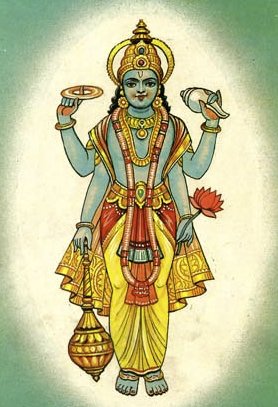
Vaishnava (वैष्णव, vaiṣṇava) or vaishnavism (vaiṣṇavism) represents a tradition of Hinduism worshipping Vishnu as the supreme Lord. Similar to the Shaktism and Shaivism traditions, Vaishnavism also developed as an individual movement, famous for its exposition of the dashavatara (‘ten avatars of Vishnu’).
See also (Relevant definitions)
Relevant text
Search found 17 books and stories containing Sattamah, Sattamaḥ; (plurals include: Sattamahs, Sattamaḥs). You can also click to the full overview containing English textual excerpts. Below are direct links for the most relevant articles:
Shiva Purana [sanskrit/english]
Garga Samhita (English) (by Danavir Goswami)
Verse 5.12.4 < [Chapter 12 - Pancajana’s Previous Birth]
Verse 2.2.42 < [Chapter 2 - Description of Girirāja Govardhana’s Birth]
Verse 1.15.40 < [Chapter 15 - Revelation of the Universal Form to Nanda’s Wife]
Bhagavad-gita (with Vaishnava commentaries) (by Narayana Gosvami)
Verse 18.18 < [Chapter 18 - Mokṣa-yoga (the Yoga of Liberation)]
Verse 18.66 < [Chapter 18 - Mokṣa-yoga (the Yoga of Liberation)]
Verse 3.26 < [Chapter 3 - Karma-yoga (Yoga through the Path of Action)]
A Descriptive Catalogue of the Sanskrit Manuscripts, Madras (by M. Seshagiri Sastri)
Notices of Sanskrit Manuscripts (by Rajendralala Mitra)