Gomukhasana, Gomukha-asana, Gomukhāsana: 5 definitions
Introduction:
Gomukhasana means something in Hinduism, Sanskrit. If you want to know the exact meaning, history, etymology or English translation of this term then check out the descriptions on this page. Add your comment or reference to a book if you want to contribute to this summary article.
In Hinduism
Yoga (school of philosophy)
Gomukhāsana (गोमुखासन) is one of the eighty-four āsanas (postures) taught by Śiva, according to the Haṭharatnāvalī 3.7-20. It is said that Ādinātha (Śiva) hand-picked 84 yoga postures from 84,00,000 living beings and taught them for the purpose of introducing physical health and well-being to the human body. The compound gomukhāsana translates to gomukha (cow’s face) and āsana (posture).
The 17th-century Haṭharatnāvalī is a Sanskrit reference book dealing with these āsanas (e.g., gomukhāsana) which form a major constituent of the haṭhayoga practice. It was written by Śrīnivāsa.
Gomukhāsana (गोमुखासन) is the name of an āsana (posture), according to Haṭhayogapradīpikā I.22.—Accordingly, “Placing the right ankle on the left side and the left ankle on the right side, makes gomukhāsana, having the appearance of a cow”.
The 15th-century Haṭhayogapradīpikā by Svātmārāma is one of the oldest extant texts dealing with haṭhayoga: an ancient form of meditation founded by Matsyendranātha. The first chapter of this book describes various āsanas (e.g., gomukha-āsana)
Gomukhāsana (गोमुखासन) is one of the thirty-two āsanas (postures) taught in the second chapter of the Gheraṇḍasaṃhitā: “Placing the two feet on the ground by the side of the buttocks and keeping the body steady is Gomukhāsana, resembling the mouth of a cow”.
Gomukhāsana is one of the selected 32 postures amongs 8,400,000 total mentioned by Śiva, according to Gheraṇḍasaṃhitā 2.1-2, “In all, there are as many Āsanas as species of animals. Eighty-four lacs of them are mentioned by Śiva. Out of them, 84 are regarded as important and among these 84, again 32 are good (enough) in this world of mortal beings”.
The 17th-century Gheraṇḍasaṃhitā (mentioning gomukha-āsana) is one of the three classic texts of Haṭha-yoga: a major branch of Yoga, sharing similarities with the Yoga system taught by Patañjali, though claiming its own mythical founder known as Matsyendranātha. This gheraṇḍa-saṃhitā is an encyclopedic Sanskrit treatise describing thirty two such āsanas.
Yoga is originally considered a branch of Hindu philosophy (astika), but both ancient and modern Yoga combine the physical, mental and spiritual. Yoga teaches various physical techniques also known as āsanas (postures), used for various purposes (eg., meditation, contemplation, relaxation).
Pancaratra (worship of Nārāyaṇa)
1) Gomukhāsana (गोमुखासन) refers to one of the Mudrās mentioned in the eighteenth chapter of the Agastyasaṃhitā (agastya-suīkṣṇa-saṃvāda edition), an ancient Pāñcarātra Āgama text dealing with the worship of Rāma, Sītā, Lakṣmaṇa and Hanumān.—[Cf. the chapter pūjāsādhanalakṣaṇa].—[...] One should offer pūjā with devotion [bhakti] and orderliness [saṃkalpa]. [...] Postures [āsana] to be assumed during worship are then discussed—with descriptions of the following: [e.g., gomukhāsana]. There are many others, the text adds, any one of which can be selected for the repetition of God’s names and for other pious activities [japādi].
2) Gomukhāsana (गोमुखासन) refers to one of the eight Āsanas (“yogic postures”) discussed in chapter 1 (Yogapāda) of the Padmasaṃhitā: the most widely followed of Saṃhitā covering the entire range of concerns of Pāñcarātra doctrine and practice (i.e., the four-fold formulation of subject matter—jñāna, yoga, kriyā and caryā) consisting of roughly 9000 verses.—Description of the chapter [āsanabheda-lakṣaṇa]:—Brahmā asks to know about Yogas. Bhagavān replies that there are two kinds of Yoga—karmayoga and jñānayoga. [...] A devotee may achieve liberation by either method [...] however, in the case of karmayoga it is to be noted that the eight steps are especially defined—Āsana, the third step, requires perfection of the eight positions [e.g., gomukhāsana].
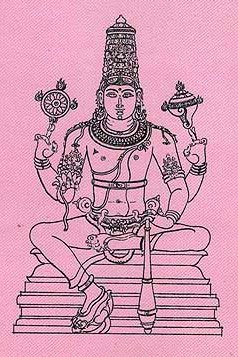
Pancaratra (पाञ्चरात्र, pāñcarātra) represents a tradition of Hinduism where Narayana is revered and worshipped. Closeley related to Vaishnavism, the Pancaratra literature includes various Agamas and tantras incorporating many Vaishnava philosophies.
Languages of India and abroad
Kannada-English dictionary
Gōmukhāsana (ಗೋಮುಖಾಸನ):—[noun] a particular
Kannada is a Dravidian language (as opposed to the Indo-European language family) mainly spoken in the southwestern region of India.
See also (Relevant definitions)
Relevant text
Search found 15 books and stories containing Gomukhasana, Gomukha-asana, Gomukhāsana, Gomukha-āsana, Gōmukhāsana, Go-mukhasana, Gō-mukhāsana; (plurals include: Gomukhasanas, asanas, Gomukhāsanas, āsanas, Gōmukhāsanas, mukhasanas, mukhāsanas). You can also click to the full overview containing English textual excerpts. Below are direct links for the most relevant articles:
World Journal of Pharmaceutical Research
"Marma Chikitsa: A Holistic Approach to Personal Remedial Therapy" < [2023: Volume 12, August issue 13]
Eval of gomukhasana and shashankasana for managing sciatica. < [2018: Volume 7, March special issue 6]
Anatomical exploration of gomukhasana and vasisthasana in rotator cuff injuries < [2017: Volume 6, April issue 4]
Varahi Tantra (English Study) (by Roberta Pamio)
Chapter 26 - Haṭhayoga (according to the Haṭhayogapradīpikā) < [Summary of the Vārāhī Tantra]
International Ayurvedic Medical Journal
Role of yoga in management of stress related hypertension: a review < [2017, Issue III March,]
Role of yoga, diet and home remedies on sinusitis < [2019, Issue 4, April]
Yoga in pregnancy – nurturing body, mind and baby! < [2024, Issue 04. April]
The concept of Yoga in Yoga Upanishads (by Philomina T.L)
3. The Classifications of Yoga < [Chapter 4 - The contents of the Yogopaniṣads]
Yoga Upanishads (study) (by Heena B. Kotak)
Part 3.3 - Posture (Asana) according to the Yoga-Upanishads < [Chapter 3 - Analytical and Critical study of 20 Yoga-Upanishads]
Part 7 - Summary of the Darshana-upanishad (Darsanopanisad) < [Chapter 2 - Brief survey of the 20 Yoga Upanishads]
Part 3 - The Hathayoga Pradipika and Yoga-upanisads < [Chapter 4 - Comparative study of the Yoga-Upanishads with the other Yogic texts]