Panjara, Pamjara, Pañjara: 33 definitions
Introduction:
Panjara means something in Buddhism, Pali, Hinduism, Sanskrit, Jainism, Prakrit, the history of ancient India, Marathi, Hindi. If you want to know the exact meaning, history, etymology or English translation of this term then check out the descriptions on this page. Add your comment or reference to a book if you want to contribute to this summary article.
Images (photo gallery)
In Hinduism
Vastushastra (architecture)
Pañjara (पञ्जर).—Type of pavillion found sculptured on the hāra (parapet of the temple);—Pañjara is a pavilion, which is apsidal on plan. Normally, the façade of the pañjaras are shown in the parapet. Pañjaras are also provided with an elevated plinth, two pillars in the front and a semi circular façade, often mounted with a kīrtimukha at the apex. In the façade of the pavilion, between the pillars, a relief sculpture is often carved. Pañjaras are placed always perpendicular to the line of the parapet, so that the façade of the pañjara faces front, (exception to this is also not absent).
Pañjara (पञ्जर) refers to “niche §§ 3.43; 4.10, 12; 5.8.”.—(For paragraphs cf. Les enseignements architecturaux de l'Ajitāgama et du Rauravāgama by Bruno Dagens)
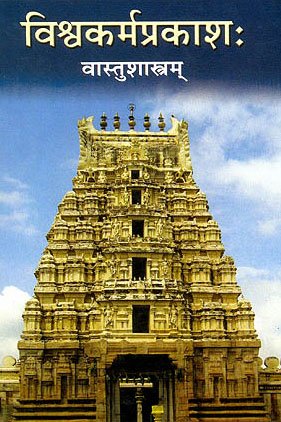
Vastushastra (वास्तुशास्त्र, vāstuśāstra) refers to the ancient Indian science (shastra) of architecture (vastu), dealing with topics such architecture, sculpture, town-building, fort building and various other constructions. Vastu also deals with the philosophy of the architectural relation with the cosmic universe.
Shilpashastra (iconography)
Pañjara (पञ्जर, “cage”) refers to a representation of a pavilion with a nāsī as its roofing element..
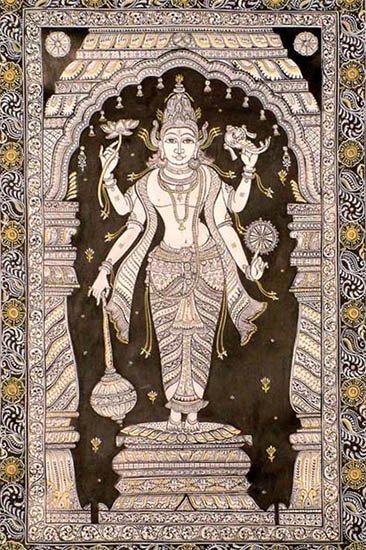
Shilpashastra (शिल्पशास्त्र, śilpaśāstra) represents the ancient Indian science (shastra) of creative arts (shilpa) such as sculpture, iconography and painting. Closely related to Vastushastra (architecture), they often share the same literature.
Shaktism
1) Pañjara (पञ्जर) refers to a “cage” (viz., prakṛtipañjara—the cage of nature), according to the second recension of the Yogakhaṇḍa of the Manthānabhairavatantra, a vast sprawling work that belongs to a corpus of Tantric texts concerned with the worship of the goddess Kubjikā.—Accordingly, as the Goddess Kumārī said to Ṛṣi Vyāsa said: “Vyāsa’s state is nothing (real). O Śaṃkara, (there is nothing) of mine (I can give) you. [...] All this is the net of Māyā. Māyā is the cage of Nature [i.e., prakṛti-pañjara]. Māyā is the intellect. Māyā is the mind. Māyā is the wish-granting gem. Māyā is (the variety and changes of phenomena and so is) like waves; also, (it is the essential nature of all phenomena and so it is) like the water (from which waves are made). Māyā is the bondage of Karma. [...]”.
2) Pañjara (पञ्जर) refers to a “cage” (e.g., pāpapañjara—the cage of sin), according to the Śrīmatottara-tantra, an expansion of the Kubjikāmatatantra: the earliest popular and most authoritative Tantra of the Kubjikā cult.—Accordingly, as Bhairava explains: “[...] By squeezing where the channels that transport the vital breath (are located), (with) the two thumbs consecrated with mantra, it [i.e., the Supreme Energy] heats up and (then) burns up the cage of sin [i.e., pāpapañjara]. The mind attains the transmental state and (the disciple) falls on the ground unconscious”.
Shakta (शाक्त, śākta) or Shaktism (śāktism) represents a tradition of Hinduism where the Goddess (Devi) is revered and worshipped. Shakta literature includes a range of scriptures, including various Agamas and Tantras, although its roots may be traced back to the Vedas.
Vedanta (school of philosophy)
Pañjara (पञ्जर) refers to a “cage‐like body”, according to the Pañcadaśī verse 7.140-141.—Accordingly: “What is there attractive in the cage‐like body [i.e., pañjara—aṅga pañjare], ever restless like a machine, of a woman who is but a doll made of flesh and consisting of nerves, bones and joints? Such are the defects of worldly pleasures, elaborately pointed out by the scriptures. No wise man, aware of these defects, will allow himself to be drowned in afflictions caused by them. [...]”.
Vedanta (वेदान्त, vedānta) refers to a school of orthodox Hindu philosophy (astika), drawing its subject-matter from the Upanishads. There are a number of sub-schools of Vedanta, however all of them expound on the basic teaching of the ultimate reality (brahman) and liberation (moksha) of the individual soul (atman).
Pancaratra (worship of Nārāyaṇa)
1) Pañjara (पञ्जर) refers to a “cage” (for keeping the icon of the Lord during special observances), as discussed in the twenty-ninth chapter of the Kapiñjalasaṃhitā: a Pāñcarātra work consisting of 1550 verses dealing with a variety of topics such as worship in a temple, choosing an Ācārya, architecture, town-planning and iconography. Description of the chapter [pūraṇa-vidhi]:—Kapiñjala says that puraṇa-observances are optional, and if done are to be done at times of eclipses, one’s own birthday and/or śravaṇa-month’s viṣnupañcamī or viṣṇudvādaśī day. [...] The icon is bathed and worshipped and then kept in a cage [pañjara] for a period of ten nāḍikās—and construction of the cage is described (7-11). The central part of the rite is worshipping the Lord with the materials already gathered, until He is “satisfied” [pūraṇa]. [...]
2) Pañjara (पञ्जर) refers to a “niche” (into which icons are installed), as discussed in chapter 1 of the Indrarātra section of the Sanatkumārasaṃhitā: an encyclopedic Sanskrit text written in over 3500 verses dealing with a variety of topics such as yoga, temple-building, consecration ceremonies, initiation and dhanurveda (martial arts).—Description of the chapter [pūraṇa-adhyāya]: Sanatkumāra promises to tell now what instructions in turn were given to him from Indra. He begins by describing how to make a pañjara-niche how to install an icon in it, and how to conduct worship to the icon there (1-122). [...]
Pancaratra (पाञ्चरात्र, pāñcarātra) represents a tradition of Hinduism where Narayana is revered and worshipped. Closeley related to Vaishnavism, the Pancaratra literature includes various Agamas and tantras incorporating many Vaishnava philosophies.
Kama-shastra (the science of Love-making)
Pañjara (पञ्जर) refers to the “cages (of pet-birds)” (placed near the couch in the householders’ residence—when settling down as a citizen), according to chapter 1.4 of Vātsyāyana’s Kāmasūtra: a Sanskrit text from the 2nd century dealing with eroticism, sexuality and emotional fulfillment in life belonging to Kāmaśāstra (the ancient Indian science of love-making).—Accordingly [while describing the bedroom of the residence of a citizen]: “[...] Not far from the couch, and on the ground, there should be a round seat, a toy cart, and a board for playing with dice; outside the outer room there should be cages (pañjara) of birds [tasya bahiḥ krīḍāśakunipañjarāṇi], and a separate place for spinning, carving and such like diversions. In the garden there should be a whirling swing and a common swing, as also a bower of creepers covered with flowers, in which a raised parterre should be made for sitting. [...]”.
Kamashastra (कामशास्त्र, kāmaśāstra) deals with ancient Indian science of love-making, passion, emotions and other related topics dealing with the pleasures of the senses.
General definition (in Hinduism)
The basic geometrical diagram is called “pañjara” (“cage”, “skeleton”) and it consists of lines, points, circles, squares, triangles and diagonals. The ritual and performative nature of sacred Hindu art has to be taken into account in order to realise that there is not a mere imitation of divine forms but by employing the divine rhythms a metrical reconsitution takes place. Drawing a pañjara becomes a ritual act which in itself is a re-enactment of the process of creation, as much on a microcosmic level as on a macrocosmic one. In this sense, pañjaras can be seen as symbolic representations of the upaniṣadic conception of world creation.
A pañjara is in a way a miniature shrine in two dimensions. Chola architects adopted the structure of the pañjara during the earlier phases of the Chola period (910 to 970) as a structure to fill the space of a vimana wall without using it to house sculptures of deities. The pañjara was already a feature of Pallava temple architecture, where it had the role of accommodating a murti on a temple wall or as abstract decoration on a roof.
The most obvious differences between a devakoshtha and a pañjara are that the first is capped by a lintel and crowned with a makaratorana, whereas the second is capped by a kapota or cornice crowned with a miniature ekatala or one-storied shrine.
The pañjaras of the later Chola period, especially the ones in a central position on a wall, distinguish themselves often by being capped with a shala or barrel shaped roof element, instead of a miniature ekatala. But the pañjaras that accommodate murtis on the Amritagateshvara temple in Melakkadambur are unusual in several ways (Figure 18). They do not have a base of their own that would have made them project out from the temple wall, but are all situated on the base of the temple. At the same time each has a kind of ‘base’ structure positioned in front, creating the appearance of a projection. Each of the walls of the ardhamandapa and the grabhagriha has a central figure that is housed in an exceptional pañjara. These pañjaras are unusual in that they each have a pair of independent octagonal pillars with lions as caryatids supporting a roof that juts out from the wall and is sculpted with a ribbed kapota (cornice).
The walls of the temple are themselves a ‘cage’ (pañjara) forming a pillared enclosure giving a body to Air. The Agni-purāṇa states that “the five Elements—Water, Light, Air, Sky, [and Earth]”—act “as the wrappings”, in the temple’s wall-frieze (jaṅghā), for the microcosm (brahmāṇṭaka) guarded within.
In Buddhism
Tibetan Buddhism (Vajrayana or tantric Buddhism)
Pañjara (पञ्जर) refers to a “canopy”, according to the Saṃvaramaṇḍala of Abhayākaragupta’s Niṣpannayogāvalī, p. 45 and n. 145; (Cf. Cakrasaṃvaratantra, Gray, David B., 2007).—Accordingly, [while describing the iconography of Cakrasaṃvara]: “In the Saṃvara Maṇḍala atop Mount Sumera within a vajra-canopy (vajrapañjara) there is a variegated lotus, on top of that a palace, in the middle of which is the Blessed Lord, standing in ālīḍhāsana, "archer's pose", on Bhairava and Kālirātrī, lying upon a solar-disc, atop the pericarp of the lotus, dark-blue with four faces, which starting in the front (and going counter-clockwise) are dark-blue, green, red and yellow, each with trinetra, "three eyes", [...]”
Pañjara (पञ्जर) refers to an “(adamantine) cage”, according to the 10th-century Ḍākārṇava-tantra: one of the last Tibetan Tantric scriptures belonging to the Buddhist Saṃvara tradition consisting of 51 chapters.—Accordingly: [while explaining the body circle (kāyacakra)]: “[...] He should push [the obstacle demons by means of the stakes] into the directions starting with the east inside the adamantine cage (vajra-pañjara). The adamantine ground should be underneath. A net of arrows is [placed] above. Moreover, there are an adamantine fence, [an adamantine] canopy, and the dharmodayā (“origin of phenomenal existences”) inside. It is triangle, [the second one is] square, and [the third one is] pentagonal [in shape]. He should also visualize a hexagonal one, [the fourth one]. He should arrange them all in sequence corresponding to the order of the four layers. [...]”.
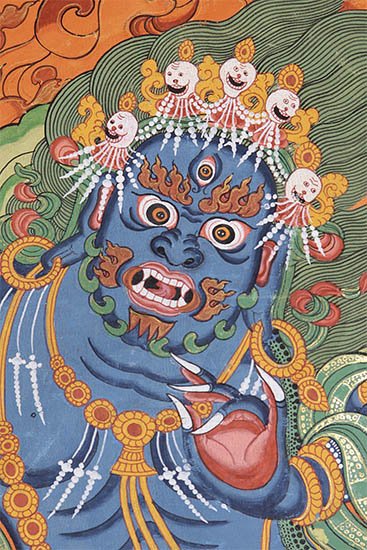
Tibetan Buddhism includes schools such as Nyingma, Kadampa, Kagyu and Gelug. Their primary canon of literature is divided in two broad categories: The Kangyur, which consists of Buddha’s words, and the Tengyur, which includes commentaries from various sources. Esotericism and tantra techniques (vajrayāna) are collected indepently.
In Jainism
General definition (in Jainism)
1) Pañjara (पञ्जर) refers to a “skeleton”, according to the 11th century Jñānārṇava, a treatise on Jain Yoga in roughly 2200 Sanskrit verses composed by Śubhacandra.—Accordingly, “Where is the body, which is filled with blood, flesh and fat, has a skeleton of slender bones (śīrṇa-kīkasa-pañjara), is bound with tendons and is of bad odour, praised? Continually pouring forth putrid smells through [its] nine orifices, the human body is ever perishable [and] dependent on other [things]”.
2) Pañjara (पञ्जर) refers to the “structure (of the body)” (of embodied souls), according to the Jñānārṇava.—Accordingly, “If this body were not covered with skin, then who would be able to protect [it] from flies, worms and crows? The structure of the body (deha-pañjara) of embodied souls is always filled with diseases, always the abode of impurity [and] always destined for death”.

Jainism is an Indian religion of Dharma whose doctrine revolves around harmlessness (ahimsa) towards every living being. The two major branches (Digambara and Svetambara) of Jainism stimulate self-control (or, shramana, ‘self-reliance’) and spiritual development through a path of peace for the soul to progess to the ultimate goal.
India history and geography
Pañjara (पञ्जर) or Pañjarapuruṣa refers to the “person who made observation from the high top of the mast”, during Sea-voyages of ancient India, according to Uddyotanasūri in his 8th-century Kuvalayamālā (a Prakrit Campū, similar to Kāvya poetry).—There is a reference again to a sea-voyage undertaken by Sāgaradatta of Campā with his starting from a big sea port of south India named Mahāsamudra-nagarī Jayaśrī with its destination to Yavanadvīpa. [...]. A special official of the ship is named as pañjara-puruṣa (106.6), the person who made observation from the high top of the mast. In the time of a storm the ropes and riggings were unfastened, the sails were rolled up, the goods on the ship were consigned to the hull, and the ship was brought to a standstill.
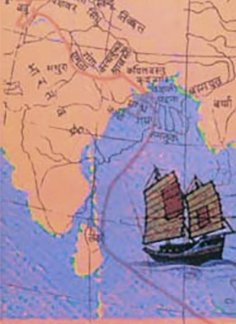
The history of India traces the identification of countries, villages, towns and other regions of India, as well as mythology, zoology, royal dynasties, rulers, tribes, local festivities and traditions and regional languages. Ancient India enjoyed religious freedom and encourages the path of Dharma, a concept common to Buddhism, Hinduism, and Jainism.
Languages of India and abroad
Pali-English dictionary
pañjara : (m.) a cage.
Pañjara, (m. & nt.) (cp. Epic Sk. pañjara, which probably belongs to Lat. pango, q. v. Walde, Lat. Wtb. s. v. ) a cage, J. I, 436; II, 141; III, 305 (sīha°); IV, 213; V, 232 (sīha), 365; VI, 385 (sīha°), 391; Miln. 23 (°antaragata gone into the c.); 27; DhA. I, 164 (nakha°), where meaning is “frame”; VbhA. 238; +sīha° meaning window. (Page 389)
pañjara (ပဉ္ဇရ) [(pu,na) (ပု၊န)]—
[paji+ara]
[ပဇိ+အရ]
[Pali to Burmese]
pañjara—
(Burmese text): (၁) အရိုးစု၊ အရိုးအပေါင်း။ (၂) ကိုယ်၊ ခန္ဓာကိုယ်။ (၃) ချိုင့်၊ လှောင်ချိုင့်၊ နှောင်အိမ်။ (၄) ထီးခရိုင်၊ ထီးချိုင့်၊ ထီးလက်များ စုဝေးရာ လှည်းပုံတောင်းသဏ္ဌာန် အဆောက်အဦ။ (၅) အသိုက်၊ ငှက်သိုက်။ (၆) လေသာပြူတင်း၊ လေသာပြူတင်းပေါက်။ ဆတ္တပဉ္ဇရ,ပဉ္ဇရသလာကာ,သလာကပဉ္ဇရ-တို့ကြည့်။ သီဟပဉ္ဇရ-ကြည့်။
(Auto-Translation): (1) Skeleton, bones. (2) Body, physique. (3) Crooked, bent, crooked house. (4) Umbrella region, umbrella bend, a collection of umbrella shapes for the construction of a shrine. (5) Nest, bird nest. (6) Freshwater fish pond, freshwater fish pond hole. Refer to Satthapunjara, Punjarathalaka, Thalakapunjara. Look at Thihapunjara.
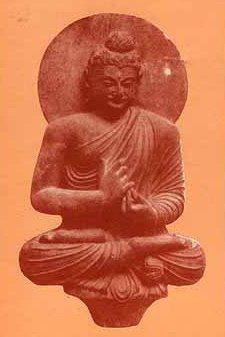
Pali is the language of the Tipiṭaka, which is the sacred canon of Theravāda Buddhism and contains much of the Buddha’s speech. Closeley related to Sanskrit, both languages are used interchangeably between religions.
Marathi-English dictionary
pañjara (पंजर).—m (S) A cage. 2 fig. The fabric or skeleton (of man or an animal). 3 The chest or the case of ribs.
--- OR ---
pāñjarā (पांजरा).—m (pañjara S) A cage. 2 The crop or branching portion of a Palm. 3 The frame or skeleton (as of a house or ship).
pañjara (पंजर).—m A cage. The skeleton (of man or an animal).
--- OR ---
pāñjarā (पांजरा).—m A cage. The frame of skeleton (as of a house or ship). aṅgācā or śarīrācā or hāḍāñcā pāñjarā A term for an emaciated person.
Marathi is an Indo-European language having over 70 million native speakers people in (predominantly) Maharashtra India. Marathi, like many other Indo-Aryan languages, evolved from early forms of Prakrit, which itself is a subset of Sanskrit, one of the most ancient languages of the world.
Sanskrit dictionary
Pañjara (पञ्जर).—A cage, an aviary; पञ्जरशुकः, भुजपञ्जरः (pañjaraśukaḥ, bhujapañjaraḥ) &c.
-raḥ, ram 1 Ribs.
2) A skeleton.
-raḥ 1 The body.
2) The Kaliyuga.
3) A purificatory ceremony performed on cows.
Derivable forms: pañjaram (पञ्जरम्).
Pañjara (पञ्जर) or Piñjara.—mn.
(-raḥ-raṃ) A skeleton. n.
(-raṃ) 1. A cage, an aviary, a dove-cot. 2. The ribs. m.
(-raḥ) 1. The body. 2. The Kali age. E. paji for piji to dwell, &c. Unadi aff. arac; also piñjara.
Pañjara (पञ्जर).—n. 1. A cage, Mahābhārata 12, 3061. 2. A skeleton, [Prabodhacandrodaya, (ed. Brockhaus.)] 71, 1. (Probably akin to paj in vedic pajra, pājas; cf. [Latin] pango).
Pañjara (पञ्जर).—[neuter] cage, skeleton.
1) Pañjara (पञ्जर):—[from pañj] n. a cage, aviary, dove-cot, net, [Mahābhārata; Kāvya literature] etc.
2) [v.s. ...] a skeleton, the ribs, [Prabodha-candrodaya; Caṇḍa-kauśika] (also m., [cf. Lexicographers, esp. such as amarasiṃha, halāyudha, hemacandra, etc.])
3) [v.s. ...] Name of [particular] prayers and formularies, [Vāmana-purāṇa]
4) [v.s. ...] m. (L.) the body, [Udbhaṭa]
5) [v.s. ...] the Kali-yuga, [cf. Lexicographers, esp. such as amarasiṃha, halāyudha, hemacandra, etc.]
6) [v.s. ...] a purificatory ceremony performed on cows, [cf. Lexicographers, esp. such as amarasiṃha, halāyudha, hemacandra, etc.]
7) [v.s. ...] a kind of bulbous plant ([varia lectio] pañjala).
8) Pāñjara (पाञ्जर):—([from] pañjara) mfn. relating or belonging to a cage, [Nalacampū or damayantīkathā]
Pañjara (पञ्जर):—[(raḥ-raṃ)] 1. m. n. A skeleton. m. The body; the Kali age. n. A cage, an aviary; a rib.
Pañjara (पञ्जर):—gaṇa saṃkāśādi zu [Pāṇini’s acht Bücher.4,2,80.] n. [Amarakoṣa.3,6,3,31.] [Siddhāntakaumudī 249,b,1.]
1) n. Käfig, Gitterbehälter [Bharata] zu [Amarakoṣa] [Śabdakalpadruma] te baddhāḥ śarajālena śakuntā iva pañjare [Mahābhārata 3, 14990.] kākaṃ pañjare baddhvā [12, 3061.] pañjarāntarasaṃcārī śakunta iva [?14, 2233. Harivaṃśa 10268. Rāmāyaṇa 2, 65, 5. 5, 15, 35. Raghuvaṃśa 5, 74. Vikramorvaśī 41. Meghadūta 83. Pañcatantra III, 144. Vetālapañcaviṃśati in Lassen’s Anthologie 20, 10. ŚUK. ebend. 38, 15. 39, 20. Suśruta 1, 344, 3. Inschr. in Journ. of the Am. Or. S. 6, 504. Śloka 12.] Uneig.: nārācapañjarāṇi [Kathāsaritsāgara 18, 14.] śayānaṃ śarapañjare [Bhāgavatapurāṇa 1, 9, 25.] iṣubaddhapañjarādvinirgataḥ [8, 11, 26.] bhujapañjaramadhyavartin [Pañcatantra I, 224.] artha 427. Ausnahmsweise in comp. mit dem was gefangen gehalten wird: caraṇa [Bhāgavatapurāṇa 5, 2, 10.] —
2) Gerippe, Skelet, n. [Bharata] zu [Amarakoṣa] (die Rippen [COLEBR.] und [Wilson’s Wörterbuch] nach ders. Aut.). m. [Jaṭādhara im Śabdakalpadruma]; vgl. asthi und piśitapaṅkāvanaddhāsthipañjaramayī (nārī) [Prabodhacandrodaja 71, 1.] —
3) m. Körper [Trikāṇḍaśeṣa 2, 6, 19.] —
4) m. das Kaliyuga. —
5) m. eine an Kühen stattfindende Reinigungscerimonie (gavāṃ nīrājanāvidhi) [SĀRASVATA][?10BHIDHĀNA im Śabdakalpadruma] —
6) n. wohl bestimmte Gebete und Formeln, mit denen man eine Gottheit gleichsam gefangen hält: vaiṣṇuvaṃ pañjaram [VĀMANA][Pāṇini’s acht Bücher] in [Oxforder Handschriften 46,b, Kapila 17.] viṣṇupañjarastotra [Böhtlingk’s Verzeichniss No. 42.] — Vgl. pāñjarya .
--- OR ---
Pañjara (पञ्जर):—
1)
3) [Spr. 3787]; vgl. dehināṃ dehapañjaram [5198.] —
1) [Z. 8] lies anartha und vgl. [Spr. 1446.]
Pañjara (पञ्जर):——
1) n. — a) Käfig , Gitterbehälter , ein gitterartiges Netz [Bālarāmāyaṇa 19,19] (Pl.). Uneigentlich von Allem , was Einen nach Art eines Käfigs gefangen hält. Ausnahmsweise im Comp. hinter dem Was gefangen gehalten wird. — b) Gerippe , Skelet [Kṣemīśvara’s Caṇḍakauśika 73,10.] Auch *m. — c) wohl bestimmte Gebete und Formeln , mit denen man eine Gottheit gleichsam gefangen hält. —
2) (*m.) — a) Körper [Indische sprüche 1238] (zugleich Käfig). — b) *das Kaliyuga. — c) *eine mit Kühen vorgenommene Reinigungsceremonie. — d) *ein best. Knollengewächs [Rājan 7,83.] pañjala v.l.
Pañjara (पञ्जर) in the Sanskrit language is related to the Prakrit word: Paṃjara.
Pañjara (in Sanskrit) can be associated with the following Chinese terms:
1) 半遮羅 [bàn zhē luó]: “(Skt. pañjara)”.
2) 樊籠 [fán lóng]: “cage”.
3) 牆 [qiáng]: “fence”..
4) 牢獄 [láo yù]: “prison”.
5) 箱 [xiāng]: “basket”.
6) 籠 [lóng]: “cage”; “crate”; “ensnare”.
7) 羅網 [luó wǎng]: “net”.
Sanskrit, also spelled संस्कृतम् (saṃskṛtam), is an ancient language of India commonly seen as the grandmother of the Indo-European language family (even English!). Closely allied with Prakrit and Pali, Sanskrit is more exhaustive in both grammar and terms and has the most extensive collection of literature in the world, greatly surpassing its sister-languages Greek and Latin.
Hindi dictionary
Paṃjara (पंजर) [Also spelled panjar]:—(nm) a skeleton, frame; cage; —[baṃdhanā] to be reduced to a skeleton.
...
Prakrit-English dictionary
1) Paṃjara (पंजर) in the Prakrit language is related to the Sanskrit word: Pañjara.
2) Paṃjara (पंजर) also relates to the Sanskrit word: Pañjara.
Prakrit is an ancient language closely associated with both Pali and Sanskrit. Jain literature is often composed in this language or sub-dialects, such as the Agamas and their commentaries which are written in Ardhamagadhi and Maharashtri Prakrit. The earliest extant texts can be dated to as early as the 4th century BCE although core portions might be older.
Kannada-English dictionary
Paṃjara (ಪಂಜರ):—
1) [noun] a box or enclosed structure made of wires, bars, etc., for confining and displaying birds or animals; a cage.
2) [noun] a veil used to cover a palanquin.
3) [noun] the bones of a human or an animal considered as a whole, together forming the framework of the body; the skeleton.
--- OR ---
Paṃjara (ಪಂಜರ):—[noun] = ಪಂಜಾ [pamja].
Kannada is a Dravidian language (as opposed to the Indo-European language family) mainly spoken in the southwestern region of India.
See also (Relevant definitions)
Partial matches (+0): Paji, Ara.
Starts with (+9): Pamjarambade, Pancara-tiruvilakku, Pancarai, Pancaraikkilavan, Pancaram, Pancarankatti, Panjarabhaj, Panjaracalananyaya, Panjarachidda, Panjaragata, Panjaraka, Panjarakapinjala, Panjarakapota, Panjarakesarin, Panjarakheta, Panjaramadhya, Panjarana, Panjaranatha, Panjaranem, Panjarantaragata.
Full-text (+138): Asthipanjara, Panjarakheta, Sharapanjara, Vajrapanjara, Bhapanjara, Vidhupanjara, Nakhapanjara, Rathapanjara, Nrisimhavajrapanjara, Dvadashanamapanjara, Panjarashuka, Vishnupanjara, Catipanjara, Dalhapanjara, Nrisimhapanjara, Pinjara, Bhavapanjara, Panjarabhaj, Panjarakesarin, Cakkapanjara.
Relevant text
Search found 49 books and stories containing Panjara, Paji-ara, Pamjara, Paṃjara, Pañjara, Pāñjarā, Pāñjara; (plurals include: Panjaras, aras, Pamjaras, Paṃjaras, Pañjaras, Pāñjarās, Pāñjaras). You can also click to the full overview containing English textual excerpts. Below are direct links for the most relevant articles:
Kashyapa Shilpa-shastra (study) (by K. Vidyuta)
5. Measurement for the Storeys of the Gopuras < [Chapter 5 - Gopura Lakṣaṇa]
7. The Shapes and Embellishments of the Gopuras < [Chapter 5 - Gopura Lakṣaṇa]
4 (b). Technical terms for the component parts of the temple < [Chapter 2 - Author and his Works]
Dictionaries of Indian languages (Kosha)
Page 167 < [Hindi-Bengali-English Volume 2]
Page 167 < [Hindi-Kannada-English Volume 2]
Page 270 < [Bengali-Hindi-English, Volume 3]
Garuda Purana (by Manmatha Nath Dutt)
Chapter XIII - The prayer of Vishnu Panjaram < [Agastya Samhita]
Vastu-shastra (Introduction to Indian architecture) (by D. N. Shukla)
Chapter 9 - House-decorations and other Equipments < [Volume 3 - House Architecture]
(vii.c) Śilparatna (Temple-architecture—Chapters 14-43) < [Chapter 5 - Study of Hindu Science of Architecture]
(i) Scope of Architecture (Vāstu) < [Chapter 2 - Scope and Subject-matter]
Matsya Purana (critical study) (by Kushal Kalita)
Part 1a - Note on Architecture (vāstu) < [Chapter 7 - Art and Architecture in the Matsyapurāṇa]
Temples of Tumkur District (historical study) (by Reshma Anjum)