Narayani, Nārāyaṇī, Nārāyaṇi: 15 definitions
Introduction:
Narayani means something in Hinduism, Sanskrit, biology, Tamil. If you want to know the exact meaning, history, etymology or English translation of this term then check out the descriptions on this page. Add your comment or reference to a book if you want to contribute to this summary article.
Images (photo gallery)

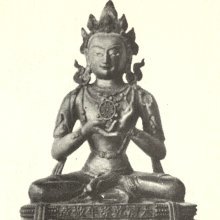


In Hinduism
Purana and Itihasa (epic history)
1) Nārāyaṇi (नारायणि).—A Pravara.*
- * Matsya-purāṇa 196. 31.
2) Nārāyaṇī (नारायणी).—A name of Yogamāyā; Lalitā;1 the goddess enshrined at Supārśva.2

The Purana (पुराण, purāṇas) refers to Sanskrit literature preserving ancient India’s vast cultural history, including historical legends, religious ceremonies, various arts and sciences. The eighteen mahapuranas total over 400,000 shlokas (metrical couplets) and date to at least several centuries BCE.
Kavya (poetry)
Nārāyaṇī (नारायणी) is one of the epithets of Durgā, according to the Kathāsaritsāgara, chapter 53. Accordingly, as Vīravara praised Durgā: “... thou art the principle of life in creatures; by thee this world moves. In the beginning of creation Śiva beheld thee self-produced, blazing and illuminating the world with brightness hard to behold, like ten million orbs of fiery suddenly produced infant suns rising at once, filling the whole horizon with the circle of thy arms, bearing a sword, a club, a bow, arrows and a spear. And thou wast praised by that god Śiva in the following words ... [Nārāyaṇī, etc...]”.
Also, “... when Skanda, and Vasiṣṭha, and Brahmā, and the others heard thee praised, under these [eg., Nārāyaṇī] and other titles, by Śiva well skilled in praising, they also praised thee. And by praising thee, O adorable one, immortals, Ṛṣis and men obtained, and do now obtain, boons above their desire. ”
The Kathāsaritsāgara (‘ocean of streams of story’), mentioning Nārāyaṇī, is a famous Sanskrit epic story revolving around prince Naravāhanadatta and his quest to become the emperor of the vidyādharas (celestial beings). The work is said to have been an adaptation of Guṇāḍhya’s Bṛhatkathā consisting of 100,000 verses, which in turn is part of a larger work containing 700,000 verses.

Kavya (काव्य, kavya) refers to Sanskrit poetry, a popular ancient Indian tradition of literature. There have been many Sanskrit poets over the ages, hailing from ancient India and beyond. This topic includes mahakavya, or ‘epic poetry’ and natya, or ‘dramatic poetry’.
Ayurveda (science of life)
Nighantu (Synonyms and Characteristics of Drugs and technical terms)
Nārāyaṇī (नारायणी) is another name for Śatāvarī, a medicinal plant identified with Asparagus racemosus Willed. (or “buttermilk root”) from the Asparagaceae family of flowering plants, according to verse 4.116-119 of the 13th-century Raj Nighantu or Rājanighaṇṭu. The fourth chapter (śatāhvādi-varga) of this book enumerates eighty varieties of small plants (pṛthu-kṣupa). Together with the names Nārāyaṇī and Śatāvarī, there are a total of thirty-two Sanskrit synonyms identified for this plant.
Āyurveda (आयुर्वेद, ayurveda) is a branch of Indian science dealing with medicine, herbalism, taxology, anatomy, surgery, alchemy and related topics. Traditional practice of Āyurveda in ancient India dates back to at least the first millenium BC. Literature is commonly written in Sanskrit using various poetic metres.
Shaivism
Nārāyaṇī (नारायणी) or Nārāyaṇītantra refers to one of the Tantras mentioned in the Mahāmokṣa-Tantra, a Sanskrit manuscript collected in volume 12 of the catalogue “Notices of Sanskrit Manuscripts (second series)” by Mahamahopadhyaya Haraprasad Shastri.—The Mahāmokṣatantra manuscript, consisting of 3,024 ślokas (metrical verses), is deposit: Dhaka, Vikramapura Majhapada, Babu Rasavihari Raya. It deals with the salvation, cosmogony (i.e., the order of cosmic regions) and contains a bibliography of Tantric literature.—The catalogue includes the term—Nārāyaṇī in its ‘subject-matter list’ or Viṣaya (which lists topics, chapters and technical terms).

Shaiva (शैव, śaiva) or Shaivism (śaivism) represents a tradition of Hinduism worshiping Shiva as the supreme being. Closely related to Shaktism, Shaiva literature includes a range of scriptures, including Tantras, while the root of this tradition may be traced back to the ancient Vedas.
Mantrashastra (the science of Mantras)
Nārāyaṇī (नारायणी) [=brahma-, haṃsa- or lakṣmī-nārāyaṇī-vidyā] refers to one of the topics discussed in the Ṛśyaśṛṅgasaṃhitā, an ancient Sanskrit text dealing with Mantraśāstra (instruction manuals for understanding and reciting mantras) which, being a Vaiṣṇava-oriented scripture, specifically deals with elaborate mantras of Viṣṇu and his incarnations, manifestations and consorts.—The term Nārāyaṇī-vidyā is mentioned in Chapter 50 (pañcāśe'dhyāye) of the Ṛśyaśṛṅga-Saṃhitā. The complete entry reads: brahmanārāyaṇīvidyāyāḥ haṃsanārāyaṇī vidyāyāḥ dvādaśākṣaryāḥ caturdaśākṣaryāḥ lakṣmīnārāyaṇīvidyāyāḥ ṣoḍaśākṣarīmahāvidyāyāḥ yājuṣi vidyāyāśca svarūpachandaṛṣidevatādi vanarṇam.
Mantrashastra (शिल्पशास्त्र, mantraśāstra) refers to the ancient Indian science of mantras—chants, incantations, spells, magical hymns, etc. Mantra Sastra literature includes many ancient books dealing with the methods reciting mantras, identifying and purifying its defects and the science behind uttering or chanting syllables.
Shaktism
Nārāyaṇī (नारायणी) refers to one of the “thousand names of Kumārī”, as mentioned in the Kumārīsahasranāma, which is included in the 10th chapter of the first part (prathamabhāga) of the Rudrayāmala-Uttaratantra: an ancient Tantric work primarily dealing with the practice of Kuṇḍalinī-yoga, the worship of Kumārī and discussions regarding the Cakras. This edition is said to be derived of the Rudrayāmalatantra and consists of 6000 verses in 90 chapters (paṭalas) together with the Saralā-Hindīvyākhyopetam (i.e., the Rudrayamalam Uttaratantram with Sarala Hindi translation).—Nārāyaṇī is mentioned in śloka 1.10.105.—The chapter notes that one is granted the rewards obtained by reciting the text even without the performance of pūjā (worship), japa, snāna (bathing) and puraścaryā
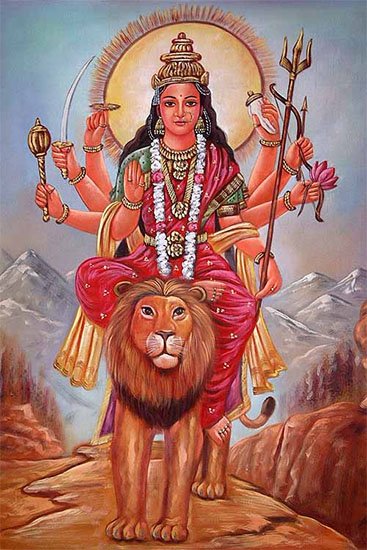
Shakta (शाक्त, śākta) or Shaktism (śāktism) represents a tradition of Hinduism where the Goddess (Devi) is revered and worshipped. Shakta literature includes a range of scriptures, including various Agamas and Tantras, although its roots may be traced back to the Vedas.
Gitashastra (science of music)
Nārāyaṇī (ନାରାୟଣୀ) refers to one of the various rāgas mentioned in the Sāraḷā Mahābhārata (i.e., the Odia Mahabharata): an adaption of the Sanskrit Mahābhārata (authored by Sāraḷā Dās) which represents an important foundation of the intellectual and cultural heritage of Oḍiśa.—The text combines not only spiritual subjects but also science, martial arts, veterinary medicine, rāgarāgiṇī (music and lyric), etc. A beautiful description of the different types of rāgas is given in the context of Ganesh dance on Bhishma Parva. Among the various rāgas, he mentions, for example, Nārāyaṇī.
Gitashastra (गीतशास्त्र, gītaśāstra) refers to the ancient Indian science of Music (gita or samgita), which is traditionally divided in Vocal music, Instrumental music and Dance (under the jurisdiction of music). The different elements and technical terms are explained in a wide range of (often Sanskrit) literature.
General definition (in Hinduism)
Nārāyaṇī was the mother of Śrī Vṛndāvana dāsa Ṭhākura. She lived on the island called Modadrumadvīpa (one of the nine islands of Navadvīpa). (Jaiva-dharma, Appendix)
Biology (plants and animals)
Narayani in India is the name of a plant defined with Asparagus racemosus in various botanical sources. This page contains potential references in Ayurveda, modern medicine, and other folk traditions or local practices It has the synonym Asparagopsis abyssinica Kunth (among others).
Example references for further research on medicinal uses or toxicity (see latin names for full list):
· Systema Vegetabilium, ed. 15 (1829)
· Flora of the British India (1892)
· Journal of Economic and Taxonomic Botany (1996)
· Journal of Economic and Taxonomic Botany (1991)
· Tent. Fl. Abyss. (1850)
· Journal of the Linnean Society, Botany (1875)
If you are looking for specific details regarding Narayani, for example side effects, pregnancy safety, health benefits, extract dosage, chemical composition, diet and recipes, have a look at these references.
This sections includes definitions from the five kingdoms of living things: Animals, Plants, Fungi, Protists and Monera. It will include both the official binomial nomenclature (scientific names usually in Latin) as well as regional spellings and variants.
Languages of India and abroad
Sanskrit dictionary
1) Nārāyaṇī (नारायणी):—[from nārāyaṇa > nāra] a f. See sub voce
2) Nārāyaṇi (नारायणि):—[from nāra] m. Name of a son of Viśvā-mitra, [Harivaṃśa]
3) Nārāyaṇī (नारायणी):—[from nāra] b f. (of ṇa q.v.) [patronymic] of Indra-senā (the wife of Mudgala), [Mahābhārata; Harivaṃśa]
4) [v.s. ...] Name of Durgā, [Harivaṃśa]
5) [v.s. ...] of Lakṣmī, [cf. Lexicographers, esp. such as amarasiṃha, halāyudha, hemacandra, etc.]
6) [v.s. ...] of Gaṅgā and Gaṇḍakī, [cf. Lexicographers, esp. such as amarasiṃha, halāyudha, hemacandra, etc.]
Nārāyaṇi (नारायणि):—(von nara oder nārāyaṇa) m. Nomen proprium eines Sohnes des Viśvāmitra [Harivaṃśa 1467.]
Nārāyaṇi (नारायणि):—m. Nomen proprium eines Sohnes des Viśvāmitra.
Nārāyaṇī (नारायणी) in the Sanskrit language is related to the Prakrit word: Ṇāyāraṇī.
Sanskrit, also spelled संस्कृतम् (saṃskṛtam), is an ancient language of India commonly seen as the grandmother of the Indo-European language family (even English!). Closely allied with Prakrit and Pali, Sanskrit is more exhaustive in both grammar and terms and has the most extensive collection of literature in the world, greatly surpassing its sister-languages Greek and Latin.
Kannada-English dictionary
Nārāyaṇi (ನಾರಾಯಣಿ):—
1) [noun] Nārāyaṇa, in the form of a woman, Mōhini.
2) [noun] Lakṣmi, the consort of Nārāyaṇa.
3) [noun] the essential Power of the universe, conceived in the form of Durgā.
4) [noun] the climbing asparagus Asparagus racemosus of Liliaceae family, having fleshy roots and fine fern-like leaves.
5) [noun] a musical mode, derived from the main mode Dhīra Śaṃkarābharaṇa.
Kannada is a Dravidian language (as opposed to the Indo-European language family) mainly spoken in the southwestern region of India.
Tamil dictionary
Nārāyaṇi (நாராயணி) noun < Nārāyaṇī.
1. Durgā; துர்க்கை. (பிங்கலகண்டு) [thurkkai. (pingalagandu)]
2. Nārāyaṇī, one of catta-mātar, q. v.; சத்தமாதரிலொருத்தி. [sathamathariloruthi.]
3. Pārvatī; பார்வதி. ((சங்கத்தகராதி) தமிழ்சொல்லகராதி) [parvathi. ((sangathagarathi) thamizhsollagarathi)]
4. The Ganges; கங்கை. ((சங்கத்தகராதி) தமிழ்சொல்லகராதி) [kangai. ((sangathagarathi) thamizhsollagarathi)]
5. (Music) A secondary melody-type of the kuṟiñci class; குறிஞ்சியாழ்த் திறத்தொன்று. (பிங்கலகண்டு) [kurinchiyazhth thirathonru. (pingalagandu)]
6. Long pungent sparsi-fasciculate asparagus. See தண்ணீர்விட்டான். (தைலவருக்கச்சுருக்கம் தைல.) [thannirvittan. (thailavarukkachurukkam thaila.)]
Tamil is an ancient language of India from the Dravidian family spoken by roughly 250 million people mainly in southern India and Sri Lanka.
See also (Relevant definitions)
Starts with (+1): Narayani prashnavali, Narayani-poovu, Narayani-puvu, Narayanikarana, Narayanimandura, Narayanipaddhati, Narayanitam, Narayanitantra, Narayanividya, Narayanividya, Narayanivilasa, Narayaniya, Narayaniya kavya, Narayaniya stotra, Narayaniyabija, Narayaniyaka, Narayaniyam, Narayaniyasamhita, Narayaniyatantra, Narayaniyavyakhya.
Full-text (+21): Narayani prashnavali, Namarayani, Narayanivilasa, Narayaniyopanishad, Vatanarayani, Namadvadashi, Brihonarayani, Natanarayani, Narayanipaddhati, Lakshminarayani, Narayanitantra, Vishanarayani, Narayanimandura, Naranarayani, Brahmanarayani, Narayanividya, Hamsanarayani, Narayani-poovu, Narayani-puvu, Narani.
Relevant text
Search found 65 books and stories containing Narayani, Naaraayani, Narayai, Nārāyai, Nārāyaṇī, Nārāyaṇi; (plurals include: Narayanis, Naaraayanis, Narayais, Nārāyais, Nārāyaṇīs, Nārāyaṇis). You can also click to the full overview containing English textual excerpts. Below are direct links for the most relevant articles:
Reassessing Religion and Politics in the Life of Jagjivan Rām < [Volume 11, Issue 5 (2020)]
Visions and Revisions of the Hindu Goddess < [Volume 10, Issue 5 (2019)]
Chaitanya Bhagavata (by Bhumipati Dāsa)
Verse 2.323 < [Chapter 2 - The Lord’s Manifestation at the House of Śrīvāsa and the Inauguration of Saṅkīrtana]
Verse 2.18.196 < [Chapter 18 - Mahāprabhu’s Dancing as a Gopī]
Verse 3.5.757 < [Chapter 5 - The Pastimes of Nityānanda]
A Descriptive Catalogue of the Sanskrit Manuscripts, Madras (by M. Seshagiri Sastri)
Markandeya Purana (by Frederick Eden Pargiter)
Puranic encyclopaedia (by Vettam Mani)
Historical Elements in the Matsya Purana (by Chaitali Kadia)
Lineages of Aṅgirā < [Chapter 6 - Human history in the Matsya-Purāṇa]