Anuvinda: 9 definitions
Introduction:
Anuvinda means something in Hinduism, Sanskrit. If you want to know the exact meaning, history, etymology or English translation of this term then check out the descriptions on this page. Add your comment or reference to a book if you want to contribute to this summary article.
In Hinduism
Vaishnavism (Vaishava dharma)
Anuvinda (अनुविन्द).—A King of Avanti. He and his brother, Vinda, were the brothers of Mitravindā, who was married to Lord Śrī Kṛṣṇa. Both brothers were inimical to Lord Kṛṣṇa and were killed by Arjuna. (Droṇa Parva in Mahābhārata)
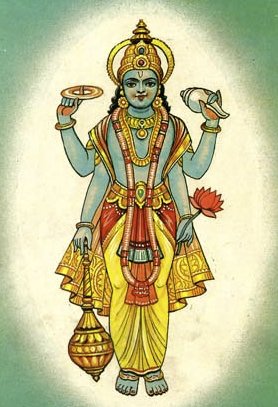
Vaishnava (वैष्णव, vaiṣṇava) or vaishnavism (vaiṣṇavism) represents a tradition of Hinduism worshipping Vishnu as the supreme Lord. Similar to the Shaktism and Shaivism traditions, Vaishnavism also developed as an individual movement, famous for its exposition of the dashavatara (‘ten avatars of Vishnu’).
Purana and Itihasa (epic history)
1) Anuvinda (अनुविन्द).—One of the 100 sons of Dhṛtarāṣṭra. There is a story in the Mahābhārata about his being imprisoned along with Duryodhana. Knowing that the Pāṇḍavas were living in the forest in all comfort and happiness Duryodhana and others went in proccession to them. Anuvinda also was in the procession. While Duryodhana and party were staying in a tent in the forest, a Gandharva named Citrasena appeared on the scene and imprisoned them. Anuvinda too was imprisoned. (See Citrasena). (Mahābhārata, Vana Parva, Chapter 242, Verse 8). He was killed in war by Bhīmasena. (Mahābhārata, Droṇa Parva, Chapter 127, Verse 66).
2) Anuvinda (अनुविन्द).—The purāṇas refer to one Anuvinda, a prince of Avanti. (1) He had a brother called Vinda. (2) He was defeated by Sahadeva who set forth to subjugate the kings of the south just before the Rājasūya yajña of Dharmaputra. (Mahābhārata, Sabhā Parva, Chapter 31, Verse 10). (3) An Akṣauhiṇī (division of army) was despatched by Anuvinda to help Duryodhana. (Mahābhārata, Udyoga Parva, Chapter 19, Verses 24, 25). (4) On the first day of the war Vinda and Anuvinda fought duels with Kuntibhoja. (Mahābhārata, Bhīṣma Parva, Chapter 45, Verses 72-75). (5) Irāvān, son of Arjuna defeated both Vinda and Anuvinda in the battle. (Mahābhārata, Bhīṣma Parva, Chapter 83, Verse, 18-22). (6) They fought with Bhīma, Arjuna and the king of Virāṭa. (Mahābhārata, Droṇa Parva, Chapter 25, Verses 20). (7) Anuvinda was killed by Arjuna. (Mahābhārata, Droṇa parva, Chapter 399, Verses 27-29). (8) Vinda and Anuvinda had a sister called Mitravindā. The three of them were the children of Rājādhidevī, sister of Śrī Kṛṣṇa’s father. Śrī Kṛṣṇa married Mitravindā, which her brother did not like. This was their reason for quitting the Pāṇḍava camp and fighting on the side of the Kauravas. (Bhāgavata, Daśama Skandha, Chapter 58, Verses 30, 31).
3) Anuvinda (अनुविन्द).—The Mahābhārata refers to another prince Anuvinda also. He was the son of a Kekayarāja. He also fought against the Pāṇḍavas and was killed by Sātyaki. (Mahābhārata, Karṇa Parva, Chapter 13, Verse 21).
4) Anuvinda (अनुविन्द).—A wife of Śrī Kṛṣṇa. (Padma Purāṇa).
Anuvinda (अनुविन्द).—A prince of Avanti. Brother of Vinda and and Mitravindā: Shared Vinda's (s.v) views and did not wish his sister to be married to Kṛṣṇa as against Duryodhana.1 Stationed at the south gate of Mathurā by Jarāsandhā,2 and also on the south during the seige of Gomanta.3 Son of Rājadhidevī according to the bhāgavata.4
- 1) Bhāgavata-purāṇa X. 58. 30; Brahmāṇḍa-purāṇa III. 71. 158.
- 2) Bhāgavata-purāṇa X. 50. 11[3].
- 3) Ib. X. 52. 11[9].
- 4) Ib. X. 58. 31; Vāyu-purāṇa 96. 157; Viṣṇu-purāṇa IV. 14. 43.
Anuvinda (अनुविन्द) is a name mentioned in the Mahābhārata (cf. I.108.3) and represents one of the many proper names used for people and places. Note: The Mahābhārata (mentioning Anuvinda) is a Sanskrit epic poem consisting of 100,000 ślokas (metrical verses) and is over 2000 years old.
The Purana (पुराण, purāṇas) refers to Sanskrit literature preserving ancient India’s vast cultural history, including historical legends, religious ceremonies, various arts and sciences. The eighteen mahapuranas total over 400,000 shlokas (metrical couplets) and date to at least several centuries BCE.
General definition (in Hinduism)
Anuvinda was the prince of Avanti. Along with his brother Vinda, he fought on the Kaurava side during the great battle of Kurukshetra. After achieving many great feats of bravery on the battlefield, he was slain by Satyaki of the Vrishnis. Soon after him, his brother Vinda also perished, slain by Satyaki
Languages of India and abroad
Sanskrit dictionary
Anuvinda (अनुविन्द):—[=anu-vinda] m. Name of a king of Oujein.
Anuvinda (अनुविन्द):—[tatpurusha compound] m.
(-ndaḥ) A proper name, a son of Jayasena, king of Avanti, by Rājādhidevī, and brother of Vinda; according to the Mahābhārata, one of the Kaikeyas slain by Sātyaki. E. anu and vinda.
Anuvinda (अनुविन्द):—(1. anu + vinda) m. Nomen proprium ein König von Avanti: vindānuvindāvāvantyau [Mahābhārata 2, 114.] [Harivaṃśa 5016. 5497. 8020. 8099.] Beides Söhne des Jaiyasena [Viṣṇupurāṇa 437.]
--- OR ---
Anuvinda (अनुविन्द):—[Z. 2 lies 2, 1114.]
Anuvinda (अनुविन्द):—m. Nomen proprium eines Fürsten [Mahābhārata 2,31,10.]
Sanskrit, also spelled संस्कृतम् (saṃskṛtam), is an ancient language of India commonly seen as the grandmother of the Indo-European language family (even English!). Closely allied with Prakrit and Pali, Sanskrit is more exhaustive in both grammar and terms and has the most extensive collection of literature in the world, greatly surpassing its sister-languages Greek and Latin.
See also (Relevant definitions)
Partial matches (+0): Vinda, Anu.
Starts with (+0): Anuvindaka.
Full-text (+0): Vinda, Mitravinda, Avantipura, Rajadhidevi, Kekaya, Cekitana, Kuntibhoja, Iravan, Duryodhana.
Relevant text
Search found 11 books and stories containing Anuvinda, Anu-vinda; (plurals include: Anuvindas, vindas). You can also click to the full overview containing English textual excerpts. Below are direct links for the most relevant articles:
Mahabharata (English) (by Kisari Mohan Ganguli)
Section XCVIII < [Jayadratha-Vadha Parva]
Section CXIV < [Bhagavat-Gita Parva]
Section LXXXIV < [Bhagavat-Gita Parva]
Chapter 6 - Arjuna Continues His Path of Destruction < [Drona Parva]
Chapter 7 - The Seventh Day of Combat < [Bhisma Parva]
Chapter 4 - The Third Day of Rivalry at Kurukshetra; Bhishma and Arjuna Reek Havoc < [Bhisma Parva]
Puranic encyclopaedia (by Vettam Mani)
List of Mahabharata people and places (by Laxman Burdak)
Vishnu Purana (Taylor) (by McComas Taylor)
Chapter 14 - The ancestry of Kṛṣṇa’s father, Vasudeva, and his nemesis, Śiśupāla < [Book Four: The Royal Dynasties]
Vishnu Purana (by Horace Hayman Wilson)