Shivagana, Shiva-gana, Śivagaṇa: 5 definitions
Introduction:
Shivagana means something in Hinduism, Sanskrit. If you want to know the exact meaning, history, etymology or English translation of this term then check out the descriptions on this page. Add your comment or reference to a book if you want to contribute to this summary article.
The Sanskrit term Śivagaṇa can be transliterated into English as Sivagana or Shivagana, using the IAST transliteration scheme (?).
Images (photo gallery)

In Hinduism
Purana and Itihasa (epic history)
Śivagaṇa (शिवगण) refers to the “attendants of Śiva”, as mentioned in the Śivapurāṇa 2.1.18.—Accordingly:—“[...] in the meantime the attendants of Śiva [viz., Śivagaṇas] with tridents (śūla) in their hands (pāṇi) [viz., Śūlapāṇi] and tinkling anklets (kiṅkiṇī) on their arms reached the spot in an aerial chariot (vimāna) in order to take him to Śivaloka.”.

The Purana (पुराण, purāṇas) refers to Sanskrit literature preserving ancient India’s vast cultural history, including historical legends, religious ceremonies, various arts and sciences. The eighteen mahapuranas total over 400,000 shlokas (metrical couplets) and date to at least several centuries BCE.
Shaktism
Śivagaṇa (शिवगण) possibly refers to the birth-name of Bimbadevī—one of the Sixteen Siddhas according to the Kubjikānityāhnikatilaka: a derative text drawing from Tantras and other sources such as the Ṣaṭsāhasrasaṃhitā.—These sixteen spiritual teachers represent the disciples of the Nine Nāthas who propagated the Western Transmission noted in the Kubjikā Tantras.—Bimbadevī the Caryā name of this Nātha (i.e., the public name the Siddha uses when living as a wandering renouncer). His birth-name is Śivagaṇa [?];
Note: This Śivagaṇa teacher was born a woman. She was called Bodhatrāsanī Ambā because she frightened the Buddhists in Ṭhāṇakoṅkaṇa with the sound of her kettle-drum (bherī). When she took initiation and assumed authority as a teacher she made a gesture that transformed her into a man and assumed authority with her female consort (śakti). Even so, the uninitiated (paśu) see her in the form of a woman. She has ten names. They are: Vimalā, Śikhā, Ciddevī, Suśobhanā, Nāgakanyā, Kumārī, Dhāraṇī, Payodhāraṇī, Rakṣā and Bhadrā.
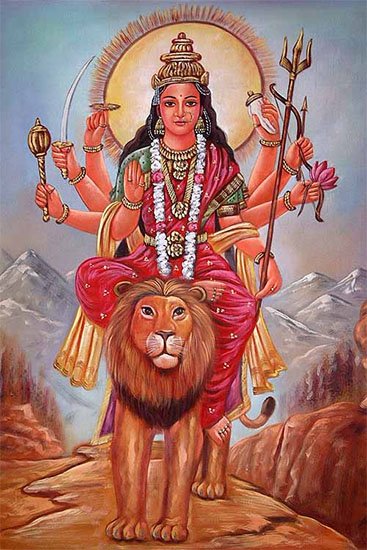
Shakta (शाक्त, śākta) or Shaktism (śāktism) represents a tradition of Hinduism where the Goddess (Devi) is revered and worshipped. Shakta literature includes a range of scriptures, including various Agamas and Tantras, although its roots may be traced back to the Vedas.
Languages of India and abroad
Sanskrit dictionary
1) Śivagaṇa (शिवगण):—[=śiva-gaṇa] [from śiva] m. Name of a king, [Catalogue(s)]
2) [v.s. ...] n. (or -pura n.) Name of a town founded by the king śivagaṇa, [ib.]
3) [v.s. ...] n. (for the Gaṇas of Śiva See [column]1.)
Śivagaṇa (शिवगण):—m. Nomen proprium eines Fürsten, n. Nomen proprium der von ihm gegründeten Stadt [Oxforder Handschriften 280,b,8. 9.]
Sanskrit, also spelled संस्कृतम् (saṃskṛtam), is an ancient language of India commonly seen as the grandmother of the Indo-European language family (even English!). Closely allied with Prakrit and Pali, Sanskrit is more exhaustive in both grammar and terms and has the most extensive collection of literature in the world, greatly surpassing its sister-languages Greek and Latin.
Kannada-English dictionary
Śivagaṇa (ಶಿವಗಣ):—[noun] a class of demigods who attend Śiva.
Kannada is a Dravidian language (as opposed to the Indo-European language family) mainly spoken in the southwestern region of India.
See also (Relevant definitions)
Partial matches (+0): Shiva, Gana.
Starts with (+0): Shivaganapura, Shivaganaradhane.
Full-text (+37): Shivaganapura, Parshada, Shaivayana, Mukha, Riti, Raksha, Nagakanya, Adhikarakala, Purushalingamudra, Ghatodara, Dharani, Purushalinga, Payodharani, Bhringi, Dharmapramana, Ciddevi, Shulapani, Kumari, Tushita, Abhasvara.
Relevant text
Search found 16 books and stories containing Shivagana, Shiva-gana, Shivaganas, Śiva-gaṇa, Siva-gana, Śivagaṇa, Sivagana; (plurals include: Shivaganas, ganas, Shivaganases, gaṇas, Śivagaṇas, Sivaganas). You can also click to the full overview containing English textual excerpts. Below are direct links for the most relevant articles:
Skanda Purana (by G. V. Tagare)
Chapter 37 - Śiveśvara (śiva-īśvara-liṅga) < [Section 2 - Caturaśīti-liṅga-māhātmya]
Chapter 221 - The Greatness of Haṃseśvara (haṃsa-īśvara-tīrtha) < [Section 3 - Revā-khaṇḍa]
Chapter 47 - Nūpureśvara (nūpura-īśvara-liṅga) < [Section 2 - Caturaśīti-liṅga-māhātmya]
The Religion and Philosophy of Tevaram (Thevaram) (by M. A. Dorai Rangaswamy)
Nayanar 38: Gananatha (Kananata) < [Volume 4.1.1 - A comparative study of the Shaivite saints the Thiruthondathogai]
Nayanar 27: Nami Nandi Adigal (Naminanti Atikal) < [Volume 4.1.1 - A comparative study of the Shaivite saints the Thiruthondathogai]
Nayanar 48: Kanampulla < [Volume 4.1.1 - A comparative study of the Shaivite saints the Thiruthondathogai]
Sucindrasthala-mahatmya (critical edition and study) (by Anand Dilip Raj)
Chapter 10 - Dashama Adhyaya (dasamo'dhyayah) < [Chapter 5 - Sucindrasthalamahatmya: Sanskrit critical edition]
Saura-purana (analytical study) (by Priyanku Chakraborty)
Part 2.24 - The account of Vasuśruta < [Chapter 3 - Myths and Legends of the Saura-purāṇa]
Part 6.2.3 - Iconographical descriptions of the Gaṇas < [Chapter 2 - A Brief Discourse on the Saura-purāṇa]
Part 4 - Subject matter of the Saurapurāṇa < [Chapter 2 - A Brief Discourse on the Saura-purāṇa]
Shaivacintamani (analytical study) (by Swati Sucharita Pattanaik)
Part 4 - The Twelve Jyotirliṅgas < [Chapter 2: Śaivism in Śaiva Purāṇas of Odisha]
Part 18 - A Note on the Important Śaiva Vratas < [Chapter 3: Śaiva tradition and Śaivacintāmaṇi]
Early Chola Temples (by S. R. Balasubrahmanyam)
Temples in Tirunaraiyur < [Chapter VIII - Temples of Uttama Chola’s Time]