Formless: 2 definitions
Introduction:
Formless means something in Hinduism, Sanskrit. If you want to know the exact meaning, history, etymology or English translation of this term then check out the descriptions on this page. Add your comment or reference to a book if you want to contribute to this summary article.
Images (photo gallery)


In Hinduism
Yoga (school of philosophy)
(That which is) Formless can denoted by the Sanskrit terms Amūrta and Arūpaka, according to the Muṇḍakopaniṣad 2.1.2-3:.—Accordingly, while describing Brahma and the mind: “For, the [cosmic] man is divine, formless (amūrta), outside and inside [of everything], unborn, breathless, mindless, radiant and higher than the highest imperishable one”.
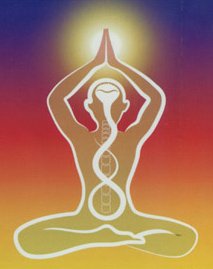
Yoga is originally considered a branch of Hindu philosophy (astika), but both ancient and modern Yoga combine the physical, mental and spiritual. Yoga teaches various physical techniques also known as āsanas (postures), used for various purposes (eg., meditation, contemplation, relaxation).
Vedanta (school of philosophy)
(That which is) Formless is denoted by the Sanskrit term Arūpaka (as opposed to Rūpaka), according to the Māṇḍūkyopaniṣatkārikā 3.35cd-36.—Accordingly, while discussing Brahma (without attributes): “That very [mind, free of thought and restrained,] is fearless Brahma, [which is] the light of gnosis [pervading] everywhere. [It is] unborn, devoid of sleep and dreaming, unnamed, formless (arūpaka), manifested [all] at once and omniscient. [This statement] is not figurative in any way”.
Vedanta (वेदान्त, vedānta) refers to a school of orthodox Hindu philosophy (astika), drawing its subject-matter from the Upanishads. There are a number of sub-schools of Vedanta, however all of them expound on the basic teaching of the ultimate reality (brahman) and liberation (moksha) of the individual soul (atman).
See also (Relevant definitions)
Starts with (+0): World of formlessness.
Full-text (+949): Arupa, Amurta, Nirakara, Arupi, Arupyadhatu, Nirakriti, Aruppa, Arupa-loka, Arupaka, Arupya, Arupyasamapatti, Wu se you, Anakara, World of formlessness, Nishkala, Arupavacara, Wu se jie, Arupa Bhava, Arup, Wu se tan.
Relevant text
Search found 266 books and stories containing Formless; (plurals include: Formlesses). You can also click to the full overview containing English textual excerpts. Below are direct links for the most relevant articles:
Brahma Sutras (Shankara Bhashya) (by Swami Vireshwarananda)
Chapter III, Section II, Adhikarana V < [Section II]
Chapter III, Section II, Adhikarana VIII < [Section II]
Chapter II, Section III, Adhikarana I < [Section III]
Dhammasangani (by C.A.F. Rhys Davids)
Chapter XIV - The Supplementary Set Of Pairs < [Part I]
Chapter III - Good In Relation To The Universe Of The Formless < [Part I - Good States Of Consciousness]
Chapter I - The Group Of Triplets < [Part I]
Taittiriya Upanishad (by A. Mahadeva Sastri)
Chapter VII - Brahman as External Objects < [B - Brahmavidyā Explained]
Chapter IX - Who Attains Brahman? < [B - Brahmavidyā Explained]
Chapter X - Brahman the Infinite Bliss < [B - Brahmavidyā Explained]
Sivaprakasam (Study in Bondage and Liberation) (by N. Veerappan)
God and Individual Self < [Chapter 4 - Concept of God]
Carya, Kriya,Yoga and Jnana < [Chapter 6 - Means to Release]
Ashuddha maya (Material cause of impure order of Creation) < [Chapter 2 - Bondage]
Shaiva Upanishads (A Critical Study) (by Arpita Chakraborty)
13. Forms are for Visualization < [Chapter 5 - Essence of Pañcabrahma Upaniṣad]
5.1. Kaivalya Upaniṣad on Method of Meditation < [Chapter 6 - Śiva as Brahman in Śaiva Upaniṣads]
9. Śiva is All and in All < [Chapter 1 - Introduction]
Brihad Bhagavatamrita (commentary) (by Śrī Śrīmad Bhaktivedānta Nārāyana Gosvāmī Mahārāja)
Verse 2.3.39 < [Chapter 3 - Bhajana (loving service)]
Verse 2.2.227 < [Chapter 2 - Jñāna (knowledge)]
Verse 2.2.180 < [Chapter 2 - Jñāna (knowledge)]