Vagbhava, Vac-bhava, Vāgbhava: 1 definition
Introduction:
Vagbhava means something in Hinduism, Sanskrit. If you want to know the exact meaning, history, etymology or English translation of this term then check out the descriptions on this page. Add your comment or reference to a book if you want to contribute to this summary article.
In Hinduism
Shaktism (Shakta philosophy)
Source: Google Books: Manthanabhairavatantram1) Vāgbhava (वाग्भव) refers to the syllable “AIṂ”, according to all three of the basic Kubjikā texts, the Kubjikāmatatantra, Ṣaṭsāhasrasaṃhitā and Śrīmatottara.—The four sacred seats are equated with the three full measures and the half-measure. The latter is the supreme energy that, possessing three divisions, viz. the other three measures, is Rudra’s power. Most pertinently, we are told that the syllable AIṂ (called Vāgbhava) is adorned with a half-measure. AIṂ, along with HSKHPHREṂ, is the syllabic form of the goddess. [...]
2) Vāgbhava (वाग्भव) or Vāgbhavamantra refers to one of the Mantras associated with Kāmarūpa, one of the eight Sacred Seats (pīṭha), according to the Yogakhaṇḍa (chapter 14) of the Manthānabhairavatantra, a vast sprawling work that belongs to a corpus of Tantric texts concerned with the worship of the goddess Kubjikā.
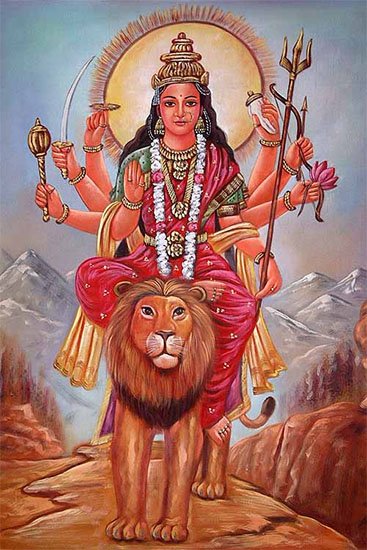
Shakta (शाक्त, śākta) or Shaktism (śāktism) represents a tradition of Hinduism where the Goddess (Devi) is revered and worshipped. Shakta literature includes a range of scriptures, including various Agamas and Tantras, although its roots may be traced back to the Vedas.
See also (Relevant definitions)
Starts with: Vagbhavamantra.
Ends with: Ananvagbhava, Avagbhava, Durvagbhava.
Full-text: Vagbhavamantra, Pancadashi, Trikoti, Aim, Bhrubila, Maitrisha, Svasthana, Vistara, Ishvarigranthi, Ishvari, Trilambini, Sadakhyagranthi, Traigunya, Kulakriya, Vaktraya, Adrishta, Sadakhya, Lambini, Granthi, Nada.
Relevant text
Search found 7 books and stories containing Vagbhava, Vac-bhava, Vāgbhava, Vāc-bhava, Vāg-bhava, Vag-bhava; (plurals include: Vagbhavas, bhavas, Vāgbhavas). You can also click to the full overview containing English textual excerpts. Below are direct links for the most relevant articles:
A History of Indian Philosophy Volume 5 (by Surendranath Dasgupta)
Part 7 - Vatula-tantra < [Chapter XXXIV - Literature of Southern Śaivism]
Paduka-panchaka (the five-fold footstool) (by Arthur Avalon)
The Devi Bhagavata Purana (by Swami Vijñanananda)
Chapter 1 - On the story of Svāyambhuva Manu < [Book 10]
Chapter 8 - On the origin of Manu < [Book 10]
Chapter 2 - On the conversation between Nārada and the Bindhya Mountain < [Book 10]
Voice Culture < [April – June, 2007]
Lalitopakhyana (Lalita Mahatmya) (by G.V. Tagare)
Puranic encyclopaedia (by Vettam Mani)