Unchangeable: 1 definition
Introduction:
Unchangeable means something in Hinduism, Sanskrit. If you want to know the exact meaning, history, etymology or English translation of this term then check out the descriptions on this page. Add your comment or reference to a book if you want to contribute to this summary article.
In Hinduism
Yoga (school of philosophy)
(That which is) Unchangeable is denoted by the Sanskrit term Dhruva, and is used to describe the “highest reality” (paratattva) [paraṃ tattvaṃ], according to the Amanaska Yoga treatise dealing with meditation, absorption, yogic powers and liberation.—Accordingly, as Īśvara says to Vāmadeva: “[...] Now, I will teach knowledge for the liberation of those people who have conquered their passion. [...] [The highest reality] is formless, undivided, ungraspable, unmoving, unchangeable (dhruva), free from all limiting adjuncts [such as time, place and so on] and devoid of any [object of] desire. [...]”.
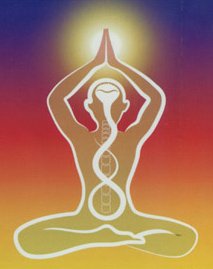
Yoga is originally considered a branch of Hindu philosophy (astika), but both ancient and modern Yoga combine the physical, mental and spiritual. Yoga teaches various physical techniques also known as āsanas (postures), used for various purposes (eg., meditation, contemplation, relaxation).
See also (Relevant definitions)
Partial matches (+0): The, The, Unchangeable, Te.
Full-text (+144): Dhruvabhaga, Avikalpa, Avikriya, Avikarin, Avyayibhava, Sthayin, Aparivartaniya, Avikara, Nirvikara, Dhruvagati, Kutastha, Avikarya, Nishcala, Dhruvaka, Niliraga, Aparivartane, Aparivatrya, Aparivartaneey, Aspanda, Aparivarty.
Relevant text
Search found 180 books and stories containing Unchangeable, The unchangeable, Unchangeables; (plurals include: Unchangeables, The unchangeables, Unchangeableses). You can also click to the full overview containing English textual excerpts. Below are direct links for the most relevant articles:
Yoga-sutras (with Vyasa and Vachaspati Mishra) (by Rama Prasada)
Sūtra 1.25 < [Book 1 - Trance (Samādhi)]
Sūtra 4.23 < [Book 4 - Absolute Independence (Kaivalya)]
Sūtra 4.18 < [Book 4 - Absolute Independence (Kaivalya)]
THE UNCHANGEABLE ESSENCE BUT CHANGEABLE AND UNCHANGEABLE ATTRIBUTES < [Issue 2 (2012)]
THE MU‘TAZILITE QADI ‘ABD AL-JABBAR ON THE DENOTATION OF MIRACLES < [Issue 2 (2012)]
Explanation and Criticism of Augustine's Viewpoint on Angels < [Issue 19 (2021)]
Bhagavad-gita (with Vaishnava commentaries) (by Narayana Gosvami)
Verse 15.16 < [Chapter 15 - Puruṣottama-toga (Yoga through understanding the Supreme Person)]
Verse 11.2 < [Chapter 11 - Viśvarūpa-darśana-yoga (beholding the Lord’s Universal Form)]
Verse 15.5 < [Chapter 15 - Puruṣottama-toga (Yoga through understanding the Supreme Person)]
The Complete Works of Swami Vivekananda (by Srila Narayana Maharaja)
Is the Soul Immortal? < [Writings: Prose]
Vedanta and Privilege < [Lectures and Discourses]
Practical Vedanta: Part III < [Practical Vedanta and other lectures]
Kena upanishad (Madhva commentary) (by Srisa Chandra Vasu)
Madhva’s commentary of the Second Khaṇḍa < [Book 2 - Dvitīya-Khaṇḍa]
A History of Indian Philosophy Volume 1 (by Surendranath Dasgupta)
Part 6 - The Fundamental Ideas of Jaina Ontology < [Chapter VI - The Jaina Philosophy]
Part 19 - Kāla and Samaya < [Chapter VI - The Jaina Philosophy]
Part 12 - The Theory of Causation < [Chapter III - The Earlier Upaniṣads (700 B.c.— 600 B.c.)]