Lakshmitantra, Lakṣmītantra, Lakshmi-tantra: 5 definitions
Introduction:
Lakshmitantra means something in Hinduism, Sanskrit. If you want to know the exact meaning, history, etymology or English translation of this term then check out the descriptions on this page. Add your comment or reference to a book if you want to contribute to this summary article.
The Sanskrit term Lakṣmītantra can be transliterated into English as Laksmitantra or Lakshmitantra, using the IAST transliteration scheme (?).
In Hinduism
Pancaratra (worship of Nārāyaṇa)
Lakṣmītantra (लक्ष्मीतन्त्र) is the name of a Pāñcarātra Āgama text written in 3600 verses divided into 57 chapters presented in the form of a narrative framework where Atri is telling his wife what some sages once heard from Nārada who, in turn, relates what Indra heard from Śrī.—The Lakṣmītantra is unusual in that it is perhaps the only Saṃhitā of the canon exclusively devoted to Lakṣmī or Śrī—the Goddess who is the Consort of Viṣṇu. The Lakṣmītantra is unusual in another regard as well. It is one of the few texts that gives so much attention to the so-called “jñāna” concerns—treating as we rarely find elsewhere so elaborately done the involutions and evolutions of creation at its various stages, and of ultimate principles, etc. By the same token, this book is also unusual in that it has such scant treatment of the so-called “kriyā” concerns, that is, the practical concerns that identify the outlooks of priests and directors of temple-building programs, etc., that typify the bulk of the Pāñcarātrāgama literature. In one regard, however, the Lakṣmī-tantra strikes a familiar note. That is in the prolonged sections given over to the subject of mantras, their composition, analysis and application. Yet even here there is an atypical note struck—-in that the mantras treated are addressed only to selected powers identified with Lakṣmī and her close associates.
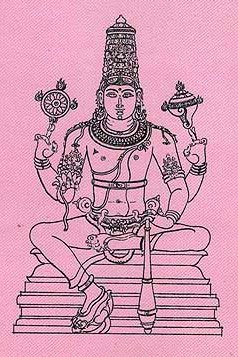
Pancaratra (पाञ्चरात्र, pāñcarātra) represents a tradition of Hinduism where Narayana is revered and worshipped. Closeley related to Vaishnavism, the Pancaratra literature includes various Agamas and tantras incorporating many Vaishnava philosophies.
General definition (in Hinduism)
Lakṣmītantra (लक्ष्मीतन्त्र) is the name of an Agamic text and the only text of the canon which exclusively extols the superior position held by Śrī or Lakṣmī in the Vaiṣṇava theology.
Languages of India and abroad
Sanskrit dictionary
1) Lakṣmītantra (लक्ष्मीतन्त्र) as mentioned in Aufrecht’s Catalogus Catalogorum:—Bik. 593. Oppert. 5331. 5634.
—attributed to Hayagrīva. K. 50.
2) Lakṣmītantra (लक्ष्मीतन्त्र):—Io. 1193.
Lakṣmītantra has the following synonyms: Nāradapañcarātrasāra.
3) Lakṣmītantra (लक्ष्मीतन्त्र):—ibid. See Nāradapañcarātrasāra.
4) Lakṣmītantra (लक्ष्मीतन्त्र):—Ulwar 2328.
Lakṣmītantra (लक्ष्मीतन्त्र):—[=lakṣmī-tantra] [from lakṣmī > lakṣ] n. Name of [work]
Lakṣmītantra (लक्ष्मीतन्त्र):—n. Titel eines Werkes [Private libraries (Gustav) 1.]
Sanskrit, also spelled संस्कृतम् (saṃskṛtam), is an ancient language of India commonly seen as the grandmother of the Indo-European language family (even English!). Closely allied with Prakrit and Pali, Sanskrit is more exhaustive in both grammar and terms and has the most extensive collection of literature in the world, greatly surpassing its sister-languages Greek and Latin.
See also (Relevant definitions)
Partial matches (+0): Lakshmi, Tantra.
Full-text (+259): Bhramari, Guru, Shambalambavarmaratna, Srishti, Sthiti, Paramatman, Naradapancaratrasara, Utpatti, Samhriti, Hayagriva, Vibhava, Shrisuktaprabhavaprakasha, Cicchakti, Purusha, Kaladhvan, Nidanajna, Avataraprakasha, Upayaprakara, Vishuddhadhva, Astramantra.
Relevant text
Search found 20 books and stories containing Lakshmitantra, Lakṣmītantra, Lakshmi-tantra, Lakṣmī-tantra, Laksmitantra, Laksmi-tantra; (plurals include: Lakshmitantras, Lakṣmītantras, tantras, Laksmitantras). You can also click to the full overview containing English textual excerpts. Below are direct links for the most relevant articles:
Diksha (initiation) in Pancharatra (by Shanta Srinivasan)
12. The concepts of Antaryamin and Arca < [Chapter 1 - Introduction]
1. Introduction to the aspects and types of Diksha < [Chapter 2 - Aspects of Diksa]
4. Home of Pancaratra < [Chapter 1 - Introduction]
Svacchandatantra (history and structure) (by William James Arraj)
Chapter 11.1: The Emanation of the Planes of the Universe < [Summaries]
1.5 Redaction Criticism < [Introduction]
Diaspora of Bhuta (Daiva) worshipping cult—India and Indonesia (by Shilpa V. Sonawane)
Part 4 - Agama Hinduism followed by Hindus in Bali Indonesia < [Chapter 4 - Inter-Disciplinary Analysis]
A Descriptive Catalogue of the Sanskrit Manuscripts, Madras (by M. Seshagiri Sastri)
Viṣṇu the Saviour < [Volume 13, Issue 8 (2022)]
Isanasivagurudeva Paddhati (study) (by J. P. Prajith)