Yaska, Yāska: 12 definitions
Introduction:
Yaska means something in Hinduism, Sanskrit. If you want to know the exact meaning, history, etymology or English translation of this term then check out the descriptions on this page. Add your comment or reference to a book if you want to contribute to this summary article.
Images (photo gallery)

In Hinduism
Purana and Itihasa (epic history)
Yāska (यास्क).—A famous Sanskrit Grammarian of ancient times. Although the people of India always believed in the greatness of the Vedas, the Vedas became unintelligible even to scholars owing to changes in language and differences in grammar. It was Yāska and Sāyaṇa who saved the country from that plight. Yāska became famous by composing "Nirukta" (etymology). There is a reference to this ancient sage in Mahābhārata, Chapter 342, Verse 72.
1a) Yaska (यस्क).—An Ārṣeya pravara (Bhārgava).*
- * Matsya-purāṇa 195. 36.
1b) A Bhārgava branch.*
- * Brahmāṇḍa-purāṇa III. 1. 100.
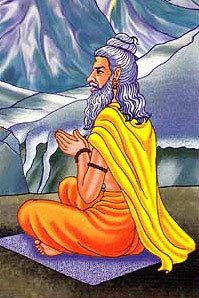
The Purana (पुराण, purāṇas) refers to Sanskrit literature preserving ancient India’s vast cultural history, including historical legends, religious ceremonies, various arts and sciences. The eighteen mahapuranas total over 400,000 shlokas (metrical couplets) and date to at least several centuries BCE.
Vyakarana (Sanskrit grammar)
Yāska (यास्क).—A reputed ancient Niruktakara or etymologist, of the 6th century B.C. or even a few centuries before that, whose work, the Nirukta, is looked upon as the oldest authoritative treatise regarding derivation of Vedic words. Yaska was preceded by a number of etymologists whom he has mentioned in his work and whose works he has utilised. Yaska's Nirukta threw into the back-ground the older treatises on etymology, all of which disappeared gradually in the course of time.
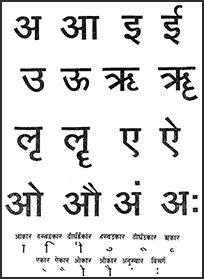
Vyakarana (व्याकरण, vyākaraṇa) refers to Sanskrit grammar and represents one of the six additional sciences (vedanga) to be studied along with the Vedas. Vyakarana concerns itself with the rules of Sanskrit grammar and linguistic analysis in order to establish the correct context of words and sentences.
Chandas (prosody, study of Sanskrit metres)
Yāska (यास्क) is the name of a pre-Piṅgalan author on the science of Sanskrit metrics (chandaśāstra): Yāska, the author of Nirukta describes the Vedic metres in Nirukta. Piṅgala also mentions him while discussing the metre urobṛhatī.
Chandas (छन्दस्) refers to Sanskrit prosody and represents one of the six Vedangas (auxiliary disciplines belonging to the study of the Vedas). The science of prosody (chandas-shastra) focusses on the study of the poetic meters such as the commonly known twenty-six metres mentioned by Pingalas.
General definition (in Hinduism)
Yāska (यास्क) was an early Sanskrit grammarian who preceded Pāṇini (fl. 4th BC), assumed to have lived in the 6th or 5th century BC. Nothing is known about him other than that he is traditionally identified as the author of Nirukta, the discipline of "etymology" (explanation of words) within Sanskrit grammatical tradition. Yaska is the author of the Nirukta, a technical treatise on etymology, lexical category and the semantics of Sanskrit words. He is thought to have succeeded Śākaṭāyana, an old grammarian and expositor of the Vedas, who is mentioned in his text.
Yāska defines four main categories of words:
- nāma - nouns or substantives
- ākhyāta - verbs
- upasarga - pre-verbs or prefixes
-
nipāta - particles, invariant words (perhaps prepositions)
Yāska also defends the view, presented first in the lost text of Sakatayana that etymologically, most nouns have their origins in verbs.
Languages of India and abroad
Sanskrit dictionary
Yāska (यास्क).—Name of the author of the Nirukta.
Derivable forms: yāskaḥ (यास्कः).
Yāska (यास्क).—m.
(-skaḥ) Name of the author of Nirukta.
Yāska (यास्क).—[masculine] [Name] of a teacher.
Yāska (यास्क) as mentioned in Aufrecht’s Catalogus Catalogorum:—Quoted in Ṛkprātiśākhya 17, 25, in Bṛhaddevatā, etc.: Nirukta.
1) Yaska (यस्क):—[from yas] m. Name of a man ([plural] his descendants and a [particular] school; cf. yāska), [Kāṭhaka; Āśvalāyana-śrauta-sūtra] (cf. [Pāṇini 2-4, 63]).
2) Yāska (यास्क):—m. ([from] yasku) [patronymic] of the author of the Nirukta (or commentary on the difficult Vedic words contained in the lists called Nighaṇṭus; he is supposed to have lived before Pāṇini; cf. [Indian Wisdom, by Sir M. Monier-Williams 156 etc.]), [Śatapatha-brāhmaṇa; Ṛgveda-prātiśākhya; Mahābhārata]
3) [plural] the pupils of Yāska, [Pāṇini 2-4, 63 [Scholiast or Commentator]]
Yaska (यस्क):—(von yas) m. Nomen proprium eines Mannes, pl. seine Nachkommen [Pāṇini’s acht Bücher.2,4,63.] [Vopadeva’s Grammatik.7,14.] [Aśvalāyana’s Śrautasūtrāni 12,10.] [SAṂSK. K. 185,a,10.] yaskā gairikṣitāḥ n. einer Schule [Kāṭhaka-Recension] in [Weber’s Indische Studien 3, 453. 475. fg. 8, 245. fg.]
--- OR ---
Yāska (यास्क):—(von yaska) m. patron. gaṇa śivādi zu [Pāṇini’s acht Bücher 4, 1, 112.] Nomen proprium eines Lehrers, Verfassers des Nirukta, [The Śatapathabrāhmaṇa 14,5,5,21.7,3,27.] [Prātiśākhya zum Ṛgveda 17,25.] [Mahābhārata 12,13230.] [Weber’s Indische Studien.1,17. 103.3,396.8,243.] [Oxforder Handschriften 113,b,3. 162,b,21.] pl. yāskāḥ Yaska's Nachkommen (fehlerhaft für yaskāḥ nach [Pāṇini’s acht Bücher.2,4,63]) [Pravarādhyāya] in [Weber’s Verzeichniss 60,26.] [SAṂSK. K. 183,b,8.] f. yāskī und pl. yāskyaḥ [Pāṇini’s acht Bücher 2, 4, 63,] [Scholiast] yāskāḥ die Schüler Yaska's ebend.
Yaska (यस्क):—m. Nomen proprium eines Mannes. Pl. seine Nachkommen und eine best. Schule.
--- OR ---
Yāska (यास्क):——
1) m. — a) Patron. Nomen proprium eines Lehrers. Pl. die Nachkommen Jaska's. — b) *Pl. die Schuler Yaska's. —
2) *f. yāskī f. zu
1) Auch Pl.
Sanskrit, also spelled संस्कृतम् (saṃskṛtam), is an ancient language of India commonly seen as the grandmother of the Indo-European language family (even English!). Closely allied with Prakrit and Pali, Sanskrit is more exhaustive in both grammar and terms and has the most extensive collection of literature in the world, greatly surpassing its sister-languages Greek and Latin.
See also (Relevant definitions)
Starts with (+0): Yaskaaran, Yaskadi, Yaskanirukta, Yaskayani, Yaskayaniya, Yaskopanishad.
Full-text (+2518): Nirukta, Paingi, Yaskanirukta, Nighantu, Vaiyaska, Shakapuni, Aupamanyava, Niruktabhashya, Shakatayana, Niruktakrit, Yaskayani, Gairikshita, Aikapadika, Kraushtuki, Katthakya, Yaskopanishad, Naighantuka, Abhyamana, Abhihuti, Carmashiras.
Relevant text
Search found 130 books and stories containing Yaska, Yāska; (plurals include: Yaskas, Yāskas). You can also click to the full overview containing English textual excerpts. Below are direct links for the most relevant articles:
Nighantu (critical study) (by Gopalakrishna N. Bhat)
Part 15 - Upayojanani (Upayojana) < [Chapter 3 - First Adhyaya (chapter) of the Nighantu (study)]
Fourth Adhyaya (chapter) of the Nighantu (study)
Part 14 - Vajranamani (Vajra Nama) < [Chapter 4 - Second Adhyaya (chapter) of the Nighantu (study)]
Brihaddevata attributed to Shaunaka (by Arthur Anthony Macdonell)
Part 1 - Romasa and Indra; Rigveda I.127-136; Praise in the dual < [Chapter 4 - Deities of Rigveda I.126–IV.32]
Part 23 - Yaska’s wrong explanations; Dropping of letters < [Chapter 2 - Introduction (continued)]
Part 7-12a - The twenty-six names of Indra < [Chapter 2 - Introduction (continued)]
Vritta-ratnakara by Kedara Bhatta (English translation) (by Mawatagama Pemananda Thero)
Part 2.5 - Origin and Pioneers of prosody < [Introduction]
Part 2.2 - Nature and usage of prosody with its broad and deep scope < [Introduction]
The concept of Vaishvanara in Vedic literature (by Satyanarayan Rath)
3.1. Salient Features of Yāska’s Etymology (Introduction) < [Chapter 2 - Derivations, etymology and meaning of Vaiśvānara]
1. Prolouge (the spiritual interpretations) < [Chapter 5 - The spiritual concept of Vaiśvānara]
7. Various concepts of Vaiśvānara < [Chapter 2 - Derivations, etymology and meaning of Vaiśvānara]
The Apri-hymns (study and reappraisal) (by Barnali Goswami)
Part 8 - Description of the deity Devyau Hotārau < [Chapter 5 - The characteristic features of the Āprī-deities]
Introduction to the Āprī-deities < [Chapter 5 - The characteristic features of the Āprī-deities]
Part 2 - Description of the deity Tanūnapāt < [Chapter 5 - The characteristic features of the Āprī-deities]
Notices of Sanskrit Manuscripts (by Rajendralala Mitra)