Paryatana, Paryaṭana: 15 definitions
Introduction:
Paryatana means something in Hinduism, Sanskrit, Marathi, Hindi. If you want to know the exact meaning, history, etymology or English translation of this term then check out the descriptions on this page. Add your comment or reference to a book if you want to contribute to this summary article.
Images (photo gallery)
In Hinduism
Shaktism
Paryaṭana (पर्यटन) refers to “wandering”, according to the Kulapañcāśikā, an unpublished text attributed to Matsyendranātha teaching secrecy.—Accordingly, “O Hara, why is it that those people who are great heroes devoted to worship and meditation, greedy to drink (the sacrificial) blood—who, well established, carry swords and are devoted, O god, to wandering [i.e., paryaṭana] at night in cremation ground(s)—do not always attain union with the Yoginīs?”.—Note: The Kulapañcāśikā is quoted by Kṣemarāja in his commentary on the Netratantra 8.28 (= Kulapañcāśikā 3.7-8) and on Śivasūtra 3.26 (= Kulapañcāśikā 3.19).
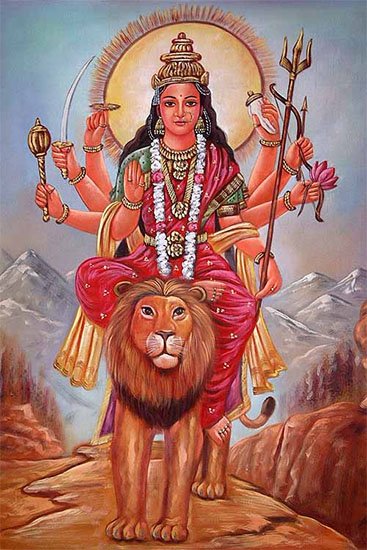
Shakta (शाक्त, śākta) or Shaktism (śāktism) represents a tradition of Hinduism where the Goddess (Devi) is revered and worshipped. Shakta literature includes a range of scriptures, including various Agamas and Tantras, although its roots may be traced back to the Vedas.
Languages of India and abroad
Marathi-English dictionary
paryaṭana (पर्यटन).—n S corruptly paryāṭana n Wandering about, peregrination, roaming.
paryaṭana (पर्यटन).—n Corruptly paryāṭana n Wandering about, roaming.
Marathi is an Indo-European language having over 70 million native speakers people in (predominantly) Maharashtra India. Marathi, like many other Indo-Aryan languages, evolved from early forms of Prakrit, which itself is a subset of Sanskrit, one of the most ancient languages of the world.
Sanskrit dictionary
Paryaṭana (पर्यटन).—Wandering or roaming about, travelling over.
Derivable forms: paryaṭanam (पर्यटनम्).
See also (synonyms): paryaṭita.
Paryaṭana (पर्यटन) or Paryyaṭana.—n.
(-naṃ) Wandering about, roaming. E. pari about, aṭana going.
Paryaṭana (पर्यटन).—i. e. pari-aṭ + ana, n. Wandering about, strolling, [Pañcatantra] 163, 22.
Paryaṭana (पर्यटन).—[neuter] wandering about, roaming through ([genetive] or —°).
Paryaṭana (पर्यटन):—[=pary-aṭana] [from pary-aṭ] n. wandering about, roaming through ([genitive case] or [compound]), [Pañcatantra; Bhāgavata-purāṇa]
Paryaṭana (पर्यटन):—[parya+ṭana] (naṃ) 1. n. Wandering about.
Paryaṭana (पर्यटन):—(von aṭ mit pari) n. das Herumstreichen, Durchstreichen [Amarakoṣa 2, 7, 35.] [Hemacandra’s Abhidhānacintāmaṇi 1501.] [Pañcatantra 163, 22.] prekṣaṇagoṣṭhīvardhāpanakotsavādilokamelakeṣu paryaṭanaṃ kṛtvā [Pañcatantra ed. orn. 49, 17.] bhūmeḥ [Bhāgavatapurāṇa 9, 7, 17.] pṛthvī [Oxforder Handschriften 17,a,4.]
Paryaṭana (पर्यटन):—n. das Herumstreichen , Durchstreichen (das Obj. im Gen. oder im Comp. vorangehend).
Paryaṭana (पर्यटन) in the Sanskrit language is related to the Prakrit word: Pariaḍaṇa.
Sanskrit, also spelled संस्कृतम् (saṃskṛtam), is an ancient language of India commonly seen as the grandmother of the Indo-European language family (even English!). Closely allied with Prakrit and Pali, Sanskrit is more exhaustive in both grammar and terms and has the most extensive collection of literature in the world, greatly surpassing its sister-languages Greek and Latin.
Hindi dictionary
Paryaṭana (पर्यटन) [Also spelled paryatan]:—(nm) touring; tourism; -[dala] touring party/team.
...
Kannada-English dictionary
Paryaṭana (ಪರ್ಯಟನ):—
1) [noun] the act of going about; wandering.
2) [noun] the act or process of traveling; travel.
3) [noun] the trips, journeys, tours, etc. taken by a person or persons; travel.
4) [noun] (jain.) a going about of a Jaina mendicant for receiving food from householders.
Kannada is a Dravidian language (as opposed to the Indo-European language family) mainly spoken in the southwestern region of India.
Nepali dictionary
Paryaṭana (पर्यटन):—n. touring; tourism;
Nepali is the primary language of the Nepalese people counting almost 20 million native speakers. The country of Nepal is situated in the Himalaya mountain range to the north of India.
See also (Relevant definitions)
Partial matches (+0): Pary, Para, Atana.
Starts with (+0): Paryatana-kendra, Paryatana-udyoga, Paryatana-vibhaga.
Full-text (+0): Paryatana-udyoga, Paryatana-kendra, Deshaparyatana, Paryatana-vibhaga, Sahasika-paryatana, Paryatane, Paletana, Paryaton, Pariadana, Paryaton-udyog, Paryaton-kendra, Paletanem, Paryyatana, Paryaton-vibhaag, Saahasik-paryaton, Paryatita, Paryatan, Palatanem, Palatana.
Relevant text
Search found 8 books and stories containing Paryatana, Pary-atana, Pary-aṭana, Paryaṭana; (plurals include: Paryatanas, atanas, aṭanas, Paryaṭanas). You can also click to the full overview containing English textual excerpts. Below are direct links for the most relevant articles:
Garga Samhita (English) (by Danavir Goswami)
Verse 1.1.6 < [Chapter 1 - Description of Śrī-Kṛṣṇa’s Glories]
Verse 1.15.46 < [Chapter 15 - Revelation of the Universal Form to Nanda’s Wife]
Verse 8.9.7 < [Chapter 9 - Lord Balarāma’s Rāsa Dance]
Dictionaries of Indian languages (Kosha)
Page 220 < [Hindi-Malayalam-English Volume 2]
Page 971 < [Hindi-Malayalam-English Volume 1]
Page 188 < [English-Gujarati-Hindi (1 volume)]
Chaitanya Bhagavata (by Bhumipati Dāsa)
Verse 1.1.175 < [Chapter 1 - Summary of Lord Gaura’s Pastimes]
Verse 2.24.56 < [Chapter 24 - The Lord Displays His Universal Form to Advaita]
Verse 3.3.167 < [Chapter 3 - Mahāprabhu’s Deliverance of Sarvabhauma, Exhibition of His Six-armed Form, and Journey to Bengal]
Bhakti-rasamrta-sindhu (by Śrīla Rūpa Gosvāmī)
Verse 3.2.8 < [Part 2 - Affection and Service (dāsya-rasa)]
Jainism in Odisha (Orissa) (by Ashis Ranjan Sahoo)
Jaina Antiquities at Yogichata (Keonjhar) < [Chapter 3: Survey of Jaina Antiquities in Odisha]
A Descriptive Catalogue of the Sanskrit Manuscripts, Madras (by M. Seshagiri Sastri)
Page 287 < [Volume 1, Part 3 (1905)]