Mrida, Mṛdā, Mṛḍa, Mṛḍā: 16 definitions
Introduction:
Mrida means something in Hinduism, Sanskrit, the history of ancient India. If you want to know the exact meaning, history, etymology or English translation of this term then check out the descriptions on this page. Add your comment or reference to a book if you want to contribute to this summary article.
The Sanskrit terms Mṛdā and Mṛḍa and Mṛḍā can be transliterated into English as Mrda or Mrida, using the IAST transliteration scheme (?).
Images (photo gallery)

In Hinduism
Shaktism
Mṛdā (मृदा, “the rubbing one”).—One of the names of the Goddess, Devī, who is regarded as the female principle of the divine; the embodiement of the energies of the Gods.
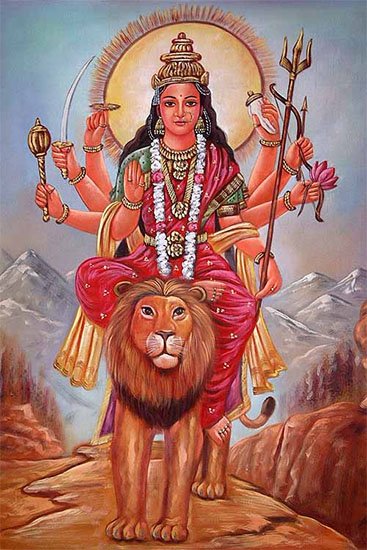
Shakta (शाक्त, śākta) or Shaktism (śāktism) represents a tradition of Hinduism where the Goddess (Devi) is revered and worshipped. Shakta literature includes a range of scriptures, including various Agamas and Tantras, although its roots may be traced back to the Vedas.
Purana and Itihasa (epic history)
Mṛḍa (मृड) is another name for Śiva, according to the Śivapurāṇa 2.3.24 (“Śiva consents to marry Pārvatī”).—Accordingly, as Viṣṇu said to Śiva: “O great lord, you are omniscient. You are the immanent being and the lord of all. Don’t you know what is in our mind? Still I speak at you bidding. O Śiva [i.e., Mṛḍa], many kinds of miseries have befallen us due to the demon Tāraka. It is for that that you have been propitiated by the gods. For attaining you Śivā is born of mountain Himācala. The demon’s death can be at the hands of your son alone begotten of her. [...]”.
Mṛḍa (मृड).—A name of Śiva.*
- * Bhāgavata-purāṇa IV. 2. 8.
The Purana (पुराण, purāṇas) refers to Sanskrit literature preserving ancient India’s vast cultural history, including historical legends, religious ceremonies, various arts and sciences. The eighteen mahapuranas total over 400,000 shlokas (metrical couplets) and date to at least several centuries BCE.
Ganitashastra (Mathematics and Algebra)
Mṛḍa (मृड) represents the number 11 (eleven) in the “word-numeral system” (bhūtasaṃkhyā), which was used in Sanskrit texts dealing with astronomy, mathematics, metrics, as well as in the dates of inscriptions and manuscripts in ancient Indian literature.—A system of expressing numbers by means of words arranged as in the place-value notation was developed and perfected in India in the early centuries of the Christian era. In this system the numerals [e.g., 11—mṛḍa] are expressed by names of things, beings or concepts, which, naturally or in accordance with the teaching of the Śāstras, connote numbers.
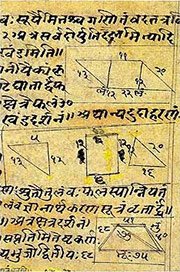
Ganita (गणित) or Ganitashastra refers to the ancient Indian science of mathematics, algebra, number theory, arithmetic, etc. Closely allied with astronomy, both were commonly taught and studied in universities, even since the 1st millennium BCE. Ganita-shastra also includes ritualistic math-books such as the Shulba-sutras.
Shaivism
Mṛdā (मृदा) refers to “soil” (used for cleaning the spoiled vessel), according to the Pātravidhi—a manual of the Lakulīśa Pāśupata school of Śaivism dealing with purification of the initiate’s vessel (pātra) and other concerned issues.—Accordingly, “[...] A vessel very much spoiled [by impure substance] should be broken and floated in water. (46ab) Or else, a wise man should take the vessel as soon as it is spoiled [by impurity], and with a cleaning brush and/or soil (mṛdā), he should remove grease and clean it properly; he should wipe it with cow’s hairs, and wash [all its] three corners. (46cd–47)”.
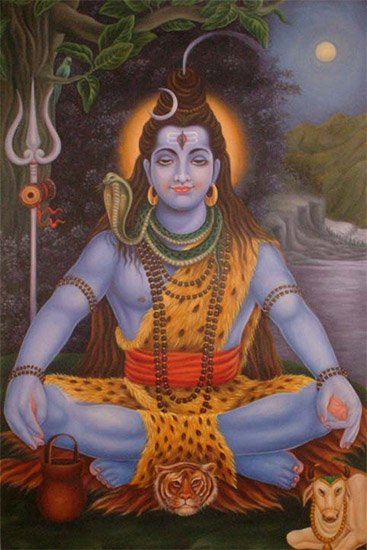
Shaiva (शैव, śaiva) or Shaivism (śaivism) represents a tradition of Hinduism worshiping Shiva as the supreme being. Closely related to Shaktism, Shaiva literature includes a range of scriptures, including Tantras, while the root of this tradition may be traced back to the ancient Vedas.
India history and geography
Mṛḍa.—also called pṛḍa or pruḍa (JNSI, Vol. XVI, p. 40); unit of metal weight like the mañjāḍi. Note: mṛḍa is defined in the “Indian epigraphical glossary” as it can be found on ancient inscriptions commonly written in Sanskrit, Prakrit or Dravidian languages.
--- OR ---
Mṛḍa.—name of a weight like māñjāḍi (q. v.). Cf. pṛḍa, pruḍ. Note: mṛḍa is defined in the “Indian epigraphical glossary” as it can be found on ancient inscriptions commonly written in Sanskrit, Prakrit or Dravidian languages.
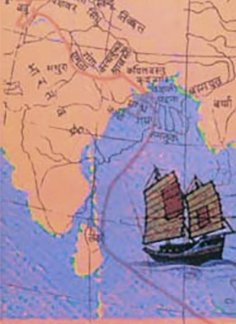
The history of India traces the identification of countries, villages, towns and other regions of India, as well as mythology, zoology, royal dynasties, rulers, tribes, local festivities and traditions and regional languages. Ancient India enjoyed religious freedom and encourages the path of Dharma, a concept common to Buddhism, Hinduism, and Jainism.
Languages of India and abroad
Sanskrit dictionary
Mṛḍa (मृड).—An epithet of Śiva; जनसुखकृते सत्त्वोद्रिक्तौ मृडाय नमो नमः (janasukhakṛte sattvodriktau mṛḍāya namo namaḥ) Śiva-mahimna S.3.
Derivable forms: mṛḍaḥ (मृडः).
--- OR ---
Mṛḍā (मृडा).—An epithet of Pārvatī; शङ्के सुन्दरि कालकूटमपिबत् मूढो मृडानीपतिः (śaṅke sundari kālakūṭamapibat mūḍho mṛḍānīpatiḥ) Gītagovinda 12.
See also (synonyms): mṛḍānī, mṛḍī.
--- OR ---
Mṛdā (मृदा).—See मृद् (mṛd).
Mṛḍa (मृड).—m.
(-ḍaḥ) 1. A name of Siva. 2. The fire that completes an oblation. f. [ḍā or -ḍā(dā)nī] Durga, the wife of Siva. E. mṛḍ to be pleased or delighted, aff. ka, fem. aff. ṅīṣ, with ānuk augment.
--- OR ---
Mṛdā (मृदा).—f.
(-dā) Earth, clay, soil. E. mṛd to trample on, affs. aṅ and ṭāp .
Mṛḍa (मृड).—[mṛḍ + a], m. Śiva. f. ḍā, ḍī, Durgā.
--- OR ---
Mṛdā (मृदा).—[mṛd + ā], f. Earth, clay.
— Cf. [Gothic.] mulda; [Anglo-Saxon.] molde; probably [Latin] merda.
Mṛḍa (मृड).—[adjective] merciful, gracious; [masculine] [Epithet] of Agni & Śiva.
--- OR ---
Mṛdā (मृदा).—[feminine] clay, loam.
1) Mṛḍa (मृड):—[from mṛḍ] mfn. showing compassion or mercy, gracious, [Kāṭhaka; Āśvalāyana-gṛhya-sūtra]
2) [v.s. ...] m. Name of Agni at the Pūrṇāhuti, [Gṛhyāsaṃgraha]
3) [v.s. ...] of Śiva, [Śivagītā, ascribed to the padma-purāṇa]
4) [v.s. ...] f(ā or ī). Name of Pārvati, [cf. Lexicographers, esp. such as amarasiṃha, halāyudha, hemacandra, etc.]
5) Mṛdā (मृदा):—[from mṛd] f. clay, loam, earth, [Śvetāśvatara-upaniṣad]
1) Mṛḍa (मृड):—(ḍaḥ) 1. m. Shiva. f. (tī) Durgā.
2) Mṛdā (मृदा):—(dā) 1. f. Earth, soil.
Mṛḍa (मृड):—1. (von adj. marḍ)
1) adj. Erbarmen übend, gnädig [Kāṭhaka-Recension 37, 13.] [ĀŚV. GṚHY. 4, 8, 19.] —
2) m. a) ein Name des Agni: pūrṇāhutyāṃ mṛḍo nāma [Gṛhyasaṃgrahapariśiṣṭa 1, 9.] — b) Beiname Śiva’s [Pāṇini’s acht Bücher 4, 1, 49.] [Vopadeva’s Grammatik 4, 23.] [Amarakoṣa 1, 1, 1, 26.] [Hemacandra’s Abhidhānacintāmaṇi 197.] [Halāyudha 1, 13.] [Harivaṃśa 7448.] [Bhāgavatapurāṇa 4, 2, 8. 3, 10. 7, 9.] [Śivanāmasahasra] —
3) f. ā und ī Beiname der Pārvatī [Śabdakalpadruma] angeblich nach [Halāyudha]; vgl. mṛḍānī .
--- OR ---
Mṛḍa (मृड):—
--- OR ---
Mṛdā (मृदा):—f. = mṛd [Dvirūpakoṣa im Śabdakalpadruma] yathaiva bimbaṃ mṛdayopaliptaṃ tejomayaṃ bhrājate tatsudhātam [ŚVETĀŚV. Upakośā 2, 14.]
--- OR ---
Mṛḍa (मृड):—1.
2) b) [Bhāgavatapurāṇa 10, 60, 44. 62, 4.]
Mṛḍa (मृड):—1. —
1) Adj. Erbarmen übend , gnädig. —
2) m. — a) Name Agni’s bei der Pūrṇāhuti. — b) Beiname Śiva's. —
3) f. ā und ī Beiname der Pārvati.
--- OR ---
Mṛḍa (मृड):—2. in āṣṭā (Nachtr.
1) und upavāya.
--- OR ---
Mṛdā (मृदा):—f. Lehm , Thon.
Sanskrit, also spelled संस्कृतम् (saṃskṛtam), is an ancient language of India commonly seen as the grandmother of the Indo-European language family (even English!). Closely allied with Prakrit and Pali, Sanskrit is more exhaustive in both grammar and terms and has the most extensive collection of literature in the world, greatly surpassing its sister-languages Greek and Latin.
Kannada-English dictionary
Mṛḍa (ಮೃಡ):—[noun] Śiva.
Kannada is a Dravidian language (as opposed to the Indo-European language family) mainly spoken in the southwestern region of India.
Nepali dictionary
Mṛḍā (मृडा):—n. → पार्वती [pārvatī]
Nepali is the primary language of the Nepalese people counting almost 20 million native speakers. The country of Nepal is situated in the Himalaya mountain range to the north of India.
See also (Relevant definitions)
Starts with (+10): Mridabhrita, Mridacchadya, Mridadibimbanirmana, Mridaghatavat, Mridahvaya, Mridakara, Mridaku, Mridamgavadaka, Mridamgavadaki, Mridamrida, Mridana, Mridanga, Mridangaka, Mridangakara, Mridangaketu, Mridanganada, Mridangapanava, Mridangapha, Mridangaphala, Mridangaphalini.
Full-text (+30): Mridakara, Pramrida, Mridankura, Mridani, Ailamrida, Prida, Mirutai, Mridapratima, Mridini, Kusindha, Mridaya, Mridayaku, Mirutan, Mridi, Mridana, Mridaku, Mridayat, Mriditri, Prud, Mridanitantra.
Relevant text
Search found 67 books and stories containing Mrida, Mṛdā, Mṛḍa, Mrda, Mṛḍā, Mṟḍa; (plurals include: Mridas, Mṛdās, Mṛḍas, Mrdas, Mṛḍās, Mṟḍas). You can also click to the full overview containing English textual excerpts. Below are direct links for the most relevant articles:
Shiva Purana [sanskrit/english]
Krishna Sandarbha of Jiva Goswami (by Kusakratha Prabhu)
Kathasaritsagara [Sanskrit/English] (by C. H. Tawney)
A Descriptive Catalogue of the Sanskrit Manuscripts, Madras (by M. Seshagiri Sastri)
Notices of Sanskrit Manuscripts (by Rajendralala Mitra)