Dasabala, Dasa-bala, Daśabala, Dashabala, Dashan-bala: 14 definitions
Introduction:
Dasabala means something in Buddhism, Pali, Hinduism, Sanskrit, the history of ancient India. If you want to know the exact meaning, history, etymology or English translation of this term then check out the descriptions on this page. Add your comment or reference to a book if you want to contribute to this summary article.
The Sanskrit term Daśabala can be transliterated into English as Dasabala or Dashabala, using the IAST transliteration scheme (?).
In Buddhism
Mahayana (major branch of Buddhism)
Daśabala (दशबल) or Jñānabala refers to the “ten powers” of the Bodhisattva, according to the 2nd century Mahāprajñāpāramitāśāstra chapter 39.
The list from Kośa and Kośavyākhyā:
- sthānāsthāna-jñānabala,
- karmavipāka-jñānabala,
- dhyānavimokṣasamādhisamāpatti-jñānabala,
- indriyaparāpara-jñānabala,
- nānādhimukti-jñānabala,
- nānādhātu-jñānabala,
- sarvatragāminīpratipad-jñānabala,
- pūrvanivasānasmṛti-jñānabala,
- cyutpapāda-jñānabala,
- āsravakṣaya-jñānabala.
By using these ten types of powers (daśabala), the Buddha saves beings. True and free of error, all are perfected (saṃpanna). This is why, although the Buddha possesses innumerable powers, we speak only of these ten powers.
Daśabala (दशबल) refers to the “ten powers”, according to the Gaganagañjaparipṛcchā: the eighth chapter of the Mahāsaṃnipāta (a collection of Mahāyāna Buddhist Sūtras).—Accordingly, “Then, the Lord went on to speak these verses: ‘(38) Giving through ten powers (daśabala) is the root, it is taught. Being based on that, they are endowed with morality (śīla). They, having been established in the qualities of morality (śīlaguṇa), attain meditation (dhyāna), and fulfil the qualities of unattached insight.. [...]’”.
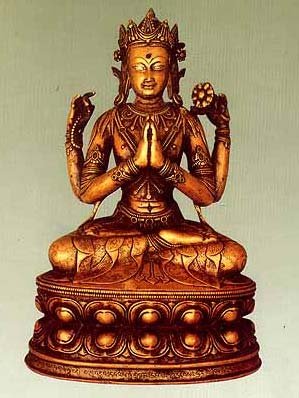
Mahayana (महायान, mahāyāna) is a major branch of Buddhism focusing on the path of a Bodhisattva (spiritual aspirants/ enlightened beings). Extant literature is vast and primarely composed in the Sanskrit language. There are many sūtras of which some of the earliest are the various Prajñāpāramitā sūtras.
India history and geography
Daśabala (दशबल) refers to the Aju-baha—one of the various Bāhās (i.e., a sacred courtyard in the Newari community where Buddhist priests reside) situated in Kathmandu.—The valley of Kathmandu is known as “Nepal Mandala”, encircling the three cities of Kathmandu (northwest), Patan (Lalitpur) (south) and Bhaktapur (east). The Vihāras, Bāhās and Bahīs were, and still are, the centre for Buddhist activities and also dwelling place of the monks or monastics. For example, Aju-bahal, which is known in Sanskrit as Daśabala-vihāra. These monstaries, courtyards and other buildings possess a central place in Buddhism and were mostly situated within the vicinity of these three cities.
The history of India traces the identification of countries, villages, towns and other regions of India, as well as mythology, zoology, royal dynasties, rulers, tribes, local festivities and traditions and regional languages. Ancient India enjoyed religious freedom and encourages the path of Dharma, a concept common to Buddhism, Hinduism, and Jainism.
Languages of India and abroad
Pali-English dictionary
dasabala : (adj.) endowed with ten supernormal powers, the Buddha.
Dasabala refers to: , (Sk. daśabala) endowed with 10 (supernormal) powers, Ep. of the Buddhas, esp. of Kassapa Buddha Vin.I, 38=J.I, 84; S.II, 27; Vism.193, 391; DhA.I, 14; VvA.148, 206, etc.
Note: dasabala is a Pali compound consisting of the words dasa and bala.
dasabala (ဒသဗလ) [(na) (န)]—
[dasa+bala.ka.328.,ṭī.1.(dagabala-saṃç dagavala-prā)]
[ဒသ+ဗလ။ ကစ္စည်း။၃၂၈။ဓာန်၊ဋီ။၁။ (ဒဂဗလ-သံ,ဒဂဝလ-ပြာ)]
[Pali to Burmese]
dasabala—
(Burmese text): (၁) ၁ဝ-ပါးသော စွမ်းအား၊ စွမ်းအား ၁ဝ-ပါး၊ (က) ကိုယ်စွမ်းအား ၁ဝ ပါး။ (ယင်း ၁ဝ ပါး အကျယ်ကို။ ဒသဆဒ္ဒန္တနာဂဗလ-ကြည့်)။ (ခ) ဉာဏ်စွမ်းအား ၁ဝ-ပါး။ (ယင်း ၁ဝ-ပါး အကျယ်ကို။ ဒသဗလဉာဏ-ကြည့်)။ (၃) ဒသဗလသုတ်။ (တိ) (၄) ၁၀ ပါးသော စွမ်းအားရှိသော၊ စွမ်းအား၁၀ ပါးရှိသော။ (က) ကိုယ်စွမ်းအား ၁ဝ ပါးရှိသော။ (ခ) ဥာဏ်စွမ်းအား ၁ဝပါးရှိသော၊သူ (မြတ်စွာဘုရား)။ (ဒါန သီလ ခမာ ဝီရိယ ဈာန် ပညာ ဗိုလ် ဥပါယ ပဏိဓိ ဥာဏ်သည် ဒသဗလမည်၏၊ (ဗျာချာသုဓာ-ဋီ။ထောမ)။ ဗလဂုဏောပေတ-လည်းကြည့်။ ဒသလေသုတ္တ-လည်းကြည့်။ ဒသလေသုတ္တန္တဟာရက-ကြည့်။ မူရင်းကြည့်ပါ။
(Auto-Translation): (1) Ten powers, power tenfold, (a) bodily strength tenfold. (Refer to the Dasa Dakkhinata Gabbala - see). (b) mental strength tenfold. (Refer to the Dasa Bala Jnana - see). (3) Dasa Bala Sutra. (d) (4) possesses tenfold power, has tenfold strength. (a) possesses bodily strength tenfold. (b) possesses mental strength tenfold, the (Noble One). (Dana, Sila, Samadhi, Viriya, Jhana, Pandita, Upaya, and Jnana are the Dasa Bala, (Vyakara Suttha - in fact). Also refer to the qualities of strength. Also refer to the Dasa Laesutra. Also view the Dasa Laesa Danta - see. Please check the original.
Pali is the language of the Tipiṭaka, which is the sacred canon of Theravāda Buddhism and contains much of the Buddha’s speech. Closeley related to Sanskrit, both languages are used interchangeably between religions.
Sanskrit dictionary
Daśabala (दशबल).—epithets of Buddha.
Derivable forms: daśabalaḥ (दशबलः).
Daśabala is a Sanskrit compound consisting of the terms daśan and bala (बल). See also (synonyms): daśabhūmiga.
Daśabala (दशबल).—adj. (= Pali dasa°), possessing the ten bala, epithet and synonym of (any) Buddha, often used in the same way as tathāgata, jina, etc.: Mahāvyutpatti 25; (yo dadyā jambudvī- paṃ saptaratnasaṃcayaṃ) daśabalānāṃ Mahāvastu i.80.7, who gives…to the Buddhas: similarly 8; 116.2, etc.; in Divyāvadāna 275.5, 7 daśabala Kāśyapa (as either two words or one) [Page263-a+ 71] refers to a monk in Śākyamuni's entourage (not to the former Buddha Kāśyapa, who according to [Pali Text Society’s Pali-English Dictionary] and Malalasekara (Dictionary of Pali Proper Names) was ‘especially’ called daśabala, a statement for which I have found no evidence; in [Buddhist Hybrid Sanskrit], at any rate, daśabala applies equally to any and every Buddha); see s.v. Kāśyapa (2).
Daśabala (दशबल).—m.
(-laḥ) A Bud'dha of Baud'dha teacher. E. daśa ten, (the ten worlds,) bala powerful.
1) Daśabala (दशबल) as mentioned in Aufrecht’s Catalogus Catalogorum:—a buddhist, composed in 1055: Tithisāraṇikā jy. Oxf. 327^b.
2) Daśabala (दशबल):—Daśabalakārikā.
Daśabala (दशबल):—[=daśa-bala] [from daśa] m. ‘possessing 10 powers’, Name of a Buddha, [cf. Lexicographers, esp. such as amarasiṃha, halāyudha, hemacandra, etc.]
Daśabala (दशबल):—(daśan + bala) adj. zehn Kräfte besitzend; Beiw. und Beiname eines Buddha [Amarakoṣa 1, 1, 1, 9.] [Hemacandra’s Abhidhānacintāmaṇi 234.] [Vyutpatti oder Mahāvyutpatti 2.] Vgl. [BURN. Lot. de Lassen’s Anthologie b. l. 781. fgg.] [KÖPPEN], Die Rel. d. Buddha 438. fg.
Daśabala (दशबल):—m. ein Buddha.
Sanskrit, also spelled संस्कृतम् (saṃskṛtam), is an ancient language of India commonly seen as the grandmother of the Indo-European language family (even English!). Closely allied with Prakrit and Pali, Sanskrit is more exhaustive in both grammar and terms and has the most extensive collection of literature in the world, greatly surpassing its sister-languages Greek and Latin.
See also (Relevant definitions)
Partial matches (+0): Dasa, The, The, Ba-la, Bala, Te, Taca, Dasabala.
Starts with (+7): Dasabala Kassapa, Dasabala Sutta, Dasabala Vagga, Dasabalabala, Dasabalabaladhari, Dasabalabhimukha, Dasabaladattiya, Dasabaladesita, Dasabaladhammadhari, Dasabaladhara, Dasabaladhari, Dasabalaguna, Dasabalagunaganaparidipana, Dasabalagunakatha, Dasabalagunopeta, Dasabalanana, Dasabalananabaladhari, Dasabalappatta, Dasabalasamannagata, Dasabalasavaka.
Full-text (+60): Dashabalakashyapa, Dashabalasutra, Dashabalakarika, Dasabala Sutta, Dashabalabalin, Dasabaladhari, Dasabalabala, Dashabala-mahabala, Dasabalanana, Shi li jia ye, Mahagotamadasabala, Dipankaradasabala, Dasabalaguna, Dasabalasavaka, Dasabalasamannagata, Vipassidasabala, Dasabalasuttantaharaka, Padumuttaradasabala, Kassapadasabala, Dasabaladesita.
Relevant text
Search found 32 books and stories containing Dasabala, Dasa-bala, Daśa-bala, Daśabala, Daśan-bala, Dasan-bala, Dasha-bala, Dashabala, Dashabalas, Dashan-bala, The dasabala; (plurals include: Dasabalas, balas, Daśabalas, Dashabalas, Dashabalases, The dasabalas). You can also click to the full overview containing English textual excerpts. Below are direct links for the most relevant articles:
Samyuta Nikaya (Linked Discourses)
Discourse 12.21: Dasabala-sutta < [12.3. Dasabala-vagga: the Ten Powers]
Discourse 12.22: Dutiyadasabala-sutta < [12.3. Dasabala-vagga: the Ten Powers]
Discourse 12.30: Dutiyasamaṇabrāhmaṇa-sutta < [12.3. Dasabala-vagga: the Ten Powers]
Apadana commentary (Atthakatha) (by U Lu Pe Win)
Dipankara Buddha predicts Buddhahood for Sumedha < [Part 1 - Remote preface (dūre-nidāna)]
Establishing Many Monasteries < [Part 3 - Discourse on proximate preface (santike-nidāna)]
Buddha finds disciples and starts his order < [Part 3 - Discourse on proximate preface (santike-nidāna)]
Amaravati Art in the Context of Andhra Archaeology (by Sreyashi Ray chowdhuri)
Bandhuma Jātaka < [Chapter 3 - Amarāvatī and the Formative Stage of the Buddhist Art]
Jataka tales [English], Volume 1-6 (by Robert Chalmers)
Jataka 463: Suppāraka-jātaka < [Volume 4]
Jataka 448: Kukkuṭa-jātaka < [Volume 4]
Jataka 468: Janasandha-jātaka < [Volume 4]
Maha Buddhavamsa—The Great Chronicle of Buddhas (by Ven. Mingun Sayadaw)
Part 16 - What is the Fruit of the Pāramīs < [Chapter 7 - On Miscellany]
Part 14 - Making the Joyful, Solemn Utterance (Udāna) < [Chapter 7 - The Attainment of Buddhahood]
Part 14 - The Ten Powers: Dasabala-ñāṇa < [Chapter 42 - The Dhamma Ratanā]
Mahavastu (great story) (by J. J. Jones)
Chapter XXVI - The Sunshades < [Volume I]
Chapter XVIII - Attributes of the Buddhas < [Volume I]
Chapter XVII - The tenth Bhūmi < [Volume I]