Wondrous, Wondrously: 1 definition
Introduction:
Wondrous means something in Hinduism, Sanskrit. If you want to know the exact meaning, history, etymology or English translation of this term then check out the descriptions on this page. Add your comment or reference to a book if you want to contribute to this summary article.
Images (photo gallery)
In Hinduism
Yoga (school of philosophy)
1) Wonderous things are denoted by the Sanskrit therm Mahā-Adbhuta, according to the Amanaska Yoga treatise dealing with meditation, absorption, yogic powers and liberation.—Accordingly, as Īśvara says to Vāmadeva: “[...] [Now], I shall define the nature of that highest, mind-free absorption which arises for those devoted to constant practice. [...] Then, by means of an absorption for a period of thirteen days, the best of Yogins attains most wonderously (mahā-adbhuta) the Siddhi of moving in the ether at will. [...]”.
2) (That which is) Wondrous is denoted by the Sanskrit term Mahā-Āścarya, according to the Śivayogadīpikā by Sadāśivayogīśvara: a text dealing with Śaivism and Haṭhayoga in two hundred and eighty-nine verses.—Accordingly, while describing the worship of Śiva: “Therefore, reverentially practise this auxiliary of worshipping Śiva which is the wondrous (āścarya) yoga with eight auxiliaries”.
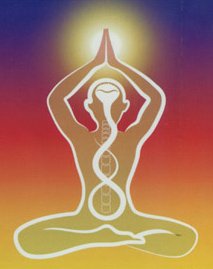
Yoga is originally considered a branch of Hindu philosophy (astika), but both ancient and modern Yoga combine the physical, mental and spiritual. Yoga teaches various physical techniques also known as āsanas (postures), used for various purposes (eg., meditation, contemplation, relaxation).
See also (Relevant definitions)
Full-text (+583): Navala, Ashcarya, Alolika, Miao zhi hui, Miao xin, Miao li, Shen miao, Miao jue, Zhen kong miao you, Miao dao, Miao zhen ru xing, Adbhuta, Mahadbhuta, Vapus, Wei miao, Miao tu, Shen bian shi, Miao wu, Anotha, Vismayaniya.
Relevant text
Search found 157 books and stories containing Wondrous, Wondrously, Wonderous, Wonderously; (plurals include: Wondrouses, Wondrouslies, Wonderouses, Wonderouslies). You can also click to the full overview containing English textual excerpts. Below are direct links for the most relevant articles:
The Role of Wonder in Creating Identity < [Volume 14, Issue 6 (2023)]
A Study on the Philosophy of Perfect Harmony in the Huayan School < [Volume 16, Issue 5 (2025)]
The “Adbhuta-Dharma” Narratives in Translated Chinese... < [Volume 14, Issue 5 (2023)]
Guhyagarbha Tantra (with Commentary) (by Gyurme Dorje)
Text 6.25-26 (Commentary) < [Chapter 6 (text and commentary)]
Text 13.21 (Commentary) < [Chapter 13 (Text and Commentary)]
Text 7.17 (Commentary) < [Chapter 7 (text and commentary)]
Jnaneshwari (Bhavartha Dipika) (by Ramchandra Keshav Bhagwat)
Verse 11.47 < [Chapter 11 - Vishvarupa-darshana-yoga]
Verse 18.61 < [Chapter 18 - Moksha-sannyasa-yoga]
Verse 11.20 < [Chapter 11 - Vishvarupa-darshana-yoga]
The Great Chariot (by Longchenpa)
Part 3a.3 - The conduct accompanying that < [B. The explanation of meditation practice]
The Homage and the Vow to Compose
Part 3e.2a - The self-existing nirmanakaya < [B. The explanation of the kayas and wisdoms]
Ramayana of Valmiki (Griffith) (by Ralph T. H. Griffith)
Chapter I: Hanuman’s Leap < [Book V]
Chapter LXI: The Vanarsh Alarm < [Book VI]
Chapter XLIV: Artcha’s Death < [Book III]
Devi Bhagavata Purana (by Swami Vijñanananda)