Varahatirtha, Varaha-tirtha, Varāhatīrtha, Vārāhatīrtha: 5 definitions
Introduction:
Varahatirtha means something in Hinduism, Sanskrit, the history of ancient India. If you want to know the exact meaning, history, etymology or English translation of this term then check out the descriptions on this page. Add your comment or reference to a book if you want to contribute to this summary article.
In Hinduism
Purana and Itihasa (epic history)
Varāhatīrtha (वराहतीर्थ).—Here Viṣṇu as Varāha worshipped Śiva; bath on the 12th day of the dark or bright half of the month leads to Viṣṇulokam.*
- * Matsya-purāṇa 193. 73-74.
Vārāhatīrtha (वाराहतीर्थ) refers to the name of a Tīrtha (pilgrim’s destination) mentioned in the Mahābhārata (cf. III.81.15). Note: The Mahābhārata (mentioning Vārāha-tīrtha) is a Sanskrit epic poem consisting of 100,000 ślokas (metrical verses) and is over 2000 years old.
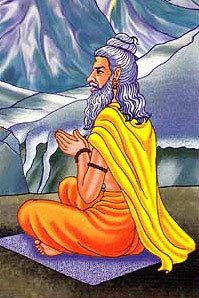
The Purana (पुराण, purāṇas) refers to Sanskrit literature preserving ancient India’s vast cultural history, including historical legends, religious ceremonies, various arts and sciences. The eighteen mahapuranas total over 400,000 shlokas (metrical couplets) and date to at least several centuries BCE.
India history and geography
Varāhatīrtha (वराहतीर्थ) is the name of a sacred place mentioned in the Anantaśayanakṣetramāhātmya, a text talking about the Thiruvananthapuram temple in eleven chapters, written before the 14th century and claiming to be part of the Brahmāṇḍapurāṇa.—Pleased by Divākara’s devotion, Viṣṇu appears before him as a radiant young child. [...] The sage repeatedly pleads with the boy to appear from the hollow where he had disappeared. Divākara meditates there, visualising Viṣṇu in the form of Anantapadmanābha. Suddenly the huge tree is transformed into the form of Padmanābha lying on a serpent along with his attributes. [...] The middle part of his body is on the southern side of the Varāhatīrtha and west of the Padmatīrtha (the present location of the Tiruvanantapuram temple).
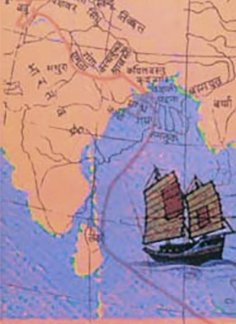
The history of India traces the identification of countries, villages, towns and other regions of India, as well as mythology, zoology, royal dynasties, rulers, tribes, local festivities and traditions and regional languages. Ancient India enjoyed religious freedom and encourages the path of Dharma, a concept common to Buddhism, Hinduism, and Jainism.
Languages of India and abroad
Sanskrit dictionary
Vārāhatīrtha (वाराहतीर्थ):—[=vārāha-tīrtha] [from vārāha] n. Name of a Tīrtha, [Catalogue(s)]
Vārāhatīrtha (वाराहतीर्थ):—n. Nomen proprium eines Tīrtha [Oxforder Handschriften 66,a,7. 77,a,14.] — Vgl. vārāha
4) a).
Sanskrit, also spelled संस्कृतम् (saṃskṛtam), is an ancient language of India commonly seen as the grandmother of the Indo-European language family (even English!). Closely allied with Prakrit and Pali, Sanskrit is more exhaustive in both grammar and terms and has the most extensive collection of literature in the world, greatly surpassing its sister-languages Greek and Latin.
See also (Relevant definitions)
Partial matches (+0): Varaha, Tirtha.
Starts with (+0): Varahatirthamahatmya.
Full-text (+0): Udirnavarahatirtha, Varahatirthamahatmya, Linkavarahatirtha, Adivarahatirtha, Jayavarahatirtha, Shvetavarahatirtha, Varahavatara, Ramatirtha, Anantatirtha, Dakshinaganga, Kanvatirtha, Tirthamahatmya, Padmatirtha, Payoshni, Varaha.
Relevant text
Search found 13 books and stories containing Varahatirtha, Varaha-tirtha, Varāha-tīrtha, Vārāha-tīrtha, Varāhatīrtha, Vārāhatīrtha; (plurals include: Varahatirthas, tirthas, tīrthas, Varāhatīrthas, Vārāhatīrthas). You can also click to the full overview containing English textual excerpts. Below are direct links for the most relevant articles:
Sanskrit sources of Kerala history (by Suma Parappattoli)
5.4. Syanandurapuravarnana-samuccaya < [Chapter 2 - Historical details from Mahatmyas and Prashastis]
Narada Purana (English translation) (by G. V. Tagare)
Chapter 104 - The Skanda Purāṇa: Contents < [Part 4 - Pūrva-bhāga: Caturtha-pāda]
Chapter 65 - Pilgrimage to Kurukṣetra < [Part 5 - Uttara-bhāga]
Skanda Purana (by G. V. Tagare)
Chapter 149 - The Greatness of Liṅga Vārāha Tīrtha < [Section 3 - Revā-khaṇḍa]
Chapter 231 - The Number of Tīrthas Enumerated < [Section 3 - Revā-khaṇḍa]
Chapter 189 - The Greatness of Udīrṇa Vārāha Tīrtha < [Section 3 - Revā-khaṇḍa]
Padma Purana (by N.A. Deshpande)
Chapter 169 - Varāha-tīrtha < [Section 6 - Uttara-Khaṇḍa (Concluding Section)]
Chapter 37 - Other Holy Places of Vārāṇasī < [Section 3 - Svarga-khaṇḍa (section on the heavens)]
Chapter 20 - Naraka, Kapilātīrtha, Ṛṣitīrtha, Gaṇeśvara, Bhṛgutīrtha, Somatīrtha etc. < [Section 3 - Svarga-khaṇḍa (section on the heavens)]
Narasimha Purana (english Translation) (by Siddheswar Jena)
Sucipatra or contents of the Vamana Purana < [Purana, Volume 12, Part 1 (1970)]
Pehoa: The Ancient Prithudaka < [Purana, Volume 9, Part 2 (1967)]