Navasamjna, Navasaṃjñā, Nava-samjna: 2 definitions
Introduction:
Navasamjna means something in Buddhism, Pali, Hinduism, Sanskrit. If you want to know the exact meaning, history, etymology or English translation of this term then check out the descriptions on this page. Add your comment or reference to a book if you want to contribute to this summary article.
In Buddhism
Mahayana (major branch of Buddhism)
Navasaṃjñā (नवसंज्ञा) is another name for the Aśubhasaṃjñā, or “nine horrible notions”, according to the 2nd century Mahāprajñāpāramitāśāstra chapter 35. The Bodhisattva-mahāsattva must cultivate the nine notions (navasaṃjñā) of the horrible. These nine notions [of the horrible] eliminate the seven types of lust (saptavidha-rāga) in people.
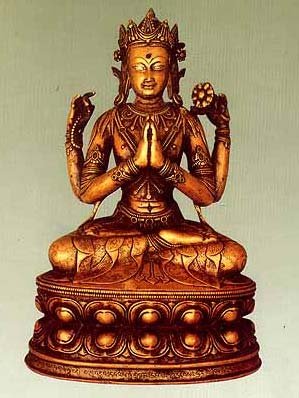
Mahayana (महायान, mahāyāna) is a major branch of Buddhism focusing on the path of a Bodhisattva (spiritual aspirants/ enlightened beings). Extant literature is vast and primarely composed in the Sanskrit language. There are many sūtras of which some of the earliest are the various Prajñāpāramitā sūtras.
Languages of India and abroad
Sanskrit dictionary
Navasamjñā (in Sanskrit) can be associated with the following Chinese terms:
1) 九想 [jiǔ xiǎng]: “nine kinds of meditation (on a corpse to quell desire)”.
Note: navasamjñā can be alternatively written as: nava-samjñā.
2) Navasaṃjñā (in Sanskrit) can be associated with the following Chinese terms:
1) 九想 [jiǔ xiǎng]: “nine kinds of meditation (on a corpse to quell desire)”.
Sanskrit, also spelled संस्कृतम् (saṃskṛtam), is an ancient language of India commonly seen as the grandmother of the Indo-European language family (even English!). Closely allied with Prakrit and Pali, Sanskrit is more exhaustive in both grammar and terms and has the most extensive collection of literature in the world, greatly surpassing its sister-languages Greek and Latin.
See also (Relevant definitions)
Partial matches (+0): Samjna, Nava.
Full-text (+0): Jiu xiang, Jiu xiang guan, Agni, Purisha, Kurmi, Bhasma, Ashucidharma, Asuci, Jiu, Ashubhasamjna.
Relevant text
Search found 2 books and stories containing Navasamjna, Navasaṃjñā, Nava-samjna, Nava-saṃjñā, Navasamjñā, Nava-samjñā; (plurals include: Navasamjnas, Navasaṃjñās, samjnas, saṃjñās, Navasamjñās, samjñās). You can also click to the full overview containing English textual excerpts. Below are direct links for the most relevant articles:
Maha Prajnaparamita Sastra (by Gelongma Karma Migme Chödrön)
Preliminary note on the nine horrible notions (navāśubhasaṃjñā) < [Chapter XXXV - The Nine Horrible Notions]
I. The position of the nine notions (navasaṃjñā) < [Part 1 - The nine notions according to the Abhidharma]
A Dictionary Of Chinese Buddhist Terms (by William Edward Soothill)