Upapadya, Upapādya: 9 definitions
Introduction:
Upapadya means something in Buddhism, Pali, Hinduism, Sanskrit, Marathi. If you want to know the exact meaning, history, etymology or English translation of this term then check out the descriptions on this page. Add your comment or reference to a book if you want to contribute to this summary article.
In Buddhism
Tibetan Buddhism (Vajrayana or tantric Buddhism)
Upapādya (उपपाद्य) refers to the “generation” (of sentient beings), according to the 10th-century Ḍākārṇava-tantra: one of the last Tibetan Tantric scriptures belonging to the Buddhist Saṃvara tradition consisting of 51 chapters.—Accordingly, [while describing the Adamantine Circle (vajracakra)]: “[...] [On each realm], there are thirty-six [couples of heroes and Yoginīs] in total; [it] consists in all merits and is powerful. In this way, [every] realm has the nature of the heroes and Yoginīs. In [all circles inside] the ring of mountains, classes of birth of sentient beings are to be generated (upapādya) in order; they are again divided into thirty-six [and arranged] in the respective places [on each circle] in order. The Adamantine Circle, the first, is thus [taught]. [...]”.
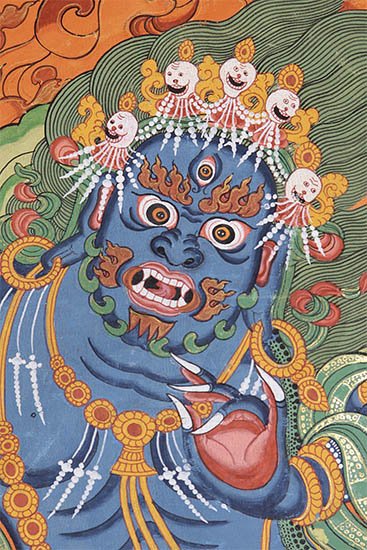
Tibetan Buddhism includes schools such as Nyingma, Kadampa, Kagyu and Gelug. Their primary canon of literature is divided in two broad categories: The Kangyur, which consists of Buddha’s words, and the Tengyur, which includes commentaries from various sources. Esotericism and tantra techniques (vajrayāna) are collected indepently.
Languages of India and abroad
Marathi-English dictionary
upapādya (उपपाद्य).—a S To be stated, laid down, proposed &c.: also as s n A proposition or a position.
Marathi is an Indo-European language having over 70 million native speakers people in (predominantly) Maharashtra India. Marathi, like many other Indo-Aryan languages, evolved from early forms of Prakrit, which itself is a subset of Sanskrit, one of the most ancient languages of the world.
Sanskrit dictionary
Upapādya (उपपाद्य).—a.
1) To be effected or done.
2) To be proved or shown.
3) Coming into existence.
1) Upapādya (उपपाद्य):—[=upa-pādya] [from upa-pad] mfn. to be effected or done
2) [v.s. ...] to be shown or proved
3) [v.s. ...] being produced, coming into existence.
Upapādya (उपपाद्य):—(von pad im caus. mit upa) adj. was zur Erscheinung gebracht wird [morgenländischen Gesellschaft 7, 310, Nalopākhyāna 2.]
Upapādya (उपपाद्य):—Adj. was zur Erscheinung gebracht wird.
Upapadya (in Sanskrit) can be associated with the following Chinese terms:
1) 得往生 [dé wǎng shēng]: “attain rebirth [in the Pure Land”.
2) 生 [shēng]: “arising”; “production”.
3) 生已 [shēng yǐ]: “fully arisen”.
Sanskrit, also spelled संस्कृतम् (saṃskṛtam), is an ancient language of India commonly seen as the grandmother of the Indo-European language family (even English!). Closely allied with Prakrit and Pali, Sanskrit is more exhaustive in both grammar and terms and has the most extensive collection of literature in the world, greatly surpassing its sister-languages Greek and Latin.
Kannada-English dictionary
Upapādya (ಉಪಪಾದ್ಯ):—[noun] that which is to be proved by scientific experiment, logical argument etc.
Kannada is a Dravidian language (as opposed to the Indo-European language family) mainly spoken in the southwestern region of India.
Nepali dictionary
Upapādya (उपपाद्य):—adj. provable; that may be proved/demonstrated;
Nepali is the primary language of the Nepalese people counting almost 20 million native speakers. The country of Nepal is situated in the Himalaya mountain range to the north of India.
See also (Relevant definitions)
Partial matches (+0): Upa, Padya.
Starts with (+0): Upapadyamana, Upapadyamanakalena, Upapadyaparinirvayin, Upapadyate, Upapadyavedaniya, Upapadyavedaniyakarma, Upapadyavedya.
Full-text (+0): Upapadyaparinirvayin, Shun ci sheng shou ye, Shun sheng shou ye, Upapadyavedaniyakarma, Upapadyavedya, Upapadyavedaniya, Sheng bao, Shun sheng, Sheng ban, De wang sheng, Shun ci sheng shou, Sheng mie, Sheng ban nie pan, Upahacca, Sheng shou, Sheng yi, Sheng.
Relevant text
Search found 10 books and stories containing Upapadya, Upapādya, Upa-padya, Upa-pādya; (plurals include: Upapadyas, Upapādyas, padyas, pādyas). You can also click to the full overview containing English textual excerpts. Below are direct links for the most relevant articles:
Dictionaries of Indian languages (Kosha)
Page 313 < [Bengali-Hindi-English, Volume 1]
Page 332 < [Hindi-Bengali-English Volume 2]
Page 332 < [Hindi-Assamese-English Volume 2]
Sahitya-kaumudi by Baladeva Vidyabhushana (by Gaurapada Dāsa)
Text 11.37 < [Chapter 11 - Additional Ornaments]
Anguttara Nikaya (Numbered Discourses)
Discourse 10.63: Niṭṭhaṅgata-sutta < [Yamaka-vagga: Pairs]
Discourse 10.64: Aveccappasanna-sutta < [Yamaka-vagga: Pairs]
Discourse 10.217: Paṭhamasañcetanika-sutta < [Karajakāya-vagga: the Body Born of Deeds]
Brahma Sutras (Govinda Bhashya) (by Kusakratha das Brahmacari)
Sūtra 4.3.15 < [Adhyaya 4, Pada 3]
Majjhima Nikaya (Middle Discourses)
Discourse 136: The Longer Analysis of Deeds < [Vibhaṅga-vagga: The Chapter on Analysis]
Atharvaveda and Charaka Samhita (by Laxmi Maji)
5b. Kṛmi (Worms) in the Atharvaveda < [Chapter 5 - Diseases and Remedies in Atharvaveda and Caraka-Saṃhitā]