Prakshaya, Prakṣaya: 8 definitions
Introduction:
Prakshaya means something in Hinduism, Sanskrit. If you want to know the exact meaning, history, etymology or English translation of this term then check out the descriptions on this page. Add your comment or reference to a book if you want to contribute to this summary article.
The Sanskrit term Prakṣaya can be transliterated into English as Praksaya or Prakshaya, using the IAST transliteration scheme (?).
In Hinduism
Shaktism
Prakṣaya (प्रक्षय) refers to “cessation”, according to the Kṣemarāja’s commentary on the Svacchandabhairavatantra.—Accordingly, “The supreme state is the Supreme Being (sattā) of Paramaśiva. It should be known to be extremely subtle and the universal cause, which, because it is the cessation (prakṣaya) of all being, is Non-being”.
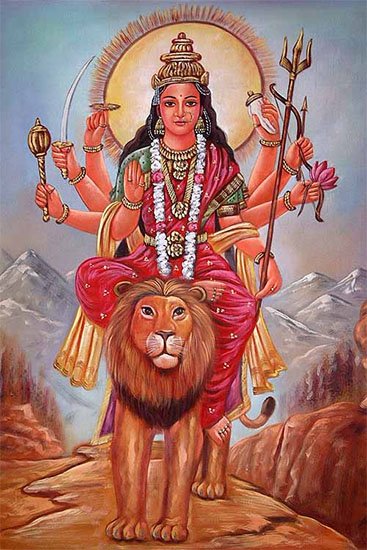
Shakta (शाक्त, śākta) or Shaktism (śāktism) represents a tradition of Hinduism where the Goddess (Devi) is revered and worshipped. Shakta literature includes a range of scriptures, including various Agamas and Tantras, although its roots may be traced back to the Vedas.
Languages of India and abroad
Sanskrit dictionary
Prakṣaya (प्रक्षय).—Ruin, destruction.
Derivable forms: prakṣayaḥ (प्रक्षयः).
Prakṣaya (प्रक्षय).—m.
(-yaḥ) Ruin, destruction.
Prakṣaya (प्रक्षय).—i. e. pra-kṣi + a, m. Destruction, ruin, [Arjunasamāgama] 7, 16.
Prakṣaya (प्रक्षय).—[masculine] destruction, ruin, fall.
Prakṣaya (प्रक्षय):—[=pra-kṣaya] [from pra-kṣi] m. destruction, ruin, vanishing, end, [Mahābhārata; Harivaṃśa; Sarvadarśana-saṃgraha]
Prakṣaya (प्रक्षय):—(von 3. kṣi mit pra) m. [Pāṇini’s acht Bücher 6, 2, 144,] [Scholiast] Vernichtung, Untergang: saṃtāna [Mahābhārata 1, 1036.] arciṣām [5, 987.] jagataḥ prakṣayakaram [6, 2234. 3646. 9, 531.] agamanprakṣayaṃ kecit [Arjunasamāgama 7, 16.] gamitāḥ prakṣayaṃ kecittridaśairdānavā raṇe [Harivaṃśa 13609.] śriyaḥ [Duaupadīpramātha 4, 19.]
--- OR ---
Prakṣaya (प्रक्षय):—das Verschwinden, Ende: āvaraṇa [SARVADARŚANAS. 29, 15. fgg. 31, 8.]
Prakṣaya (प्रक्षय):—m. Vernichtung , Untergang , das Verschwinden , Ende.
Sanskrit, also spelled संस्कृतम् (saṃskṛtam), is an ancient language of India commonly seen as the grandmother of the Indo-European language family (even English!). Closely allied with Prakrit and Pali, Sanskrit is more exhaustive in both grammar and terms and has the most extensive collection of literature in the world, greatly surpassing its sister-languages Greek and Latin.
See also (Relevant definitions)
Partial matches (+0): Kshaya, Pra.
Starts with (+0): Prakshayana.
Relevant text
Search found 6 books and stories containing Prakshaya, Pra-kṣaya, Pra-ksaya, Pra-kshaya, Prakṣaya, Praksaya; (plurals include: Prakshayas, kṣayas, ksayas, kshayas, Prakṣayas, Praksayas). You can also click to the full overview containing English textual excerpts. Below are direct links for the most relevant articles:
Shiva Purana [sanskrit/english]
Verse 5.9.2 < [Chapter 9]
Village Folk-tales of Ceylon (Sri Lanka), vol. 1-3 (by Henry Parker)
Story 137 - The Rakshasa-eating Prakshasa < [Part III - Stories of the Cultivating Caste]
Story 160 - The Story Of The Foolish Leopard < [Part III - Stories of the Cultivating Caste]
Inscriptions of Orissa (Rajaguru) (by Shri Satyanarayana Rajguru)
Sidelights on History and Culture Of Orissa (by Manmath Nath Das)
Chapter 43 - The date of the Jagannatha temple < [Part 3 - Monuments, Art and Architecture]
Srikara Bhashya (commentary) (by C. Hayavadana Rao)
Kavyalankara-sara-sangraha of Udbhata (by Narayana Daso Banhatti)
Chapter 4—Fourth Varga < [English notes to the Kavyalankara-sara-sangraha]