Avartaki, Āvartakī: 4 definitions
Introduction:
Avartaki means something in Hinduism, Sanskrit, biology. If you want to know the exact meaning, history, etymology or English translation of this term then check out the descriptions on this page. Add your comment or reference to a book if you want to contribute to this summary article.
In Hinduism
Ayurveda (science of life)
Nighantu (Synonyms and Characteristics of Drugs and technical terms)
Āvartakī (आवर्तकी) is the Sanskrit name for a medicinal plant identified with Cassia auriculata, synonym of Senna auriculata (matura tea tree) from the Fabaceae or “legume” family of flowering plants, according to verse 3.135-136 of the 13th-century Raj Nighantu or Rājanighaṇṭu. Āvartakī is known in Hindi as Maroḍaphalī.
Āvartakī is mentioned as having eleven synonyms: Tindukinī, Vibhāṇḍī, Viṣāṇikā, Raṅgalatā, Manojñā, Raktapuṣpī, Mahadādijālī, Pītakīlā, Carmaraṅgā and Vāmāvartā.
Properties and characteristics: “Āvartakī is astringent and sour and has cold potency. It alleviates the vitiated pitta-doṣa”.
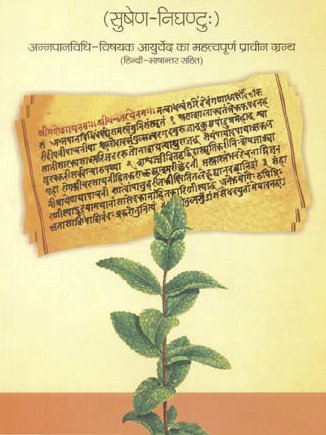
Āyurveda (आयुर्वेद, ayurveda) is a branch of Indian science dealing with medicine, herbalism, taxology, anatomy, surgery, alchemy and related topics. Traditional practice of Āyurveda in ancient India dates back to at least the first millenium BC. Literature is commonly written in Sanskrit using various poetic metres.
Biology (plants and animals)
Avartaki in the Sanskrit language is the name of a plant identified with Dillenia indica L. from the Dilleniaceae (Karmal) family. For the possible medicinal usage of avartaki, you can check this page for potential sources and references, although be aware that any some or none of the side-effects may not be mentioned here, wether they be harmful or beneficial to health.
Avartaki in India is the name of a plant defined with Senna auriculata in various botanical sources. This page contains potential references in Ayurveda, modern medicine, and other folk traditions or local practices It has the synonym Cassia densistipulata Taub. (among others).
Example references for further research on medicinal uses or toxicity (see latin names for full list):
· Pflanzenw. Ost-Afrikas (1895)
· Pharmaceutical Biology (2002)
· Species Plantarum (1753)
· Journal of Agricultural and Food Chemistry (2541)
· Flora Indica (1832)
If you are looking for specific details regarding Avartaki, for example health benefits, side effects, chemical composition, pregnancy safety, diet and recipes, extract dosage, have a look at these references.
This sections includes definitions from the five kingdoms of living things: Animals, Plants, Fungi, Protists and Monera. It will include both the official binomial nomenclature (scientific names usually in Latin) as well as regional spellings and variants.
Languages of India and abroad
Sanskrit dictionary
Āvartakī (आवर्तकी):—[=ā-vartakī] [from ā-vartaka > ā-vṛt] f. Name of a creeping plant, [cf. Lexicographers, esp. such as amarasiṃha, halāyudha, hemacandra, etc.]
Sanskrit, also spelled संस्कृतम् (saṃskṛtam), is an ancient language of India commonly seen as the grandmother of the Indo-European language family (even English!). Closely allied with Prakrit and Pali, Sanskrit is more exhaustive in both grammar and terms and has the most extensive collection of literature in the world, greatly surpassing its sister-languages Greek and Latin.
See also (Relevant definitions)
Partial matches (+0): Vartaki, A.
Full-text (+0): Pitakila, Carmaranga, Tindukini, Mahatali, Mahadadijali, Vibhandi, Rangalata, Vamavarta, Raktapushpi, Vibhanda, Ahula, Manojna, Vishanika, Ahulya, Vishanaka, Marodaphali, Raktapushpa.
Relevant text
Search found 10 books and stories containing Avartaki, Āvartakī, A-vartaki, Ā-vartakī; (plurals include: Avartakis, Āvartakīs, vartakis, vartakīs). You can also click to the full overview containing English textual excerpts. Below are direct links for the most relevant articles:
Asian Journal of Pharmaceutics
Comparative Antidiabetic Investigation of Talapotaka Churna and Avartaki... < [Vol. 10 No. 03: Supplimentary Issue (2016)]
Talapotaka Pushpa: A Promising Herbal Remedy for Diabetes Mellitus < [Vol. 11 No. 04: Supplementary Issue (2017)]
World Journal of Pharmaceutical Research
Ayurvedic aspects of shayyamutrata – a review article < [2023: Volume 12, December issue 21]
Standardizing mutra pariksha using mutra varna scale in Ayurveda. < [2019: Volume 8, October issue 11]
A phytopharmacological review of plant- cassia auriculata < [2021: Volume 10, April issue 4]
Anti-Diabetic Herbo-Mineral Drugs From Priya Nighantu < [Volume 11, Issue 2: March-April 2024]
International Ayurvedic Medical Journal
A classical categorization of herbs/herbal compounds used in skin disorders wsr to ashtanga hridya < [2023, Issue 01 January]
Compilation of ayurveda drugs having hemostatic action mentioned for management of asrigdara/dysfunctional uterine bleeding < [2022, Issue 08 August]
"Exploring Ayurvedic 'prameha' (diabetes) and its ancient-modern links." < [Volume 2 (issue 1), Jul-Sep 1982]
Vegetable Drugs in Basavarajeeyam < [Volume 20 (issue 3), Jan-Mar 2001]
Journal of Ayurveda and Integrated Medical Sciences
Clinical management of Madhumeha with Akulyadi Yoga < [Vol. 6 No. 01 (2021)]