Fowl: 1 definition
Introduction:
Fowl means something in Buddhism, Pali. If you want to know the exact meaning, history, etymology or English translation of this term then check out the descriptions on this page. Add your comment or reference to a book if you want to contribute to this summary article.
In Buddhism
Tibetan Buddhism (Vajrayana or tantric Buddhism)
Source: academia.edu: The Structure and Meanings of the Heruka MaṇḍalaFowl (animal) is associated with the Yoginī (female deity) named Mantrī, being situated in the Vāyucakra, according to the 10th century Ḍākārṇava-tantra: one of the last Tibetan Tantric scriptures belonging to the Buddhist Saṃvara tradition consisting of 51 chapters.—Accordingly, the vāyucakra refers to one of the three divisions of the dharma-puṭa (‘dharma layer’), situated in the Herukamaṇḍala. The 36 pairs of Ḍākinīs [viz., Mantrī—“Fowl”] and Vīras are dark blue in color; they each have one face and four arms; they hold a skull bowl, a skull staff, a small drum, and a knife.
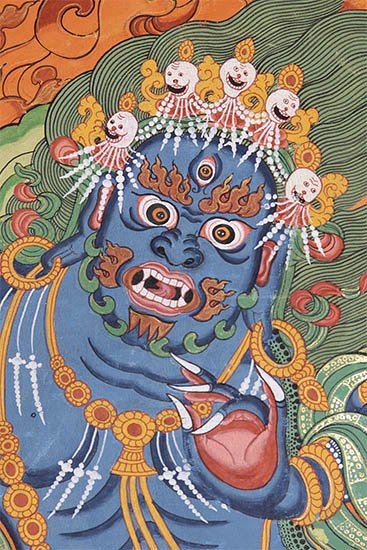
Tibetan Buddhism includes schools such as Nyingma, Kadampa, Kagyu and Gelug. Their primary canon of literature is divided in two broad categories: The Kangyur, which consists of Buddha’s words, and the Tengyur, which includes commentaries from various sources. Esotericism and tantra techniques (vajrayāna) are collected indepently.
See also (Relevant definitions)
Starts with: Fowl bluegrass, Fowl foot, Fowl manna grass, Fowl meadow grass, Fowl nettle.
Full-text (+163): Rajjudalaka, Vanakukkuta, Rajabhattika, Jalakukkuta, Shut, Kavrika, Goranku, Khalayajna, Ambukukkuta, Jalavihamgama, Ghudi, Gobhandira, Panakombada, Jalapakshin, Khurada, Krikavaku, Kukkutasukara Sutta, Goduvale, Cittukoli, Canca.
Relevant text
Search found 86 books and stories containing Fowl; (plurals include: Fowls). You can also click to the full overview containing English textual excerpts. Below are direct links for the most relevant articles:
The Jataka tales [English], Volume 1-6 (by Robert Chalmers)
Jataka 448: Kukkuṭa-jātaka < [Volume 4]
Jataka 284: Siri-jātaka < [Book III - Tika-Nipāta]
Jataka 226: Kosiya-jātaka < [Book II - Dukanipāta]
Village Folk-tales of Ceylon (Sri Lanka), vol. 1-3 (by Henry Parker)
Story 65 - The Jackal And The Brahmana < [Part II (c) - Stories of the Durayas]
Story 30 - The Jackal And The Hare < [Part I - Stories told by the Cultivating Caste and Vaeddas]
Heimskringla (by Snorri Sturlson)
Part 83 - Gyrd's Dreams < [Chapter IX - Saga Of Harald Hardrade]
Part 48 - Earl Svein's Flight < [Chapter VII - Saga Of Olaf Haraldson]
Folklore of the Santal Parganas
Chapter II - Anuwa and His Mother < [Part I]
Chapter XXXIX - The Daydreamer < [Part I]
Chapter CXIII - The Jackal Punished < [Part II]
Vernacular architecture of Assam (by Nabajit Deka)
Mising Vernacular Architecture < [Chapter 6]
Sonowal Kachari Vernacular Architecture < [Chapter 7]
Dimasa Kachari Vernacular Architecture < [Chapter 7]
Puranic encyclopaedia (by Vettam Mani)