Bhanja, Bhāṃja, Bhāṃjā, Bhamja, Bhañj, Bhanj, Bhānjā, Bhañjā: 24 definitions
Introduction:
Bhanja means something in Hinduism, Sanskrit, Buddhism, Pali, the history of ancient India, Jainism, Prakrit, Hindi. If you want to know the exact meaning, history, etymology or English translation of this term then check out the descriptions on this page. Add your comment or reference to a book if you want to contribute to this summary article.
Images (photo gallery)


India history and geography
Bhañja (ଭଞ୍ଜ) is the name of a dynasty that originated in the northern and central regions of modern Odisha before the Gupta Empire became an imperial power. The Bhanj later became feudatories of the Bhauma-Kara dynasty. The Bhanjas (according to early mandala inscriptions) describe their origins from the mythical peahen, likely pointing out to the early peafowl-related traditions of the ancient Bhanja clans, which is observed on their emblems that are shared by the successive branches. Khinjali and Khijjinga mandalas were among the prominent mandalas under Bhauma-Kara rule. (1) The Khinjili mandala comprised the areas of modern-day Boudh, Phulbani, Nayagarh, Ghumusar, and Sonepur. Its capital was Dhritipura (modern Boudh). (2) Khijjinga, or Khijjinga-Kotta, comprised areas of modern-day Mayurbhanj and Kendujhar. The founder of the dynasty was Virabahdra Adi Bhanja, with his capital located at Khijjinga Kota (now Khiching).
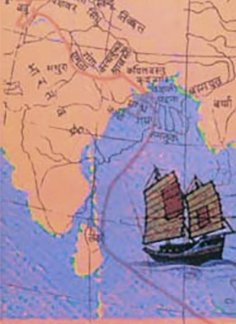
The history of India traces the identification of countries, villages, towns and other regions of India, as well as mythology, zoology, royal dynasties, rulers, tribes, local festivities and traditions and regional languages. Ancient India enjoyed religious freedom and encourages the path of Dharma, a concept common to Buddhism, Hinduism, and Jainism.
Languages of India and abroad
Sanskrit dictionary
Bhañj (भञ्ज्).—I. 7 P. (bhanakti, babhañja, abhāṅkṣīt, bhaṅkṣyati, bhaṅktum, bhagna; desid. bibhaṅkṣati)
1) To break, tear down, shatter, shiver or break to pieces, split; भनज्मि सर्वमर्यादाः (bhanajmi sarvamaryādāḥ) Bk. 6.38; भङ्क्त्वा भुजौ (bhaṅktvā bhujau) 4.3; बभञ्जुर्वलयानि च (babhañjurvalayāni ca) 3.22; धनुरभाजि यत्त्वया (dhanurabhāji yattvayā) R.11.76.
2) To devastate, destroy by pulling down; भनक्त्युपवनं कपिः (bhanaktyupavanaṃ kapiḥ) Bhaṭṭikāvya 9.2.
2) To make a breach (in a fortress).
4) To frustrate, foil, disappoint, baffle; पिनाकिना भग्नमनोरथा सती (pinākinā bhagnamanorathā satī) Kumārasambhava 5.1.
5) To arrest, check, interrupt, suspend; as in भग्ननिद्रः (bhagnanidraḥ).
6) To defeat, vanquish; क्षत्राणि रामः परिभूय रामात् क्षत्राद्यथाऽभज्यत स द्विजेन्द्रः (kṣatrāṇi rāmaḥ paribhūya rāmāt kṣatrādyathā'bhajyata sa dvijendraḥ) N.22.133; नृपा भीष्मादयो भग्नाः (nṛpā bhīṣmādayo bhagnāḥ) Pañch.2.41. -With अव (ava) to break down, shatter; वनस्पतिं वज्र इवावभज्य (vanaspatiṃ vajra ivāvabhajya) Kumārasambhava 3. 74.
-pra 1 To break down, shatter, splinter.
2) to stop, arrest, suspend.
3) to frustrate, disappoint. -II. 1 U. (bhañjayati-te)
1) To brighten, illuminate.
2) To speak.
3) To shine.
Bhañjā (भञ्जा).—Name of Durgā.
Bhañj (भञ्ज्).—[(o, au) obhañjau] r. 7th cl. (bhanakti) To break, to destroy.
Bhañj (भञ्ज्).—ii. 7, bhanaj, bhañj, [Parasmaipada.] 1. To split, [Rāmāyaṇa] 1, 67, 17. 2. To break, [Pañcatantra] i. [distich] 148; to destroy, Mahābhārata 3, 10990. Ptcple. of the pf. pass. bhagna. 1. Broken, [Pañcatantra] 36, 12; torn. 2. Defeated, [Bhartṛhari, (ed. Bohlen.)] 2, 85; [Rājataraṅgiṇī] 5, 340. 3. Disheartened,
— With the prep. ava ava, To break down, Mahābhārata 1, 7081.
— With ni ni, To break, [Bhaṭṭikāvya, (ed. Calc.)] 15, 117.
— With vinis vi-nis, vinirbhagna, Broken down, Mahābhārata 3, 12477.
— With pra pra, To break down, Mahābhārata 3, 11121. The original form has been probably bhrañj.
— Cf. [Latin] frango; [Gothic.] brikan; A. S. bracan, brecan;
Bhañja (भञ्ज).—bhanakti [participle] bhagna (q.v.) break, bend, curve; scatter, disperse; defeat, conquer; frustrate, disappoint, destroy, annihilate; [Passive] bhajyate with [intransitive] [meaning] ([Causative] bhañjayati [with] śūle pierce with a pale*).
1) Bhañj (भञ्ज्):—1. bhañj [class] 7. [Parasmaipada] ([Dhātupāṭha xxix, 16]) bhanakti ([perfect tense] babhañja, [Ṛg-veda] etc., 3. [plural] [Ātmanepada] babhañjire, [Harivaṃśa]; [Aorist] abhāṅkṣīt, [Mahābhārata]; [future] bhaṅkṣyati, ktā, [ib.]; [indeclinable participle] bhaṅktvā, bhaktvā or -bhajya, [ib.]),
—to break, shatter, split, [Ṛg-veda] etc. etc.;
—to break into, make a breach in (a fortress, with [accusative]), [Hitopadeśa];
—to rout, put to flight, defeat (an army), [Mahābhārata; Harivaṃśa; Rājataraṅgiṇī];
—to dissolve (an assembly), [Harṣacarita];
—to break up id est. divide (a Sūtra), [Siddhānta-kaumudī];
—to bend, [Rāmāyaṇa];
—to check, arrest, suspend, frustrate, disappoint, [Mahābhārata; Kāvya literature] etc.:—[Passive voice] bhajyate ([Epic] also ti; [Aorist] abhāji or abhañji, [Pāṇini 6-4, 33]),
—to be broken or break (intr.) etc., [Atharva-veda] etc. etc.:—[Causal] bhañjayati ([Aorist] ababhañjat) [grammar]:—[Desiderative] bibhaṅkṣati, [ib.] :—[Intensive] bambhajyate or jīti, [ib.]
2) [Perhaps for [originally] bhrañj; cf. bhraj; [Latin] frangere, nau-fraga; [German] brechen; [English] break.]
3) 2. bhañj (√2. bhañj, [class] 10. [Parasmaipada] bhañjayati), ‘to speak’ or ‘to shine’, [Dhātupāṭha xxxiii, 86].
Bhañjā (भञ्जा):—[from bhañjaka > bhañj] f. Name of Durgā, [cf. Lexicographers, esp. such as amarasiṃha, halāyudha, hemacandra, etc.]
Bhañj (भञ्ज्):—(dha, au, o) bhanakti 7. a. To break.
Bhañj (भञ्ज्):—
--- OR ---
Bhañj (भञ्ज्):—2. , bhañjayati sprechen oder leuchten [DHĀTUP. 33, 86.]
--- OR ---
Bhañj (भञ्ज्):—1. [Sp. 186, Z. 1] nach 24 hinzuzufügen: bhajyanmadhya sich biegend [Bhāgavatapurāṇa 10, 33, 8.] — nis, pravahaṇaṃ tasya nirbabhañjurmahormayaḥ [Kathāsaritsāgara 56, 144.]
--- OR ---
Bhañj (भञ्ज्):—1. krümmen: aṅgaṃ bhanakti [Spr. (II) 7199.] — vi zerbrechen, sprengen, vertheilen: timiramavibhajya aṃśumān [Spr. (II) 399.]
Bhañjā (भञ्जा):—f. Beiname der Durgā [Śabdakalpadruma] nach dem [RUDRAYĀMALA.]
Bhañj (भञ्ज्):—1. bhanakti abhaṅkta und abhaṅkṣus im [Bhāgavatapurāṇa] fehlerhaft für abhākta und abhākṣus von bhaj Med. nur einmal) , Partic. bhagna (Steht im Comp. bisweilen nach , statt vor:) grīvāgna = bhagnagrīva Adj. dharmabhagna st. bhagnadharma Adj. —
1) brechen , zerbrechen , zersprengen (ein Heer) , Jmd schlagen , so v.a. Jmd eine Niederlage bereite , Pass. bhajyate u.s.w. mit intans. Bed. babhañja mit intrans. Bed. wohl fehlerhaft für babhañje. bhagna gebrochen , zerbrochen , zersprengt , der sich Etwas gebrochen hat ; geschlagen , s. v.a. besiegt ; gebrochen , so. v.a. geknickt in übertr. Bed. —
2) brechen , so v.a. theilen (ein Sutra.) —
3) krumm machen , krümmen , biegen. bhajyant sich biegend , bhagna gekrümmt , gebogen. —
4) brechen , so v.a. zu Nichte machen , vereiteln , aufheben , unterbrechen , stören. so v.a. sabhām so v.a. eine Versammlung aufheben [Harṣacarita 162,17.] bhagna gebrochen , so v.a. zu Nichte gemacht , vereitelt u.s.w. —
5) bhagna so v.a. verloren gegangen. — Intens. bambhajyate , bambhajīti. — Mit apa abbrechen [Kād. (1872) 2,74,13. (91,5.)] — Mit abhi zerbrechen , zersprengen , zerstören. — Mit ava —
1) abbrechen , zerbrechen , brechen. —
2) avabhagna gebrochen , so v.a. dahin seiend. — Mit ā erschüttern [Carakasaṃhitā 6,20.] — Mit vyā , bhagna zerbrochen , zerschmettert. — Mit ud —
1) ermüden. [Hemacandra's Pariśiṣṭaparvan 9,73.] —
2) udbhagna gesprengt , zerrissen. — Mit upa in upabhaṅga — Mit ni zerbrechen , zerschmettern. — Mit nis —
1) zerbrechen , zerspalten , einen Feind schlagen. —
2) etwa durchzucken [Carakasaṃhitā 6,20.] —
3) biegen , eindrücken in nātinirbhagna. Mit vinis vinirbhagna zerbrochen , ausgeschlagen (Auge). — Mit pari, bhagna —
1) gebrochen. —
2) unterbrochen , gestört , gehemmt. — Mit pra —
1) zerbrechen , zerstören , zersprengen , schlagen (ein Heer , eine Feind). Pass. mit intrans. Bed. prabhagna zerbrochen u.s.w. [Saṃhitopaniṣad 9,1(wo] vātā bahupra zu lesen ist. ) —
2) zerbrechen (intrans.) [Mānavagṛhyasūtra 2,15.] — Mit abhipra in abhiprabhāṅgin — Mit saṃpra, bhagna zersprengt , geschlagen (ein Heer.) — Mit prati zerbrechen , umknicken. — Mit vi —
1) zerbrechen , sprengen , vertheilen. vibhagna auseinander gebrochen , zerbrochen [Saṃhitopaniṣad 9,1.] —
2) vereiteln , täuschen [Viṣṇupurāṇa 4,2,22.] — vyabhāṅkṣīt [Bhāgavatapurāṇa] fehlerhaft für vyabhākṣīt theile. — Mit sam —
1) zerbrechen , zerschmettern. Pass. zerbrechen (intrans.) , zerschmettert werden. saṃbhagna zerbrochen , zerschmettert , zersprengt , geschlagen (Feind) , —
2) saṃbhagna vereitelt , dahin seiend. — saṃbhagna als Beiw. Śiva'swird von [Nīlakaṇṭha] auf bhaj (!) zurückgeführt und durch samyaksevita erklärt. — Mit abhisam abhisaṃbhagna zerbrochen , zerschmettert.
--- OR ---
Bhañj (भञ्ज्):—2. bhañjayati bhaṣārtha oder bhāsārtha.
Bhañj (भञ्ज्) in the Sanskrit language is related to the Prakrit words: Karaṃja, Ṇīraṃja, Pariraṃja, Paviraṃja, Piaraṃja, Bhaṃja, Mūra, Vira, Vemaya, Sūra.
Bhañja (भञ्ज) in the Sanskrit language is related to the Prakrit words: Musumura, Sūḍa.
Bhañja (in Sanskrit) can be associated with the following Chinese terms:
1) 伴惹 [bàn rě]: “Skt. bhañja”..
2) 降 [jiàng]: “overcome”.
Bhañj (in Sanskrit) can be associated with the following Chinese terms:
1) 不續 [bù xù]: “not connected”.
2) 打碎 [dǎ suì]: “to pulverize”.
3) 破裂 [pò liè]: “broken”.
Note: bhañj can be alternatively written as: √bhañj.
Sanskrit, also spelled संस्कृतम् (saṃskṛtam), is an ancient language of India commonly seen as the grandmother of the Indo-European language family (even English!). Closely allied with Prakrit and Pali, Sanskrit is more exhaustive in both grammar and terms and has the most extensive collection of literature in the world, greatly surpassing its sister-languages Greek and Latin.
Hindi dictionary
Bhāṃjā (भांजा):—(nm) see [bhānajā]; hence [bhāṃjī] (nf) see [bhānajī].
Bhanja in Hindi refers in English to:—(nm) sister’s son; hence [bhanaji] (nf)..—bhanja (भानजा) is alternatively transliterated as Bhānajā.
...
Prakrit-English dictionary
Bhaṃja (भंज) in the Prakrit language is related to the Sanskrit word: Bhañj.
Prakrit is an ancient language closely associated with both Pali and Sanskrit. Jain literature is often composed in this language or sub-dialects, such as the Agamas and their commentaries which are written in Ardhamagadhi and Maharashtri Prakrit. The earliest extant texts can be dated to as early as the 4th century BCE although core portions might be older.
Nepali dictionary
1) Bhāṃja (भांज):—[=भाँज] n. 1. folding (of clothes); 2. line made by folding; 3. way; means; method;
2) Bhāṃjā (भांजा):—[=भाँजा] n. 1. trap or snare of logs to kill the wild animals; 2. pl. of भाँजो [bhāṃjo]
Bhānjā (भान्जा):—n. pl. of भान्जो [bhānjo]
Bhanj is another spelling for भाँज [bhāṃja].—[=भाँज] n. 1. folding (of clothes); 2. line made by folding; 3. way; means; method;
Nepali is the primary language of the Nepalese people counting almost 20 million native speakers. The country of Nepal is situated in the Himalaya mountain range to the north of India.
Pali-English dictionary
bhañja (ဘဉ္ဇ) [(na) (န)]—
[bhanja+a]
[ဘန္ဇ+အ]
[Pali to Burmese]
bhañja—
(Burmese text): ရတနာ။
(Auto-Translation): Jewel.
Pali is the language of the Tipiṭaka, which is the sacred canon of Theravāda Buddhism and contains much of the Buddha’s speech. Closeley related to Sanskrit, both languages are used interchangeably between religions.
See also (Relevant definitions)
Partial matches (+0): Bhanja, A.
Starts with (+21): Bhamjaa, Bhamjaga, Bhamjaki, Bhamjali, Bhamjane, Bhamjanige, Bhanga, Bhanjabhanji, Bhanjagada, Bhanjagadakhora, Bhanjagadanem, Bhanjak, Bhanjaka, Bhanjala, Bhanjam, Bhanjamana, Bhanjami, Bhanjan, Bhanjana, Bhanjanagiri.
Full-text (+219): Bhanga, Bhanjana, Bhanji, Bhanjati, Mrinalabhanjam, Mayurabhanja, Bhanjamana, Bhanjam, Pabhanjati, Bhanjani, Byabhangi, Vibhanj, Ikshubhanjam, Varunakatthabhanja, Abhanjati, Bhagna, Bhanjita, Bhanjatu, Bhanjanti, Bhanjasi.
Relevant text
Search found 46 books and stories containing Bhanja, Bhamj, Bhaṃj, Bhaṃja, Bhāṃja, Bhāṃjā, Bhamja, Bhañj, Bhanj, Bhānjā, Bhañjā, Bhañja, Bhanja-a, Bhanjas; (plurals include: Bhanjas, Bhamjs, Bhaṃjs, Bhaṃjas, Bhāṃjas, Bhāṃjās, Bhamjas, Bhañjs, Bhanjs, Bhānjās, Bhañjās, Bhañjas, as, Bhanjases). You can also click to the full overview containing English textual excerpts. Below are direct links for the most relevant articles:
Shaivacintamani (analytical study) (by Swati Sucharita Pattanaik)
Part 6 - Introduction to Tantric Śaivism < [Chapter 1: Introduction to Śaivism]
Part 2 - The Origin and Development of Śaivism in Orissa (Odisha) < [Chapter 1: Introduction to Śaivism]
Part 1.6 - Description of Liṅgarāja Worship < [Chapter 2: Śaivism in Śaiva Purāṇas of Odisha]
Sidelights on History and Culture Of Orissa (by Manmath Nath Das)
Chapter 18 - The princely states of Orissa in retrospect < [Part 1 - Land, People and History]
Chapter 51 - Bhanjas of Khijjingakotta and their monuments < [Part 3 - Monuments, Art and Architecture]
Studies in Orissan History, Archaeology and Archives (by Padmasri Paramananda Acharya)
Part 50 - A note on the “Bhum” countries in Eastern India < [Section E - Historical Geography]
Part 16 - Description of Raja Man Singh < [Section B - Papers on the Historical Records]
Part 57 - The Puranas—an egg born tribe of Orissa < [Section G - Miscellaneous Papers]
Kingship in early Medieval India (by Sudip Narayan Maitra)
Part 4 - Mahanadi Delta region: Sub Period III: 900-1300 A.D < [Chapter 3 - Kingship And Polity In Mahanadi Delta Region]
Part 19 - Temple Building (of the Mahanadi Delta and the Gangas) < [Chapter 5 - The Cholas and the Eastern Gangas (comparative study)]
Part 16 - The Origin Myths (of the Mahanadi Delta and the Gangas) < [Chapter 5 - The Cholas and the Eastern Gangas (comparative study)]
Inscriptions of Orissa (Rajaguru) (by Shri Satyanarayana Rajguru)
Part 47 - Two Incomplete Plates of Palimpsests From Dharakota < [Section 4 - Central-Orissa—The Sailodbhavas]
Part 64 - Badakhimedi plates of Danarnavadeva < [Section 2 - The Gangas of Svetaka]
Part 45 - Chidivalasa plates of Devendravarman < [Section 1 - The Gangas of Kalinganagara]
Rural and Agricultural Glossary (by William Crooke)