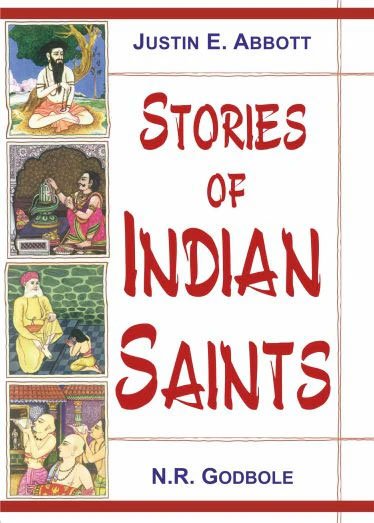
Bhaktavijaya: Stories of Indian Saints
by Justin E. Abbott | 1933 | 306,590 words
This is the English translation of Bhaktavijaya which is a Marathi poem written by Mahipati in 40,000 lines. The text documents the legends of Indian saints from various backgrounds and extensively covers figures like Ekanath, Tukaram, and Ramadasa, highlighting their contributions to scholarship, philosophy, poetry, and social reform. The Bhaktavi...
12.4: Dnyandev and Nama on pilgrimage
55. They saw many sacred bathing places in the different countries through which they hastened. They visited BadrikashRam [Rama] in the Himalayas and arrived in the Himalaya mountains.
56. They visited Jagannath [Jagannatha] of Odhya where God lives in the form of Buddha; and even in the Kali Yuga seemingly impossible miracles still take place here today.
57. After visiting Onkar [Omkara] and Amaleshwar they went on to Kedar. From there they visited Mahakaleshwar [Mahakaleshvara] at Ujjain.
58. After seeing that place, they came back and after visiting Paralivaijanath [Paralivaija-natha] they arrived at Sorati-somnath [Sorati-somanatha].
59. Their next place was the mountain of Shri Shaila where the Husband of Parvati lives (in a Shiva temple). For sixty years He had been waiting for these bhaktas to come there.
60. After visiting this place they hastened on to see Ghrishneshwar [Ghrishneshvara]. I am not able properly to describe the great glory of the sacred bathing place Seval.
61. From there they came to Nasit and Trimbak where they bathed in the Kushavart [Kushavarta] pond. After worshipping the five-faced One (Shiva) they departed from there (see page 88 of Nama’s Gathas).
62. They had a view of the western ocean and then arrived at Bhimashankar [Bhimashankara] where they worshipped Janardan. From there they started for Rameshwar [Rameshvara].
63. Thus taking one after another the most important sacred bathing places on the surface of this earth, among which the most distinguished of them are mentioned as well known and with high reputation in. the Puranas.
64. Ayodhya, Mathura, Kanti, Benares, Dwarawati, Avanti and Maya, the seven cities as givers of salvation, were lovingly visited with repentant hearts.
65. To this may be added the celebrated twelve Jyotirlingas. I have mentioned only these; still there are many- on the earth which remain to be mentioned, but to what length should I go in speaking of them in this book?
66. Just as when one looks at the moon, the eye without any effort sees the stars; or if one dug up a tree and gave it to anyone, the branches would naturally go with it;
67. or as when drinking nectar it includes every medicine; or as when studying the Vedanta, one thereby understands the meaning of the Vedas;
68. or as when worshipping the Ashvaitha tree, it is the same worship given to eighteen bhars (a bhar is 8000 tolas) of vegetables; or as when one sees the serpent on which the earth rests, he has seen practically all other serpents algo;
69. or as when offering a garland of tulsi leaves to Vishnu, there is included in it the sixteen materials of worship; or as when having seen the Husband of Mridani (Shiva) one has seen all yogis;
70. or as when one sees the elephant Airaval, he has really seen every elephant on earth; or as when the Husband of Shachi (Indra) becomes pleased, the other gods are pleased also;
71. or as when the son of Vinata (the eagle, Vishnu’s vehicle) comes in to one’s sight, that includes all birds; or as when one sees the Himalaya mountains, the whole stable creation becomes known;
72. so, in describing the greatness of the seven salvation-giving cities, and the greatness of the twelve lingas, one has naturally met with the names of the other sacred bathing places on the earth.