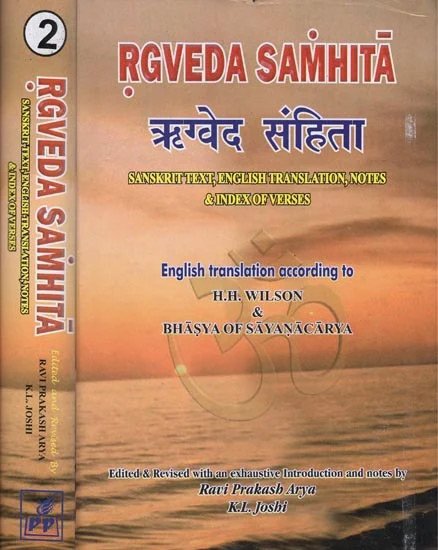
Rig Veda (translation and commentary)
by H. H. Wilson | 1866 | 1,999,864 words | ISBN-10: 8171101380 | ISBN-13: 9788171101382
The Rig-Veda, English translation, including the commentary of Sayana and grammatical analysis. The hyms of the Rigveda Samhita represents some of the oldest and complex of Hindu Sanskrit literature. In ten books, these mantras form the core essence of rituals and ceremonies once widely performed throughout ancient India. This edition contains the...
Disclaimer: These are translations of Sanskrit texts and are not necessarily approved by everyone associated with the traditions connected to these texts. Consult the source and original scripture in case of doubt.
Rig Veda 10.22.8
Sanskrit text [Accents, Plain, Transliterated]:
अ॒क॒र्मा दस्यु॑र॒भि नो॑ अम॒न्तुर॒न्यव्र॑तो॒ अमा॑नुषः । त्वं तस्या॑मित्रह॒न्वध॑र्दा॒सस्य॑ दम्भय ॥
अकर्मा दस्युरभि नो अमन्तुरन्यव्रतो अमानुषः । त्वं तस्यामित्रहन्वधर्दासस्य दम्भय ॥
akarmā dasyur abhi no amantur anyavrato amānuṣaḥ | tvaṃ tasyāmitrahan vadhar dāsasya dambhaya ||
English translation:
“The Dasyu practising no religious rites, not knowing as thoroughly, following other observances,obeying no human laws, baffle, destroyer of enemies, the weapon of that slave.”
Commentary by Sāyaṇa: Ṛgveda-bhāṣya
Thoroughly: abhi = face to face,i.e., person nally;
Amantuḥ = avamantuḥ = despising; following other observances: anyavrataḥ, others than thoseof the śruti and smṛti; a possible indication of the practice of soma vratas;
Amānuṣaḥ =manuṣyasaṃvyavahārād bāhyaḥ, out of the laws or customs of men, asuraprakṛtirūpaḥ, being of thenature of evil spirits
Details:
Ṛṣi (sage/seer): vimada aindraḥ prājāpatyo vā vasukṛdvā vāsukraḥ [vimada aindra prājāpatya vā vasukṛdvā vāsukra];Devatā (deity/subject-matter): indra:;
Chandas (meter): pādnicṛdbṛhatī ;
Svara (tone/note): Swar;
Padapatha [Accents, Plain, Transliterated]:
अ॒क॒र्मा । दसुः॑ । अ॒भि । नः॒ । अ॒म॒न्तुः । अ॒न्यऽव्र॑तः । अमा॑नुषः । त्वम् । तस्य॑ । अ॒मि॒त्र॒ऽह॒न् । वधः॑ । दा॒सस्य॑ । द॒म्भ॒य॒ ॥
अकर्मा । दसुः । अभि । नः । अमन्तुः । अन्यव्रतः । अमानुषः । त्वम् । तस्य । अमित्रहन् । वधः । दासस्य । दम्भय ॥
akarmā | dasuḥ | abhi | naḥ | amantuḥ | anya-vrataḥ | amānuṣaḥ | tvam | tasya | amitra-han | vadhaḥ | dāsasya | dambhaya
Multi-layer Annotation of the Ṛgveda
[Rigveda 10.22.8 English analysis of grammar]
[noun], nominative, singular, masculine
“evil.”
[noun], nominative, singular, masculine
“savage; outcast; mugger.”
[adverb]
“towards; on.”
[noun], accusative, plural
“I; mine.”
[noun], nominative, singular, masculine
“ignorant.”
[noun]
“other; another(a); remaining; different; anya [word]; other than; more(a); fresh; any(a).”
[noun], nominative, singular, masculine
“vrata (vote); commandment; law; oath; command; rule; custom; vrata [word]; rule; behavior.”
[adverb]
“not; akāra; a [taddhita]; a [word]; a; a.”
[noun], nominative, singular, masculine
“human.”
[noun], nominative, singular
“you.”
[noun], genitive, singular, masculine
“this; he,she,it (pers. pron.); respective(a); that; nominative; then; particular(a); genitive; instrumental; accusative; there; tad [word]; dative; once; same.”
[noun], masculine
“enemy; foe.”
[noun], vocative, singular, masculine
“killing; curative; destroying; removing; māraka; stabbing.”
[noun], accusative, singular, neuter
“weapon.”
[noun], genitive, singular, masculine
“slave; Dāsa; servant; savage; Shudra.”
[verb], singular, Present imperative
“subjugate; destroy.”