New Delhi Museum—Bronze images: photo 95
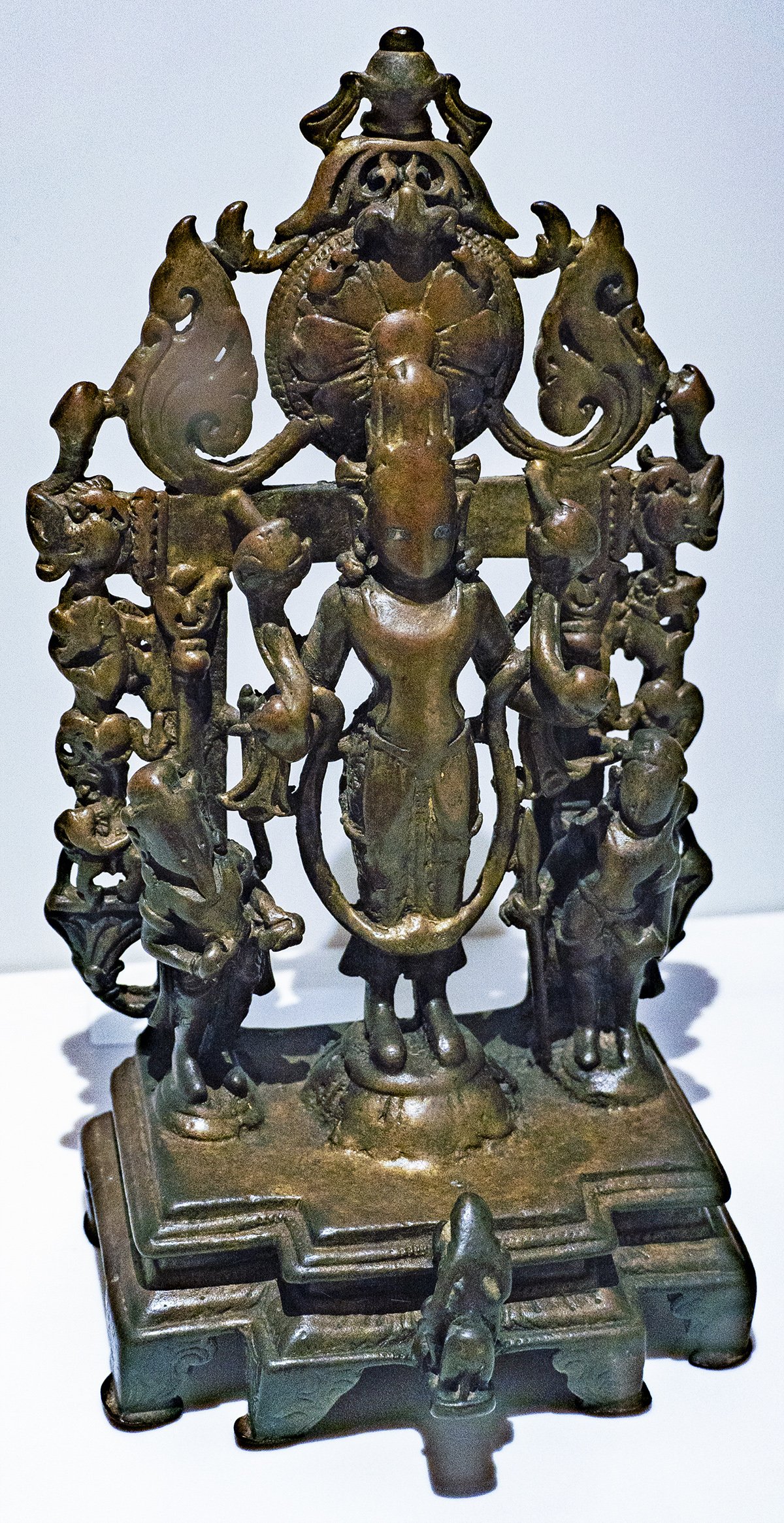
Image title: Sculpture of Surya (11th century)
Description of the photo
Surya
Northern Pra a, 11th Century CE North India
Ht. 24.5 cm., Wd. 13.6 cm., Dep. 9.7 cm.
Bronze, Acc. 72.275
Surya, a prominent Vedic deity symbolizing the sun, can be seen holding lotuses in both hands. He is standing in samapada on an inverted lotus placed on a tri-ratha pitha. His features, as commonly seen in bronzes of this period and region, are totally defaced - all that is visible is the silver inlay in the eyes. This is a rare image which shows a horse-riding figure facing the Sun God and tells us of a popular legend that Aruna, the son of Surya, never shows his back to Surya but drives the chariot while facing him. Around him are his two a endants, the bearded Pingala with his pen and inkpot on his right and Dandi on his le
Transcription (not proofread):
सूर्य
प्रतिहार, 11वीं शताब्दी उत्तर भारत
ऊं. 24.5 से.मी., चौ. 13.6 से.मी., गह. 9.7 से.मी.
कांसा, अवाप्ति सं. 72.275
इस सूर्य प्रतिमा के दोनों हाथों में कमल पुश्प हैं। वे त्रिरथ पीठिका पर स्थापित उलटे कमल पुश्पद पर संपाद में खड़े हैं। प्रतिमा के नैन-नक्श विरूपित हैं। नेत्रों में मात्र चांदी जड़ी हुई दिखाई देती है। यह एक दुर्लभ प्रतिमा है जिसमें घोड़े पर सवार आकृति निदर्शित है। यह उस मिथक के बारे में बतलाता है जिसमें कहा गया है कि सूर्य के सारथि अरुण सूर्य को अपना पृश्ठ भाग नहीं दिखलाते बल्कि सूर्य की ओर अभिमुख होकर रथ चलाते हैं। उनके दायें-बायें दो परिचर भी हैं, दाहिनी ओर दादीयुक्त पिंगल जिनके हाथ में कलम और दवात है और बाईं ओर दंडी जिन्होंने भाला पकड़ा हुआ है।
sūrya
pratihāra, 11vīṃ śatābdī uttara bhārata
ūṃ. 24.5 se.mī., cau. 13.6 se.mī., gaha. 9.7 se.mī.
kāṃsā, avāpti saṃ. 72.275
isa sūrya pratimā ke donoṃ hāthoṃ meṃ kamala puśpa haiṃ| ve triratha pīṭhikā para sthāpita ulaṭe kamala puśpada para saṃpāda meṃ khare haiṃ| pratimā ke naina-nakśa virūpita haiṃ| netroṃ meṃ mātra cāṃdī jarī huī dikhāī detī hai| yaha eka durlabha pratimā hai jisameṃ ghore para savāra ākṛti nidarśita hai| yaha usa mithaka ke bāre meṃ batalātā hai jisameṃ kahā gayā hai ki sūrya ke sārathi aruṇa sūrya ko apanā pṛśṭha bhāga nahīṃ dikhalāte balki sūrya kī ora abhimukha hokara ratha calāte haiṃ| unake dāyeṃ-bāyeṃ do paricara bhī haiṃ, dāhinī ora dādīyukta piṃgala jinake hātha meṃ kalama aura davāta hai aura bāīṃ ora daṃḍī jinhoṃne bhālā pakarā huā hai|
surya pratihar, 11vin shatabdi uttar bharat oon. 24.5 se.mi., chou. 13.6 se.mi., gah. 9.7 se.mi. kansa, avapti sn. 72.275 is surya pratima ke donon hathon mein kamal pushp hain. ve trirath pithika par sthapit ulte kamal pushpad par sampad mein khade hain. pratima ke nain-naksh virupit hain. netron mein matr chandi jadi hui dikhai deti hai. yah ek durlabh pratima hai jismen ghode par savar aakriti nidarshit hai. yah us mithak ke bare mein batlata hai jismen kaha gaya hai ki surya ke sarathi arun surya ko apna prsht bhag nahin dikhlate balki surya ki or abhimukh hokar rath chalate hain. unke dayen-bayen do parichar bhi hain, dahini or dadIyukt pingal jinke hath mein kalam aur dawat hai aur bayein or dandi jinhone bhala pakda hua hai.
Gallery information:
These photographs are from the section “Bronze images” (kamsya) within the National Museum of New Delhi (India). Bronze images, small for domestic shrines or larger and hollow, are made using the lost wax process (madhuchista-vidhana). Bronze is an alloy of copper and tin. The oldest group of bronze sculptures from the Indian subcontinent date back to the 3rd millennium B.C.E.
Photo details:
Date: 2024-04-04
Camera: SONY ILCE-6400
Exposure: 1/40
Aperture: f/4
ISO: 100
Focal length: 21mm
High resolution:
Download file
Size: 1.74 MB
Resolution: 1200 x 2330
© Photograph by Gabe Hiemstra.
(except photos of text/posters)
License: CC BY-NC-ND 4.0