Yogopanishad, Yoga-upanishat, Yogopaniṣad, Yogopaniṣat, Yoga-upanishad, Yogopanishat: 6 definitions
Introduction:
Yogopanishad means something in Hinduism, Sanskrit, Jainism, Prakrit. If you want to know the exact meaning, history, etymology or English translation of this term then check out the descriptions on this page. Add your comment or reference to a book if you want to contribute to this summary article.
The Sanskrit terms Yogopaniṣad and Yogopaniṣat can be transliterated into English as Yogopanisad or Yogopanishad or Yogopanisat or Yogopanishat, using the IAST transliteration scheme (?).
In Hinduism
Yoga (school of philosophy)
Yogopaniṣad (योगोपनिषद्) represents various 18th-century texts dealing with Yoga.—These so-called Yoga Upaniṣads are part of a recent recension compiled in South India in the first half of the eighteenth century and commented on by Upaniṣadbrahmayogin (See Bouy 1994). They include the Yogatattvopaniṣat, the Dhyānabindūpaniṣat, the Nādabindūpaniṣat, the Śāṇḍilyopaniṣat, the Yogacūḍāmaṇyupaniṣat, the Yogakuṇḍalinyupaniṣat, the Yogaśikhopaniṣat, the Darśanopaniṣat, the Maṇḍalabrāhmanopaniṣat, the Saubhāgyalakṣmyupaniṣat and the Varāhopaniṣat.
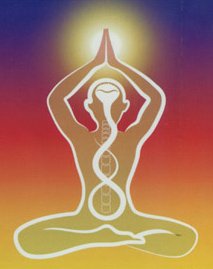
Yoga is originally considered a branch of Hindu philosophy (astika), but both ancient and modern Yoga combine the physical, mental and spiritual. Yoga teaches various physical techniques also known as āsanas (postures), used for various purposes (eg., meditation, contemplation, relaxation).
In Jainism
General definition (in Jainism)
Yogopaniṣat (योगोपनिषत्) refers to an “Upaniṣad of Yoga”, according to the 12th century Yogaśāstra (verse 12.55) by Hemacandra: a Jain treatise dealing with Yoga and the highest reality (tattva).—Accordingly, “[This] Upaniṣad of Yoga (yogopaniṣat—yogasyopaniṣad), which is a cause of wonder in the mind of the assembly of the wise, was known from scripture, from the mouth of a good Guru and a little from experience in various places. Because of the profuse requesting of the Caulukya king, Kumārapāla, it was placed in the realm of words by his teacher, the honourable Hemacandra. [...]”.

Jainism is an Indian religion of Dharma whose doctrine revolves around harmlessness (ahimsa) towards every living being. The two major branches (Digambara and Svetambara) of Jainism stimulate self-control (or, shramana, ‘self-reliance’) and spiritual development through a path of peace for the soul to progess to the ultimate goal.
Languages of India and abroad
Sanskrit dictionary
1) Yogopaniṣad (योगोपनिषद्) as mentioned in Aufrecht’s Catalogus Catalogorum:—another name of the Amṛtanādopaniṣad. B. 1, 124. Rādh. 4. Burnell. 35^b.
2) Yogopaniṣad (योगोपनिषद्):—Gov. Or. Libr. Madras 73.
Yogopaniṣad (योगोपनिषद्):—[from yoga] f. Name of [work]
Yogopaniṣad (योगोपनिषद्):—f. Titel einer Upaniṣad [Oxforder Handschriften 76,a,13.]
Yogopaniṣad (योगोपनिषद्):—f. Titel einer Dichters [Saduktikarṇāmṛta]
Sanskrit, also spelled संस्कृतम् (saṃskṛtam), is an ancient language of India commonly seen as the grandmother of the Indo-European language family (even English!). Closely allied with Prakrit and Pali, Sanskrit is more exhaustive in both grammar and terms and has the most extensive collection of literature in the world, greatly surpassing its sister-languages Greek and Latin.
See also (Relevant definitions)
Partial matches (+0): Upanishat, Yoga, Upanishad.
Full-text (+3): Mandalabrahmanopanishad, Shandilyopanishad, Varahopanishad, Upanishad Brahman, Darshanopanishad, Dhyanabindupanishad, Nadabindupanishad, Yogacudamanyupanishad, Yogatattvopanishad, Yogashikhopanishad, Saubhagyalakshmyupanishad, Yogakundalinyupanishad, Mayukha, Amritanadopanishad, Yama, Talumula, Jyotirmayukha, Amurtimat, Urdhvabhaga, Advayatarakopanishad.
Relevant text
Search found 31 books and stories containing Yogopanishad, Yoga upanishads, Yoga-upaniṣad, Yoga-upanisad, Yoga-upaniṣat, Yoga-upanisat, Yoga-upanishad, Yoga-upanishat, Yogopaniṣad, Yogopanisad, Yogopaniṣat, Yogopanisat, Yogopanishat; (plurals include: Yogopanishads, Yoga upanishadses, upaniṣads, upanisads, upaniṣats, upanisats, upanishads, upanishats, Yogopaniṣads, Yogopanisads, Yogopaniṣats, Yogopanisats, Yogopanishats). You can also click to the full overview containing English textual excerpts. Below are direct links for the most relevant articles:
Yoga Upanishads (study) (by Heena B. Kotak)
References and Notes for chapter 3 < [Chapter 3 - Analytical and Critical study of 20 Yoga-Upanishads]
Studies in Indian Literary History (by P. K. Gode)
11. Upanisadbrahmayogin and Hathayogapradipika < [Volume 3 (1956)]
56. The Uddiyana Bandha of Hatha-yoga I < [Volume 1 (1945)]
Index (of third volume) < [Volume 3 (1956)]
The concept of Yoga in Yoga Upanishads (by Philomina T.L)
10. Resume (of fourth chapter) < [Chapter 5 - Textual Analysis]
6. Comparision of Yogasūtra and Yogopaniṣads < [Chapter 5 - Textual Analysis]
8. The Similes and Concepts analysed in the Yogopaniṣads < [Chapter 5 - Textual Analysis]
Journal of Ayurveda and Integrated Medical Sciences
Tracing the pathways < [Vol. 9 No. 4 (2024)]
Conceptual study of Shatkarma for Prevention of Disease < [Vol. 8 No. 1 (2023)]
Yoga Mudras and Physiological Benefits < [Vol. 10 No. 4 (2025)]
The Breathing Body, Whistling Flute, and Sonic Divine < [Volume 12, Issue 9 (2021)]
The Mystical World of the Body in the Bengali Tantric Work... < [Volume 11, Issue 9 (2020)]
The concept of Yoga according to Yoga Upanisads (by Jeong Soo Lee)
The Fixing of the Sources and the Aims of the Present Work < [Introduction]
3. Bhakti-Yoga in the Yoga-Upanisads < [Chapter 3 - Karma, Jnana and Bhakti in Yoga Upanisads]