Yamya, Yāmyā, Yāmya: 25 definitions
Introduction:
Yamya means something in Buddhism, Pali, Hinduism, Sanskrit. If you want to know the exact meaning, history, etymology or English translation of this term then check out the descriptions on this page. Add your comment or reference to a book if you want to contribute to this summary article.
In Hinduism
Shaivism
Yāmyā (याम्या):—One of the nine Dūtī presided over by one of the nine bhaivaravas named Diṅmaheśvara (emanation of Ananta, who is the central presiding deity of Dūtīcakra), according to the Kubjikāmata-tantra and the Ṣaṭsāhasrasaṃhitā.
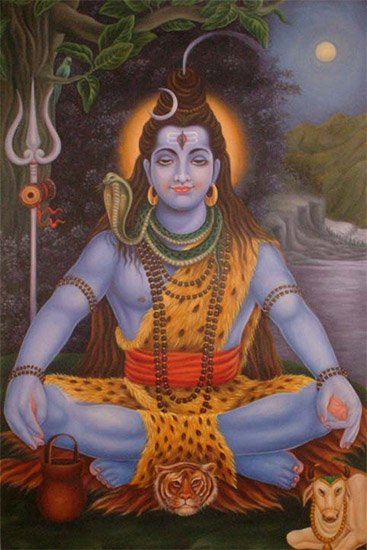
Shaiva (शैव, śaiva) or Shaivism (śaivism) represents a tradition of Hinduism worshiping Shiva as the supreme being. Closely related to Shaktism, Shaiva literature includes a range of scriptures, including Tantras, while the root of this tradition may be traced back to the ancient Vedas.
Purana and Itihasa (epic history)
Yāmya (याम्य) refers to “(tasks relating to) Yama”, according to the Śivapurāṇa 2.5.29 (“The previous birth of Śaṅkhacūḍa”).—Accordingly, [after Śaṅkhacūḍa and the Asuras conquered the Gods in battle]: “[...] Thus [Śaṃkhacūḍa,] the son of Dambha, the valorous leader of the Dānavas, conquered all the worlds and took up the powers of the gods. [...] He carried the tasks of Kubera, Moon, Sun, Fire, Yama [i.e., yāmyam adhikāram] and Vāyu, according to his ability. The great hero, the powerful Śaṅkhacūḍa became overlord of the gods, Asuras, Dānavas, Rākṣasas, Gandharvas, serpents, Kinnaras, Nāgas and in fact of all the people of the three worlds. [...]”.
Yāmya (याम्य).—A group of nāḍis emitting dew from the sun.*
- * Brahmāṇḍa-purāṇa II. 24. 28.
Yāmya (याम्य) is a name mentioned in the Mahābhārata (cf. XIV.8.14, XIV.8) and represents one of the many proper names used for people and places. Note: The Mahābhārata (mentioning Yāmya) is a Sanskrit epic poem consisting of 100,000 ślokas (metrical verses) and is over 2000 years old.

The Purana (पुराण, purāṇas) refers to Sanskrit literature preserving ancient India’s vast cultural history, including historical legends, religious ceremonies, various arts and sciences. The eighteen mahapuranas total over 400,000 shlokas (metrical couplets) and date to at least several centuries BCE.
Natyashastra (theatrics and dramaturgy)
Yāmyā (याम्या) is the Sanskrit name for an asterism (Musca). According to the Nāṭyaśāstra 3.14-15, the master of the dramatic art (nāṭyācārya) should perform raṅgapūjā after offering pūjā to the Jarjara (Indra’s staff). Accordingly, “After proceeding thus according to rules and staying in the phayhouse for the night, he should begin pūjā as soon as it is morning. This pūjā connected with the stage should take place under the asterism Ārdrā, Maghā, Yāmyā, Pūrvaphalgunī, Pūrvāṣāḍhā, Pūrvabhādrapadā, Aśleṣā or Mūlā”.
Natyashastra (नाट्यशास्त्र, nāṭyaśāstra) refers to both the ancient Indian tradition (shastra) of performing arts, (natya—theatrics, drama, dance, music), as well as the name of a Sanskrit work dealing with these subjects. It also teaches the rules for composing Dramatic plays (nataka), construction and performance of Theater, and Poetic works (kavya).
Jyotisha (astronomy and astrology)
1) Yāmya (याम्य) or Yāmyodadhi refers to a country (=the south sea ?) belonging to “Dakṣiṇa or Dakṣiṇadeśa (southern division)” classified under the constellations of Uttaraphālguni, Hasta and Citrā, according to the system of Kūrmavibhāga, according to the Bṛhatsaṃhitā (chapter 14), an encyclopedic Sanskrit work written by Varāhamihira mainly focusing on the science of ancient Indian astronomy astronomy (Jyotiṣa).—Accordingly, “The countries of the Earth beginning from the centre of Bhāratavarṣa and going round the east, south-east, south, etc., are divided into 9 divisions corresponding to the 27 lunar asterisms at the rate of 3 for each division and beginning from Kṛttikā. The constellations of Uttaraphālguni, Hasta and Citrā represent the southern division consisting of [i.e., Yāmya-udadhi] [...]”.
2) Yāmya (याम्य) is another name for Bharaṇī, according to the Bṛhatsaṃhitā (chapter 15) (“On the nakṣatras—‘asterisms’”).—Accordingly, “Those who are born on the lunar day of Bharaṇī will deal in precious stones, will be flesh eaters, will be wicked men; will delight in acts of killing and torture; will be dealers in pod grains; will be of low descent or weak-minded. [...]”.
Yāmya (याम्य) or Yāmyadiś refers to the “southern direction”, according to Kāśīnātha Upādhye’s Dharmasindhu, a commentary on the Rāma Daivajña’s Muhūrtacintāmaṇi (an astrological work).—Accordingly, “[...] The water clock [i.e., ghaṭīyantra], thus calibrated, should be placed in a copper basin or clay basin, full of water, when half of the Sun’s orb has risen or set. There this sacred formula is recited. ‘You have been created long time ago by Brahmā as the foremost among the [time measuring] instruments. For the sake of the state of [their] becoming a married couple you be the means of measuring time’. With this sacred formula, preceded by the worship of Gaṇeśa and Varuṇa, the bowl should be placed [on the water in the basin]. If the bowl thus placed moves to the south-east, south, south-west, or north-west [i.e., yāmya—āgneyayāmyanairṛtavāyavyādidiggatā] of the basin, it is not auspicious. If it stays in the middle, or moves to other directions, it is auspicious. Likewise, if it fills [and sinks] in the five directions starting from the southeast, it is not auspicious. Thus the discussion of the water clock. [...]”.
Yāmya (याम्य).—1. The south direction which is presided over by Yama. 2. The southern hemisphere (yāmyagola). 3. The nakṣatra, Bhariṇi that is presided over by Yama. Note: Yāmya is a Sanskrit technical term used in ancient Indian sciences such as Astronomy, Mathematics and Geometry.

Jyotisha (ज्योतिष, jyotiṣa or jyotish) refers to ‘astronomy’ or “Vedic astrology” and represents the fifth of the six Vedangas (additional sciences to be studied along with the Vedas). Jyotisha concerns itself with the study and prediction of the movements of celestial bodies, in order to calculate the auspicious time for rituals and ceremonies.
Shaktism
Yāmyā (याम्या) is the name of a Mātṛkā-Śakti created by Mahārudra in order to control the plague of demons created by Andhakāsura.—Accordingly, Andhaka-Asura tried to kidnap Umā (Devī Pārvatī), and was fiercely attacked by Mahārudra who shot arrows at him from his mahāpināka. when the arrows pierced the body of Andhakāsura, drops of blood fell to earth and from those drops, thousands of Andhakas arose. To control this plague of demons, Mahārudra created Mātṛkā-Śaktis [viz., Yāmyā] and ordered them to drink the blood of the demons and drain them dry.
Yāmyā (याम्या) refers to one of the various Mātṛkā-Śaktis created by Rudra in order to destroy the clones that spawned from Andhaka’s body.—Accordingly, [...] Andhakāsura attempted to abduct Girājanandinī (Pārvatī) and thus ensued a fierce battle between Andhakāsura and the great Rudra, the Lord of Umā. Like raktabīja, every drop of blood that fell from the body of Andhaka created another Asura like him and in no time, the entire world was filled with Andhakas. To destroy the growing number of Andhakas, Rudra created innumerable Mātṛkā-Śaktis [viz., Yāmyā]. These Śaktis of immense power at once began to drink every drop of blood that flowed from the body of Andhaka, but they could still not effectively contain the emergence of more and more demons.
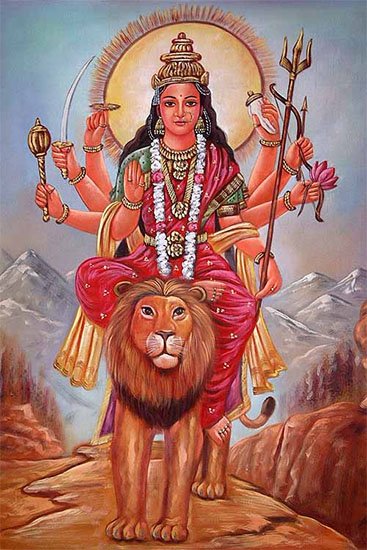
Shakta (शाक्त, śākta) or Shaktism (śāktism) represents a tradition of Hinduism where the Goddess (Devi) is revered and worshipped. Shakta literature includes a range of scriptures, including various Agamas and Tantras, although its roots may be traced back to the Vedas.
Vastushastra (architecture)
Yāmya (याम्य) [=Yāmī?] refers to the “southern” (direction), according to the Devyāmata (chapter 105).—Accordingly, [while describing the layout of the residence (gṛha) for the prāsādāśramin]—“[...] Storage for gems, gold and cloths is recommended in the east, and for water in the south (yāmya—yāmyāśre'pyuttare) and centre. Grain storage is recommended in the west. In the northwest is storage for the mortar. [...]”.
Vastushastra (वास्तुशास्त्र, vāstuśāstra) refers to the ancient Indian science (shastra) of architecture (vastu), dealing with topics such architecture, sculpture, town-building, fort building and various other constructions. Vastu also deals with the philosophy of the architectural relation with the cosmic universe.
Pancaratra (worship of Nārāyaṇa)
1) Yāmya (याम्य) is the name of an ancient Pāñcarātra Saṃhitā mentioned in the Kapiñjalasaṃhitā: a Pāñcarātra work consisting of 1550 verses dealing with a variety of topics such as worship in a temple, choosing an Ācārya, architecture, town-planning and iconography.—For the list of works, see chapter 1, verses 14b-27. The list [including Yāmya-saṃhitā] was said to have comprised “108” titles, these, different saṃhitās named after different manifestations of the Lord or different teachers. They are all said to be authoritative as the ultimate promulgator of all these is the same Nārāyaṇa.
2) Yāmya (याम्य) is the name of an ancient Pāñcarātra Saṃhitā mentioned in the Padmasaṃhitā: the most widely followed of Saṃhitā covering the entire range of concerns of Pāñcarātra doctrine and practice (i.e., the four-fold formulation of subject matter—jñāna, yoga, kriyā and caryā) consisting of roughly 9000 verses.—[Cf. Jñānapāda chapter 1, verses 99-114]—First is explained the folly of following more than one Saṃhitā for a single series of rituals. Then the names of the 108 Tantras of the Pāñcarātra corpus are named [e.g., Yāmya]. Even those who repeat these 108 titles will gain salvation.
3) Yāmya (याम्य) or Yāmyasaṃhitā is also mentioned in the Bhāradvājasaṃhitā or “Bhāradvāja-kaṇva-saṃhitā”: a Pāñcarātra text comprising some 230 ślokas mainly concerned with basic details concerning temple construction and icon consecration.
4) Yāmya (याम्य) or Yāmyasaṃhitā is also mentioned in the Viśvāmitrasaṃhitā: a Pāñcarātra text comprising some 2600 Sanskrit verses covering topics such as initiation (dīkṣā) and the construction, decoration and consecration of temples and icons, as well as routines of regular and special worship cycles.—
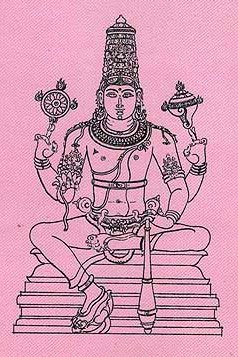
Pancaratra (पाञ्चरात्र, pāñcarātra) represents a tradition of Hinduism where Narayana is revered and worshipped. Closeley related to Vaishnavism, the Pancaratra literature includes various Agamas and tantras incorporating many Vaishnava philosophies.
In Buddhism
Tibetan Buddhism (Vajrayana or tantric Buddhism)
Yāmyā (याम्या) refers to one of the various Mātṛs and Mahāmātṛs mentioned as attending the teachings in the 6th century Mañjuśrīmūlakalpa: one of the largest Kriyā Tantras devoted to Mañjuśrī (the Bodhisattva of wisdom) representing an encyclopedia of knowledge primarily concerned with ritualistic elements in Buddhism. The teachings in this text originate from Mañjuśrī and were taught to and by Buddha Śākyamuni in the presence of a large audience (including Yāmyā).
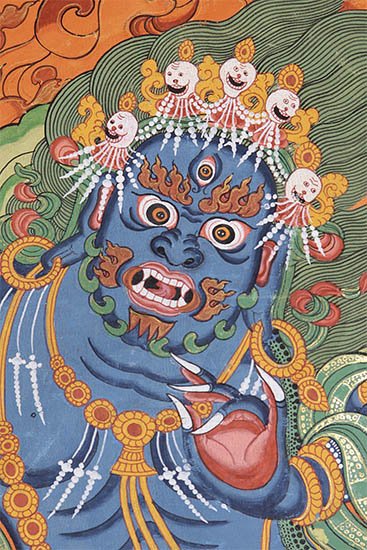
Tibetan Buddhism includes schools such as Nyingma, Kadampa, Kagyu and Gelug. Their primary canon of literature is divided in two broad categories: The Kangyur, which consists of Buddha’s words, and the Tengyur, which includes commentaries from various sources. Esotericism and tantra techniques (vajrayāna) are collected indepently.
Languages of India and abroad
Sanskrit dictionary
Yamya (यम्य).—a. Restrainable, to be curbed; P.III.1.1.
-myā Night; Naigh.1.7.
--- OR ---
Yāmya (याम्य).—a. [yamo devatāsya tasyedaṃ vā ṇya]
1) Southern; द्वारं ररङ्घतुर्याम्यम् (dvāraṃ raraṅghaturyāmyam) Bhaṭṭikāvya 14.15.
2) Belonging to or resembling Yama.
-myaḥ 1 A servant of Yama; भगवत्पुरुषै राजन् याम्याः प्रतिहतोद्यमाः (bhagavatpuruṣai rājan yāmyāḥ pratihatodyamāḥ) Bhāgavata 6.3.3.
2) Name of Agastya.
3) Of Śiva.
4) Of Viṣṇu.
5) Sandal-wood.
-myam The Bharaṇī Nakṣatra.
--- OR ---
Yāmyā (याम्या).—
1) The south; दिशं याम्यामभिमुखो रुदन् वचनमब्रवीत् (diśaṃ yāmyāmabhimukho rudan vacanamabravīt) Rām.2.13.26.
2) Night.
Yāmyā (याम्या).—name of a mātar (śakti of Yama): Mahā-Māyūrī 242.18.
Yāmya (याम्य).—m.
(-myaḥ) 1. Sandal. 2. The saint Agastya. f.
(-myā) 1. The south. 2. The lunar asterism, Bharani. 3. Night. E. yama Yama, ṇyat aff.; being sacred to or governed by that deity, &c.
Yāmya (याम्य).—i. e. yama + ya, I. adj., f. yā, Relating to Yama, [Rāmāyaṇa] 3, 54, 10 (with diś, The south); propounded by Yama, [Mānavadharmaśāstra] 8, 173. Ii. m. 1. Agastya. 2. Sandal. Iii. f. yā. 1. The south. 2. i. e. yāma + ya, f. Night.
Yāmya (याम्य).—[adjective] relating to Yama, southern; [masculine] a servant of Yama, [feminine] (±diś) the south.
1) Yamya (यम्य):—[from yam] 1. yamya mfn. restrainable, to be curbed or controlled, [Pāṇini 3-1, 100.]
2) [v.s. ...] 2. yamya mfn. (?) ([from] yama) being a twin, belonging to twins, [Ṛg-veda]
3) Yamyā (यम्या):—[from yamya > yam] f. night, [Naighaṇṭuka, commented on by Yāska i, 7.]
4) Yāmyā (याम्या):—[from yā] a f. night, [cf. Lexicographers, esp. such as amarasiṃha, halāyudha, hemacandra, etc.] (cf. under yāmya, p. 851, col. 3).
5) Yāmya (याम्य):—[from yāma] a mf(ā)n. relating or belonging to Yama, [Gṛhya-sūtra and śrauta-sūtra; Manu-smṛti; Mahābhārata] etc.
6) [v.s. ...] southern, southerly (also applied to a kind of fever; ye ind. or yena ind. in the south or to the south), [Taittirīya-saṃhitā] etc. etc.
7) [v.s. ...] m. the right hand (cf. dakṣiṇa), [Hemādri’s Caturvarga-cintāmaṇi]
8) [v.s. ...] ([scilicet] nara or puruṣa or dūta) a servant or messenger of Yama, [ṢaḍvBr.; Śāṅkhāyana-gṛhya-sūtra; Mārkaṇḍeya-purāṇa]
9) [v.s. ...] Name of Śiva or Viṣṇu, [Mahābhārata]
10) [v.s. ...] of Agastya, [cf. Lexicographers, esp. such as amarasiṃha, halāyudha, hemacandra, etc.]
11) [v.s. ...] the sandal-tree, [cf. Lexicographers, esp. such as amarasiṃha, halāyudha, hemacandra, etc.]
12) Yāmyā (याम्या):—[from yāmya > yāma] b f. (cf. yāmyā on p. 850, col. 1) the southern quarter, south, [Harivaṃśa; Rāmāyaṇa; Varāha-mihira] etc. (also with diś or āsā)
13) [v.s. ...] = n., [Viṣṇu-purāṇa]
14) Yāmya (याम्य):—[from yāma] n. (also with ṛkṣa) the Nakṣatra Bharaṇī (presided over by Yama), [Varāha-mihira; Mārkaṇḍeya-purāṇa; Suśruta]
15) b etc. See p. 851, col. 3.
Yāmya (याम्य):—(myaḥ) 1. m. Sandal; Agastya. f. South; night; an asterism. a. Belonging to Yama.
Yamya (यम्य):—1. partic. fut. pass. von yam [Pāṇini’s acht Bücher 3, 1, 100.] [Vopadeva’s Grammatik 26, 15.]
--- OR ---
Yamya (यम्य):—2. (von 2. yama) adj. verzwillingt: nānā cakrāte ya.yā..vapūṃṣi [Ṛgveda 3, 55, 11.] Dagegen scheint zu yamī (f. von yama) zu gehören ya.yaḥ [Ṛgveda 5, 44, 4] und ya.yā saṃya.ī [9, 68, 3] und auf die letztere Stelle dürfte die Aufnahme von yamyā (sollte wohl yamyā betont sein) unter den Namen für Nacht [das 1, 7] (vgl. [The Śatapathabrāhmaṇa 8, 5, 2, 5]) zu beziehen sein.
--- OR ---
Yāmya (याम्य):—(yāmya [Kāśikīvṛtti] zu [Pāṇini’s acht Bücher 4, 1, 85])
1) adj. zu Yama in Beziehung stehend, ihm gehörend, ihm eigen u.s.w.: kākāḥ [ĀŚV. GṚHY.] bei [STENZLER S. 46.] homa [Kauśika’s Sūtra zum Atuarvaveda 81.] vṛtti [Manu’s Gesetzbuch 8, 173.] kopavidhāraṇa [Mahābhārata 2, 2577.] sattvavant (v. l. yama) [Suśruta 1, 335, 12.] sabhā [Mahābhārata 2, 310. fg. 13, 3795.] dhanus [7, 1041.] sāmāni [2, 2627.] mātaraḥ kārttikeyasya [9, 2654.] [Varāhamihira’s Bṛhajjātaka S. 5, 23. 80, 8.] purī [Bhāgavatapurāṇa 5, 21, 7. 10.] [Mārkāṇḍeyapurāṇa 10, 76, 15. 54.] niyoga [78, 29] (niyoge zu lesen) [108, 18.] pāśa [Bhāgavatapurāṇa 6, 2, 20.] dūtāḥ [21.] narāḥ [Mārkāṇḍeyapurāṇa 12, 38.] yātanāḥ [KUSUM. 65, 7.] muhūrta [Weber’s Verzeichniss No. 912.] vrata [Kullūka] zu [Manu’s Gesetzbuch 9, 307.] ṛkṣa das von Yama beherrschte Nakṣatra Bharaṇī [Suśruta 2, 261, 12.] [Varāhamihira’s Bṛhajjātaka S. 7, 9. 9, 2. 6. 35. 10, 3. 15, 27.] [Mārkāṇḍeyapurāṇa 58, 53.] yāmyā f. dass. [Hemacandra’s Anekārthasaṃgraha 2, 378.] [Medinīkoṣa y. 47.] Insbes. südlich; in Verbindung mit diś und āśā oder yāmyā f. mit Ergänzung des subst. der Süden [Hemacandra’s Abhidhānacintāmaṇi 169,] [Scholiast] [Halāyudha 1, 101.] (yāmyā = prācī! [Hemacandra’s Anekārthasaṃgraha] [Medinīkoṣa][?). Taittirīyasaṃhitā.4,4,12,4. Harivaṃśa 4857. Rāmāyaṇa.2,103,26 (111,32 Gorresio).3,29,6. 54,10.4,60,16.5,27,17. WEBER, Jyotiṣa 35. Mārkāṇḍeyapurāṇa 29,18. Sūryasiddhānta.2,7. Oxforder Handschriften 51,b,24. Varāhamihira’s Bṛhajjātaka S.2, S.7, Z. 13.3,4. 11,12. 19. 33. 35. 37. 53,38. 54,65.] udaṅmadhyayāmyamārgasthāḥ [9, 4. fgg.] yāmyodadhi [14, 15. 26, 7. 54, 40. 44. 60, 2. 86, 30.] yāmyāṭ [87, 6. 90, 7.] [Sūryasiddhānta 2, 63. 3, 15.] [Bhaṭṭikavya 14, 15.] yāmye im Süden, in südlicher Richtung [WEBER, Rāmatāpanīya Upaniṣad 300.] [Varāhamihira’s Bṛhajjātaka S. 8, 15. 31, 3. 54, 33. 48. 68. 70. 78. 87, 43. 95, 21.] yāmyena dass. [4, 5. 5, 33. 11, 34. 18, 1. 53, 73. 54, 18. 41. 87, 4.] yāmyatas von Süden her [86, 21.] yāmyottara südlich und nördlich [Sūryasiddhānta 3, 4.] [Varāhamihira’s Bṛhajjātaka S. 5, 15.] von Süden nach Norden gehend [4, 12. 54, 118.] —
2) m. a) (sc. nara, puruṣa, dūta) ein Scherge Yama's: namo yamāya yāmyebhyaśca [Śāṅkhāyana’s Gṛhyasūtrāṇi 2, 14.] [Ṣaḍviṃśabrāhmaṇa 5, 1.] [Mārkāṇḍeyapurāṇa 11, 30. 121, 35. 14, 64.] — b) Beiname Agastya's [Medinīkoṣa] — c) Beiname Śiva’s [Weber’s Indische Studien 2, 39.] [Mahābhārata 7, 9521] (= yāmakartā kālaḥ [NILAK.][). 14, 193.] — d) Beiname Viṣṇu’s (neben mahā) [Mahābhārata 12, 12864] (= yamagaṇa [Nīlakaṇṭha]). — e) Sandelbaum [Medinīkoṣa]
--- OR ---
Yāmyā (याम्या):—(von 3. yāma 1, c,) f. = yāminī Nacht [Trikāṇḍaśeṣa 1, 1, 104.] [Hemacandra’s Abhidhānacintāmaṇi 18.] — yāmyā Süden s. u. yāmya 1).
Yamya (यम्य):—1. Partic. fut. pass. von yam.
--- OR ---
Yamya (यम्य):—2. Adj. verzwillingt scheinbar [Ṛgveda (roth). 3,55,11,] da hier yamyāṃ Nomin. Du. f. von yamī ist.
--- OR ---
Yamyā (यम्या):—f. Nacht.
--- OR ---
Yāmya (याम्य):——
1) Adj. (f. ā) zu Yama in Beziehung stehend , ihm gehörend , ihm eigen u.s.w. ṛkṣa n. das unter Yama stehende Mondhaus Bharaṇī. Insbes. südlich. Loc. und Instr. im Süden , in südlicher Richtung. Auch Bez. einer Species von Fieber [Bhāvaprakāśa 3,71.74.] —
2) m. — a) die rechte Hand [Hemādri’s Caturvargacintāmaṇi 2,a.100,3.8.102,17.] — b) ein Scherge Yama's. — c) Beiname — α) Śiva's. — β) Viṣṇu's. — γ) *Agastya's. — d) *Sandelbaum. —
3) f. ( ā) und n. das Mondhaus Bharaṇī [Wilson's Uebersetzung des Viṣṇupurāṇa 2,266.277.] —
4) f. ā Süden.
--- OR ---
Yāmyā (याम्या):—f. Nacht. — s. auch n. yāmya 3)4).
Yāmyā (याम्या) in the Sanskrit language is related to the Prakrit word: Jammā.
Sanskrit, also spelled संस्कृतम् (saṃskṛtam), is an ancient language of India commonly seen as the grandmother of the Indo-European language family (even English!). Closely allied with Prakrit and Pali, Sanskrit is more exhaustive in both grammar and terms and has the most extensive collection of literature in the world, greatly surpassing its sister-languages Greek and Latin.
Kannada-English dictionary
Yāmya (ಯಾಮ್ಯ):—
1) [adjective] relating to Yama the God of Righteousness and Death.
2) [adjective] in, of, to, toward or facing or from the south; southern.
--- OR ---
Yāmya (ಯಾಮ್ಯ):—
1) [noun] an attendant of Yama, the God Righteousness and Death.
2) [noun] the tree Santalum album ( = Sirium myrtifolium) of Santalaceae family; sandal wood tree.
3) [noun] the tree Bombax ceiba ( = B. malabaricum) of Bombacaceae family; silk cotton tree.
Kannada is a Dravidian language (as opposed to the Indo-European language family) mainly spoken in the southwestern region of India.
Nepali dictionary
Yāmya (याम्य):—n. 1. Mythol. messenger of Yama; 2. South (direction); 3. Mythol. a famous ascetic (supposed to be the son of Varun (वरुण [varuṇa] ));
Nepali is the primary language of the Nepalese people counting almost 20 million native speakers. The country of Nepal is situated in the Himalaya mountain range to the north of India.
See also (Relevant definitions)
Starts with (+0): Yamyadish, Yamyadishe, Yamyadruma, Yamyagola, Yamyam, Yamyamarga, Yamyamatri, Yamyapasha, Yamyasamhita, Yamyasattvavant, Yamyasattvavat, Yamyashra, Yamyatas, Yamyatirtha, Yamyayana, Yamyodadhi, Yamyottara.
Full-text (+39): Yamyottara, Yamyayana, Mahayamya, Niyamya, Purvayamya, Yamyatirtha, Prayamya, Ayamya, Yamyatas, Udyamya, Yamyam, Yamyapasha, Yamyadruma, Yamyadishe, Yamyodbhuta, Yamyashra, Yamiyam, Nagavithi, Yamyodadhi, Samyamya.
Relevant text
Search found 65 books and stories containing Yamya, Yāmyā, Yāmya, Yamyā, Yamyas; (plurals include: Yamyas, Yāmyās, Yāmyas, Yamyās, Yamyases). You can also click to the full overview containing English textual excerpts. Below are direct links for the most relevant articles:
Nighantu (critical study) (by Gopalakrishna N. Bhat)
Part 7 - Ratrinamani (Ratri Nama) < [Chapter 3 - First Adhyaya (chapter) of the Nighantu (study)]
Rig Veda (translation and commentary) (by H. H. Wilson)
Yavanajataka by Sphujidhvaja [Sanskrit/English] (by Michael D Neely)
Verse 73.19 < [Chapter 73 - Result of the Nakṣatras and Tithis on Military Expeditions]
Verse 73.16 < [Chapter 73 - Result of the Nakṣatras and Tithis on Military Expeditions]
Verse 1.84 < [Chapter 1 - The Innate Nature of the Zodiac Signs and Planets]
Jivanandana of Anandaraya Makhin (Study) (by G. D. Jayalakshmi)
Sannipātas (fevers due to Vāta, Pitta and Kapha) < [Chapter 4 - Āyurvedic principles in Jīvanandana Nāṭaka]
Act II (Summary) < [Chapter 3 - Summary of the Play Jīvānandana Nāṭaka]
A Descriptive Catalogue of the Sanskrit Manuscripts, Madras (by M. Seshagiri Sastri)
List of Mahabharata people and places (by Laxman Burdak)