Wesak, Vesak: 1 definition
Introduction:
Wesak means something in Buddhism, Pali, the history of ancient India. If you want to know the exact meaning, history, etymology or English translation of this term then check out the descriptions on this page. Add your comment or reference to a book if you want to contribute to this summary article.
In Buddhism
Theravada (major branch of Buddhism)
The ancient name for the Indian lunar month in spring corresponding to our April May. According to tradition, the Buddhas birth, Awakening, and Parinibbana each took place on the full moon night in the month of Visakha. These events are commemorated on that day in the Visakha festival, which is celebrated annually throughout the world of Theravada Buddhism.Theravāda is a major branch of Buddhism having the the Pali canon (tipitaka) as their canonical literature, which includes the vinaya-pitaka (monastic rules), the sutta-pitaka (Buddhist sermons) and the abhidhamma-pitaka (philosophy and psychology).
India history and geography
Wesak:—The second month of the Sinhalese year (May-June).
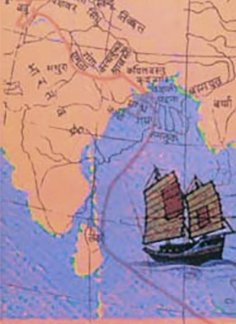
The history of India traces the identification of countries, villages, towns and other regions of India, as well as mythology, zoology, royal dynasties, rulers, tribes, local festivities and traditions and regional languages. Ancient India enjoyed religious freedom and encourages the path of Dharma, a concept common to Buddhism, Hinduism, and Jainism.
See also (Relevant definitions)
Full-text (+0): Mahavessantara, Fu sheng ri, Fu dan ri, Fu dan, Fu bao jie.
Relevant text
Search found 18 books and stories containing Wesak, Vesak; (plurals include: Wesaks, Vesaks). You can also click to the full overview containing English textual excerpts. Below are direct links for the most relevant articles:
Socially Engaged Buddhism (with reference to Australian society) (by Phuong Thi Thu Ngo)
The Festival of Theravada Tradition < [Chapter 4]
The Festival of Mahayana Tradition < [Chapter 4]
Significance of the Moon in Ancient Civilizations (by Radhakrishnan. P)
5. Full Moon Festivals < [Chapter 10 - Analysis of the Data]
The Birth of Buddhist Organizations in Modern Indonesia, 1900–1959 < [Volume 13, Issue 3 (2022)]
Buddhist Pilgrimage and the Ritual Ecology of Sacred Sites in the... < [Volume 12, Issue 6 (2021)]
“Contramodernist Buddhism” in a Global City-State < [Volume 13, Issue 3 (2022)]
Buddhist Ceremonies and Rituals of Sri Lanka (by A. G. S. Kariyawasam)
Dhammapada (Illustrated) (by Ven. Weagoda Sarada Maha Thero)
Verse 117 - The Story of Venerable Seyyasaka < [Chapter 9 - Pāpa Vagga (Evil)]
Dipavamsa (study) (by Sibani Barman)