Viccheda: 23 definitions
Introduction:
Viccheda means something in Hinduism, Sanskrit, Jainism, Prakrit, Buddhism, Pali, Marathi, Hindi. If you want to know the exact meaning, history, etymology or English translation of this term then check out the descriptions on this page. Add your comment or reference to a book if you want to contribute to this summary article.
Alternative spellings of this word include Vichchheda.
In Hinduism
Natyashastra (theatrics and dramaturgy)
Viccheda (द्रुत, “separation”) refers to “division during a pause” and represents one of six “elements of diction” (aṅga). According to the Nāṭyaśāstra chapter 19, these six elements of diction are part of the ‘vocal representation’ (vācika), which is used in communicating the meaning of the drama and calling forth the sentiment (rasa). The term is used throughout nāṭyaśāstra literature.
Viccheda refers to ‘separating due to pause’. Viccheda can be used in the Comic, the Erotic, the Heroic, the Furious, the Marvellous, the Odious and the Terrible Sentiment.
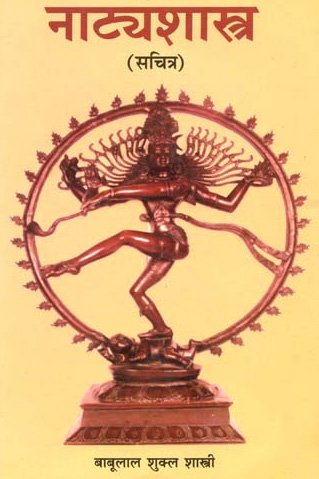
Natyashastra (नाट्यशास्त्र, nāṭyaśāstra) refers to both the ancient Indian tradition (shastra) of performing arts, (natya—theatrics, drama, dance, music), as well as the name of a Sanskrit work dealing with these subjects. It also teaches the rules for composing Dramatic plays (nataka), construction and performance of Theater, and Poetic works (kavya).
Vyakarana (Sanskrit grammar)
Viccheda (विच्छेद).—(l) breach or break (in the Samhitapatha); utterance of words separately by breaking their coalescence; cf. पदविच्छेदः असंहितः (padavicchedaḥ asaṃhitaḥ) V. Pr.I.156; (2) doubling of a consonant technically called यम (yama); cf. अन्तःपदे अपञ्चमः पञ्चमेषु विच्छेदम् (antaḥpade apañcamaḥ pañcameṣu vicchedam) V.Pr. IV.163.
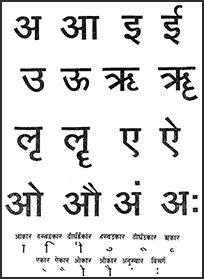
Vyakarana (व्याकरण, vyākaraṇa) refers to Sanskrit grammar and represents one of the six additional sciences (vedanga) to be studied along with the Vedas. Vyakarana concerns itself with the rules of Sanskrit grammar and linguistic analysis in order to establish the correct context of words and sentences.
Shaiva philosophy
Viccheda (विच्छेद) refers to “(being) separated (from the subject)” according to the Utpaladeva’s Vivṛti on Īśvarapratyabhijñākārikā 1.5.8-9.—Accordingly, “[...] And insofar as this [inference] produces the realization of this object—[which only] exists inside [consciousness at the time when we infer]—thanks to the residual trace of the [past] experience, [and insofar as it produces this realization] as is appropriate [for an object, i.e.] in the form “this”, it only manifests [this object] as being separated (viccheda) [from the subject, the latter being expressed as “I”]. [...]”.
Shaiva philosophy is a spritiual tradition within Hinduism that includes theories such as the relationship between the Atman (individual soul) and Siva, the nature of liberation (moksha), and the concepts of maya (illusion) and shakti (divine energy). Saiva philosophy teaches that union with Shiva can be achieved through knowledge, devotion, and spiritual practice. It encompasses major branches like Shaiva Siddhanta and Kashmir Shaivism.
Purana and Itihasa (epic history)
1) Viccheda (विच्छेद) refers to the “separation (of a copulated pair)”, according to the Śivapurāṇa 2.4.1 (“The dalliance of Śiva”).—Accordingly, as Lord Viṣṇu said to Brahmā: “[...] If the enjoyment is desired by Śiva who can check it? When another thousand years are completed He will desist from it, out of his own will. If any one separates (viccheda) the copulated pair by a tricky expedient, he will have the pangs of separation from his wife and sons in every birth. [...]”.
2) Viccheda (विच्छेद) refers to “plucking (the leaves of a plant)”, according to the Śivapurāṇa 2.5.41 (“The curse of Tulasī”).—Accordingly: “[As Śiva said to Tulasī and Viṣṇu]: “[...] O great lady, as a boon granted by me, Tulasī (holy basil) will be the most important constituent of the materials of worship of the gods some time. In heaven, earth and the nether worlds you will become the Tulasī plant (tulasīvṛkṣa) more excellent than flowers. [...] O gentle lady, If anyone plucks the leaves of Tulasī [i.e., tulasīpatra-viccheda] lying on Śālagrāma he will be separated from his wife in the next birth. If any one plucks Tulasī leaves without using conch he will become a widower and a chronic patient for seven births. He who keeps Śālagrāma, Tulasī and Śaṅkha in one place shall become wise and a favourite of Viṣṇu. [...]”.

The Purana (पुराण, purāṇas) refers to Sanskrit literature preserving ancient India’s vast cultural history, including historical legends, religious ceremonies, various arts and sciences. The eighteen mahapuranas total over 400,000 shlokas (metrical couplets) and date to at least several centuries BCE.
Vastushastra (architecture)
Viccheda (विच्छेद) refers to the “removal of the connection (of channels)” which is performed during the ritual for the re-installation of damaged idols from the temple, according to Kerala ritual texts such as the Śaivāgamanibandhana, Prayogamañjarī and the Īśanagurudevapaddhati.—[...] [After filling the temple with caitanya]:—[...] Next he ritually brings back the caitanya that had been spread over the temple complex, first to the sanctum and then to the seat and idol and finally to the entire idol. Then that caitanya is absorbed in the heart in the form of lotus (hṛdayakamala) of the god. Then the priest imagines the God as `cinmātra’ and does the removal of the connection of channels (nāḍī-viccheda), and then opens the sanctum.
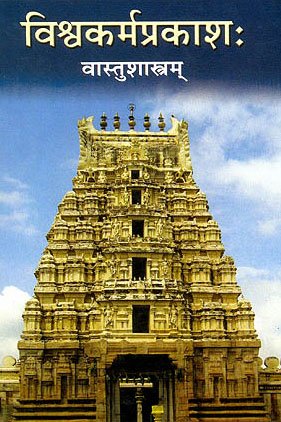
Vastushastra (वास्तुशास्त्र, vāstuśāstra) refers to the ancient Indian science (shastra) of architecture (vastu), dealing with topics such architecture, sculpture, town-building, fort building and various other constructions. Vastu also deals with the philosophy of the architectural relation with the cosmic universe.
In Jainism
General definition (in Jainism)
Viccheda (विच्छेद) refers to the “cessation” (of the acquisition of karmic material) (of an ascetic), according to the 11th century Jñānārṇava, a treatise on Jain Yoga in roughly 2200 Sanskrit verses composed by Śubhacandra.—Accordingly, “That, which is the cessation of the acquisition (ādāna-viccheda) of karmic material of an ascetic, is declared by those whose sins are removed by meditation to be the physical stopping of the influx of karma. That which is evidently cessation of action causing the cycle of rebirth is to be considered as the mental stopping of the influx of karma by those who know about that from the most excellent scripture”.
Synonyms: Vinaṣṭa, Vigama, Nāśa, Vilaya.

Jainism is an Indian religion of Dharma whose doctrine revolves around harmlessness (ahimsa) towards every living being. The two major branches (Digambara and Svetambara) of Jainism stimulate self-control (or, shramana, ‘self-reliance’) and spiritual development through a path of peace for the soul to progess to the ultimate goal.
Languages of India and abroad
Pali-English dictionary
viccheda : (m.) interruption; cutting off.
Viccheda, (vi+cheda) cutting off, destruction J. IV, 284 (santati°). a° uninterruptedness VvA. 16. (Page 616)
viccheda (ဝိစ္ဆေဒ) [(pu) (ပု)]—
[vi+chidi+ṇa.nīti,dhātu.215.viccheda-saṃ.vicchea-prā.]
[ဝိ+ဆိဒိ+ဏ။ နီတိ၊ ဓာတု။ ၂၁၅။ ဝိစ္ဆေဒ-သံ။ ဝိစ္ဆေအ-ပြာ။]
[Pali to Burmese]
viccheda—
(Burmese text): (၁)ပြတ်ခြင်း။ (၂)ဖြတ်ခြင်း။
(Auto-Translation): (1) Cutting. (2) Splitting.

Pali is the language of the Tipiṭaka, which is the sacred canon of Theravāda Buddhism and contains much of the Buddha’s speech. Closeley related to Sanskrit, both languages are used interchangeably between religions.
Marathi-English dictionary
vicchēda (विच्छेद).—m S Division, disjunction, separation; act of dividing or divided state. 2 Shivering, shattering, smashing: also shivered or shattered state.
vicchēda (विच्छेद).—m Division, separation; shattering.
Marathi is an Indo-European language having over 70 million native speakers people in (predominantly) Maharashtra India. Marathi, like many other Indo-Aryan languages, evolved from early forms of Prakrit, which itself is a subset of Sanskrit, one of the most ancient languages of the world.
Sanskrit dictionary
Viccheda (विच्छेद).—
1) Cutting asunder, cutting, dividing, separation; किं वा भणामि विच्छेददारुणायासकारिणि (kiṃ vā bhaṇāmi vicchedadāruṇāyāsakāriṇi) Mālatīmādhava (Bombay) 6.11.
2) Breaking; विच्छेदः सहृदययेव हारयष्ट्या (vicchedaḥ sahṛdayayeva hārayaṣṭyā) Śiśupālavadha 8.51.
3) Break, interruption, cessation, discontinuance; विच्छेदमाप भुवि यस्तु कथाप्रबन्धः (vicchedamāpa bhuvi yastu kathāprabandhaḥ) K.; पिण्डविच्छेददर्शिनः (piṇḍavicchedadarśinaḥ) R.1.66.
4) Removal, prohibition.
5) Dissension.
6) A section, or division of a book.
7) Interval, space.
8) Interruption in family succession, failure of issue.
9) Distinction, difference, variety.
Derivable forms: vicchedaḥ (विच्छेदः).
Viccheda (विच्छेद).—m.
(-daḥ) 1. Separation, disjunction, removal. 2. Prohibition. prevention. 3. Dividing, cutting. 4. The division of a book, a section. 5. Space, interval. 6. Dissension, difference. 7. Interruption. 8. Termination. 9. Removal. E. vi before, chid to cut, aff. ghañ .
Viccheda (विच्छेद).—i. e. vi-cid + a, m. 1. Cutting. 2. Dividing, breaking, [Kirātārjunīya] 7, 16. 3. Separation, interruption, [Vikramorvaśī, (ed. Bollensen.)] 60, 5. 4. A section, a chapter. 5. Interval. 6. Dissension.
Viccheda (विच्छेद).—[masculine] piercing, tearing or breaking asunder, severing from ([genetive] or —°); interruption, hindrance, prevention, destruction; division, difference.
1) Viccheda (विच्छेद):—[=vi-ccheda] [from vi-cchid] m. cutting asunder, cleaving, piercing, breaking, division, separation, [Kāvya literature; Sāhitya-darpaṇa]
2) [v.s. ...] interruption, discontinuance, cessation, end, [Mahābhārata; Kāvya literature] etc.
3) [v.s. ...] removal, destruction, [Rājataraṅgiṇī; Kathāsaritsāgara]
4) [v.s. ...] (ifc.) injury to, [Kāmandakīya-nītisāra]
5) [v.s. ...] distinction, difference (ifc. also ‘variety’ id est. different kinds of), [Mahābhārata; Śaṃkarācārya; Sarvadarśana-saṃgraha]
6) [v.s. ...] division of a book, section, chapter, [Horace H. Wilson]
7) [v.s. ...] space, interval, [ib.]
8) [v.s. ...] caesura, pause in a verse, [Piṅgala Scholiast, i.e. halāyudha [Scholiast or Commentator]]
Viccheda (विच्छेद):—(daḥ) 1. m. Cutting asunder; disjunction; prevention; division; difference; interstice.
Viccheda (विच्छेद):—(von 1. chid mit vi) m.
1) das Zerspalten, Zerhauen: kavaca [Oxforder Handschriften 117,a,21.] Brechung, Theilung: yātasya vicchedaṃ vārivāhajāle suradhanuṣaḥ [Kirātārjunīya 7, 16.] —
2) Ausrottung, Vertilgung, Vernichtung: dāyāda [Rājataraṅgiṇī 8, 1030.] vairi [1249.] sarga [Kathāsaritsāgara 20, 70.] asmajjāteḥ [Pañcatantra ed. orn. 45, 1.] —
3) Trennung: lālitānāṃ svajātānām von [Spr. 2666.] [Chandomañjarī 78.] priya [Sāhityadarpana 147.] kāntāyāḥ kāntavicchedo maraṇādatiricyate [BRAHMAVAIV. Pāṇini’s acht Bücher] [GAṆAPATIKH. im Śabdakalpadruma] —
4) Unterbrechung, Hemmung, Störung, Aufhebung: snehasya vilāparuditasya ca [Mahābhārata 12, 5741.] haracaraṇasmaraṇa [13, 774.] śvāsapraśvāsayoḥ [Yogasūtra 2, 49.] [SARVADARŚANAS. 174, 13. 18. 175, 1.] saṃpradāya [127, 18.] [Rājataraṅgiṇī 5, 139.] [KĀM. NĪTIS. 10, 5. 14.] piṇḍa [Raghuvaṃśa 1, 66.] kathā [Vikramorvaśī 60, 6. 120, 22.] [Varāhamihira’s Bṛhajjātaka S. S. 4, Z. 7.] vṛtti [Pañcatantra ed. orn. 45, 1.] [Sāhityadarpana 8, 22. 139, 7. 215. 319.] Cit. beim Schol. zu [Śākuntala 98.] [DEVAR.] bei [Geschichte des Weda,] [Yāska’s Nirukta LI.] [KUSUM. 52, 10.] pipāsā [Kullūka] zu [Manu’s Gesetzbuch 5, 128.] svārtha so v. a. Beeinträchtigung [KĀM. NĪTIS. 17, 57.] a [The Śatapathabrāhmaṇa 6, 4, 2, 10. 9, 5, 1, 44.] [SARVADARŚANAS. 127, 16. fg.] avicchedena ununterbrochen [115, 21.] avicchedakṛtā giraḥ [Mahābhārata 8, 2514.] tena sārdhamavicchedasthānam [PAÑCAR. 1, 1, 21.] —
5) Unterschied, Verschiedenheit [] zu [Bṛhadāranyakopaniṣad] [?S. 159. Bhāgavatapurāṇa 2, 10, 8.] pratiśarīraṃ jīvavicchedaḥ [SARVADARŚANAS. 45, 12.] dhātuvicchedaiḥ so v. a. mit verschiedenen Erzen [Mahābhārata 3, 11090.] —
6) gramm. Einschnitt, Brechung [Prātiśākhya zum Ṛgveda 6, 13.] [Prātiśākhya zur Vājasaneyisaṃhitā 4, 160.] = yati Cäsur [Weber’s Indische Studien 8, 363.] — Vgl. pada, pāṭha .
--- OR ---
Viccheda (विच्छेद):—
1) Durchbohrung: karṇakambala [Hemacandra] [Yogaśāstra 3, 110.]
Viccheda (विच्छेद) in the Sanskrit language is related to the Prakrit word: Vicchea.
Sanskrit, also spelled संस्कृतम् (saṃskṛtam), is an ancient language of India commonly seen as the grandmother of the Indo-European language family (even English!). Closely allied with Prakrit and Pali, Sanskrit is more exhaustive in both grammar and terms and has the most extensive collection of literature in the world, greatly surpassing its sister-languages Greek and Latin.
Hindi dictionary
Viccheda (विच्छेद) [Also spelled vichchhed]:—(nm) dissection; division; difference; disintegration, separation; discontinuance; breach; breaking up; hence ~[ka] (nm); ~[na] (nm); ~[nīya] (a); [vicchedya] (a).
...
Kannada-English dictionary
Vicchēda (ವಿಚ್ಛೇದ):—
1) [noun] the act of cutting, severing.
2) [noun] the act or an instance of abandoning (something).
3) [noun] a division of a book, treatise; a chapter.
4) [noun] a period of time between two points of time, events, etc.; intervening period; interval.
Kannada is a Dravidian language (as opposed to the Indo-European language family) mainly spoken in the southwestern region of India.
Nepali dictionary
1) Viccheda (विच्छेद):—n. 1. separation; dividing; cutting; 2. breaking; 3. discontinuance; break; interruption; 4. divorce; 5. ruin; destruction; devastation;
2) Viccheda (विच्छेद):—[sandhi-vigraha/viccheda] n. 1. peace and war; 2. Gram. separation of the words;
Nepali is the primary language of the Nepalese people counting almost 20 million native speakers. The country of Nepal is situated in the Himalaya mountain range to the north of India.
See also (Relevant definitions)
Partial matches (+0): Ccheda, Cheda, Chidi, Vi, Chide, Ceta, Na.
Starts with (+0): Vicchedabhava, Vicchedaka, Vicchedakapaccayuppatti, Vicchedakara, Vicchedakarin, Vicchedamatra, Vicchedana, Vicchedanatthajotaka, Vicchedanayanakara, Vicchedaniya, Vicchedapaccaya, Vicchedappatti, Vicchedappavatti, Vicchedaprasanga, Vicchedattha, Vicchedatthajotana.
Full-text (+44): Aviccheda, Padaviccheda, Vivahaviccheda, Pathaviccheda, Vicchedana, Bhavangaviccheda, Jivitindriyaviccheda, Vicchedabhava, Vicchedanayanakara, Padavaraviccheda, Bhavanaviccheda, Vicikicchaviccheda, Vicchedappavatti, Gamanaviccheda, Vicchedattha, Vicchedapaccaya, Vicchedappatti, Sadviccheda, Cittavisesadassanaviccheda, Vicchedakara.
Relevant text
Search found 26 books and stories containing Viccheda, Vi-ccheda, Vi-cchēda, Vi-cheda, Vi-chēda, Vi-chidi-na, Vi-chidi-ṇa, Vicchēda; (plurals include: Vicchedas, cchedas, cchēdas, chedas, chēdas, nas, ṇas, Vicchēdas). You can also click to the full overview containing English textual excerpts. Below are direct links for the most relevant articles:
Dictionaries of Indian languages (Kosha)
Page 312 < [Hindi-English-Nepali (1 volume)]
Page 72 < [English-Gujarati-Hindi (1 volume)]
Page 15 < [Hindi-English-Nepali (1 volume)]
Notices of Sanskrit Manuscripts (by Rajendralala Mitra)
A Descriptive Catalogue of the Sanskrit Manuscripts, Madras (by M. Seshagiri Sastri)
Yoga-sutras (with Vyasa and Vachaspati Mishra) (by Rama Prasada)
Sūtra 2.49 < [Book 2 - Practice (Sādhana)]
Shiva Purana [sanskrit/english]
Yoga-sutras (Vedanta Commentaries)
Sūtras 46-49 < [Part II - Yoga and its Practice]