Varnadharma, Varna-dharma, Varṇadharma: 10 definitions
Introduction:
Varnadharma means something in Hinduism, Sanskrit, Marathi. If you want to know the exact meaning, history, etymology or English translation of this term then check out the descriptions on this page. Add your comment or reference to a book if you want to contribute to this summary article.
In Hinduism
Purana and Itihasa (epic history)
Varṇadharma (वर्णधर्म).—Of the four varṇas; could take to other professions in extreme cases. The āśrama dharma; specific duties of the Vānaprastha and Sannyāsa.1 First introduced in the Svāyambhuva epoch in five dvīpas of concentric islands of Hindu cosmos—Plakṣa, Śālmali, Kuśa, Krauñca and Śākadvīpas; its observance in Tretayuga, languishing in Dvāpara, completely ruined in the Kaliyuga; based on Śrauta and Smārta dharma.2 Aurva narrates to Sagara the duties of all castes.3
- 1) Bhāgavata-purāṇa VII. 11. 14-24; XI. 17. 13-58; ch. 18 (whole) . Vāyu-purāṇa 8. 168-75.
- 2) Brahmāṇḍa-purāṇa II. 14. 41; 29. 46; 30. 4; 31. 27-8. 107; 32. 33-44; 35. 195; III. 7. 407-8; 13. 132; 50. 4. IV. 3. 50; 43. 58.
- 3) Viṣṇu-purāṇa III. 8. 20-40.
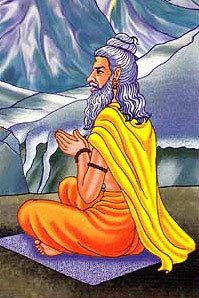
The Purana (पुराण, purāṇas) refers to Sanskrit literature preserving ancient India’s vast cultural history, including historical legends, religious ceremonies, various arts and sciences. The eighteen mahapuranas total over 400,000 shlokas (metrical couplets) and date to at least several centuries BCE.
Dharmashastra (religious law)
Varṇadharma (वर्णधर्म) refers to one of the topics dealt with in the (reconstructed) Devalasmṛti, a lost text dealing with Dharmaśāstra authored by Devala—one of the most famous personalities in the ancient Sanskrit literature renowned as a Vedic Seer and a highly celebrated sage.—The original and complete text of Devalasmṛti, is no longer existing. About 2500 prose and verse quotations, of the reconstructed text were thus collected, from numerous printed and manuscript works on Dharmaśāstra. After minute and repeated study of topics, treated in the collected quotations, they were classified even into the following twenty-two different prakaraṇas (divisions) [e.g., the varṇāśramajātidharma], of the three main adhyāyas (chapters).
Dharmashastra (धर्मशास्त्र, dharmaśāstra) contains the instructions (shastra) regarding religious conduct of livelihood (dharma), ceremonies, jurisprudence (study of law) and more. It is categorized as smriti, an important and authoritative selection of books dealing with the Hindu lifestyle.
Languages of India and abroad
Marathi-English dictionary
varṇadharma (वर्णधर्म).—m (S) The occupation, business, function, or virtue peculiar or appropriate to a caste or tribe.
varṇadharma (वर्णधर्म).—m Function peculiar to a caste.
Marathi is an Indo-European language having over 70 million native speakers people in (predominantly) Maharashtra India. Marathi, like many other Indo-Aryan languages, evolved from early forms of Prakrit, which itself is a subset of Sanskrit, one of the most ancient languages of the world.
Sanskrit dictionary
Varṇadharma (वर्णधर्म).—the peculiar duties of a caste.
Derivable forms: varṇadharmaḥ (वर्णधर्मः).
Varṇadharma is a Sanskrit compound consisting of the terms varṇa and dharma (धर्म).
Varṇadharma (वर्णधर्म).—[masculine] sgl. & [plural] the laws or duties of castes.
Varṇadharma (वर्णधर्म):—[=varṇa-dharma] [from varṇa > varṇ] m. the [particular] duty or occupation of any caste or tribe, [Gautama-dharma-śāstra; Manu-smṛti etc.]
Varṇadharma (वर्णधर्म):—[varṇa-dharma] (rmmaḥ) 1. m. Particular occupation of any caste.
Sanskrit, also spelled संस्कृतम् (saṃskṛtam), is an ancient language of India commonly seen as the grandmother of the Indo-European language family (even English!). Closely allied with Prakrit and Pali, Sanskrit is more exhaustive in both grammar and terms and has the most extensive collection of literature in the world, greatly surpassing its sister-languages Greek and Latin.
Kannada-English dictionary
Varṇadharma (ವರ್ಣಧರ್ಮ):—[noun] the traditionally set occupation of the vour classes (see varṇa sl. no. 4 above) of Hindu society.
Kannada is a Dravidian language (as opposed to the Indo-European language family) mainly spoken in the southwestern region of India.
Nepali dictionary
Varṇadharma (वर्णधर्म):—n. the peculiar duties of a caste; social dharma;
Nepali is the primary language of the Nepalese people counting almost 20 million native speakers. The country of Nepal is situated in the Himalaya mountain range to the north of India.
See also (Relevant definitions)
Partial matches (+0): Varna, Dharma, Dharma, Dharma.
Full-text (+0): Varndharm, Dhamma, Bhargabhumi, Varnashrama, Shaunaka, Shishupala, Aurva.
Relevant text
Search found 33 books and stories containing Varnadharma, Varna dharmas, Varna-dharma, Varṇa-dharma, Varṇadharma; (plurals include: Varnadharmas, Varna dharmases, dharmas, Varṇadharmas). You can also click to the full overview containing English textual excerpts. Below are direct links for the most relevant articles:
The Gita’s Ethics (A Critical Study) (by Arpita Chakraborty)
7. Co-relation of Varna-dharma with Sadharana and Svadharma < [Chapter 3 - Constituents of Moral Action: Dharma]
4. Varnadharma (duties relative to one’s varna) < [Chapter 3 - Constituents of Moral Action: Dharma]
4. Foundation of Vedic Ethics < [Chapter 1 - Indian Ethics]
Atithi or Guest Reception (study) (by Sarika. P.)
Part 1 - Introduction to Varṇāśrama-dharma (the wholeness of one’s life) < [Chapter 6 - Social Customs and Ethical Codes in Dharmaśāstras]
Part 1 - Introduction to the Dharmaśāstra Literature < [Chapter 5 - The Dharmaśāstra Literature]
Some Aspects of Andhra Folklore and Folk Values < [April 1970]
Dharma: Some Aspects < [July – September, 1993]
Book Reviews < [April – June, 1997]
Ramanuja’s Interpretation of the Bhagavad-gita (by Abani Sonowal)
Manasollasa (study of Arts and Sciences) (by Mahadev Narayanrao Joshi)
2. Concept of Dharma and Danda < [Chapter 3 - Social and Political conditions reflected in Somesvara’s Manasollasa]
Dictionaries of Indian languages (Kosha)
Page 366 < [Gujarati-Hindi-English, Volume 3]