Vaksiddhi, Vac-siddhi, Vāksiddhi: 5 definitions
Introduction:
Vaksiddhi means something in Hinduism, Sanskrit, Marathi. If you want to know the exact meaning, history, etymology or English translation of this term then check out the descriptions on this page. Add your comment or reference to a book if you want to contribute to this summary article.
Images (photo gallery)
In Hinduism
Purana and Itihasa (epic history)
Vāksiddhi (वाक्सिद्धि).—A yoga siddhi.*
- * Brahmāṇḍa-purāṇa IV. 36. 53.

The Purana (पुराण, purāṇas) refers to Sanskrit literature preserving ancient India’s vast cultural history, including historical legends, religious ceremonies, various arts and sciences. The eighteen mahapuranas total over 400,000 shlokas (metrical couplets) and date to at least several centuries BCE.
Yoga (school of philosophy)
Vāksiddhi (वाक्सिद्धि) refers to the “Siddhi of speech”, according to the Śivayogadīpikā, an ancient Sanskrit text dealing with Yoga possibly corresponding to the Śivayoga quoted in Śivānanda’s Yogacintāmaṇi.—Accordingly, [while describing a sequence of Haṭhayoga practices]: “Thus, by means of this Haṭhayoga which has eight auxiliaries, those [students who are] life-long celibates obtain the Siddhis of the [best of Sages] because of their untiring practice. [...] In the fifth year, he has clairaudience, the Siddhi of speech (vāksiddhi) and [the power to] enter the bodies of other [beings]. Within six [years,] he cannot be pierced by even a thunderbolt, he can move extremely quickly and has clairvoyance. [...]”.

Yoga is originally considered a branch of Hindu philosophy (astika), but both ancient and modern Yoga combine the physical, mental and spiritual. Yoga teaches various physical techniques also known as āsanas (postures), used for various purposes (eg., meditation, contemplation, relaxation).
Shilpashastra (iconography)
Vāksiddhi (वाक्सिद्धि) refers to “eloquence” and represents one of the sixty-four arts associated with Sarasvatī, Śāradā (=Śāradādevī), Devī-Lalitā or Catuṣṣaṣṭikalādevī: a form of Devī whose Pratimālakṣaṇa (Śakti-based iconographical details) are discussed in verse 1.91 of the Śrītattvanidhi of Śrī Kṛṣṇarāja Uḍaiyar (in its Tañcāvūr Sarasvatī Mahal Library edition).—Devī-Lalitā is the Cosmic Mistress. She is the Mistress of Sixty-four Arts (e.g, vāksiddhi); [...] She is named Śāradādevī; the manifestation of Mahā-Sarasvatī.
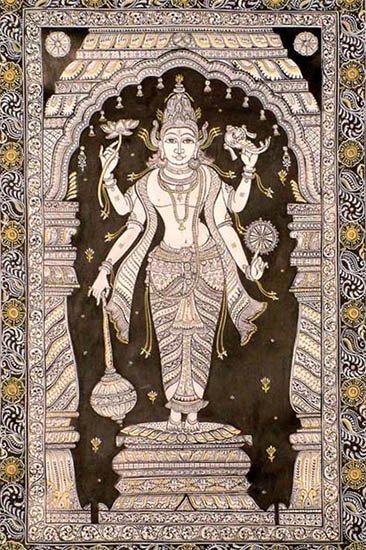
Shilpashastra (शिल्पशास्त्र, śilpaśāstra) represents the ancient Indian science (shastra) of creative arts (shilpa) such as sculpture, iconography and painting. Closely related to Vastushastra (architecture), they often share the same literature.
Languages of India and abroad
Marathi-English dictionary
vāksiddhi (वाक्सिद्धि).—f S One of the siddhi or superhuman faculties,--that which moulds events into conformity with one's words; the faculty of conforming events into verification of one's prediction or declaration.
Marathi is an Indo-European language having over 70 million native speakers people in (predominantly) Maharashtra India. Marathi, like many other Indo-Aryan languages, evolved from early forms of Prakrit, which itself is a subset of Sanskrit, one of the most ancient languages of the world.
Nepali dictionary
Vāksiddhi (वाक्सिद्धि):—n. realization of everything spoken;
Nepali is the primary language of the Nepalese people counting almost 20 million native speakers. The country of Nepal is situated in the Himalaya mountain range to the north of India.
See also (Relevant definitions)
Partial matches (+0): Vak, Vac, Siddhi, Siddhi, Siddhi.
Full-text (+0): Vakyasiddhi.
Relevant text
Search found 13 books and stories containing Vaksiddhi, Vac-siddhi, Vāc-siddhi, Vāk-siddhi, Vak-siddhi, Vāksiddhi; (plurals include: Vaksiddhis, siddhis, Vāksiddhis). You can also click to the full overview containing English textual excerpts. Below are direct links for the most relevant articles:
Shiva Purana [sanskrit/english]
Verse 1.16.53 < [Chapter 16]
World Journal of Pharmaceutical Research
Elucidation of rasayana concept – unique contribution of rasashastra < [2024: Volume 13, January special issue 2]
Role of ayurveda in preventing cataract < [2018: Volume 7, March issue 5]
Role of rasayanas in management of covid-19 epidemic < [2022: Volume 11, January issue 1]
Yogatattva Upanishad (translation and study) (by Sujata Jena)
A Descriptive Catalogue of the Sanskrit Manuscripts, Madras (by M. Seshagiri Sastri)
Page 31 < [Volume 13 (1912)]
Chaitanya Bhagavata (by Bhumipati Dāsa)
Verse 3.5.316-317 < [Chapter 5 - The Pastimes of Nityānanda]
International Research Journal of Ayurveda and Yoga
The Significance of Rasayana in Madhumeha (Diabetes): A Review Article. < [Vol. 6 No. 6: Jun (2023)]
Geriatric Health Care through Rasayana : A Review < [Vol. 3 No. 11: Nov (2020)]
Utility Of Rasayana In Present Era < [Vol. 4 No. 9: SEP (2021)]