Vairocanabhadra, Vairocana-bhadra: 3 definitions
Introduction:
Vairocanabhadra means something in Buddhism, Pali, Hinduism, Sanskrit. If you want to know the exact meaning, history, etymology or English translation of this term then check out the descriptions on this page. Add your comment or reference to a book if you want to contribute to this summary article.
Alternative spellings of this word include Vairochanabhadra.
In Buddhism
Tibetan Buddhism (Vajrayana or tantric Buddhism)
Vairocanabhadra (वैरोचनभद्र) is the name of an ancient teacher belonging to the “lineage of vast conduct”, according to “the succession of Gurus in the Mahāmudrā lineages” in the Kagyü School of Tibetan Buddhism (the Mahāmudrā deals with the nature of the mind).—The graduated path of the three levels of beings, which is an adornment [for the Mahāmudrā], is of three lineages: 1. The lineage of vast conduct; 2. The lineage of the profound view; 3. The lineage of the blessing of practice.—[The lineage of vast conduct]—(1) The Lord of Sages [the Buddha], ... (9) Vairocanabhadra,... and (14) Atiśa Dīpaṃkara.
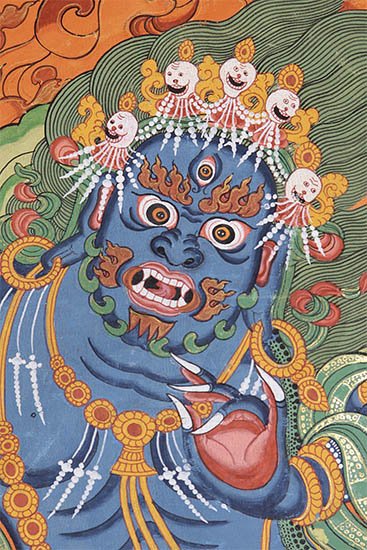
Tibetan Buddhism includes schools such as Nyingma, Kadampa, Kagyu and Gelug. Their primary canon of literature is divided in two broad categories: The Kangyur, which consists of Buddha’s words, and the Tengyur, which includes commentaries from various sources. Esotericism and tantra techniques (vajrayāna) are collected indepently.
Languages of India and abroad
Sanskrit dictionary
Vairocanabhadra (वैरोचनभद्र):—[=vairocana-bhadra] [from vairocana] m. Name of a scholar, [Buddhist literature]
Vairocanabhadra (वैरोचनभद्र):—m. Nomen proprium eines Gelehrten [TĀRAN. 219.]
Sanskrit, also spelled संस्कृतम् (saṃskṛtam), is an ancient language of India commonly seen as the grandmother of the Indo-European language family (even English!). Closely allied with Prakrit and Pali, Sanskrit is more exhaustive in both grammar and terms and has the most extensive collection of literature in the world, greatly surpassing its sister-languages Greek and Latin.
See also (Relevant definitions)
Relevant text
No search results for Vairocanabhadra, Vairocana-bhadra; (plurals include: Vairocanabhadras, bhadras) in any book or story.