Vaikhanasa, Vaikhānasa, Vaikhāṇasa: 19 definitions
Introduction:
Vaikhanasa means something in Hinduism, Sanskrit, Hindi. If you want to know the exact meaning, history, etymology or English translation of this term then check out the descriptions on this page. Add your comment or reference to a book if you want to contribute to this summary article.
Alternative spellings of this word include Vaikhanas.
In Hinduism
Purana and Itihasa (epic history)
Vaikhānasa (वैखानस).—A philosopher. He had written a book known as 'Vaikhānasadharmapraśna'. Matters concerning the duties of a forest-house-holder, occupation suitable for children born of wedlocks which are in accordance with natural law as well as contrary to the natural order, etc. are dealt with in detail, in this book. A large number of quotations from Vaikhānasadharmapraśna occur in Manusmṛti.
1a) Vaikhānasa (वैखानस).—A Vaiṣṇava of the ardent type.*
- * Brahmāṇḍa-purāṇa IV. 8. 44
1b) Practices for a Brahmacārin before becoming a full fledged mendicant.*
- * Viṣṇu-purāṇa III. 10. 15; IV. 2. 130.
1c) A class of seers, born on vyapohini rite on ashes. Pṛthu became a Vaikhānasa in the evening of his life;1 a son of Nahuṣa;2 Agastya followed the system;3 tapas in the forests.4
- 1) Bhāgavata-purāṇa III. 12. 43; IV. 23. 4; Brahmāṇḍa-purāṇa I. 2. 27; II: 32. 25; III. 1. 57; Vāyu-purāṇa 65: 56.
- 2) Matsya-purāṇa 24. 51.
- 3) Ib. 61. 37.
- 4) Ib. 145. 24; Vāyu-purāṇa 2. 27; 59. 24.
Vaikhānasa (वैखानस) is a name mentioned in the Mahābhārata (cf. IX.44.8) and represents one of the many proper names used for people and places. Note: The Mahābhārata (mentioning Vaikhānasa) is a Sanskrit epic poem consisting of 100,000 ślokas (metrical verses) and is over 2000 years old.

The Purana (पुराण, purāṇas) refers to Sanskrit literature preserving ancient India’s vast cultural history, including historical legends, religious ceremonies, various arts and sciences. The eighteen mahapuranas total over 400,000 shlokas (metrical couplets) and date to at least several centuries BCE.
Vaishnavism (Vaishava dharma)
Vaikhānasa (वैखानस) or Vaikhānasāgama refers to one of the two classifications of Vaiṣṇavāgamas: one of the three classes of āgamas (traditionally communicated wisdom).—Sage Vikhanasa is said to be the revealer of this Āgama, following him the four sages called Atri, Bhṛgu, Kāśyapa and Marīci have composed individual works. Hence they are called vaikhānasa-āgamas.
The works of sage Atri are called as Tantra and there are totally 88,000 Granthas, which are divided in to Pūrvatantra, Ātreyatantra, Viṣṇutantra, Uttaratantra, Khilatantra and Paratantra.
The works of sage Bhṛgu are called as Adhikāra consisting of 64,000 Granthas and they are Vāsādhikāra, Citrādhikāra, Mānādhikāra, Kriyādhikāra, Arcanādhikāra, Yajñādhikāra, Varṇādhikāra, Prakīrṇādhikāra, Pratigṛhyādhikāra, Niruktādhikāra and Khilādhikāra.
The works of sage Kāśyapa are called as Kāṇḍa and its extant are 64,000 Granthas and they are divided in to Satyakāṇḍa, Tarkakāṇḍa and Jñānakāṇḍa.
The works of sage Marīci are called as Saṃhitā and they are of 1,84,000 Granthas and they are Jayasaṃhitā, Ānandasaṃhitā, Saṃjñānasaṃhitā, Vīrasaṃhitā, Vijayasaṃhitā, Vijitasaṃhitā, Vimalasaṃhitā and Jñānasaṃhitā.
Vaikhānasa (वैखानस) or Vaikhānasāgama refers to one of the two divisions of the Vaiṣṇava Āgamas (the other being Pāñcarātra).—Tradition has it that Lord Viṣṇu himself manifested as sage Vikhanasa and authored the Vaikhānasa-āgama. The sage Vikhanasa is also considered to be the mind-born or mānasaputra of lord Viṣṇu. The sage along with other seers like Atri, Marīci, Bhṛgu, and Kaśyapa was responsible for expounding the Vaikhānasa-āgama after deeply digging within himself (khanana) and meditated on the Lord, the ultimate Truth.
The Vaikhānasa branch of Vaishnavism is monotheistic in its import. Its focus is on undiluted devotion to Viṣṇu in the visual (mūrta-arcā) form, with utmost emphasis on the ritualistic aspects of worship of the same both in homes and temples. [...] The Vaikhānasa school focuses more on ritualistic worship enjoined in the Pūrva Mīmāṃsā rather than the esoteric philosophical tenets imparted in the Vedānta or Uttara Mīmāṃsā of the Vedas. [...] Vaikhānasa literature is quiet extensive. Most of the treatises dwell deeply on the rituals of worship in their minutest details covering daily, fortnightly, monthly and annual festivals or utsavas with special emphasis on expiatory rituals, temple-Architecture, Iconography, installation of idols, consecration and so on.
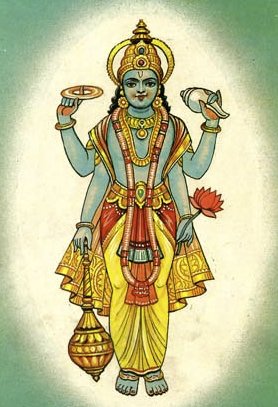
Vaishnava (वैष्णव, vaiṣṇava) or vaishnavism (vaiṣṇavism) represents a tradition of Hinduism worshipping Vishnu as the supreme Lord. Similar to the Shaktism and Shaivism traditions, Vaishnavism also developed as an individual movement, famous for its exposition of the dashavatara (‘ten avatars of Vishnu’).
Pancaratra (worship of Nārāyaṇa)
1) Vaikhānasa (वैखानस) is the name of an ancient Pāñcarātra Saṃhitā mentioned in the Kapiñjalasaṃhitā: a Pāñcarātra work consisting of 1550 verses dealing with a variety of topics such as worship in a temple, choosing an Ācārya, architecture, town-planning and iconography.—For the list of works, see chapter 1, verses 14b-27. The list [including Vaikhānasa-saṃhitā] was said to have comprised “108” titles, these, different saṃhitās named after different manifestations of the Lord or different teachers. They are all said to be authoritative as the ultimate promulgator of all these is the same Nārāyaṇa.
2) Vaikhānasa (वैखानस) is the name of an ancient Pāñcarātra Saṃhitā mentioned in the Padmasaṃhitā: the most widely followed of Saṃhitā covering the entire range of concerns of Pāñcarātra doctrine and practice (i.e., the four-fold formulation of subject matter—jñāna, yoga, kriyā and caryā) consisting of roughly 9000 verses.—[Cf. Jñānapāda chapter 1, verses 99-114]—First is explained the folly of following more than one Saṃhitā for a single series of rituals. Then the names of the 108 Tantras of the Pāñcarātra corpus are named [e.g., Vaikhānasa]. Even those who repeat these 108 titles will gain salvation.
3) Vaikhāṇasa (वैखाणस) or Vaikhāṇasasaṃhitā is also mentioned in the Bhāradvājasaṃhitā or “Bhāradvāja-kaṇva-saṃhitā”: a Pāñcarātra text comprising some 230 ślokas mainly concerned with basic details concerning temple construction and icon consecration.
1) Vaikhānasa (वैखानस) refers to a subdivision of the Vānaprastha group of initiates, as discussed in chapter 5 of the Brahmarātra section of the Sanatkumārasaṃhitā: an encyclopedic Sanskrit text written in over 3500 verses dealing with a variety of topics such as yoga, temple-building, consecration ceremonies, initiation and dhanurveda (martial arts).—Description of the chapter [varṇa-ācāra-vidhi]: Sanatkumāra says that only five groups [Brāhmaṇas, Kṣatriyas, Vaiśyas and Śūdras and Sūtas] are eligible for dīkṣā-initiation. Those who were initiated by cakramaṇḍala means are further generally distinguished according to one or another of the āśrama-stages. The initiates who are known as Vānaprasthas has four subdivisions, namely Vaikhānasas, Tantrins, Gurus, and Niṣkalas .
2) Vaikhānasa (वैखानस) refers to a class of persons for whom their “behavior” is discussed in the fourth chapter of the Kapiñjalasaṃhitā: a Pāñcarātra work consisting of 1550 verses dealing with a variety of topics such as worship in a temple, choosing an Ācārya, architecture, town-planning and iconography.—Description of the chapter [samayācāra-vidhi]:—For each of the four castes and for pratilomakas and sūtakas as well as for any of the four āśramas certain modes of behavior are expected; further, all of these persons are eligible for saṃskāras (1-4). [...] Such terms as [e.g., vaikhānasa] [...] are defined (5-21a). The remainder of the chapter deals with general principles of conduct common to all these persons—prāṇāhuti, japa, etc. (21b-24a).
3) Vaikhānasa (वैखानस) refers to a classification of Vaiṣṇavas, as discussed in the twenty-second chapter of the Jayākhyasaṃhitā: a Pāñcarātra Āgama text composed of 4500 verses in 33 chapters dealing with topics such as mantra (formulas), japa (repetitions), dhyāna (meditations), mudrā (gesticulations), nyāsa (concentrations) etc.—Description of the chapter [vaiṣṇava-ācāra]:—[...] The different types of Vaiṣṇavas are explained on the “natural” grounds that peoples’ states are determined by past karmans (3-5)—[e.g., vaikhānasas (13b-35a)] [...]. All of these are distinguished by some overt sign or profession. [...] The Lord asks Nārada to honor all these kinds of persons. All of them, He says, are eligible to do yāgas as well as pūjās. Even their mere glance can wash away the sins of those less fortunate and endowed (57-64a).
4) Vaikhānasa (वैखानस) refers to a classification of those aligned with the Pāñcarātra philosophy, as discussed in chapter 2 of the Viṣṇusaṃhitā: a Sanskrit text written in 2600 verses which covers typical Pāñcarātra topics through a narrative dialogue between Aupagāyana and Siddha Sumati.—Description of the chapter [tantra-vyākhyā]: This chapter concerns itself with a clarification of certain ideas and terms, viz., [...] how the Pāñcarātra believers’ extremist groups [pāramārthikas] differ among themselves—e.g., Vaikhānasa, Sāttvata, Śikhin, Ekāntin, Mūlaka—and how each of these so-called groups is to be understood and how each is interrelated to the other four (26-35), [...]
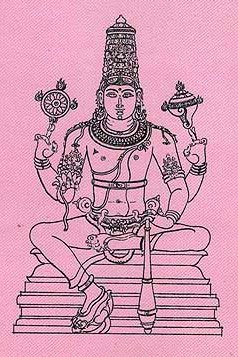
Pancaratra (पाञ्चरात्र, pāñcarātra) represents a tradition of Hinduism where Narayana is revered and worshipped. Closeley related to Vaishnavism, the Pancaratra literature includes various Agamas and tantras incorporating many Vaishnava philosophies.
General definition (in Hinduism)
Vaikhānasa (वैखानस) is one of the principal traditions of Hinduism and primarily worships Viṣṇu (and his associated Avatars) as the Supreme God. Vaikhānasas claim to be a surviving school of Vedic ritual, the Taittirīya-śākhā of the Kṛṣṇna-yajurveda. The Vaikhānasa doctrine states that Mokṣa is release into Viṣṇu’s heaven.
Languages of India and abroad
Sanskrit dictionary
Vaikhānasa (वैखानस).—a. (-sī f.) Relating to a hermit, ascetic, monastic; वैखानसं किमनया व्रतमा प्रदानाद् व्यापाररोधि मदनस्य निषेवितव्यम् (vaikhānasaṃ kimanayā vratamā pradānād vyāpārarodhi madanasya niṣevitavyam) Ś.1.26.
-saḥ An anchorite, a hermit (vāna- prastha); a Brāhmaṇa in the third order of his religious life; संबद्धवैखानसकन्यकानि (saṃbaddhavaikhānasakanyakāni) (tapovanāni) R.14.28; वैखानसेभ्यः श्रुतरामवार्ताः (vaikhānasebhyaḥ śrutarāmavārtāḥ) Bhaṭṭikāvya 3.46; Manusmṛti 6.21; Mahābhārata (Bombay) 3.114.15.
3) A hermit born from the nails and hair of the god Brahman; Rām.3.6.2. (com. prajāpaternakhalomajāḥ vaikhānasāḥ).
Vaikhānasa (वैखानस).—m.
(-saḥ) A man of the third religious order, a hermit, an anchoret. f. (-sī) A vessel used for frying meal to be offered in sacrifice. f. (-sī) Relating to hermits. E. vi before khan to dig, ḍa-an asun karma0 svārthe aṇ, subsisting on roots, &c.
Vaikhānasa (वैखानस).—i. e. vikhānasa (a proper name), + a, I. adj. Instituted by Vaikhānasa (with vrata, the life of an anchoret), [Śākuntala, (ed. Böhtlingk.)] [distich] 26. Ii. m. An anchoret, [Uttara Rāmacarita, 2. ed. Calc., 1862.] 16, 5; cf. 93, 5. Iii. f. sī, A vessel used for frying meat to be offered in sacrifice.
Vaikhānasa (वैखानस).—1. [masculine] a class of Ṛṣis & cert. stars; a Brahman of the third order, ascetic, hermit ([feminine] sī).
--- OR ---
Vaikhānasa (वैखानस).—2. [adjective] relating to hermits or ascetics, monastic.
1) Vaikhānasa (वैखानस) as mentioned in Aufrecht’s Catalogus Catalogorum:—Quoted as a medical author in Ṭoḍarānanda W. p. 290.
2) Vaikhānasa (वैखानस):—on architecture. Used by Rāmrāj.
3) Vaikhānasa (वैखानस):—Śrautasūtra. Haug. 20. Oppert. 8257. Gṛhyasūtra. Mysore. 3. Sūtra, without accurate statement. B. 1, 190. Oppert. 115. 116. 3017. Ii, 413. 4170.
1) Vaikhānasa (वैखानस):—m. ([from] vi-khānasa) a Brāhman in the third stage of his life, anchorite, hermit (= vānaprastha q.v.), [Kāvya literature; Gautama-dharma-śāstra; Bhāgavata-purāṇa]
2) a [patronymic] of Vamra, [Ṛgveda-anukramaṇikā]
3) of Puru-hanman, [Pañcaviṃśa-brāhmaṇa]
4) Name of [particular] stars, [Varāha-mihira’s Bṛhat-saṃhitā]
5) of a sect of Vaiṣṇavas, [Horace H. Wilson; Catalogue(s)]
6) mf(ī)n. relating or belonging to Vaikhānasas or anchorites (with tantra n. the Tantra of the sect called Vaikhānasa, [Bhāgavata-purāṇa]), [Taittirīya-saṃhitā; Pañcaviṃśa-brāhmaṇa; Lāṭyāyana] etc.
7) n. Name of a Sāman, [Ārṣeya-brāhmaṇa]
Vaikhānasa (वैखानस):—(saḥ) 1. m. A man of the third religious order, a hermit. f. (sī). A vessel to fry meal for sacrifices.
Vaikhānasa (वैखानस):—(von vikhānasa)
1) m. pl. Bez. einer Art von Ṛṣi [Pañcaviṃśabrāhmaṇa 14,4,7.] [Taittirīyāraṇyaka.1,23,3.] [Mahābhārata.1,7683. 13,4126. 4323.] [Harivaṃśa 4353.] [Rāmāyaṇa.1,51,27.3,10,2. 39,30.4,40,60. 44,40.] [CARAKA,] Einl. [Bhāgavatapurāṇa 3,12,43.] [Oxforder Handschriften 310,a,30.] śataṃ vaikhānasāḥ Liedverfasser von [Ṛgveda 9,66.] aṅgirasaḥ [Weber’s Indische Studien.3,237,a.] mate sthitaḥ [Manu’s Gesetzbuch 6, 21.] vaikhānasāśrama [Mahābhārata 5, 3831.] śrautasūtra [Weber’s Indische Studien 9, 175.] sūtra [Oxforder Handschriften 270,b,46.] vaikhānasācārya [Weber’s Indische Studien 1, 82.] Bez. best. Sterne am Himmel [Varāhamihira’s Bṛhajjātaka S. 48, 67.] —
2) m. ein Brahmane im 3ten Lebensstadium, der das Haus verlassen hat und in den Wald gezogen ist; Einsiedler [Trikāṇḍaśeṣa 2, 7, 2.] [Hemacandra’s Abhidhānacintāmaṇi 809.] [Halāyudha 2, 239.] [Vaijayantī] beim Schol. zu [Bhaṭṭikavya 3, 46.] = akṛṣṭapacyavṛtti [Rāmāyaṇa ed. Gorresio Bd. III, S. 467.] - [Raghuvaṃśa 14, 28.] [Śākuntala 6, 17.] [UTTARAR. 11, 19 (16, 5). 72, 9 (93, 5).] [Prabodhacandrodaja 43, 6. 44, 7.] [Bhaṭṭikavya 3, 46.] susaṃmata (tapas) [Bhāgavatapurāṇa 4, 23, 4.] —
3) m. patron. des Vamra [Ṛgveda] [Anukramaṇikā] des Puruhanman [Pañcaviṃśabrāhmaṇa 14, 9, 29.] —
4) m. pl. Bez. einer best. Viṣṇu'itischen Secte [WILSON, Sel. Works] [?I,15. fg. Oxforder Handschriften 248,a,15. 31.] vaikhānasādyāgamāḥ [Weber’s Verzeichniss No. 1025.] —
5) Nomen proprium eines Autors (m.) oder Titel eines Werkes (n.) [Weber’s Verzeichniss No. 941.] [Oxforder Handschriften 279,b,4. 5.] —
6) adj. zu den Vaikhānasa oder zu einem Einsiedler in Beziehung stehend, ihnen zukommend u. s. w.: saras [Mahābhārata 13, 7280] (vai mānasaṃ ed. Bomb.). [Harivaṃśa 12852.] [Rāmāyaṇa 4, 44, 42.] sāman [Weber’s Indische Studien.3,237,a.] [Taittirīyasaṃhitā.7,1,4,3.] [Pañcaviṃśabrāhmaṇa 14,4,6.] [LĀṬY.7,3,15.9,13.] mārga [Rāmāyaṇa 2, 52, 65.] vrata [Śākuntala 26.] tantra das Tantra der Vaikhānasa genannten Secte [Bhāgavatapurāṇa ed. BURN. I, XCV.]
Sanskrit, also spelled संस्कृतम् (saṃskṛtam), is an ancient language of India commonly seen as the grandmother of the Indo-European language family (even English!). Closely allied with Prakrit and Pali, Sanskrit is more exhaustive in both grammar and terms and has the most extensive collection of literature in the world, greatly surpassing its sister-languages Greek and Latin.
Hindi dictionary
Vaikhānasa (वैखानस) [Also spelled vaikhanas]:—(nm) a Brahman in the third stage of his life—an anchorite.
...
Kannada-English dictionary
Vaikhānasa (ವೈಖಾನಸ):—[adjective] relating or belonging to anchorites.
--- OR ---
Vaikhānasa (ವೈಖಾನಸ):—
1) [noun] a brāhmaṇa who lives alone and apart from society for religious meditation.
2) [noun] a sage or ascetic.
3) [noun] a vaiṣṇava sect.
4) [noun] a man belonging to this sect.
5) [noun] one of the vaiṣṇavaāgamas.
Kannada is a Dravidian language (as opposed to the Indo-European language family) mainly spoken in the southwestern region of India.
Nepali dictionary
Vaikhānasa (वैखानस):—n. 1. an anchorite; a hermit; 2. a Brahmin in the third order of his religious life;
Nepali is the primary language of the Nepalese people counting almost 20 million native speakers. The country of Nepal is situated in the Himalaya mountain range to the north of India.
See also (Relevant definitions)
Starts with (+0): Vaikhanasabhrigusamhita, Vaikhanasacarya, Vaikhanasadharmasutra, Vaikhanasagama, Vaikhanasagrihyasutra, Vaikhanasamata, Vaikhanasaradhana, Vaikhanasarcananavanita, Vaikhanasas, Vaikhanasasamhita, Vaikhanasasamprokshana, Vaikhanasashastra, Vaikhanasashrama, Vaikhanasashrautasutra, Vaikhanasashrautasutre pravarakhanda, Vaikhanasasutra, Vaikhanasatantra, Vaikhanasavaishnavagama.
Full-text (+310): Vaikhanasagama, Vaikhanasavaishnavagama, Vaikhanasasamprokshana, Vaikhanasasamhita, Vikhanasa, Vaikhanasatantra, Vaishnavagama, Vaikhanasas, Vaikhanasashastra, Vaikhanasasutra, Vaikhanasamata, Vaikhanasagrihyasutra, Vaikhanasadharmasutra, Vaikhanas, Puruhanman, Agama, Dikshashrama, Vaikhanasabhrigusamhita, Vaikhanasashrautasutra, Vamra.
Relevant text
Search found 96 books and stories containing Vaikhanasa, Vaikhānasa, Vaikhāṇasa; (plurals include: Vaikhanasas, Vaikhānasas, Vaikhāṇasas). You can also click to the full overview containing English textual excerpts. Below are direct links for the most relevant articles:
Abhijnana Sakuntala (with Katayavema commentary) (by C. Sankara Rama Sastri)
Chapter 1 - Sanskrit text (prathama-anka) < [Abhijnana Sakuntalam, text and commentary]
Chapter 1 - Notes and Analysis of First Act < [Abhijnana Sakuntalam, text and commentary]
Diksha (initiation) in Pancharatra (by Shanta Srinivasan)
8. Vaikhanasa and Pancaratra < [Chapter 1 - Introduction]
3. General charateristics of a Disciple or Aspirant (Shishya) < [Chapter 2 - Aspects of Diksa]
Atithi or Guest Reception (study) (by Sarika. P.)
Part 7 - References to Hospitality in Abhijñānaśākuntala < [Chapter 4 - Atithi-saparyā in Classical Sanskrit Literature]
Part 2 - Introduction to the Dharmasūtra Literature < [Chapter 5 - The Dharmaśāstra Literature]
Part 6 - Gārhasthya and Atithi-saparyā in Dharmasūtras < [Chapter 9 - Atithi-saparyā in Dharmaśāstra Literature]
Rig Veda (translation and commentary) (by H. H. Wilson)
Abhijnana Sakuntalam (with translation and notes) (by Bidhubhusan Goswami)
Chapter 1 - Prathama-anka (prathamo'nkah) < [Abhijnana Sakuntalam, text and notes]
Chapter 1: Translation and notes < [Abhijnana Sakuntalam, text and notes]
Baudhayana Dharmasutra (by Georg Bühler)