Tom, Tōṃ, Toṃ, Tōm: 6 definitions
Introduction:
Tom means something in the history of ancient India, Marathi, biology, Tamil. If you want to know the exact meaning, history, etymology or English translation of this term then check out the descriptions on this page. Add your comment or reference to a book if you want to contribute to this summary article.
Images (photo gallery)

India history and geography
Tom-bahal (in Sanskrit: Ādipadma-mahāvihāra) refers to one of the various Bahals (“monasteries” = Vihāras) found in Bhaktapur, situated in the Nepal Mandala (lit. “circle or country of Nepal”), the ancient name for the Kathmandu Valley. A Bahal is a type of ‘enclosed courtyard’ or ‘sacred monastery’ constructed according to traditional Newari Architecture and hence found primarily in Nepal amongst Newar communities. These buildings play a big role in maintaining the norms of their society and lifestyle. There is a common list of eighteen major such Temples (bahals) found in Bhaktapur. For example Tom-bahal, which is also known by its Sanskrit name Ādipadma-mahāvihāra.
Tom-baha (in Sanskrit: Ādipadma-mahāvihāra) is the name of a Bāhā (i.e., a sacred courtyard in the Newari community where Buddhist priests reside) situated in the Bhaktapur region of the “Nepal Mandala” (popularly known as the “valley of Kathmandu”). These Vihāras, Bāhās and Bahīs were, and still are, the centre for Buddhist activities and also dwelling place of the monks or monastics. For example, the Tom-bahal, which is known in Sanskrit as Ādipadma-mahāvihāra. These monstaries, courtyards and other buildings possess a central place in Nepalese/Newar Buddhism and were mostly situated within the vicinity of the three cities of Kathmandu (northwest), Patan (Lalitpur) (south) and Bhaktapur (east).
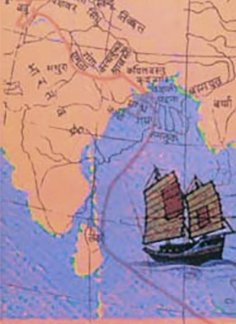
The history of India traces the identification of countries, villages, towns and other regions of India, as well as mythology, zoology, royal dynasties, rulers, tribes, local festivities and traditions and regional languages. Ancient India enjoyed religious freedom and encourages the path of Dharma, a concept common to Buddhism, Hinduism, and Jainism.
Biology (plants and animals)
1) Tom in Cameroon is the name of a plant defined with Erythrophleum suaveolens in various botanical sources. This page contains potential references in Ayurveda, modern medicine, and other folk traditions or local practices It has the synonym Erythrophleum guineense G. Don (among others).
2) Tom in Nigeria is also identified with Ceiba pentandra It has the synonym Bombax guineense Schum. & Thonn. (etc.).
Example references for further research on medicinal uses or toxicity (see latin names for full list):
· Journal of Ethnopharmacology (1987)
· Taxon (1979)
· A General History of the Dichlamydeous Plants (1831)
· Taxon (1960)
· Journal of Ethnopharmacology (2001)
· Journal of Ethnopharmacology (2005)
If you are looking for specific details regarding Tom, for example side effects, diet and recipes, pregnancy safety, health benefits, extract dosage, chemical composition, have a look at these references.

This sections includes definitions from the five kingdoms of living things: Animals, Plants, Fungi, Protists and Monera. It will include both the official binomial nomenclature (scientific names usually in Latin) as well as regional spellings and variants.
Languages of India and abroad
Marathi-English dictionary
tōṃ (तों).—ad See under taṃva ad.
tōṃ (तों).—ad Till that time; then.
Marathi is an Indo-European language having over 70 million native speakers people in (predominantly) Maharashtra India. Marathi, like many other Indo-Aryan languages, evolved from early forms of Prakrit, which itself is a subset of Sanskrit, one of the most ancient languages of the world.
Tamil dictionary
Tōm (தோம்) noun < dōṣa.
1. Fault, defect, blemish; குற்றம். தோமறு கடிஞையும் [kurram. thomaru kadignaiyum] (சிலப்பதிகாரம் அரும்பதவுரை [silappathigaram arumbathavurai] 10, 98).
2. Moral evil, vice; தீமை. [thimai.] (W.)
3. Trouble; துன்பம். தீச்சொ லிறுத்தனர் தோமும் [thunpam. thicho liruthanar thomum] (கல்லாடம் [kalladam] 74, 24).
Tamil is an ancient language of India from the Dravidian family spoken by roughly 250 million people mainly in southern India and Sri Lanka.
See also (Relevant definitions)
Starts with (+21): Tom gatal, Tom janti, Tom sapi, Tom-toman, Toma, Toma ule, Tomak, Tomaka, Tomal, Tomal pattar, Tomalati, Tomale, Tomalo, Tomam, Tomamas, Tomami, Tomana, Tomanaratittha, Tomanem, Tomani.
Full-text (+310): Dom, Tat-tomaci, Tommenal, Tom-bahal, Tompatam, Dom-sal, Pata, Kembera, Magul-bere, Tam-tomenal, Tang mu, Tou kui kuang, Wang wu, Slaeng thom, Adipadmamahavihara, Adipadma, Nhor thom, Thom prickle, Salaeng thom, Dau khau thom.
Relevant text
Search found 147 books and stories containing Tom, Dhom, Dom, Thaom, Thom, Tōṃ, Toṃ, Tōm, Toms; (plurals include: Toms, Dhoms, Doms, Thaoms, Thoms, Tōṃs, Toṃs, Tōms, Tomses). You can also click to the full overview containing English textual excerpts. Below are direct links for the most relevant articles:
Village Folk-tales of Ceylon (Sri Lanka), vol. 1-3 (by Henry Parker)
Story 61 - The Margosa Tree < [Part II (c) - Stories of the Durayas]
Story 36 - The Jackal And The Turtle < [Part I - Stories told by the Cultivating Caste and Vaeddas]
Story 52 - The Wimali Story < [Part II (b) - Stories of the Tom-tom Beaters]
Indian Antiquary (a journal of oriental research) (by Jas Burgess)
The Perahera festival in Ceylon (Sri Lanka) < [Volume 3 (1874)]
Walking through fire < [Volume 2 (1873)]
Archaeological Notes (3) Folklore < [Volume 3 (1874)]
Composition Characterization and Transformation Mechanism of Dissolved... < [Volume 14, Issue 11 (2022)]
The Impact of Dissolved Organic Matter on Photodegradation Rates, Byproduct... < [Volume 16, Issue 3 (2024)]
Potential Hormetic Effects of Cimetidine on Aerobic Composting of Human Feces... < [Volume 14, Issue 21 (2022)]
International Ayurvedic Medical Journal
Preparation of aqueous extract of tinospora cordifolia (wild) miers ex. hook f. and thoms.: an ayurveda formulation < [2021, Issue 8, August]
A critical analysis on vegadharana: a review article < [2018, Issue X, October]
The clinical study of ksheerbala tail paadabhyanga in anidra w.s.r primary insomnia < [2018, Issue V, May]
Dictionaries of Indian languages (Kosha)
Page 178 < [Malayalam-English-Kannada (1 volume)]
Page 751 < [Malayalam-English-Kannada (1 volume)]
Page 768 < [Hindi-Assamese-English Volume 1]
Tirumantiram by Tirumular (English translation)
Verse 2568: Tat-Tvam-Asi is Beyond the Three Muktis < [Tantra Eight (ettam tantiram) (verses 2122-2648)]
Verse 2494: The Three Turiyas in the Three Letters A, U, M (Aum) < [Tantra Eight (ettam tantiram) (verses 2122-2648)]
Verse 2438: Tvam-Pada is Beyond Nadanta State < [Tantra Eight (ettam tantiram) (verses 2122-2648)]