Til, Tîl: 16 definitions
Introduction:
Til means something in Hinduism, Sanskrit, the history of ancient India, Hindi, biology, Tamil. If you want to know the exact meaning, history, etymology or English translation of this term then check out the descriptions on this page. Add your comment or reference to a book if you want to contribute to this summary article.
Images (photo gallery)


In Hinduism
Vyakarana (Sanskrit grammar)
Til (तिल्).—tad. affix ति (ti) added in Vedic Literature to the word वृक (vṛka) when superior quality is meant, e.g. वृकतिः (vṛkatiḥ) cf. P. V. 4.41.
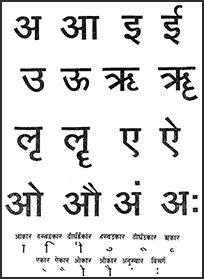
Vyakarana (व्याकरण, vyākaraṇa) refers to Sanskrit grammar and represents one of the six additional sciences (vedanga) to be studied along with the Vedas. Vyakarana concerns itself with the rules of Sanskrit grammar and linguistic analysis in order to establish the correct context of words and sentences.
India history and geography
Til refers to “Sesame”.—It is included in the glossary section of the study on the Sonowal and Thengal Kacharis tribes of Assam (India) who possess a rich cultural heritage, folk customs, local traditions and oral histories
Til refers to certain “oil-seeds” cultivated by the Sounti: a small tribe in Odisha, distributed mainly in the district of Keonjhar and Mayurbhanj.—[Regarding their livelihood]: The Sounti are primarily agriculturists and their economic life revolves around farming and allied pursuits. Paddy is their major crop which they raise in their low lands. In their highlands they produce ragi and other minor millets like kosla, kangu and janna etc., pulses like kulthi (horse gram), biri (black gram), mung (green gram) arhar and oil-seeds like til, mustard etc. In their kitchen gardens they raise maize, chilli and varieties of vegetables. Most of them are poor marginal farmers and share croppers. They engage themselves in different pursuits like wage earning both in agricultural and construction sectors to earn their livelihood. Their women and children contribute substantially to their family economy by collection of minor forest produce, fuel woods etc. They also domesticate cows, goats and fowls. They occasionally practise hunting and fishing in nearest rivers and nals.
The history of India traces the identification of countries, villages, towns and other regions of India, as well as mythology, zoology, royal dynasties, rulers, tribes, local festivities and traditions and regional languages. Ancient India enjoyed religious freedom and encourages the path of Dharma, a concept common to Buddhism, Hinduism, and Jainism.
Biology (plants and animals)
Til [તિલ] in the Gujarati language is the name of a plant identified with Wendlandia heynei (Schult.) Santapau & Merchant from the Rubiaceae (Coffee) family having the following synonyms: Rondeletia heynei, Rondeletia exserta, Wendlandia exserta. For the possible medicinal usage of til, you can check this page for potential sources and references, although be aware that any some or none of the side-effects may not be mentioned here, wether they be harmful or beneficial to health.
Til [तीळ] in the Marathi language, ibid. previous identification.
Til [तिल] in the Hindi language is the name of a plant identified with Sesamum indicum subsp. malabaricum (Burm.) Bedigian from the Pedaliaceae (Sesame) family having the following synonyms: Sesamum malabaricum Burm..
Til [तिल] in the Nepali language is the name of a plant identified with Ototropis multiflora (DC.) H.Ohashi & K.Ohashi from the Fabaceae (Pea) family having the following synonyms: Desmodium multiflorum, Desmodium nepalense, Desmodium floribundum.
Til [तिल] in the Nepali language is the name of a plant identified with Sesamum indicum subsp. indicum Sesamum indicum L. subsp. indicum from the Pedaliaceae (Sesame) family having the following synonyms: Sesamum orientale, Sesamum mulayanum.
1) Til in India is the name of a plant defined with Sesamum indicum in various botanical sources. This page contains potential references in Ayurveda, modern medicine, and other folk traditions or local practices It has the synonym Capraria integerrima Miq. (among others).
2) Til is also identified with Saccharum bengalense It has the synonym Erianthus bengalensis (Retz.) Bharadw., Basu Chaudh. & Sinha, nom. illeg., non Erianthus bengalensis (Retz.) Hubbard & Vaughn ex Stewart (etc.).
3) Til in Morocco is also identified with Agropyron repens It has the synonym Triticum vaillantianum Wulfen & Schreb. (etc.).
Example references for further research on medicinal uses or toxicity (see latin names for full list):
· Journal de Botanique, rédigé par une société de botanistes (1813)
· Proceedings of the Indian National Science Academy. Part B, Biological Sciences (1985)
· Prodromus stirpium in horto ad Chapel Allerton vigentium. (1796)
· FBI (1884)
· Flora Indica; or descriptions … (1820)
· Journal of Cytology and Genetics (1983)
If you are looking for specific details regarding Til, for example health benefits, diet and recipes, pregnancy safety, side effects, extract dosage, chemical composition, have a look at these references.
This sections includes definitions from the five kingdoms of living things: Animals, Plants, Fungi, Protists and Monera. It will include both the official binomial nomenclature (scientific names usually in Latin) as well as regional spellings and variants.
Languages of India and abroad
Sanskrit dictionary
Til (तिल्).—I. 1. P. (telati) To go, move. -II 6. P., 1 U. (tilati, telayati-te)
1) To be unctuous or greasy.
2) To anoint, smear with oil.
Til (तिल्).—[tila] r. 1st cl. (telati) To go. r. 6th cl. (tilati) and 10th cl. (telayati-te) 1. To be unctuous or greasy. 2. To oil or anoint. E. bhvā0 pa0 saka0 seṭ . tudā0 pa0 aka0 aniṭ . curā0 ubha0 aka0 seṭ .
Til (तिल्).—i. 6 and 10, [Parasmaipada.] To be greasy.
--- OR ---
Til (तिल्).—i. 1, [Parasmaipada.] To go.
1) Til (तिल्):—1. til [class] 1. telati, to go, [Dhātupāṭha]
2) 2. til (derived [from] tila) [class] 6. 10. lati, telayati, to be unctuous, [ib.];
2) —to anoint, [ib.]
Til (तिल्):—telati 1. a. To go. (ś) tilati 6. a. (ka) telayati 10. a. To be unctuous or oily.
Til (तिल्):—1. , tilati und telayati ölig —, fettig sein [DHĀTUP. 28, 62. 32, 67.] Wohl nur eine aus tila geschlossene Wurzel. — pra, pratilāmi [Vājasaneyisaṃhitā 23, 24.] Nach [Mahīdhara] = snihyāmi, aber weit eher = pratirāmi von 1. tar .
--- OR ---
Til (तिल्):—2. , telati gehen, sich bewegen [DHĀTUP. 15, 27.] — Vgl. till .
Til (तिल्):—1. , tilati , teyayati ( snehe , snehane). — Mit pra etwa coeundi ardore flagrare.
--- OR ---
Til (तिल्):—2. , telati^2 ( gatau).
Sanskrit, also spelled संस्कृतम् (saṃskṛtam), is an ancient language of India commonly seen as the grandmother of the Indo-European language family (even English!). Closely allied with Prakrit and Pali, Sanskrit is more exhaustive in both grammar and terms and has the most extensive collection of literature in the world, greatly surpassing its sister-languages Greek and Latin.
Hindi dictionary
Til in Hindi refers in English to:—(nf) sesamum (plant and its seed); a mole; pupil (of the eye); small particle; the least bit; ~[kuta] a kind of sweetmeat prepared from [tila] and sugar or gur; ~[catta] a cockroach; —[ka tada karana] to make a mountain of a mole; —[ki ota pahada] a mountain hidden underneath a mole-hill; —[tila karake] by small bits; by inches; —[dharane ki jagaha na hona] to be packed full, not to have an iota of space; —[bhara] just a bit; —[bhara ka amtara] within an ace of, hair’s breadth; [tilom mem tela na hona] to be dry and stingy; to yield nothing worthwhile..—til (तिल) is alternatively transliterated as Tila.
...
Tamil dictionary
Til (தில்) particle Expletive signifying a desire, time or a suggestion; விழைவு, காலம், ஒழியிசை என்னும் பொருள்களில் வரும் ஓரிடைச்சொல். [vizhaivu, kalam, ozhiyisai ennum porulkalil varum oridaichol.] (தொல். சொல். [thol. sol.] 255.)
Tamil is an ancient language of India from the Dravidian family spoken by roughly 250 million people mainly in southern India and Sri Lanka.
Nepali dictionary
Til is another spelling for टिल [ṭila].—adj. drunken; intoxicated;
Nepali is the primary language of the Nepalese people counting almost 20 million native speakers. The country of Nepal is situated in the Himalaya mountain range to the north of India.
Tibetan-English dictionary
til (ཏིལ) (in Tibetan) can be associated with the following Chinese terms:
1) 胡麻 [hú má]: “sesame”.
Tibetan language.
See also (Relevant definitions)
Starts with (+25): Tela, Til bad, Til dhara, Til kakri, Til-ka-tel, Til-karandi, Tila, Tila-darbh-odaka-pavitra-panina, Tilabhakkha, Tilabhara, Tilabhavini, Tilabhrishta, Tilabija, Tilacandra, Tilacaturthi, Tilaccaram, Tilaccekku, Tilacunna, Tilacurna, Tiladakkhina.
Full-text (+286): Tela, Tilpacantu, Till, Tilakata, Sada-dil, Thil kush, Rakta-til, Sanki-til, Krishna-til, Barik-til, Chadu-til, Bon til, Til dhara, Til kakri, Ubio-til-kanti, Til-ka-tel, Ubio til kant, Til bad, Ram til, Sa-til-odaka.
Relevant text
Search found 82 books and stories containing Til, Dhil, Dil, Thil, Tîl, Tils; (plurals include: Tils, Dhils, Dils, Thils, Tîls, Tilses). You can also click to the full overview containing English textual excerpts. Below are direct links for the most relevant articles:
Dictionaries of Indian languages (Kosha)
Page 301 < [English-Urdu-Hindi (1 volume)]
Page 920 < [English-Urdu-Hindi (1 volume)]
Page 342 < [English-Urdu-Hindi (1 volume)]
International Journal of Environmental Research and Public Health (MDPI)
Epithelial Ovarian Cancer: Providing Evidence of Predisposition Genes < [Volume 19, Issue 13 (2022)]
New Advances in Cervical Cancer: From Bench to Bedside < [Volume 19, Issue 12 (2022)]
Associations between Physical Activity, Sitting Time, and Time Spent Outdoors... < [Volume 18, Issue 17 (2021)]
Tirumantiram by Tirumular (English translation)
Verse 2205: Turiya and Its Inner Divisions < [Tantra Eight (ettam tantiram) (verses 2122-2648)]
Verse 1570: Lord is Beginning and End < [Tantra Five (aintam tantiram) (verses 1419-1572)]
Verse 968: Lord in His Five Letters < [Tantra Four (nankam tantiram) (verses 884-1418)]
Making Leaders’ and Followers’ Relationship Sustainable < [Volume 13, Issue 21 (2021)]
Agriculture and Eutrophication: Where Do We Go from Here? < [Volume 6, Issue 9, September (2014)]
Explorative Study of Aquaponics Systems in Indonesia < [Volume 13, Issue 22 (2021)]
World Journal of Pharmaceutical Research
Key to enhancing cancer treatment and survival via immunotherapy. < [2021: Volume 10, January issue 1]
CD8 T-lymphocyte correlation in gingival squamous cell carcinoma. < [2016: Volume 5, August issue 8]
A literary exploration of cancer treatment technologies < [2018: Volume 7, July issue 13]
The Malaysian Journal of Medical Sciences
Letter to the Editor: Importance of Syphilis Seroreactivity in Screening < [Volume 19 (issue 2), Apr-Jun 2012]
Young-Onset vs Adult-Onset Colorectal Cancer: A Tertiary Study < [v.31(1): 1–244 2024 Feb]
Hypoglycemic and protective effects of Persea Americana seed extract. < [v.20(5): 1–91 2013 Oct]