Tantrasara, Tantrasāra: 5 definitions
Introduction:
Tantrasara means something in Hinduism, Sanskrit, the history of ancient India. If you want to know the exact meaning, history, etymology or English translation of this term then check out the descriptions on this page. Add your comment or reference to a book if you want to contribute to this summary article.
Images (photo gallery)
In Hinduism
Shaivism
Tantrasāra (तन्त्रसार) or Tantrasāratantra refers to one of the Tantras mentioned in the Mahāmokṣa-Tantra, a Sanskrit manuscript collected in volume 12 of the catalogue “Notices of Sanskrit Manuscripts (second series)” by Mahamahopadhyaya Haraprasad Shastri.—The Mahāmokṣatantra manuscript, consisting of 3,024 ślokas (metrical verses), is deposit: Dhaka, Vikramapura Majhapada, Babu Rasavihari Raya. It deals with the salvation, cosmogony (i.e., the order of cosmic regions) and contains a bibliography of Tantric literature.—The catalogue includes the term—Tantra-sāra in its ‘subject-matter list’ or Viṣaya (which lists topics, chapters and technical terms).
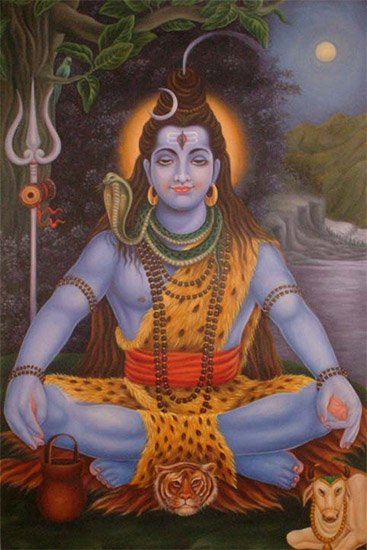
Shaiva (शैव, śaiva) or Shaivism (śaivism) represents a tradition of Hinduism worshiping Shiva as the supreme being. Closely related to Shaktism, Shaiva literature includes a range of scriptures, including Tantras, while the root of this tradition may be traced back to the ancient Vedas.
General definition (in Hinduism)
Tantrasāra (तन्त्रसार) (or Bṛhattantrasāra) by Kṛṣṇānanda Vāgīśa’s (i.e., Kṛṣṇānanda Āgamavāgīśa Bhaṭṭācārya) is a Tantric digest composed in Bengal in the last part of the sixteenth century and still widely influential there today. The section of most interest, labeled “garuḍamantra” begins with a coded version of the Vipati-mantra, apparently drawn from the Śāradātilaka because the verse is identical. What follows, not drawn from the Śāradātilaka, is a relatively detailed summary of the major ancillary mantras, nyāsa procedures, and visualization to be used with the Vipati for curing snakebite. [...] The Tantrasāra (Bṛhattantrasāra) also has passages on Tvaritā and Bheruṇḍā vidyās, but only in their identities as Nityā goddesses, and without any association with snakebite.
India history and geography
Tantrasāra (तन्त्रसार) or Tantrasāratantra is the name of a Tantra categorized as “Viṣṇukrānta”, and is mentioned in a (further unknown) book in the possession of Kamlesh Punyark [=Śrī Kamaleśa Puṇyārka or श्री कमलेश पुण्यार्क].—This book contains a detailed discussion of the basics of Tantra and opens with a list of three times sixty-four Tantras. One such text is the तन्त्रसार-तन्त्रम् [tantrasāra-tantram] or तन्त्र-सार [tantra-sāra].
The history of India traces the identification of countries, villages, towns and other regions of India, as well as mythology, zoology, royal dynasties, rulers, tribes, local festivities and traditions and regional languages. Ancient India enjoyed religious freedom and encourages the path of Dharma, a concept common to Buddhism, Hinduism, and Jainism.
Languages of India and abroad
Sanskrit dictionary
1) Tantrasāra (तन्त्रसार) as mentioned in Aufrecht’s Catalogus Catalogorum:—vedānta. Np. V, 36.
—by Bhagavatpādācārya and—[commentary] by Vyāsa, son of Janārdana. K. 120.
—by Śaṅkarācārya. Rādh. 45.
2) Tantrasāra (तन्त्रसार):—by Ānandatīrtha. K. 120. Oudh. 1877, 58. Burnell. 106^b. Oppert. 7058. 7973. Ii, 6073. Rice. 94.
—[commentary] [Mackenzie Collection] 140.
—[commentary] by Madhumādhavasahāya. Burnell. 106^b.
—[commentary] by a pupil of Nṛsiṃhācārya. K. 120.
—[commentary] by Calāri Śeṣācārya. Oudh. 1877, 58. Burnell. 106^b.
—[commentary] by Śrīnivāsatīrtha. Rice. 96
3) Tantrasāra (तन्त्रसार):—śaiva, by Abhinavagupta. Bp. 275. Quoted Oxf. 238^b.
4) Tantrasāra (तन्त्रसार):—[tantric] written by Kṛṣṇānanda Vāgīśa, and revised by Amṛtānanda. Jones. 410. [Mackenzie Collection] 136. Cop. 101. Io. 1200. 1582. W. p. 361. Oxf. 93^a. Paris. (B 132). L. 936. K. 40. B. 4, 256. Bik. 617. Kāṭm. 12. Rādh. 26. NW. 258. Oudh. Ix, 22. X, 22. Xv, 134. Np. Iii, 34. Burnell. 207^b. Bhk. 37. 38. Bhr. 388. Poona. 277. Oppert. 2846. 6586. Ii, 103. Sb. 333. Quoted in Śāktānandataraṅgiṇī Oxf. 104^a, by Gaurīkānta Oxf. 108^b.
—[commentary] Oppert. Ii, 104. Tantrasāre Samprokṣaṇavidhi. Paris. (D 314 Iv). Bṛhattantrasāra by Kṛṣṇānanda. Pheh. 1. Oudh. Xiii, 106. Laghutantrasāra. Pheh. 1.
5) Tantrasāra (तन्त्रसार):—[tantric] by Mukundalāla. Np. Iii, 44.
—by Rāmabhadra. Np. Iii, 64.
—by Rāmānandatirtha. Mentioned L. 1017.
6) Tantrasāra (तन्त्रसार):—by Ānandatīrtha. read Oppert. 7055 instead of 7058.
7) Tantrasāra (तन्त्रसार):—[tantric] read Poona. 272. Mentioned in Āgamatattvavilāsa.
8) Tantrasāra (तन्त्रसार):—śaiva, by Abhinavagupta. Devīpr. 79, 48. Stein 221.
9) Tantrasāra (तन्त्रसार):—[tantric] by Kṛṣṇānanda. Oudh. Xx, 242. Xxi, 166. Xxii, 126. Peters. 4, 42. Stein 230. Tantrasāre Dīkṣāvidhi
—mālāśodhana
—mantraśodhanavidhi. Stein 230. Comp. Oxf. 93^a.
—Devīpūjanasampradāya, Kumārīpūjana, Yogaprakriyā. Peters. 4, 42. Comp. Oxf. 95^a.
10) Tantrasāra (तन्त्रसार):—by Kṛṣṇānanda. As p. 74. Cr. Cs 5, 27. 28 (inc.). 29 (inc.). Il. L.. 1272. Tantrasāre Viṣṇupūjāprakaraṇam. Ak 441.
Tantrasāra (तन्त्रसार):—[=tantra-sāra] [from tantra > tan] m. ‘Tantra-essence’, Name of a compilation.
Tantrasāra (तन्त्रसार):—(tantra + sāra) m. die Essenz der Tantra (tantra [1], g, β), Titel einer Compilation [MACK. Coll. I, 136.] [Weber’s Verzeichniss No. 1335.] [Oxforder Handschriften No. 149. S. 104], a; vgl. u. gālinī. vyākhyāna [MACK. Coll. I, 140.]
--- OR ---
Tantrasāra (तन्त्रसार):—Titel verschiedener Werke; vgl. noch [Oxforder Handschriften 108,b,23. 238,b,35.] [HALL 95. 193.]
Sanskrit, also spelled संस्कृतम् (saṃskṛtam), is an ancient language of India commonly seen as the grandmother of the Indo-European language family (even English!). Closely allied with Prakrit and Pali, Sanskrit is more exhaustive in both grammar and terms and has the most extensive collection of literature in the world, greatly surpassing its sister-languages Greek and Latin.
See also (Relevant definitions)
Partial matches (+0): Sara, Cara, Tantra.
Starts with (+0): Tantrasarapancaratna, Tantrasarasamgraha, Tantrasaratantra, Tantrasaravali.
Full-text (+327): Tantrasarasamgraha, Tantrasaratantra, Tajikatantrasara, Chandahsangraha, Siddhasusiddha, Siddhari, Siddhasiddha, Kaulikatantra, Siddhasadhyaka, Galini, Karttrika, Candracudamani, Pithanyasa, Cakradipika, Kulakulavara, Tripurasara, Tarapajjhatika, Dharanayantra, Tantrahridaya, Mahalilasarasvati.
Relevant text
Search found 61 books and stories containing Tantrasara, Tantra-sara, Tantra-sāra, Tantrasāra; (plurals include: Tantrasaras, saras, sāras, Tantrasāras). You can also click to the full overview containing English textual excerpts. Below are direct links for the most relevant articles:
Saura-purana (analytical study) (by Priyanku Chakraborty)
Part 4.1 - The Tantric elements and the heretic sects in the Saura-purāṇa < [Chapter 4 - The Vedic and other Elements as Reflected in the Saura-purāṇa]
A Descriptive Catalogue of the Sanskrit Manuscripts, Madras (by M. Seshagiri Sastri)
Notices of Sanskrit Manuscripts (by Rajendralala Mitra)
Charms of the Atharvaveda Samhita (study) (by Devi Mridusmita)
Part 1 - Introduction to the Ābhicārika Charms < [Chapter 5 - The Ābhicārika Charms]
Studies in Indian Literary History (by P. K. Gode)
20. Manuscripts of the Tantrasara of Krishnananda Vagisha < [Volume 2 (1954)]
Subject-Index (of second volume) < [Volume 2 (1954)]
62. Date of Raghavabhatta < [Volume 1 (1945)]
Prayogamanjari and Saivagamanibandhana (Study) (by R. Suthashi)
Isanasivagurudeva-paddhati (summary) < [Chapter 1 - Introduction]