Syanda, Syamda: 11 definitions
Introduction:
Syanda means something in Hinduism, Sanskrit. If you want to know the exact meaning, history, etymology or English translation of this term then check out the descriptions on this page. Add your comment or reference to a book if you want to contribute to this summary article.
In Hinduism
Shaktism
Syanda (स्यन्द) refers to one of the 64 rays of the Ājñā-Cakra which (together with the 72 rays of the Viśuddhi) are associated with the lunar plane called Brahmagranthi, according to Śaṅkarācārya’s Saudaryalaharī.—Accordingly, the Goddess is visualised (by Sādhaka) as dwelling above the six Ādhāracakras ruling over the 360 rays which emanate in them [e.g., Syanda]. These 360 rays represent 360 syllables (i.e., a consummation of the śabdaprapañca or 50 alphabets) as well as the principles of nature. For the 360 syllables, together with haṃ and saḥ, Nyāsa should be performed for Śrīcakrapūjā.
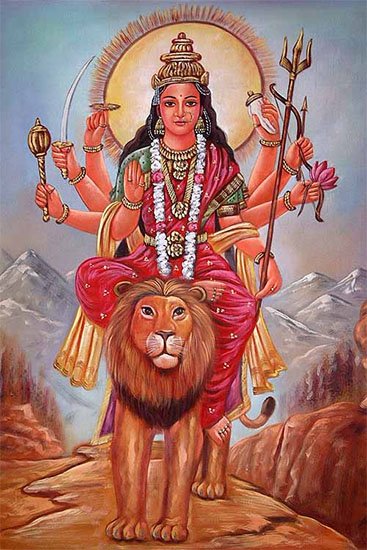
Shakta (शाक्त, śākta) or Shaktism (śāktism) represents a tradition of Hinduism where the Goddess (Devi) is revered and worshipped. Shakta literature includes a range of scriptures, including various Agamas and Tantras, although its roots may be traced back to the Vedas.
Ayurveda (science of life)
Veterinary Medicine (The study and treatment of Animals)
Syanda (स्यन्द) refers to “pouring (water)” (on the heads of elephants), according to the 15th century Mātaṅgalīlā composed by Nīlakaṇṭha in 263 Sanskrit verses, dealing with elephantology in ancient India, focusing on the science of management and treatment of elephants.—[Cf. chapter 11, “34. No taking to the road (travel), active pouring (syanda-kriyā) on the head of bags full of water [adhvāśīlanamambupūritadṛtisyandakriyā mastake], and anointing the head morning, noon, and night with the butter called ‘hundred-fold purified’; contact with the rays of the moon, tending with grits mixed with jaggery and butter, a cool stall, play in water and mud—this is the regimen for the summer”.
Āyurveda (आयुर्वेद, ayurveda) is a branch of Indian science dealing with medicine, herbalism, taxology, anatomy, surgery, alchemy and related topics. Traditional practice of Āyurveda in ancient India dates back to at least the first millenium BC. Literature is commonly written in Sanskrit using various poetic metres.
Languages of India and abroad
Sanskrit dictionary
Syanda (स्यन्द).—[syand-bhāve ghañ]
1) Flowing, trickling.
2) Going rapidly, moving.
3) A car, chariot.
4) Fluxion; Suśr.
5) Trickling perspiration; यत्र क्वचन स्यन्देनाभिपतति (yatra kvacana syandenābhipatati) Bhāgavata 5.21.9.
6) A particular eye-disease.
7) The moon.
Derivable forms: syandaḥ (स्यन्दः).
Syanda (स्यन्द).—m. (compare niṣyanda, virtually a synonym), issue, outcome, result (not waste, Bendall; it is only niṣ- phala-sya° that is waste; Tibetan cited as sbyoṅ ba): sarvaniṣ- phala-°da-varjanāt Śikṣāsamuccaya 116.12; parārthaṃ…yaḥ syando na saṃvartate, sa niṣphalatvād varjayitavyaḥ 13; simi- larly 118.3 f.; compare next.
Syanda (स्यन्द).—m.
(-ndaḥ) 1. Oozing, trickling. 2. Going, moving. 3. A car, a chariot. E. syand to go, aff. ghañ .
Syanda (स्यन्द).—[masculine] flowing.
1) Syanda (स्यन्द):—[from syad] m. flowing, running, streaming, trickling, oozing, [Kāvya literature; Rājataraṅgiṇī]
2) [v.s. ...] fluxion, [Suśruta]
3) [v.s. ...] a [particular] disease of the eyes, [ib.]
4) [v.s. ...] trickling perspiration, [Bhāgavata-purāṇa]
5) [v.s. ...] the moon, [cf. Lexicographers, esp. such as amarasiṃha, halāyudha, hemacandra, etc.]
1) Syanda (स्यन्द):—[(u-ṅa) spandate] 1. d. To sprinkle; to distil; to go.
2) (ndaḥ) 1. m. Oozing; going; a car.
Syanda (स्यन्द):—(wie eben) m.
1) das Fliessen [Amarakoṣa 3, 4, 14, 71.] syandātmaka [Suśruta 2, 311, 19.] ghṛta [Pāṇini’s acht Bücher 6, 4, 28, Scholiast] adharamadhu [Gītagovinda 12, 11.] sudhā [Spr. (II) 5934.] ghanamakaranda [433.] amandarasa [Rājataraṅgiṇī 1, 24.] dhātu [4, 329.] —
2) Fluss (verschiedener Art, Katarrh u.s.w.) [Suśruta 1, 239, 14. 2, 342, 13.] fliessende Augenkrankheit [305, 5. 312, 12.] —
3) triefender Schweiss [Bhāgavatapurāṇa 5, 21, 9] (spanda ed. Bomb., = svedodgama Comm.). —
4) der Mond [Hemacandra’s Abhidhānacintāmaṇi 11.] — manda (manas) [Spr. (II) 5256] fehlerhaft für spanda . — Vgl. pitta, madhu, sarala .
Syanda (स्यन्द) in the Sanskrit language is related to the Prakrit word: Saṃda.
Sanskrit, also spelled संस्कृतम् (saṃskṛtam), is an ancient language of India commonly seen as the grandmother of the Indo-European language family (even English!). Closely allied with Prakrit and Pali, Sanskrit is more exhaustive in both grammar and terms and has the most extensive collection of literature in the world, greatly surpassing its sister-languages Greek and Latin.
Kannada-English dictionary
Syaṃda (ಸ್ಯಂದ):—
1) [noun] the act or an instance of trickling or oozing.
2) [noun] the act of moving rapidly; speed.
3) [noun] a horse-drawn, two wheeled cart; a chariot.
4) [noun] the moon.
5) [noun] a kind of eye-disease.
6) [noun] a liquid globule; a drop.
Kannada is a Dravidian language (as opposed to the Indo-European language family) mainly spoken in the southwestern region of India.
See also (Relevant definitions)
Starts with (+2): Syandaka, Syandakriya, Syandal, Syandamanika, Syandamaya, Syandan, Syandana, Syandanadhvani, Syandanadruma, Syandanadrumah, Syandanah, Syandanakshi, Syandanalokabhita, Syandanamukha, Syandanaroha, Syandanarudha, Syandani, Syandanika, Syandaniya, Syandapara.
Full-text (+15): Nisyanda, Abhishyanda, Parishyanda, Vishyanda, Prasyanda, Nihsyanda, Madhusyanda, Sparshasyanda, Sudhasyanda, Abhinishyanda, Pittasyanda, Anushyanda, Saralasyanda, Sparshaspanda, Kardamasyandanikaya, Parishyandana, Parishyandin, Syanna, Madhushpanda, Nihshyandana.
Relevant text
Search found 14 books and stories containing Syanda, Syamda, Syaṃda, Syamdas; (plurals include: Syandas, Syamdas, Syaṃdas, Syamdases). You can also click to the full overview containing English textual excerpts. Below are direct links for the most relevant articles:
A Descriptive Catalogue of the Sanskrit Manuscripts, Madras (by M. Seshagiri Sastri)
Page 250 < [Volume 21 (1918)]
Rama-caritabdhi-ratna of Nityananda Shastri (by Satya Vrat Shastri)
Why Śrīdhara Svāmī? The Makings of a Successful Sanskrit Commentary < [Volume 11, Issue 9 (2020)]
Alamkaras mentioned by Vamana (by Pratim Bhattacharya)
18: Definition of Dīpaka Alaṃkāra < [Chapter 4 - Arthālaṃkāras mentioned by Vāmana]
International Ayurvedic Medical Journal
Management of (shonitabhishyandana) dyslipidaemia through margavarana chikitsa < [2016, Issue VII July]
Nyayas found in ashtanga hridaya samhitha < [2017, Issue X, october,]
Ayurvedic approach of allergic conjunctivitis (vataja abhishyanda) < [2021, Issue 5, May]
Study on jaloukavacharana for vataja abhishyanda in allergic conjunctivitis. < [Volume 5, Issue 3: May - June 2018]
Mode of Action of Akshi Tarpana - A Critical Review Article < [Volume 9, Issue 6: November-December 2022]