Svatahpramana, Svataḥpramāṇa, Svatas-pramana: 5 definitions
Introduction:
Svatahpramana means something in Hinduism, Sanskrit, Marathi. If you want to know the exact meaning, history, etymology or English translation of this term then check out the descriptions on this page. Add your comment or reference to a book if you want to contribute to this summary article.
In Hinduism
Vaishnavism (Vaishava dharma)
Svataḥpramāṇa (स्वतःप्रमाण) refers to “possessing self-validity”.—The (Pāñcarātra) Āgamas, like the Vedas, are revealed scriptures, apauruṣeya, and īśvarapraṇīta (God-given). They possess self-validity or svataḥpramāṇa. Hence the name ‘Bhagavatśāstra’ and ‘mantra tantra samuccaya’,–the combination of knowledge, encompassing in itself, both theory and practice. [...] The self-validity of the Pāñcarātrāgamas is reiterated in the Viśvāmitra Saṃhitā (2.11-12ab; 19) which vouches that they are āptavākya and are valid like the words of seers like Manu, since it has roots in the Veda and Purāṇas.
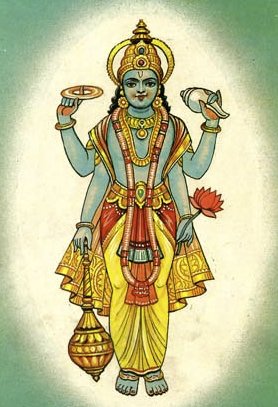
Vaishnava (वैष्णव, vaiṣṇava) or vaishnavism (vaiṣṇavism) represents a tradition of Hinduism worshipping Vishnu as the supreme Lord. Similar to the Shaktism and Shaivism traditions, Vaishnavism also developed as an individual movement, famous for its exposition of the dashavatara (‘ten avatars of Vishnu’).
Languages of India and abroad
Marathi-English dictionary
svataḥpramāṇa (स्वतःप्रमाण).—a (S) That is itself its own proof or evidence; self-proved, self-evidenced, self-evident.
Marathi is an Indo-European language having over 70 million native speakers people in (predominantly) Maharashtra India. Marathi, like many other Indo-Aryan languages, evolved from early forms of Prakrit, which itself is a subset of Sanskrit, one of the most ancient languages of the world.
Sanskrit dictionary
Svataḥpramāṇa (स्वतःप्रमाण).—a. self-evident, self-proved, axiomatic.
Derivable forms: svataḥpramāṇam (स्वतःप्रमाणम्).
Svataḥpramāṇa is a Sanskrit compound consisting of the terms svatas and pramāṇa (प्रमाण). See also (synonyms): svataḥsiddha.
Svataḥpramāṇa (स्वतःप्रमाण):—[=sva-taḥ-pramāṇa] [from sva-tas > sva] mfn. self-proved, self-evident, [Sarvadarśana-saṃgraha]
Sanskrit, also spelled संस्कृतम् (saṃskṛtam), is an ancient language of India commonly seen as the grandmother of the Indo-European language family (even English!). Closely allied with Prakrit and Pali, Sanskrit is more exhaustive in both grammar and terms and has the most extensive collection of literature in the world, greatly surpassing its sister-languages Greek and Latin.
Kannada-English dictionary
Svataḥpramāṇa (ಸ್ವತಃಪ್ರಮಾಣ):—[noun] that which is proof for itself; that which does not depend on external things to prove, corroborate its existence, characteristic, etc.
Kannada is a Dravidian language (as opposed to the Indo-European language family) mainly spoken in the southwestern region of India.
See also (Relevant definitions)
Partial matches (+0): Svatah, Svatas, Pramana.
Full-text (+0): Svatahsiddha, Ishvarapranita, Zi liang, Apaurusheya.
Relevant text
Search found 7 books and stories containing Svatahpramana, Svatah-pramana, Svataḥ-pramāṇa, Svatah-pramāṇa, Svataḥpramāṇa, Svatahpramāṇa, Svatas-pramana, Svatas-pramāṇa; (plurals include: Svatahpramanas, pramanas, pramāṇas, Svataḥpramāṇas, Svatahpramāṇas). You can also click to the full overview containing English textual excerpts. Below are direct links for the most relevant articles:
Prasthanatrayi Swaminarayan Bhashyam (Study) (by Sadhu Gyanananddas)
4.4h. The Most Authentic Scripture—The Vacanāmṛta < [Chapter 2 - Analysis on the Basis Of Epistemology]
Shri Gaudiya Kanthahara (by Srila Bhaktisiddhanta Sarasvati)
Contribution of Vachaspati-Mishra to Samkhya System (by Sasikumar. B)
Bhagavatpadabhyudaya by Lakshmana Suri (study) (by Lathika M. P.)
Brahman or the Supreme Reality < [Chapter 3 - References to Śaṅkara’s Philosophy]
Liberation in early Advaita Vedanta (by Aleksandar Uskokov)
1. Liberation and the Highest Good < [Introduction]
A History of Indian Philosophy Volume 3 (by Surendranath Dasgupta)
Part 3 - The Philosophy of Bhāskara’s Bhāṣya < [Chapter XV - The Bhāskara School of Philosophy]