Sugati, Su-gati: 19 definitions
Introduction:
Sugati means something in Buddhism, Pali, Hinduism, Sanskrit, Marathi, Hindi. If you want to know the exact meaning, history, etymology or English translation of this term then check out the descriptions on this page. Add your comment or reference to a book if you want to contribute to this summary article.
In Hinduism
Purana and Itihasa (epic history)
Sugati (सुगति).—A King of the Bharata dynasty. It it mentioned in Bhāgavata, Skandha 5, that he was one of the sons of Gaya.
Sugati (सुगति).—A son of Gaya and Gāyantī.*
- * Bhāgavata-purāṇa V. 15. 14.

The Purana (पुराण, purāṇas) refers to Sanskrit literature preserving ancient India’s vast cultural history, including historical legends, religious ceremonies, various arts and sciences. The eighteen mahapuranas total over 400,000 shlokas (metrical couplets) and date to at least several centuries BCE.
Shaktism
Sugati (सुगति) refers to “realisation”, according to the Manthānabhairavatantra, a vast sprawling work that belongs to a corpus of Tantric texts concerned with the worship of the goddess Kubjikā.—[...] Freedom from thought, in other words, is both one of the foundations of practice and the achievement of its perfect accomplishment in the Śāmbhava state. The practice of Yoga is understood as the development of the Śāmbhava state beyond conception which arises when thought constructs have been silenced. This is simply because “the condition (gati) of the mind on the plane of realisation (sugati-pada) is one that cannot be conceived by thought (cintācinta)”.
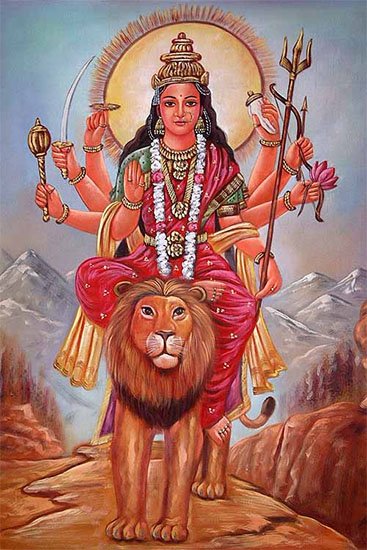
Shakta (शाक्त, śākta) or Shaktism (śāktism) represents a tradition of Hinduism where the Goddess (Devi) is revered and worshipped. Shakta literature includes a range of scriptures, including various Agamas and Tantras, although its roots may be traced back to the Vedas.
Jyotisha (astronomy and astrology)
Sugati (सुगति) or Gati refers to “(planetary) conjunctions”, according to the Bṛhatsaṃhitā (chapter 9), an encyclopedic Sanskrit work written by Varāhamihira mainly focusing on the science of ancient Indian astronomy astronomy (Jyotiṣa).—Accordingly, “If Venus (śukra) should be of the colour of fire, there will be fear from fire; if of blood colour, there will be wars in the land; if of the colour of burnished gold, there will be disease; if green, there will be asthmatic complaints; if ashy-pale or black, there will be drought in the land. If Venus should be of the colour of coagulated milk, of the white water lily, or of the moon, or if her course be direct [i.e., sugati—sugatiravikṛto], or if she should be the successful planet in conjunctions, mankind will enjoy the happiness of Kṛtayuga”.
Jyotisha (ज्योतिष, jyotiṣa or jyotish) refers to ‘astronomy’ or “Vedic astrology” and represents the fifth of the six Vedangas (additional sciences to be studied along with the Vedas). Jyotisha concerns itself with the study and prediction of the movements of celestial bodies, in order to calculate the auspicious time for rituals and ceremonies.
In Buddhism
Theravada (major branch of Buddhism)
Happy destinations; the two higher levels of existence into which one might be reborn as a result of past skillful actions (see kamma): rebirth in the human world or in the heavens (See sagga). None of these states is permanent'happy course of existence'; s. gati.
Theravāda is a major branch of Buddhism having the the Pali canon (tipitaka) as their canonical literature, which includes the vinaya-pitaka (monastic rules), the sutta-pitaka (Buddhist sermons) and the abhidhamma-pitaka (philosophy and psychology).
Tibetan Buddhism (Vajrayana or tantric Buddhism)
Sugati (सुगति) is the name of a Bodhisattva mentioned as attending the teachings in the 6th century Mañjuśrīmūlakalpa: one of the largest Kriyā Tantras devoted to Mañjuśrī (the Bodhisattva of wisdom) representing an encyclopedia of knowledge primarily concerned with ritualistic elements in Buddhism. The teachings in this text originate from Mañjuśrī and were taught to and by Buddha Śākyamuni in the presence of a large audience (including Sugati).
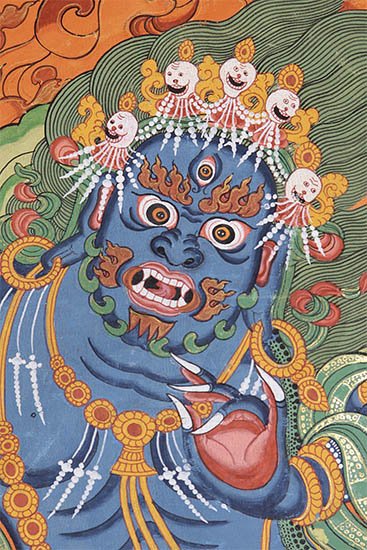
Tibetan Buddhism includes schools such as Nyingma, Kadampa, Kagyu and Gelug. Their primary canon of literature is divided in two broad categories: The Kangyur, which consists of Buddha’s words, and the Tengyur, which includes commentaries from various sources. Esotericism and tantra techniques (vajrayāna) are collected indepently.
Languages of India and abroad
Pali-English dictionary
sugati : (f.) a happy state. || sugatī (adj.) righteous.
1) Sugati, (f.) (su+gati) happiness, bliss, a happy fate (see detail under gati) Vin. II, 162, 195; D. I, 143; II, 141; Pug. 60; It. 24, 77, 112; A. III, 5, 205; V, 268; Vism. 427 (where defd as “sundarā gati” & distinguished fr. sagga as including “manussagati, ” whereas sagga is “devagati”); VbhA. 158; DhA. I, 153.—suggati (in verses), Dh. 18; D. II, 202 (printed as prose); J. IV, 436 (=sagga C.); VI, 224. Kern, Toev. II. 83 explained suggati as svargati, analogous to svar-ga (=sagga); doubtful. Cp. duggati. (Page 716)
2) Sugati (sometimes suggati after duggati e.g. J.VI, 224) a happy existence; a realm of bliss; the devaloka. Cp. sugatin. Usually with gacchati (sugatiṃ) & gata “gone to Heaven” Vin.II, 195; D.II, 202; It.77; PvA.65. In combination w. sagga loka (sugatiṃ, etc. uppajjati) D.I, 143; A.I, 97; J.I, 152. parammaraṇā sugati pāṭikaṅkhā It.24; suggatiṃ gata Dh.18; sugati pāpehi kammehi sulabhā na hoti “bliss is not gained by evil” PvA.87; =sugga & dibbaṭṭhāna PvA.89; sugati-parāyana sure of rebirth in a realm of bliss, ib.

Pali is the language of the Tipiṭaka, which is the sacred canon of Theravāda Buddhism and contains much of the Buddha’s speech. Closeley related to Sanskrit, both languages are used interchangeably between religions.
Marathi-English dictionary
sugati (सुगति).—f (S) Happy or comfortable condition or state.
sugati (सुगति).—f Happy or comfortable state.
Marathi is an Indo-European language having over 70 million native speakers people in (predominantly) Maharashtra India. Marathi, like many other Indo-Aryan languages, evolved from early forms of Prakrit, which itself is a subset of Sanskrit, one of the most ancient languages of the world.
Sanskrit dictionary
Sugati (सुगति).—
1) Welfare, happiness.
2) a secure refuge.
Derivable forms: sugatiḥ (सुगतिः).
Sugati is a Sanskrit compound consisting of the terms su and gati (गति).
Sugati (सुगति).—[feminine] welfare, happiness.
1) Sugati (सुगति):—[=su-gati] [from su > su-ga] f. a good or happy condition, welfare, happiness, bliss, [Mahābhārata; Harivaṃśa; Mārkaṇḍeya-purāṇa] etc.
2) [v.s. ...] a secure refuge, [Chandomañjarī]
3) [v.s. ...] mfn. having a good or auspicious position (as a planet), [Varāha-mihira’s Bṛhat-saṃhitā]
4) [v.s. ...] m. Name of a son of Gaya, [Bhāgavata-purāṇa]
5) [v.s. ...] of an Arhat ([probably] [wrong reading] for su-mati), [cf. Lexicographers, esp. such as amarasiṃha, halāyudha, hemacandra, etc.]
Sugati (सुगति):—1. (6. su + gati) f. Wohlfahrt, Wohlergehen, ein glückliches Loos, Seligkeit: paśyāmyahaṃ bhikṣavo divyena cakṣuṣā lokānāṃ sugatiṃ durgatiṃ ca [Prabodhacandrodaja 49, 8. 9.] sugatiṃ gam [Mahābhārata 1, 615. 5, 2448.] [Mārkāṇḍeyapurāṇa 95, 7.] i [Harivaṃśa 11275.] vraj [8197.] pra-āp [Mahābhārata 3, 10511.] [Harivaṃśa 4870.] prada [PAÑCAR. 4, 3, 44.] narakaripuravatu sa nikhilasugatiḥ so v. a. sichere Zuflucht [Chandomañjarī 73.]
--- OR ---
Sugati (सुगति):—2. (wie eben)
1) adj. einen guten Stand habend, eine günstige Stelle einnehmend: ein Planet [Varāhamihira’s Bṛhajjātaka S. 9, 45.] —
2) m. Nomen proprium ein Arhant der vergangenen Utsarpiṇī [Śabdakalpadruma] angeblich nach H.; wohl fehlerhaft für sumati . Sohn Gaya's [Bhāgavatapurāṇa 5, 15, 12.] ein Autor. [Śabdakalpadruma] mit folgendem Belege: sugatisopānaprabhṛtayo pyevamiti smārtalikhanam .
Sugati (सुगति) in the Sanskrit language is related to the Prakrit word: Sugai.
Sanskrit, also spelled संस्कृतम् (saṃskṛtam), is an ancient language of India commonly seen as the grandmother of the Indo-European language family (even English!). Closely allied with Prakrit and Pali, Sanskrit is more exhaustive in both grammar and terms and has the most extensive collection of literature in the world, greatly surpassing its sister-languages Greek and Latin.
Hindi dictionary
Sugati (सुगति):—(nf) happy state; salvation, beatitude.
...
Kannada-English dictionary
Sugati (ಸುಗತಿ):—
1) [noun] a beautiful, lovely gait.
2) [noun] a good or happy condition.
3) [noun] the state of being emancipated from being worldly to the stage of Beatitude and Perfect Happiness.
Kannada is a Dravidian language (as opposed to the Indo-European language family) mainly spoken in the southwestern region of India.
Nepali dictionary
Sugati (सुगति):—n. a good state; happy condition; release from rebirth in the world; salvation; beatitude;
Nepali is the primary language of the Nepalese people counting almost 20 million native speakers. The country of Nepal is situated in the Himalaya mountain range to the north of India.
See also (Relevant definitions)
Partial matches (+0): Gati, Cu, Shu.
Starts with (+0): Sugatigamana, Sugatigamin, Sugatigatapatha, Sugatigati, Sugatin, Sugatipada, Sugatiparyapanna, Sugatisamdarshanalokeshvara, Sugatisandarshana, Sugatisopana, Sugativade, Sugativrata.
Full-text (+19): Sugatisopana, Kamavacarasugati, Mahaggatavajjasugati, Kamasugati, Agariyapatipattisugati, Anagariyapatipattisugati, Patipattisugati, Manussasugati, Gatisugati, Devasugati, Shan qu, Gati, Sugata, Shandao, Sugatigamin, Sugatiparyapanna, Sugatigati, Trisugati, Sugatigamana, Wang shan qu.
Relevant text
Search found 44 books and stories containing Sugati, Su-gati; (plurals include: Sugatis, gatis). You can also click to the full overview containing English textual excerpts. Below are direct links for the most relevant articles:
Shiva Purana [sanskrit/english]
Samyuta Nikaya (Linked Discourses)
Discourse 37.15: Akkodhana-sutta < [37.2. Dutiyapeyyāla-vagga: Second Chapter of Abbreviated Texts]
Discourse 37.31: Hetu-sutta < [37.3. Bala-vagga: Powers]
Discourse 55.18: Paṭhamadevacārika-sutta < [55.2. Rājakārāma-vagga: the Royal Monastery]
Digha Nikaya (Long Discourses)
30. Individuals Worthy of a Monument < [Discourse 16: The Great Discourse on the Buddha’s Extinguishment]
14. On Bad Conduct < [Discourse 27: The Origin of the World]
1.14. Death and Rebirth < [Discourse 28: Inspiring Confidence]
Anguttara Nikaya (Numbered Discourses)
Discourse 5.34: Sīhasenāpati-sutta < [Sumana-vagga: The Chapter with Sumanā]
Discourse 5.241: Paṭhamaduccarita-sutta < [Duccarita-vagga: Bad Conduct]
Discourse 8.33: Dānavatthu-sutta < [Dāna-vagga: Giving]
Majjhima Nikaya (Middle Discourses)
Discourse 135: The Shorter Analysis of Deeds < [Vibhaṅga-vagga: The Chapter on Analysis]
Discourse 42: The People of Verañja < [Cūḷayamaka-vagga: The Lesser Chapter on Pairs]
Discourse 136: The Longer Analysis of Deeds < [Vibhaṅga-vagga: The Chapter on Analysis]