Shlishta, Śliṣṭa: 13 definitions
Introduction:
Shlishta means something in Hinduism, Sanskrit, Marathi, Hindi. If you want to know the exact meaning, history, etymology or English translation of this term then check out the descriptions on this page. Add your comment or reference to a book if you want to contribute to this summary article.
The Sanskrit term Śliṣṭa can be transliterated into English as Slista or Shlishta, using the IAST transliteration scheme (?).
Alternative spellings of this word include Shlisht.
In Hinduism
Vyakarana (Sanskrit grammar)
Śliṣṭa (श्लिष्ट).—Or श्लिष्टबन्ध (śliṣṭabandha) compact arrangement as seen in the Samhita text.
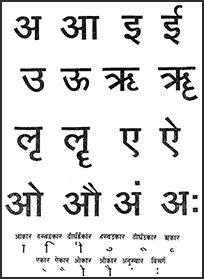
Vyakarana (व्याकरण, vyākaraṇa) refers to Sanskrit grammar and represents one of the six additional sciences (vedanga) to be studied along with the Vedas. Vyakarana concerns itself with the rules of Sanskrit grammar and linguistic analysis in order to establish the correct context of words and sentences.
Yoga (school of philosophy)
Śliṣṭa (श्लिष्ट) refers to the “absorbed” (mind), according to Hemacandra’s commentary (the Svopajña) on Yogaśāstra 12.4 (Cf. Amanaska 2.97).—Accordingly, [while explaining the integrated and absorbed states of mind]: “The integrated [mind] is said to be steady and accompanied by bliss, [that is to say,] it is accompanied by bliss because it is steady. The absorbed (śliṣṭa) [mind] is completely still and immersed in supreme bliss. These two [states of] mind apprehend just those, [which are] merely mental, and not external”.

Yoga is originally considered a branch of Hindu philosophy (astika), but both ancient and modern Yoga combine the physical, mental and spiritual. Yoga teaches various physical techniques also known as āsanas (postures), used for various purposes (eg., meditation, contemplation, relaxation).
Languages of India and abroad
Marathi-English dictionary
śliṣṭa (श्लिष्ट).—a S Of a double interpretation, ambiguous, equivocal.
Marathi is an Indo-European language having over 70 million native speakers people in (predominantly) Maharashtra India. Marathi, like many other Indo-Aryan languages, evolved from early forms of Prakrit, which itself is a subset of Sanskrit, one of the most ancient languages of the world.
Sanskrit dictionary
Śliṣṭa (श्लिष्ट).—p. p. [śliṣ-kta]
1) Embraced.
2) Clung, adhered to.
3) Resting or leaning on.
4) Involving a pun, susceptible of a double interpretation; अत्र विषमादयः शब्दाः श्लिष्टाः (atra viṣamādayaḥ śabdāḥ śliṣṭāḥ) K. P.1.
5) Fitting tight (as a coat of mail); विबभौ सर्वतः श्लिष्टम् (vibabhau sarvataḥ śliṣṭam) (varma) Mahābhārata (Bombay) 7.127.18.
Śliṣṭa (श्लिष्ट).—mfn.
(-ṣṭaḥ-ṣṭā-ṣṭaṃ) 1. Embraced. 2. Touched by, clung or adhered to. 3. Leaving on. 4. Susceptible of a double interpretation, (in rhetoric.) E. śliṣ to embrace, kta aff.
Śliṣṭa (श्लिष्ट).—[adjective] hanging on, cleaving or sticking to ([locative] or —°); joined, closed, limited or confined (to itself); (holding) clasped or embraced.
1) Śliṣṭa (श्लिष्ट):—[from śliṣ] mfn. clinging or adhering to ([locative case] or [compound]), [Kāṭhaka; Kātyāyana-śrauta-sūtra; Mahābhārata] etc.
2) [v.s. ...] (with sarvataḥ) adhering closely, fitting tight (as a coat of mail), [Mahābhārata vii, 5161]
3) [v.s. ...] adhering to one’s self id est. not affecting others, merely personal (as an art or science), [Mālavikāgnimitra i, 15] ([varia lectio] śiṣṭa)
4) [v.s. ...] joined together, united, connected, [Mahābhārata; Kāvya literature] etc.
5) [v.s. ...] clasped, embraced, [Kāvya literature; Kathāsaritsāgara]
6) [v.s. ...] (in [rhetoric]) connected so as to be susceptible of a double interpretation, equivocal, [Sāhitya-darpaṇa]
Śliṣṭa (श्लिष्ट):—[(ṣṭaḥ-ṣṭā-ṣṭaṃ) p.] Embraced, clung to.
Śliṣṭa (श्लिष्ट) in the Sanskrit language is related to the Prakrit words: Avayāsiya, Pariaṃtia, Sāmaggia, Siliṭṭha.
Śliṣṭa (in Sanskrit) can be associated with the following Chinese terms:
1) 捧 [pěng]: “offer”.
2) 相合 [xiāng hé]: “combine”.
Sanskrit, also spelled संस्कृतम् (saṃskṛtam), is an ancient language of India commonly seen as the grandmother of the Indo-European language family (even English!). Closely allied with Prakrit and Pali, Sanskrit is more exhaustive in both grammar and terms and has the most extensive collection of literature in the world, greatly surpassing its sister-languages Greek and Latin.
Hindi dictionary
Śliṣṭa (श्लिष्ट) [Also spelled shlisht]:—(a) punned; equivocal, susceptible of double interpretation; clasped, joined together; hence ~[tā] (nf).
...
Kannada-English dictionary
Śliṣṭa (ಶ್ಲಿಷ್ಟ):—[adjective] clung or adhered to.
--- OR ---
Śliṣṭa (ಶ್ಲಿಷ್ಟ):—[noun] = ಶ್ಲೇಷೆ [shleshe].
Kannada is a Dravidian language (as opposed to the Indo-European language family) mainly spoken in the southwestern region of India.
Nepali dictionary
Śliṣṭa (श्लिष्ट):—adj. 1. embraced; 2. clung, adhered to; 3. resting or leaning on;
Nepali is the primary language of the Nepalese people counting almost 20 million native speakers. The country of Nepal is situated in the Himalaya mountain range to the north of India.
See also (Relevant definitions)
Starts with (+0): Shlishtabhavana, Shlishtabindu, Shlishtakshara, Shlishtakshepa, Shlishtam, Shlishtaparamparitarupaka, Shlishtarthadipaka, Shlishtarupaka, Shlishtavartman.
Full-text (+35): Samshlishta, Vishlishta, Sushlishta, Ashlishta, Prashlishta, Shlishtarupaka, Upashlishta, Prakshlishta, Shlishtavartman, Dantashlishta, Parishlishta, Natishlishta, Shlishtam, Hetushlishta, Shlish, Shlishtabindu, Shlishtokti, Shlisht, Silittha, Shlishtakshepa.
Relevant text
Search found 25 books and stories containing Shlishta, Śliṣṭa, Slista; (plurals include: Shlishtas, Śliṣṭas, Slistas). You can also click to the full overview containing English textual excerpts. Below are direct links for the most relevant articles:
Kathasaritsagara [Sanskrit/English] (by C. H. Tawney)
Anguttara Nikaya (Numbered Discourses)
Discourse 3.5: Ayoniso-sutta < [Bāla-vagga: Fools]
Alamkaras mentioned by Vamana (by Pratim Bhattacharya)
7: Definition of Śleṣa Alaṃkāra < [Chapter 4 - Arthālaṃkāras mentioned by Vāmana]
27: Definition of Sahokti Alaṃkāra < [Chapter 4 - Arthālaṃkāras mentioned by Vāmana]
1-2: The number of Alaṃkāras (poetic figures) mentioned < [Chapter 5 - A Comparative study of the different alaṃkāras mentioned by Vāmana]
Krishna Sandarbha of Jiva Goswami (by Kusakratha Prabhu)
Verse 23.3 < [Anuccheda 23]
Mudrarakshasa (literary study) (by Antara Chakravarty)
3.2. Use of Śleṣa (Śabdaśleṣa)-alaṃkāra < [Chapter 3 - Use of Alaṃkāras in Mudrārākṣasa]
1. Patākāsthānaka used in Mudrārākṣasa < [Chapter 6 - Other Literary Estimates of Mudrārākṣasa]
3.5. Use of Rūpaka-alaṃkāra < [Chapter 3 - Use of Alaṃkāras in Mudrārākṣasa]
Sahitya-kaumudi by Baladeva Vidyabhushana (by Gaurapada Dāsa)
Text 10.110 < [Chapter 10 - Ornaments of Meaning]
Text 10.108 < [Chapter 10 - Ornaments of Meaning]
Text 10.55 < [Chapter 10 - Ornaments of Meaning]