Shivabhakta, Shiva-bhakta, Śivabhakta: 9 definitions
Introduction:
Shivabhakta means something in Hinduism, Sanskrit. If you want to know the exact meaning, history, etymology or English translation of this term then check out the descriptions on this page. Add your comment or reference to a book if you want to contribute to this summary article.
The Sanskrit term Śivabhakta can be transliterated into English as Sivabhakta or Shivabhakta, using the IAST transliteration scheme (?).
Images (photo gallery)

In Hinduism
Purana and Itihasa (epic history)
Śivabhakta (शिवभक्त) refers to a “devotee of Śiva”, as defined in the Śivapurāṇa 1.17. Accordingly, “[...] at the end of every five hundred thousand Japas, the aspirant shall perform Mahābhiṣeka and Naivedya. He shall worship devotees of Śiva for gratifying Śiva. Śiva becomes delighted at the worship of the devotee (śivabhakta). There is no difference between Śiva and the devotee of Śiva. He is Śiva Himself. The mantra is of the nature of Śiva. By holding the mantra the physical body of the devotee becomes identified with Śiva. Devotees of Śiva (śivabhakta) know all the rites, nay all the Vedic rites. The more an aspirant repeats the mantra of Śiva, the greater is the presence of Śiva in his body. For the woman devotee of Śiva, the symbol of the goddess shall be the form for concentration”.
According to the Śivapurāṇa 1.25, while explaining the greatness of Rudrākṣa:—“[...] he who applies ash (bhasma) and wears Rudrākṣa is called a devotee of Śiva (śivabhakta). A person devoted to the Japa of the five-syllabled mantra is a perfect and noble being”.
Śivabhakta (शिवभक्त).—Eligible for Pārvaṇa Śrāddha.*
- * Matsya-purāṇa 16. 9.

The Purana (पुराण, purāṇas) refers to Sanskrit literature preserving ancient India’s vast cultural history, including historical legends, religious ceremonies, various arts and sciences. The eighteen mahapuranas total over 400,000 shlokas (metrical couplets) and date to at least several centuries BCE.
Shaivism
Śivabhakta (शिवभक्त) refers to “all those who have bhāvanā, who know music and dance, play musical instruments, and understand nāṭyarasa”. Highest among them are those who know the science of dance, proficient in dancing and also in counting mātrā. They are called Nartaka, one of the Pañcācārya, representing members of the dance troupe employed in Śiva temples.
Śivabhakta (शिवभक्त) refers to a “devotee of Śiva”, according to the Śivadharmottara: an ancient Sanskrit text dealing with the merit generated by ritual action and methods for attaining rewards after death.—Accordingly, “If [the king] performs this rite [of worshipping the Liṅga] with its six factors Śiva will show his favour. In both this world and the next he will grant all his desires. So a king who is a devotee of Śiva (śivabhakta) should worship him in this way. If he does so he will rescue twenty-one generations of his patriline. He will install them in heaven and then go on himself to the eternal domain of Īśvara...”.
Śivabhakta (शिवभक्त) refers to “one who is devoted to Śiva”, according to the Pātravidhi—a manual of the Lakulīśa Pāśupata school of Śaivism dealing with purification of the initiate’s vessel (pātra) and other concerned issues.—Accordingly, “One who is pure, devoted to Śiva (śivabhakta), intent on chanting mantras and on meditation, [and] who has permanently conquered sleep and hunger, is entitled to eat from the vessel. (58) One who is completely devoted [to Śiva], a man of good conduct, who is always compassionate to all living beings, and always serene, is entitled to eat from the vessel. (59)”.
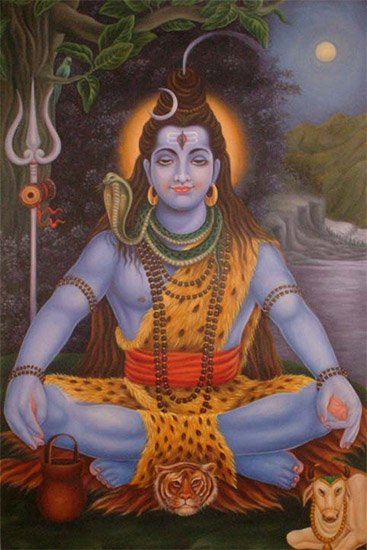
Shaiva (शैव, śaiva) or Shaivism (śaivism) represents a tradition of Hinduism worshiping Shiva as the supreme being. Closely related to Shaktism, Shaiva literature includes a range of scriptures, including Tantras, while the root of this tradition may be traced back to the ancient Vedas.
Languages of India and abroad
Sanskrit dictionary
Śivabhakta (शिवभक्त).—[masculine] a worshipper of Śiva.
Śivabhakta (शिवभक्त):—[=śiva-bhakta] [from śiva] m. ‘devoted to Ś°’, a Śaiva, [Catalogue(s)]
Śivabhakta (शिवभक्त):—adj. ein Verehrer Śiva’s [Oxforder Handschriften 69,a, Nalopākhyāna 1]; vgl. śivaikabhakta [Kathāsaritsāgara 114, 20.]
Sanskrit, also spelled संस्कृतम् (saṃskṛtam), is an ancient language of India commonly seen as the grandmother of the Indo-European language family (even English!). Closely allied with Prakrit and Pali, Sanskrit is more exhaustive in both grammar and terms and has the most extensive collection of literature in the world, greatly surpassing its sister-languages Greek and Latin.
Kannada-English dictionary
Śivabhakta (ಶಿವಭಕ್ತ):—
1) [noun] (masc.) a devotee of Śiva.
2) [noun] a man belonging to Vīraśaiva community.
Kannada is a Dravidian language (as opposed to the Indo-European language family) mainly spoken in the southwestern region of India.
See also (Relevant definitions)
Partial matches (+0): Shiva, Bhakta.
Starts with (+0): Shivabhaktamahatmya, Shivabhaktananda, Shivabhaktanandakarika, Shivabhaktapratishtha.
Full-text (+7): Shivabhaktamahatmya, Shivabhaktapratishtha, Shivabhaktananda, Shivabhaktanandakarika, Agama, Trimurtisthapana, Guhasthapana, Vishnumardhapratishtha, Vishnumardha, Vishnuma, Vrisharudhapratishtha, Gangadharapratishtha, Candeshasthapana, Annadana, Bhumidana, Vidyadana, Shayyadana, Nartaka, Tiladana, Dipadana.
Relevant text
Search found 25 books and stories containing Shivabhakta, Shiva bhaktas, Siva bhaktas, Śiva-bhakta, Siva-bhakta, Śivabhakta, Sivabhakta; (plurals include: Shivabhaktas, Shiva bhaktases, Siva bhaktases, bhaktas, Śivabhaktas, Sivabhaktas). You can also click to the full overview containing English textual excerpts. Below are direct links for the most relevant articles:
Shiva Purana [sanskrit/english]
Love of God in Saivism < [April – June, 1980]
The Forces in the Ramayana < [April - June 1972]
The Lingayats-Their Religion and Literature < [May 1937]
Saura-purana (analytical study) (by Priyanku Chakraborty)
Part 3 - Viṣṇu, Vaiṣṇavism and the Saura-purāṇa < [Chapter 6 - Different Religious Cults in the Perspective of the Saura-purāṇa]
Appendix 1 - Translation of Saura-purāṇa chapter 15 (partially)
History of Indian Medicine (and Ayurveda) (by Shree Gulabkunverba Ayurvedic Society)
Chapter 9 - Commentators of Caraka Samhita < [Part 1 - The History of Medicine in India]
Dictionaries of Indian languages (Kosha)
Page 163 < [Hindi-Bengali-English Volume 3]
Page 230 < [Tamil-Hindi-English, Volume 1]
Page 164 < [Hindi-Kannada-English Volume 3]
Kashyapa Shilpa-shastra (study) (by K. Vidyuta)
9. Dwellings outside the Prākāras < [Chapter 3 - Prākāra Lakṣaṇa]