Sheng, Shēng, Shěng, Shèng, Shéng: 32 definitions
Introduction:
Sheng means something in Buddhism, Pali. If you want to know the exact meaning, history, etymology or English translation of this term then check out the descriptions on this page. Add your comment or reference to a book if you want to contribute to this summary article.
Images (photo gallery)
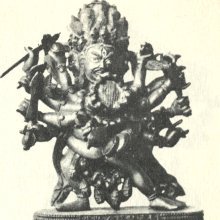
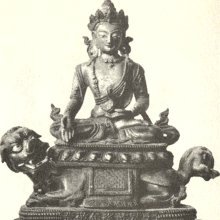
In Buddhism
Chinese Buddhism
1) 生 [sheng]—The twenty-eight forms of existence, or birth. 二十九有 [er shi jiu you] the twenty-ninth is the non-existent; v. 有 [you].
2) 生 [sheng]—jāti 惹多 [re duo]; life; utpāda means coming forth, birth, production; 生 [sheng] means beget, bear, birth, rebirth, born, begin, produce, life, the living. One of the twelve nidānas, 十二因緣 [shi er yin yuan]; birth takes place in four forms, catur yoni, v. 四生 [si sheng], in each case causing: a sentient being to enter one of the 六道 [liu dao] six gati, or paths of transmigration.
3) 省 [sheng]—Look into minutely, inspect, examine; arouse; spare, save; an inspectorate, hence a province.
4) 陞 [sheng]—To ascend: rise, raise.
5) 勝 [sheng]—jina, victorious, from ji, to overcome, surpass.
6) 聖 [sheng]—ārya; sādhu; a sage; wise and good; upright, or correct in all his character; sacred, holy, saintly.
7) 聲 [sheng]—śabda. Sound, tone, voice, repute; one of the five physical senses or sensations, i.e. sound, the 聲入 [sheng ru], 聲根 [sheng gen], or 聲塵 [sheng chen], cf. 六 [liu] and 十二入 [shi er ru].
8) 繩 [sheng]—String, cord.
[The following represents an unverified English translation. For all purposes consult the original Chinese text.]
聲 [sheng]—Sound—[Technical Term] One of the five objects of the senses (五塵 [wu chen]). It is created by the four great elements (四大種 [si da zhong]) and belongs to the category of form/matter (色法 [se fa]). It is the object of the ear faculty (耳根 [er gen]). There are eight kinds of distinctions.
聲—【術語】五塵之一。為四大種之所造,屬於色法。耳根所對之境也。有八種之別。
[shù yǔ] wǔ chén zhī yī. wèi sì dà zhǒng zhī suǒ zào, shǔ yú sè fǎ. ěr gēn suǒ duì zhī jìng yě. yǒu bā zhǒng zhī bié.
[shu yu] wu chen zhi yi. wei si da zhong zhi suo zao, shu yu se fa. er gen suo dui zhi jing ye. you ba zhong zhi bie.
[The following represents an unverified English translation. For all purposes consult the original Chinese text.]
生 [sheng]—(shēng) — [Term (術語 [shu yu])] In Sanskrit, it is called Jati. The arising of conditioned phenomena (有為法 [you wei fa]) is called (shēng). Kosa-guangji (俱舍光記 [ju she guang ji]), Volume 5, states: "That which enables a dharma to manifest its function and enter the present sphere is called (shēng)."
生—【術語】梵語曰惹多 Jati,有為法之現起名為生。俱舍光記五曰:「於法能起彼用令入現在境名為生。」
[shù yǔ] fàn yǔ yuē rě duō Jati, yǒu wèi fǎ zhī xiàn qǐ míng wèi shēng. jù shě guāng jì wǔ yuē: “yú fǎ néng qǐ bǐ yòng lìng rù xiàn zài jìng míng wèi shēng.”
[shu yu] fan yu yue re duo Jati, you wei fa zhi xian qi ming wei sheng. ju she guang ji wu yue: "yu fa neng qi bi yong ling ru xian zai jing ming wei sheng."
[The following represents an unverified English translation. For all purposes consult the original Chinese text.]
聖 [sheng]—Shèng (圣 [sheng])—[Technical term] means "righteous" or "correct" (正 [zheng]). One who realizes the righteous path (正道 [zheng dao]) is called a Shèng. The lower volume of the Shèngmán Bǎokū (胜鬘宝窟 [sheng man bao ku]) states: "A Shèng (圣 [sheng]) is one who is righteous (正 [zheng]). One who rectifies things with principle (理 [li]) is called a Shèng." The end of chapter 17 of the Dàshèng Yìzhāng (大乘义章 [da cheng yi zhang]) states: "One who, from the first bhūmi (初地 [chu de]) upwards, ceases delusions (妄 [wang]), accords with the truth (真 [zhen]), and comprehends the correct (正 [zheng]), is called a Shèng."
聖—【術語】正之義也。證正道,名為聖。勝鬘寶窟下本曰:「聖者正也。以理正物名為聖。」大乘義章十七末曰:「初地以上,息妄契真會正,名聖。」
[shù yǔ] zhèng zhī yì yě. zhèng zhèng dào, míng wèi shèng. shèng mán bǎo kū xià běn yuē: “shèng zhě zhèng yě. yǐ lǐ zhèng wù míng wèi shèng.” dà chéng yì zhāng shí qī mò yuē: “chū de yǐ shàng, xī wàng qì zhēn huì zhèng, míng shèng.”
[shu yu] zheng zhi yi ye. zheng zheng dao, ming wei sheng. sheng man bao ku xia ben yue: "sheng zhe zheng ye. yi li zheng wu ming wei sheng." da cheng yi zhang shi qi mo yue: "chu de yi shang, xi wang qi zhen hui zheng, ming sheng."
1) 昇 ts = shēng p refers to [noun] “sunrise; sūryodaya”; Domain: Buddhism 佛教 [fu jiao]; Notes: Sanskrit equivalent: sūryodaya, Japanese: shou (BCSD '昇 [sheng]', p. 596; Mahāvyutpatti 'sūryodayaḥ'; MW 'sūryodaya'; Unihan '昇 [sheng]').
2) 升 ts = shēng p refers to [verb] “ascend; rūḍha”; Domain: Buddhism 佛教 [fu jiao]; Notes: Sanskrit equivalent: rūḍha (BCSD '升 [sheng]', p. 219; MW 'rūḍha')..
3) 聖 t = 圣 s = shèng p refers to [adjective] “noble; sacred; ārya”; Domain: Buddhism 佛教 [fu jiao]; Notes: Sanskrit equivalent: ārya, Pali: ariya; Japanese: shō; Tibetan: 'phags pa; in a Buddhist context translates Sanskrit ārya (BCSD '聖 [sheng]', p. 955; BL 'ārya', p. 64; Giles 1892 '聖 [sheng]')..
4) 生 ts = shēng p refers to [noun] “birth”; Domain: Buddhism 佛教 [fu jiao]; Notes: Sanskrit equivalent: jāti, Pali: jāti, Japanese: shō, Tibetan: skye ba (BCSD '生 [sheng]', p. 832; BL 'jāti', p. 382; FGDB '生 [sheng]'; Mahāvyutpatti 'jātiḥ'; MW 'jāti'; SH '生 [sheng]', p. 195)..
5) 生 ts = shēng p refers to [verb] “arise; produce; utpad”; Domain: Buddhism 佛教 [fu jiao]; Notes: Sanskrit equivalent: utpad, or: utpanna (BCSD '生 [sheng]', p. 832; MW 'utpad'; SH '生 [sheng]', p. 195)..
6) 勝 t = 胜 s = shèng p refers to [adjective] “conquering; victorious; jaya”; Domain: Buddhism 佛教 [fu jiao]; Notes: Sanskrit equivalent: jaya, or: jina, Japanese: shō, Tibetan: rgyal ba (BCSD '胜 [sheng]', p. 205; DJBT '胜 [sheng]', p. 433; Mahāvyutpatti 'jinaḥ'; MW 'jaya'; SH '勝 [sheng]', p. 367)..
7) 勝 t = 胜 s = shèng p refers to [adjective] “superior; agra”; Domain: Buddhism 佛教 [fu jiao]; Notes: Sanskrit equivalent: agra, Pali: agga, Tibetan: mchog (BCSD '胜 [sheng]', p. 205; Dhammajoti 2013, p. 9; Edgerton 1953 'agra', p. 4; Mahāvyutpatti 'agraḥ'; MW 'agra'; Unihan '勝 [sheng]')..
8) 聲 t = 声 s = shēng p refers to [noun] “sound”; Domain: Buddhism 佛教 [fu jiao]; Notes: Sanskrit equivalent: śabdaḥ, Japanese: sei, or: shou, Tibetan: sgra (BCSD '聲 [sheng]', p. 960; Edgerton 1953 'śabda', p. 523; Mahāvyutpatti 'śabdaḥ'; MW 'śabda'; SH '聲 [sheng]', p. 461; Unihan '聲 [sheng]')..
9) 省 ts = shěng p refers to [verb] “seeking; gaveṣin”; Domain: Buddhism 佛教 [fu jiao]; Notes: Sanskrit equivalent: gaveṣin, Japanese: sei, or: shou (BCSD '省 [sheng]', p. 875; MW 'gaveṣin'; SH '省 [sheng]', p. 309; Unihan '省 [sheng]')..
10) 繩 t = 绳 s = shéng p refers to [noun] “rope; rajju”; Domain: Buddhism 佛教 [fu jiao]; Notes: Sanskrit equivalent: rajju, Japanese: jou, or: bin, or: you (BCSD '繩 [sheng]', p. 941; MW 'rajju'; SH '繩 [sheng]', p. 471; Unihan '繩 [sheng]')..
Chinese Buddhism (漢傳佛教, hanchuan fojiao) is the form of Buddhism that developed in China, blending Mahayana teachings with Daoist and Confucian thought. Its texts are mainly in Classical Chinese, based on translations from Sanskrit. Major schools include Chan (Zen), Pure Land, Tiantai, and Huayan. Chinese Buddhism has greatly influenced East Asian religion and culture.
Languages of India and abroad
Chinese-English dictionary
[The following represents an unverified English translation. For all purposes consult the original Chinese text.]
狌 [shēng] [sheng]—
Same as 猩 [xing] (xīng). See the entry for 猩猩 [xing xing] (xīngxing).
狌:同「猩」。參見「猩猩」條。
shēng: tóng “xīng” . cān jiàn “xīng xīng” tiáo.
sheng: tong "xing" . can jian "xing xing" tiao.
[The following represents an unverified English translation. For all purposes consult the original Chinese text.]
省 [shěng] [sheng]—
[動 [dong]] Verb
1. To review, to examine, to reflect. For example: `內 [nei]` introspection, `反 [fan]` self-reflection. From Analects, Xue Er (`論語 [lun yu].學而 [xue er]`): "I daily examine myself on three points (`吾日三吾身 [wu ri san wu shen]`)."
2. To visit, to greet, to pay respects. For example: `晨昏定 [chen hun ding]` paying respects to parents morning and evening. From Dream of the Red Chamber (`紅樓夢 [hong lou meng]`), Chapter 83 (`第八三回 [di ba san hui]`): "The Imperial Consort (`貴妃娘娘 [gui fei niang niang]`) returned from visiting her parents (`親 [qin]`) the other day, and we personally saw her bring back several carts of gold and silver (`金銀 [jin yin]`)."
3. To understand, to comprehend, to realize. From Records of the Grand Historian, Volume 55, Hereditary House of Marquis Liu (`史記 [shi ji].卷五五 [juan wu wu].留侯世家 [liu hou shi jia]`): "Zhang Liang (`良 [liang]`) spoke for others, but they did not understand at all (`皆不 [jie bu]`)." From Yuan Dynasty, Wang Shifu's (`王實甫 [wang shi fu]`) Romance of the Western Chamber, Act 1, Scene 3 (`西廂記 [xi xiang ji].第一本 [di yi ben].第三折 [di san zhe]`): "Although we exchanged glances (`眼角兒傳情 [yan jiao er chuan qing]`), we did not speak, but understood each other in our hearts (`口不言 [kou bu yan],心自 [xin zi]`)."
4. To examine, to test. From Book of Rites, Doctrine of the Mean (`禮記 [li ji].中庸 [zhong yong]`): "daily examination and monthly testing (`日月試 [ri yue shi]`)."
5. To remember, to recall. For example: `記 [ji]` to remember. From Yuan Dynasty, Sun Zhongzhang's (`孫仲章 [sun zhong zhang]`) Kantuanjin (Investigating the Headscarf), Prologue (`勘頭巾 [kan tou jin].楔子 [xie zi]`): "I don't remember riding the dark horse (`上青驄 [shang qing cong]`) at all, I only remember holding up the golden goblet (`金鍾漫捧 [jin zhong man peng]`), constantly urging me to drink until it reached my throat (`喫的到喉嚨 [chi de dao hou long]`)."
省:[動]
1.檢討、審察。如:「內省」、「反省」。《論語.學而》:「吾日三省吾身。」
2.探望、問候。如:「晨昏定省」。《紅樓夢》第八三回:「前兒貴妃娘娘省親回來,我們還親見他帶了幾車金銀回來。」
3.明瞭、領悟。《史記.卷五五.留侯世家》:「良為他人言,皆不省。」元.王實甫《西廂記.第一本.第三折》:「雖然是眼角兒傳情,喒兩個口不言,心自省。」
4.考校。《禮記.中庸》:「日省月試。」
5.記得、記住。如:「記省」。元.孫仲章《勘頭巾.楔子》:「全不省上青驄,只記得金鍾漫捧,直勸我喫的到喉嚨。」
shěng:[dòng]
1. jiǎn tǎo,, shěn chá. rú: “nèi shěng” ,, “fǎn shěng” . < lùn yǔ. xué ér>: “wú rì sān shěng wú shēn.”
2. tàn wàng,, wèn hòu. rú: “chén hūn dìng shěng” . < hóng lóu mèng> dì bā sān huí: “qián ér guì fēi niáng niáng shěng qīn huí lái, wǒ men hái qīn jiàn tā dài le jǐ chē jīn yín huí lái.”
3. míng liǎo,, lǐng wù. < shǐ jì. juǎn wǔ wǔ. liú hóu shì jiā>: “liáng wèi tā rén yán, jiē bù shěng.” yuán. wáng shí fǔ < xī xiāng jì. dì yī běn. dì sān zhé>: “suī rán shì yǎn jiǎo ér chuán qíng, zá liǎng gè kǒu bù yán, xīn zì shěng.”
4. kǎo xiào. < lǐ jì. zhōng yōng>: “rì shěng yuè shì.”
5. jì dé,, jì zhù. rú: “jì shěng” . yuán. sūn zhòng zhāng < kān tóu jīn. xiē zi>: “quán bù shěng shàng qīng cōng, zhǐ jì dé jīn zhōng màn pěng, zhí quàn wǒ chī de dào hóu lóng.”
sheng:[dong]
1. jian tao,, shen cha. ru: "nei sheng" ,, "fan sheng" . < lun yu. xue er>: "wu ri san sheng wu shen."
2. tan wang,, wen hou. ru: "chen hun ding sheng" . < hong lou meng> di ba san hui: "qian er gui fei niang niang sheng qin hui lai, wo men hai qin jian ta dai le ji che jin yin hui lai."
3. ming liao,, ling wu. < shi ji. juan wu wu. liu hou shi jia>: "liang wei ta ren yan, jie bu sheng." yuan. wang shi fu < xi xiang ji. di yi ben. di san zhe>: "sui ran shi yan jiao er chuan qing, za liang ge kou bu yan, xin zi sheng."
4. kao xiao. < li ji. zhong yong>: "ri sheng yue shi."
5. ji de,, ji zhu. ru: "ji sheng" . yuan. sun zhong zhang < kan tou jin. xie zi>: "quan bu sheng shang qing cong, zhi ji de jin zhong man peng, zhi quan wo chi de dao hou long."
[The following represents an unverified English translation. For all purposes consult the original Chinese text.]
盛 [shèng] [sheng]—
[Verb]
1. To put something into a 容器 [rong qi] (container). For example: to scoop 飯 [fan] (rice), to ladle 湯 [tang] (soup).
2. To 容納 [rong na] (contain/hold). For example: The 箱子 [xiang zi] (box) is too small to hold so many 東西 [dong xi] (things).
[Noun]
Ancient 穀物 [gu wu] (grains) placed in 食器 [shi qi] (vessels) for 祭祀 [ji si] (sacrificial offerings). From 《周禮 [zhou li].地官 [de guan].閭師 [lu shi]》 (Zhou Li, Diguan, Lüshi): "不耕者祭無 [bu geng zhe ji wu](Those who do not cultivate have no Sheng for offerings)." 漢 [han] (Han Dynasty) 鄭玄 [zheng xuan] (Zheng Xuan)'s 注 [zhu] (commentary): "(Sheng) refers to 黍稷 [shu ji] (millet and broomcorn millet)."
盛:[動]
1.用容器裝東西。如:「盛飯」、「盛湯」。
2.容納。如:「箱子太小,盛不了這麼多東西。」
[名]
古代裝在食器裡祭祀的穀物。《周禮.地官.閭師》:「不耕者祭無盛。」漢.鄭玄.注:「盛,黍稷也。」
shèng:[dòng]
1. yòng róng qì zhuāng dōng xī. rú: “shèng fàn” ,, “shèng tāng” .
2. róng nà. rú: “xiāng zi tài xiǎo, shèng bù le zhè me duō dōng xī.”
[míng]
gǔ dài zhuāng zài shí qì lǐ jì sì de gǔ wù. < zhōu lǐ. de guān. lǘ shī>: “bù gēng zhě jì wú shèng.” hàn. zhèng xuán. zhù: “shèng, shǔ jì yě.”
sheng:[dong]
1. yong rong qi zhuang dong xi. ru: "sheng fan" ,, "sheng tang" .
2. rong na. ru: "xiang zi tai xiao, sheng bu le zhe me duo dong xi."
[ming]
gu dai zhuang zai shi qi li ji si de gu wu. < zhou li. de guan. lu shi>: "bu geng zhe ji wu sheng." han. zheng xuan. zhu: "sheng, shu ji ye."
[The following represents an unverified English translation. For all purposes consult the original Chinese text.]
升 [shēng] [sheng]—
[動 [dong]]
1. To rise; to ascend (由下而上 [you xia er shang]). For example: to raise a flag (旗 [qi]), to get promoted (官 [guan]), to upgrade (級 [ji]). From Bai Juyi's (白居易 [bai ju yi]) "Lament for Lu Qian" (祭盧虔文 [ji lu qian wen]) in the Tang (唐 [tang]) Dynasty: "His name became famous because of his writings, and his position rose due to his talent (名因文著 [ming yin wen zhe],位以才 [wei yi cai])."
2. To ascend; to enter (登 [deng]). From The Analects of Confucius (論語 [lun yu]), "Xiānjìn" (先進 [xian jin]) chapter: "The Master (子 [zi]) said: 'Yóu (由 [you]) has ascended to the hall (堂矣 [tang yi]), but has not yet entered the inner chamber (未入於室也 [wei ru yu shi ye]).'"
[名 [ming]]
1. A measure word (量詞 [liang ci]). A unit of volume (表示容量的單位 [biao shi rong liang de dan wei]), also known as liter (公 [gong]). One liter equals one thousand milliliters (毫 [hao]).
2. The name of a hexagram (卦名 [gua ming]) in the I Ching (易經 [yi jing]). One of the sixty-four hexagrams (六十四卦之一 [liu shi si gua zhi yi]). It consists of the lower trigram Xùn (巽 [xun]) (☴) and the upper trigram Kūn (坤 [kun]) (☷). It signifies smooth progress or success (亨通之義 [heng tong zhi yi]).
3. A surname (姓 [xing]). For example, Sheng Yuan (元 [yuan]) existed during the Liu Song (宋 [song]) Dynasty of the Southern Dynasties (南朝 [nan chao]).
升:[動]
1.由下而上。如:「升旗」、「升官」、「升級」。唐.白居易〈祭盧虔文〉:「名因文著,位以才升。」
2.登。《論語.先進》:「子曰:『由也,升堂矣,未入於室也。』」
[名]
1.量詞。表示容量的單位,也稱為「公升」。一升等於一千毫升。
2.《易經》卦名。六十四卦之一。巽(☴)下坤(☷)上。表示亨通之義。
3.姓。如南朝宋有升元。
shēng:[dòng]
1. yóu xià ér shàng. rú: “shēng qí” ,, “shēng guān” ,, “shēng jí” . táng. bái jū yì 〈jì lú qián wén〉: “míng yīn wén zhe, wèi yǐ cái shēng.”
2. dēng. < lùn yǔ. xiān jìn>: “zi yuē: ‘yóu yě, shēng táng yǐ, wèi rù yú shì yě.’ ”
[míng]
1. liàng cí. biǎo shì róng liàng de dān wèi, yě chēng wèi “gōng shēng” . yī shēng děng yú yī qiān háo shēng.
2. < yì jīng> guà míng. liù shí sì guà zhī yī. xùn (☴) xià kūn (☷) shàng. biǎo shì hēng tōng zhī yì.
3. xìng. rú nán cháo sòng yǒu shēng yuán.
sheng:[dong]
1. you xia er shang. ru: "sheng qi" ,, "sheng guan" ,, "sheng ji" . tang. bai ju yi
2. deng. < lun yu. xian jin>: "zi yue: 'you ye, sheng tang yi, wei ru yu shi ye.' "
[ming]
1. liang ci. biao shi rong liang de dan wei, ye cheng wei "gong sheng" . yi sheng deng yu yi qian hao sheng.
2. < yi jing> gua ming. liu shi si gua zhi yi. xun (☴) xia kun (☷) shang. biao shi heng tong zhi yi.
3. xing. ru nan chao song you sheng yuan.
[The following represents an unverified English translation. For all purposes consult the original Chinese text.]
昇 [shēng] [sheng]—
[動 [dong]]
1. To rise; to ascend.
Southern Dynasties Liang (南朝梁 [nan chao liang]), Jiang Yan's (江淹 [jiang yan]) "Shi Jie Fu" (石劫賦 [shi jie fu]): "The sun (日 [ri]) shines on the water (水 [shui]) and rises in the east (東 [dong]), mountains (山 [shan]) emerge from the waves (波 [bo]) and then disappear."
2. To be promoted (晉級 [jin ji]); to advance (登進 [deng jin]).
"Old Book of Tang" (舊唐書 [jiu tang shu]), Volume 74, "Biography of Ma Zhou" (馬周傳 [ma zhou chuan]): "Since ancient times, commandery governors (郡守 [jun shou]) and county magistrates (縣令 [xian ling]) were all carefully selected for their virtue (賢德 [xian de]); if one wishes to be promoted (擢 [zhuo]) to prime minister (宰相 [zai xiang]), they must first be tested in governing people (臨人 [lin ren])."
[名 [ming]]
A surname (姓 [xing]). For example, during the Song Dynasty (宋代 [song dai]), there was Sheng Yuanzhong (元中 [yuan zhong]).
昇:[動]
1.上升。南朝梁.江淹〈石劫賦〉:「日照水而東昇,山出波而隱沒。」
2.晉級、登進。《舊唐書.卷七十四.馬周傳》:「自古郡守、縣令,皆妙選賢德,欲有擢昇宰相必先試以臨人。」
[名]
姓。如宋代有昇元中。
shēng:[dòng]
1. shàng shēng. nán cháo liáng. jiāng yān 〈shí jié fù〉: “rì zhào shuǐ ér dōng shēng, shān chū bō ér yǐn méi.”
2. jìn jí,, dēng jìn. < jiù táng shū. juǎn qī shí sì. mǎ zhōu chuán>: “zì gǔ jùn shǒu,, xiàn lìng, jiē miào xuǎn xián dé, yù yǒu zhuó shēng zǎi xiāng bì xiān shì yǐ lín rén.”
[míng]
xìng. rú sòng dài yǒu shēng yuán zhōng.
sheng:[dong]
1. shang sheng. nan chao liang. jiang yan
2. jin ji,, deng jin. < jiu tang shu. juan qi shi si. ma zhou chuan>: "zi gu jun shou,, xian ling, jie miao xuan xian de, yu you zhuo sheng zai xiang bi xian shi yi lin ren."
[ming]
xing. ru song dai you sheng yuan zhong.
[The following represents an unverified English translation. For all purposes consult the original Chinese text.]
陞 [shēng] [sheng]—
Same as '升 [sheng]'.
陞:同「升」。
shēng: tóng “shēng” .
sheng: tong "sheng" .
[The following represents an unverified English translation. For all purposes consult the original Chinese text.]
生 [shēng] [sheng]—
[動 [dong]]
1. To grow, to sprout. For example: "出一对角 [chu yi dui jiao] (shēngchū yī duì jiǎo)" (to grow a pair of horns). From The Classic of Poetry (诗经 [shi jing]), Greater Odes (大雅 [da ya]), Juan'a (卷阿 [juan a]): "梧桐矣 [wu tong yi] (wútóng shēng yǐ), 于彼朝阳 [yu bi chao yang] (yú bǐ zhāoyáng)." (The phoenix trees grow, by that morning sun.)
2. To produce, to give birth. From The Classic of Poetry (诗经 [shi jing]), Greater Odes (大雅 [da ya]), Shengmin (民 [min]): "不康禋祀 [bu kang yin si] (bù kāng yīn sì), 居然子 [ju ran zi] (jūrán shēngzǐ)." (Not content with the sacrifices, she unexpectedly gave birth to a son.) From Tang Dynasty (唐 [tang]) Bai Juyi's (白居易 [bai ju yi]) "Song of Everlasting Sorrow (长恨歌 [zhang hen ge])": "遂令天下父母心 [sui ling tian xia fu mu xin] (suì lìng tiānxià fùmǔ xīn), 不重男重女 [bu zhong nan zhong nu] (bù chóng shēng nán chóng shēng nǚ)." (Thus made the hearts of parents worldwide, value giving birth to daughters more than sons.)
3. To happen, to produce. For example: "病 [bing] (shēngbìng)" (to get sick), "效 [xiao] (shēngxiào)" (to take effect), "横枝节 [heng zhi jie] (héngshēng zhījié)" (to have unexpected complications arise). From Zuo Zhuan (左传 [zuo chuan]), Duke Cheng, Year 2 (成公二年 [cheng gong er nian]): "义以利 [yi yi li] (yì yǐ shēnglì), 利以平民 [li yi ping min] (lì yǐ píngmín)." (Righteousness generates profit, and profit stabilizes the people.) From Tang Dynasty (唐 [tang]) Du Fu's (杜甫 [du fu]) poem "Sorrow (愁 [chou])": "江草日日唤愁 [jiang cao ri ri huan chou](jiāngcǎo rìrì huàn chóu shēng), 巫峡泠泠非世情 [wu xia ling ling fei shi qing] (wūxiá línglíng fēi shìqíng)." (The river grass daily evokes sorrow, the chilling Wuxia Gorge is not worldly sentiment.)
4. To survive, to live. For example: "置之死地而后 [zhi zhi si de er hou](zhì zhī sǐdì ér hòu shēng)" (to be placed in a death trap and then survive).
5. To create, to innovate. For example: "惹事非 [re shi fei] (rěshì shēngfēi)" (to stir up trouble), "你又出新花样来了 [ni you chu xin hua yang lai le] (nǐ yòu shēngchū xīn huāyàng láile)." (You've come up with new tricks again.)
[名 [ming]]
1. Survival, life. For example: "起死回 [qi si hui](qǐsǐ huíshēng)" (to bring back to life), "忍辱偷 [ren ru tou](rěnrǔ tōushēng)" (to endure humiliation and live on). From The Analects of Confucius (论语 [lun yu]), Yan Yuan (颜渊 [yan yuan]): "死有命 [si you ming] (sǐshēng yǒu mìng), 富贵在天 [fu gui zai tian] (fùguì zài tiān)." (Life and death are determined by fate, wealth and honor depend on heaven.)
2. Classifier. A unit for counting a lifetime. For example: "三三世 [san san shi] (sānshēng sānshì)" (three lives and three worlds), "缘定三 [yuan ding san](yuándìng sānshēng)" (fate determined for three lives), "三姻缘 [san yin yuan] (sānshēng yīnyuán)" (marriage fated for three lives).
3. Life. For example: "轻 [qing](qīngshēng)" (to commit suicide), "余 [yu](yúshēng)" (remaining life).
4. General term for living creatures. For example: "众 [zhong](zhòngshēng)" (all sentient beings), "群 [qun](qúnshēng)" (all living creatures), "放 [fang](fàngshēng)" (to release captured animals).
5. Livelihood. For example: "谋 [mou](móushēng)" (to make a living), "无以为 [wu yi wei](wú yǐ wéi shēng)" (to have no means of livelihood).
6. A term for scholars. For example: "书 [shu](shūshēng)" (scholar), "儒 [ru](rúshēng)" (Confucian scholar).
7. Learner, disciple. For example: "徒 [tu] (shēngtú)" (student), "门 [men](ménshēng)" (disciple), "师 [shi](shīshēng)" (teacher and student), "学 [xue](xuésheng)" (student).
8. A character role in Chinese opera. For example: "小 [xiao](xiǎoshēng)" (young male role), "老 [lao](lǎoshēng)" (old male role), "武 [wu](wǔshēng)" (martial male role).
9. A surname. For example, during the Ming Dynasty (明代 [ming dai]) there was 用和 [yong he] (Shēng Yònghé).
10. One of the 214 Kangxi radicals (二一四部首 [er yi si bu shou]).
[形 [xing]]
1. (Of fruit) not yet ripe. For example: "这个番石榴太了 [zhe ge fan shi liu tai le],不能吃 [bu neng chi] (zhège fānshíliú tài shēng le, bù néng chī)." (This guava is too unripe to eat.)
2. Uncooked. For example: "肉 [rou] (shēngròu)" (raw meat), "饭 [fan] (shēngfàn)" (undercooked rice).
3. Rare, unfamiliar. For example: "人 [ren] (shēngrén)" (stranger), "面 [mian](miànshēng)" (unfamiliar face), "手 [shou] (shēngshǒu)" (novice), "字 [zi] (shēngzì)" (unfamiliar character).
4. Unprocessed or unrefined. For example: "铁 [tie] (shēngtiě)" (pig iron).
[副 [fu]]
1. Very, extremely. For example: "怕 [pa] (shēngpà)" (terribly afraid), "恐 [kong] (shēngkǒng)" (terribly afraid). From Tang Dynasty (唐 [tang]) Liu Caichun's (刘采春 [liu cai chun]) "Luogong Qu (啰嗊曲 [luo hong qu])" (one of six poems): "不喜秦淮水 [bu xi qin huai shui] (bù xǐ Qínhuái shuǐ), 憎江上船 [zeng jiang shang chuan] (shēng zēng jiāng shàng chuán)." (Dislike the Qinhuai River water, intensely detest the boats on the river.)
2. Forcibly. For example: "拉硬扯 [la ying che] (shēnglā yìngchě)" (to pull and drag by force). From Yuan Dynasty (元 [yuan]) Guan Hanqing's (关汉卿 [guan han qing]) "Butterfly Dream (蝴蝶梦 [hu die meng])", Act 2 (第二折 [di er zhe]): "把三个未发迹小秀士 [ba san ge wei fa ji xiao xiu shi] (bǎ sān ge wèi fājī xiǎoxiùshì), 扭做吃勘问死囚徒 [niu zuo chi kan wen si qiu tu] (shēng niǔ zuò chī kānwèn sǐqiútú)." (Forcibly turned three aspiring young scholars into interrogated death row prisoners.)
[助 [zhu]]
1. Auxiliary particle, without meaning. From The Scholars (儒林外史 [ru lin wai shi]), Chapter 7 (第七回 [di qi hui]): "况我看見你不喜我这烦剧的事 [kuang wo kan jian ni bu xi wo zhe fan ju de shi] (kuàng wǒ kànjiàn nǐ bù xǐ wǒ zhè fánjù de shì), 怎是好 [zen shi hao] (zěnshēng shì hǎo)?" (Moreover, I see that you don't like my troublesome affairs, what is to be done?)
生:[動]
1.長出、生長。如:「生出一對角。」《詩經.大雅.卷阿》:「梧桐生矣,于彼朝陽。」
2.生產、生育。《詩經.大雅.生民》:「不康禋祀,居然生子。」唐.白居易〈長恨歌〉:「遂令天下父母心,不重生男重生女。」
3.發生、產生。如:「生病」、「生效」、「橫生枝節」。《左傳.成公二年》:「義以生利,利以平民。」唐.杜甫〈愁〉詩:「江草日日喚愁生,巫峽泠泠非世情。」
4.生存、活存。如:「置之死地而後生」。
5.製造、新創。如:「惹事生非」、「你又生出新花樣來了。」
[名]
1.生存、生活。如:「起死回生」、「忍辱偷生」。《論語.顏淵》:「死生有命,富貴在天。」
2.量詞。計算一輩子的單位。如:「三生三世」、「緣定三生」、「三生姻緣」。
3.生命。如:「輕生」、「餘生」。
4.泛指生物。如:「眾生」、「群生」、「放生」。
5.生計。如:「謀生」、「無以為生」。
6.讀書人稱為「生」。如:「書生」、「儒生」。
7.學習者、門徒。如:「生徒」、「門生」、「師生」、「學生」。
8.戲劇裡的角色名稱。如:「小生」、「老生」、「武生」。
9.姓。如明代有生用和。
10. 二一四部首之一。
[形]
1.果實尚未成熟。如:「這個番石榴太生了,不能吃。」
2.沒有煮熟的。如:「生肉」、「生飯」。
3.罕見、不熟悉。如:「生人」、「面生」、「生手」、「生字」。
4.沒有加工或鍛鍊過的。如:「生鐵」。
[副]
1.很、甚。如:「生怕」、「生恐」。唐.劉采春〈囉嗊曲〉六首之一:「不喜秦淮水,生憎江上船。」
2.強迫。如:「生拉硬扯」。元.關漢卿《蝴蝶夢》第二折:「把三個未發跡小秀士,生扭做吃勘問死囚徒。」
[助]
語助詞,無義。《儒林外史》第七回:「況我看見你不喜我這煩劇的事,怎生是好?」
shēng:[dòng]
1. zhǎng chū,, shēng zhǎng. rú: “shēng chū yī duì jiǎo.” < shī jīng. dà yǎ. juǎn ā>: “wú tóng shēng yǐ, yú bǐ cháo yáng.”
2. shēng chǎn,, shēng yù. < shī jīng. dà yǎ. shēng mín>: “bù kāng yīn sì, jū rán shēng zi.” táng. bái jū yì 〈zhǎng hèn gē〉: “suì lìng tiān xià fù mǔ xīn, bù zhòng shēng nán zhòng shēng nǚ.”
3. fā shēng,, chǎn shēng. rú: “shēng bìng” ,, “shēng xiào” ,, “héng shēng zhī jié” . < zuǒ chuán. chéng gōng èr nián>: “yì yǐ shēng lì, lì yǐ píng mín.” táng. dù fǔ 〈chóu〉 shī: “jiāng cǎo rì rì huàn chóu shēng, wū xiá líng líng fēi shì qíng.”
4. shēng cún,, huó cún. rú: “zhì zhī sǐ de ér hòu shēng” .
5. zhì zào,, xīn chuàng. rú: “rě shì shēng fēi” ,, “nǐ yòu shēng chū xīn huā yàng lái le.”
[míng]
1. shēng cún,, shēng huó. rú: “qǐ sǐ huí shēng” ,, “rěn rǔ tōu shēng” . < lùn yǔ. yán yuān>: “sǐ shēng yǒu mìng, fù guì zài tiān.”
2. liàng cí. jì suàn yī bèi zi de dān wèi. rú: “sān shēng sān shì” ,, “yuán dìng sān shēng” ,, “sān shēng yīn yuán” .
3. shēng mìng. rú: “qīng shēng” ,, “yú shēng” .
4. fàn zhǐ shēng wù. rú: “zhòng shēng” ,, “qún shēng” ,, “fàng shēng” .
5. shēng jì. rú: “móu shēng” ,, “wú yǐ wèi shēng” .
6. dú shū rén chēng wèi “shēng” . rú: “shū shēng” ,, “rú shēng” .
7. xué xí zhě,, mén tú. rú: “shēng tú” ,, “mén shēng” ,, “shī shēng” ,, “xué shēng” .
8. xì jù lǐ de jiǎo sè míng chēng. rú: “xiǎo shēng” ,, “lǎo shēng” ,, “wǔ shēng” .
9. xìng. rú míng dài yǒu shēng yòng hé.
10. èr yī sì bù shǒu zhī yī.
[xíng]
1. guǒ shí shàng wèi chéng shú. rú: “zhè gè fān shí liú tài shēng le, bù néng chī.”
2. méi yǒu zhǔ shú de. rú: “shēng ròu” ,, “shēng fàn” .
3. hǎn jiàn,, bù shú xī. rú: “shēng rén” ,, “miàn shēng” ,, “shēng shǒu” ,, “shēng zì” .
4. méi yǒu jiā gōng huò duàn liàn guò de. rú: “shēng tiě” .
[fù]
1. hěn,, shén. rú: “shēng pà” ,, “shēng kǒng” . táng. liú cǎi chūn 〈luō hǒng qū〉 liù shǒu zhī yī: “bù xǐ qín huái shuǐ, shēng zēng jiāng shàng chuán.”
2. qiáng pò. rú: “shēng lā yìng chě” . yuán. guān hàn qīng < hú dié mèng> dì èr zhé: “bǎ sān gè wèi fā jī xiǎo xiù shì, shēng niǔ zuò chī kān wèn sǐ qiú tú.”
[zhù]
yǔ zhù cí, wú yì. < rú lín wài shǐ> dì qī huí: “kuàng wǒ kàn jiàn nǐ bù xǐ wǒ zhè fán jù de shì, zěn shēng shì hǎo?”
sheng:[dong]
1. zhang chu,, sheng zhang. ru: "sheng chu yi dui jiao." < shi jing. da ya. juan a>: "wu tong sheng yi, yu bi chao yang."
2. sheng chan,, sheng yu. < shi jing. da ya. sheng min>: "bu kang yin si, ju ran sheng zi." tang. bai ju yi
3. fa sheng,, chan sheng. ru: "sheng bing" ,, "sheng xiao" ,, "heng sheng zhi jie" . < zuo chuan. cheng gong er nian>: "yi yi sheng li, li yi ping min." tang. du fu
4. sheng cun,, huo cun. ru: "zhi zhi si de er hou sheng" .
5. zhi zao,, xin chuang. ru: "re shi sheng fei" ,, "ni you sheng chu xin hua yang lai le."
[ming]
1. sheng cun,, sheng huo. ru: "qi si hui sheng" ,, "ren ru tou sheng" . < lun yu. yan yuan>: "si sheng you ming, fu gui zai tian."
2. liang ci. ji suan yi bei zi de dan wei. ru: "san sheng san shi" ,, "yuan ding san sheng" ,, "san sheng yin yuan" .
3. sheng ming. ru: "qing sheng" ,, "yu sheng" .
4. fan zhi sheng wu. ru: "zhong sheng" ,, "qun sheng" ,, "fang sheng" .
5. sheng ji. ru: "mou sheng" ,, "wu yi wei sheng" .
6. du shu ren cheng wei "sheng" . ru: "shu sheng" ,, "ru sheng" .
7. xue xi zhe,, men tu. ru: "sheng tu" ,, "men sheng" ,, "shi sheng" ,, "xue sheng" .
8. xi ju li de jiao se ming cheng. ru: "xiao sheng" ,, "lao sheng" ,, "wu sheng" .
9. xing. ru ming dai you sheng yong he.
10. er yi si bu shou zhi yi.
[xing]
1. guo shi shang wei cheng shu. ru: "zhe ge fan shi liu tai sheng le, bu neng chi."
2. mei you zhu shu de. ru: "sheng rou" ,, "sheng fan" .
3. han jian,, bu shu xi. ru: "sheng ren" ,, "mian sheng" ,, "sheng shou" ,, "sheng zi" .
4. mei you jia gong huo duan lian guo de. ru: "sheng tie" .
[fu]
1. hen,, shen. ru: "sheng pa" ,, "sheng kong" . tang. liu cai chun
2. qiang po. ru: "sheng la ying che" . yuan. guan han qing < hu die meng> di er zhe: "ba san ge wei fa ji xiao xiu shi, sheng niu zuo chi kan wen si qiu tu."
[zhu]
yu zhu ci, wu yi. < ru lin wai shi> di qi hui: "kuang wo kan jian ni bu xi wo zhe fan ju de shi, zen sheng shi hao?"
[The following represents an unverified English translation. For all purposes consult the original Chinese text.]
狌 [shēng] [sheng]—
[Noun]
Weasel. People from Jiangdong (江東 [jiang dong]) call it "鼪 [sheng]" (shēng). In "Jiyun" (集韻 [ji yun]), "Qusheng" (去聲 [qu sheng]), "Jingyun" (勁韻 [jin yun]) it states: "(shēng) is a type of rodent (鼠屬 [shu shu])." In "Zhuangzi" (莊子 [zhuang zi]), "Qiushui" (秋水 [qiu shui]) it states: "Even a qiji (騏驥 [qi ji]) or hualiu (驊騮 [hua liu]) that can travel a thousand li (千里 [qian li]) in a single day is not as good as a li (狸 [li]) or sheng at catching mice." During the Tang (唐 [tang]) Dynasty, Lu Deming (陸德明 [lu de ming]) in "Jingdian Shiwen" (經典釋文 [jing dian shi wen]), Volume 27 (卷二七 [juan er qi]), "Zhuangzi Yinyi Zhong" (莊子音義中 [zhuang zi yin yi zhong]) stated: "The character (shēng) in Cui's (崔 [cui]) version is written as 鼬 [you] (yòu)."
狌:[名]
鼬鼠。江東人稱為「鼪」。《集韻.去聲.勁韻》:「狌,鼠屬。」《莊子.秋水》:「騏驥驊騮,一日而馳千里,捕鼠不如狸狌。」唐.陸德明《經典釋文.卷二七.莊子音義中》:「狌,崔本作鼬。」
shēng:[míng]
yòu shǔ. jiāng dōng rén chēng wèi “shēng” . < jí yùn. qù shēng. jìn yùn>: “shēng, shǔ shǔ.” < zhuāng zi. qiū shuǐ>: “qí jì huá liú, yī rì ér chí qiān lǐ, bǔ shǔ bù rú lí shēng.” táng. lù dé míng < jīng diǎn shì wén. juǎn èr qī. zhuāng zi yīn yì zhōng>: “shēng, cuī běn zuò yòu.”
sheng:[ming]
you shu. jiang dong ren cheng wei "sheng" . < ji yun. qu sheng. jin yun>: "sheng, shu shu." < zhuang zi. qiu shui>: "qi ji hua liu, yi ri er chi qian li, bu shu bu ru li sheng." tang. lu de ming < jing dian shi wen. juan er qi. zhuang zi yin yi zhong>: "sheng, cui ben zuo you."
[The following represents an unverified English translation. For all purposes consult the original Chinese text.]
牲 [shēng] [sheng]—
Noun
1. Domestic animals (家畜 [jia chu]) used during sacrifices (祭祀 [ji si]). For example: 三 [san](sānshēng) (three sacrificial animals).
2. Generally refers to common domestic animals (家畜 [jia chu]) such as oxen (牛 [niu]), sheep (羊 [yang]), pigs (豬 [zhu]), horses (馬 [ma]), etc. For example: 口 [kou] (shēngkǒu) (livestock) or 畜 [chu](chùshēng) (beast/brute).
牲:[名]
1.祭祀時所用的家畜。如:「三牲」。
2.泛指牛、羊、豬、馬等一般的家畜。如:「牲口」、「畜牲」。
shēng:[míng]
1. jì sì shí suǒ yòng de jiā chù. rú: “sān shēng” .
2. fàn zhǐ niú,, yáng,, zhū,, mǎ děng yī bān de jiā chù. rú: “shēng kǒu” ,, “chù shēng” .
sheng:[ming]
1. ji si shi suo yong de jia chu. ru: "san sheng" .
2. fan zhi niu,, yang,, zhu,, ma deng yi ban de jia chu. ru: "sheng kou" ,, "chu sheng" .
[The following represents an unverified English translation. For all purposes consult the original Chinese text.]
胜 [shèng] [sheng]—
See "Peptide Bond" (键 [jian]), "Dipeptides" (雙類 [shuang lei]), and related entries.
胜:參見「胜鍵」、「雙胜類」等條。
shèng: cān jiàn “shèng jiàn” ,, “shuāng shèng lèi” děng tiáo.
sheng: can jian "sheng jian" ,, "shuang sheng lei" deng tiao.
[The following represents an unverified English translation. For all purposes consult the original Chinese text.]
笙 [shēng] [sheng]—
Noun
1. A musical instrument name, a wind instrument. It originates from China as a reed instrument. It is made from thirteen to seventeen bamboo pipes fitted with reeds and a blowing tube, all mounted on a pot-shaped base. When played, the mouth is placed on the 吹管 [chui guan] (blowing tube), and fingers press the 簧管 [huang guan] (reed pipes) to produce sound. It can play 和聲 [he sheng] (harmonies), produce sound both when blowing and inhaling, and its 音色 [yin se] (timbre) is clear and bright. The commonly used 高音 [gao yin](treble sheng) today often has三十六簧 [san shi liu huang] (thirty-six reeds) and is frequently used for 獨奏 [du zou] (solos) and 合奏 [he zou] (ensembles). Currently, there are also 中音 [zhong yin](alto sheng), 次中音 [ci zhong yin](tenor sheng), and 低音 [di yin](bass sheng), mostly used in 合奏 [he zou] (ensembles).
2. Ancient music of the East. 周禮 [zhou li] (Rites of Zhou).春官 [chun guan] (Spring Officials).眡瞭 [shi liao] (Shi Liao): "For all 樂事 [le shi] (musical events), 播鞀 [bo tao] (beat the tao), 擊頌磬 [ji song qing] (strike the song qing) and 磬 [qing] (sheng qing)." 漢 [han] (Han). 鄭玄 [zheng xuan] (Zheng Xuan). 注 [zhu] (commentary): "The East is called (sheng). (sheng) means 生 [sheng] (birth). The West is called 頌 [song] (song)." 清 [qing] (Qing). 孫詒讓 [sun yi rang] (Sun Yirang). 正義 [zheng yi] (Zhengyi): "The 東方之樂 [dong fang zhi le] (music of the East) is different from the musical instrument (sheng), but their meaning derived from 生 [sheng] (sheng) is the same."
3. Bamboo mat. 漢 [han] (Han). 揚雄 [yang xiong] (Yang Xiong). 方言 [fang yan] (Fangyan). 卷五 [juan wu] (Volume 5): "簟 [dian] (dian) is called (sheng) in the region between 宋 [song] (Song) and 魏 [wei] (Wei)." 晉 [jin] (Jin). 左思 [zuo si] (Zuo Si). 〈吳都賦 [wu dou fu] (Ode to the Capital of Wu)〉: "桃 [tao](peach sheng) and 象簟 [xiang dian] (ivory dian), stored in 筒中 [tong zhong] (tubes)." 李善 [li shan] (Li Shan). 注 [zhu] (commentary) quoting 劉逵 [liu kui] (Liu Kui) says: "桃 [tao](tao sheng) is a 桃枝簟 [tao zhi dian] (peach branch dian), the 吳人 [wu ren] (people of Wu) call 簟 [dian] (dian) (sheng)."
笙:[名]
1.樂器名,吹管樂器。源自中國的簧管樂器。用十三至十七根裝有簧片的竹管和一根吹氣管,裝在一個鍋形的底座上製成。演奏時以口接於吹管,分別以指按簧管,吹之發聲。能奏和聲,吹氣及吸氣皆能發聲,其音色清晰透亮。今常用的高音笙多為三十六簧,常用於獨奏與合奏。目前還有中音笙、次中音笙、低音笙,多用於合奏。
2.古代東方之樂。《周禮.春官.眡瞭》:「凡樂事,播鞀,擊頌磬、笙磬。」漢.鄭玄.注:「東方曰笙。笙,生也。在西方曰頌。」清.孫詒讓.正義:「東方之樂,與樂器之笙物異,而取義於生則同也。」
3.竹簟。漢.揚雄《方言》卷五:「簟,宋、魏之間謂之笙。」晉.左思〈吳都賦〉:「桃笙象簟,盛於筒中。」李善注引劉逵曰:「桃笙,桃枝簟也,吳人謂簟為笙。」
shēng:[míng]
1. lè qì míng, chuī guǎn lè qì. yuán zì zhōng guó de huáng guǎn lè qì. yòng shí sān zhì shí qī gēn zhuāng yǒu huáng piàn de zhú guǎn hé yī gēn chuī qì guǎn, zhuāng zài yī gè guō xíng de dǐ zuò shàng zhì chéng. yǎn zòu shí yǐ kǒu jiē yú chuī guǎn, fēn bié yǐ zhǐ àn huáng guǎn, chuī zhī fā shēng. néng zòu hé shēng, chuī qì jí xī qì jiē néng fā shēng, qí yīn sè qīng xī tòu liàng. jīn cháng yòng de gāo yīn shēng duō wèi sān shí liù huáng, cháng yòng yú dú zòu yǔ hé zòu. mù qián hái yǒu zhōng yīn shēng,, cì zhōng yīn shēng,, dī yīn shēng, duō yòng yú hé zòu.
2. gǔ dài dōng fāng zhī lè. < zhōu lǐ. chūn guān. shì liǎo>: “fán lè shì, bō táo, jī sòng qìng,, shēng qìng.” hàn. zhèng xuán. zhù: “dōng fāng yuē shēng. shēng, shēng yě. zài xī fāng yuē sòng.” qīng. sūn yí ràng. zhèng yì: “dōng fāng zhī lè, yǔ lè qì zhī shēng wù yì, ér qǔ yì yú shēng zé tóng yě.”
3. zhú diàn. hàn. yáng xióng < fāng yán> juǎn wǔ: “diàn, sòng,, wèi zhī jiān wèi zhī shēng.” jìn. zuǒ sī 〈wú dōu fù〉: “táo shēng xiàng diàn, shèng yú tǒng zhōng.” lǐ shàn zhù yǐn liú kuí yuē: “táo shēng, táo zhī diàn yě, wú rén wèi diàn wèi shēng.”
sheng:[ming]
1. le qi ming, chui guan le qi. yuan zi zhong guo de huang guan le qi. yong shi san zhi shi qi gen zhuang you huang pian de zhu guan he yi gen chui qi guan, zhuang zai yi ge guo xing de di zuo shang zhi cheng. yan zou shi yi kou jie yu chui guan, fen bie yi zhi an huang guan, chui zhi fa sheng. neng zou he sheng, chui qi ji xi qi jie neng fa sheng, qi yin se qing xi tou liang. jin chang yong de gao yin sheng duo wei san shi liu huang, chang yong yu du zou yu he zou. mu qian hai you zhong yin sheng,, ci zhong yin sheng,, di yin sheng, duo yong yu he zou.
2. gu dai dong fang zhi le. < zhou li. chun guan. shi liao>: "fan le shi, bo tao, ji song qing,, sheng qing." han. zheng xuan. zhu: "dong fang yue sheng. sheng, sheng ye. zai xi fang yue song." qing. sun yi rang. zheng yi: "dong fang zhi le, yu le qi zhi sheng wu yi, er qu yi yu sheng ze tong ye."
3. zhu dian. han. yang xiong < fang yan> juan wu: "dian, song,, wei zhi jian wei zhi sheng." jin. zuo si
[The following represents an unverified English translation. For all purposes consult the original Chinese text.]
甥 [shēng] [sheng]—
[名 [ming]] (míng) Noun
1. 稱謂 [cheng wei] (chēngwèi): Term of address
(1) Used to refer to a sister's 孩子 [hai zi] (háizi) (child). From 爾雅 [er ya].釋親 [shi qin] (Ěryǎ. Shìqīn): "He who calls me 舅 [jiu] (jiù) (maternal uncle), I call him (shēng)." For example: 外 [wai](wàishēng) (nephew/niece, child of a sister).
(2) A 男子 [nan zi] (nánzǐ) (man)'s 自稱 [zi cheng] (zìchēng) (self-appellation) when addressing his 阿姨 [a yi] (āyí) (maternal aunt) or 舅舅 [jiu jiu] (jiùjiu) (maternal uncle).
(3) Used to refer to a 外孫 [wai sun] (wàisūn) (grandchild from a daughter). From 詩經 [shi jing].齊風 [qi feng].猗嗟 [yi jie] (Shījīng. Qífēng. Yījiē): "終日射侯 [zhong ri she hou],不出正兮 [bu chu zheng xi],展我兮 [zhan wo xi] (Zhōngrì shè hóu, bù chū zhèng xī, zhǎn wǒ shēnɡ xī)." (All day he shoots at the target, never missing the mark; Truly he is my (shēng)!) Han (漢 [han]) Dynasty, 毛亨 [mao heng] (Máo Hēng)'s 傳 [chuan] (Chuán) (Commentary): "A 外孫 [wai sun] (wàisūn) (grandchild from a daughter) is called (shēng)."
2. 女婿 [nu xu] (nǚxù): Son-in-law. From 孟子 [meng zi].萬章下 [wan zhang xia] (Mèngzǐ. Wànzhāng Xià): "舜 [shun] (Shùn) still went to see the 帝 [di] (Dì) (Emperor). The 帝 [di] (Dì) (Emperor) housed his (shēng) (son-in-law) in the 貳室 [er shi] (èrshì) (second apartment), and 亦饗舜 [yi xiang shun] (yì xiǎng Shùn) (also entertained Shun). 迭為賓主 [die wei bin zhu] (Dié wéi bīnzǔ) (They alternated as host and guest). This shows that the 天子 [tian zi] (tiānzǐ) (Son of Heaven) could be friends with a 匹夫 [pi fu] (pǐfū) (commoner)." Han (漢 [han]) Dynasty, 趙岐 [zhao qi] (Zhào Qí)'s 注 [zhu] (Zhù) (Commentary): "堯 [yao] (Yáo) gave his 女 [nu] (nǚ) (daughter) to 舜 [shun] (Shùn) as 妻 [qi] (qī) (wife), therefore 舜 [shun] (Shùn) was called (shēng)."
甥:[名]
1.稱謂:(1)用以稱姊妹的孩子。《爾雅.釋親》:「謂我舅者,吾謂之甥也。」如:「外甥」。(2)男子對阿姨、舅舅的自稱。(3)用以稱外孫。《詩經.齊風.猗嗟》:「終日射侯,不出正兮,展我甥兮。」漢.毛亨.傳:「外孫曰甥。」
2.女婿。《孟子.萬章下》:「舜尚見帝,帝館甥于貳室,亦饗舜,迭為賓主,是天子而友匹夫也。」漢.趙岐.注:「堯以女妻舜,故謂舜甥。」
shēng:[míng]
1. chēng wèi:(1) yòng yǐ chēng zǐ mèi de hái zi. < ěr yǎ. shì qīn>: “wèi wǒ jiù zhě, wú wèi zhī shēng yě.” rú: “wài shēng” .(2) nán zi duì ā yí,, jiù jiù de zì chēng.(3) yòng yǐ chēng wài sūn. < shī jīng. qí fēng. yī jiē>: “zhōng rì shè hóu, bù chū zhèng xī, zhǎn wǒ shēng xī.” hàn. máo hēng. chuán: “wài sūn yuē shēng.”
2. nǚ xù. < mèng zi. wàn zhāng xià>: “shùn shàng jiàn dì, dì guǎn shēng yú èr shì, yì xiǎng shùn, dié wèi bīn zhǔ, shì tiān zi ér yǒu pǐ fū yě.” hàn. zhào qí. zhù: “yáo yǐ nǚ qī shùn, gù wèi shùn shēng.”
sheng:[ming]
1. cheng wei:(1) yong yi cheng zi mei de hai zi. < er ya. shi qin>: "wei wo jiu zhe, wu wei zhi sheng ye." ru: "wai sheng" .(2) nan zi dui a yi,, jiu jiu de zi cheng.(3) yong yi cheng wai sun. < shi jing. qi feng. yi jie>: "zhong ri she hou, bu chu zheng xi, zhan wo sheng xi." han. mao heng. chuan: "wai sun yue sheng."
2. nu xu. < meng zi. wan zhang xia>: "shun shang jian di, di guan sheng yu er shi, yi xiang shun, die wei bin zhu, shi tian zi er you pi fu ye." han. zhao qi. zhu: "yao yi nu qi shun, gu wei shun sheng."
[The following represents an unverified English translation. For all purposes consult the original Chinese text.]
勝 [shèng] [sheng]—
[動 [dong]] (Verb)
To be able to withstand (禁得起 [jin de qi]), to be able to bear/endure (承受得了 [cheng shou de le]).
E.g., 任 [ren] (shèng rèn) "competent," 不其擾 [bu qi rao] (bù shèng qí rǎo) "extremely bothered/annoyed beyond endurance."
Tang Dynasty (唐 [tang]) poet Han Yu (韓愈 [han yu]), "On Wood Layman" (題木居士 [ti mu ju shi]) (Part 2 of 2): "朽蠹不刀鋸力 [xiu du bu dao ju li],匠人雖巧欲何如 [jiang ren sui qiao yu he ru]。" (Rotten wood (朽蠹 [xiu du]) cannot withstand the force of saws and axes (刀鋸力 [dao ju li]), no matter how skilled the craftsman (匠人 [jiang ren]), what can he do?)
[副 [fu]] (Adverb)
All (盡皆 [jin jie]), entirely (全部 [quan bu]).
E.g., 不枚舉 [bu mei ju] (bù shèng méi jǔ) "too numerous to mention," 不可數 [bu ke shu] (bù kě shèng shǔ) "innumerable."
Mencius (孟子 [meng zi]), "King Hui of Liang" (梁惠王上 [liang hui wang shang]) (Part 1): "斧斤以時入山林 [fu jin yi shi ru shan lin],材木不可用也 [cai mu bu ke yong ye]。" (If axes and hatchets (斧斤 [fu jin]) enter the mountains and forests at the proper time, the timber (材木 [cai mu]) will be inexhaustible (不可用 [bu ke yong]).)
勝:[動]
禁得起、承受得了。如:「勝任」、「不勝其擾」。唐.韓愈〈題木居士〉詩二首之二:「朽蠹不勝刀鋸力,匠人雖巧欲何如。」
[副]
盡皆、全部。如:「不勝枚舉」、「不可勝數」。《孟子.梁惠王上》:「斧斤以時入山林,材木不可勝用也。」
shèng:[dòng]
jìn dé qǐ,, chéng shòu dé le. rú: “shèng rèn” ,, “bù shèng qí rǎo” . táng. hán yù 〈tí mù jū shì〉 shī èr shǒu zhī èr: “xiǔ dù bù shèng dāo jù lì, jiàng rén suī qiǎo yù hé rú.”
[fù]
jǐn jiē,, quán bù. rú: “bù shèng méi jǔ” ,, “bù kě shèng shù” . < mèng zi. liáng huì wáng shàng>: “fǔ jīn yǐ shí rù shān lín, cái mù bù kě shèng yòng yě.”
sheng:[dong]
jin de qi,, cheng shou de le. ru: "sheng ren" ,, "bu sheng qi rao" . tang. han yu
[fu]
jin jie,, quan bu. ru: "bu sheng mei ju" ,, "bu ke sheng shu" . < meng zi. liang hui wang shang>: "fu jin yi shi ru shan lin, cai mu bu ke sheng yong ye."
[The following represents an unverified English translation. For all purposes consult the original Chinese text.]
聲 [shēng] [sheng]—
[名 [ming]] (Noun)
1. Sound waves produced by the impact or friction of objects, capable of causing hearing. E.g., 笑 [xiao](laughter), 雷 [lei](thunder).
2. Music. E.g., 色之美 [se zhi mei] (beauty of sound and sight). From 《禮記 [li ji].樂記 [le ji]》 (Book of Rites, Record of Music): "When moved by things, it is manifested as (sound)." 漢 [han] (Han Dynasty) 鄭玄 [zheng xuan] (Zheng Xuan)'s commentary: "宮商角徵羽 [gong shang jiao zheng yu] (Gong, Shang, Jiao, Zhi, Yu - the five notes of ancient Chinese music), when mixed and compared, are called 音 [yin] (music/sound); when produced individually, they are called (sound), just like seeing."
3. Speech, words. From 《史記 [shi ji].卷八 [juan ba]○.樂毅傳 [le yi chuan]》 (Records of the Grand Historian, Vol. 80, Biography of Yue Yi): "Your servant has heard that ancient 君子 [jun zi] (gentlemen), even when breaking off relations, do not utter 惡 [e](harsh words)." From 《樂府詩集 [le fu shi ji].卷七三 [juan qi san].雜曲歌辭十三 [za qu ge ci shi san].古辭 [gu ci].焦仲卿妻 [jiao zhong qing qi]》 (Collection of Music Bureau Poetry, Vol. 73, Miscellaneous Songs and Arias 13, Ancient Poem, Wife of Jiao Zhongqing): "The girl was silent, without a (sound); she covered her mouth with a 手巾 [shou jin] (handkerchief) and cried, 淚 [lei] (tears) flowed like a gush."
4. Reputation. E.g., 政 [zheng](political reputation), 名大振 [ming da zhen] (reputation greatly boosted). From 南朝梁 [nan chao liang] (Southern Dynasties, Liang) 劉勰 [liu xie] (Liu Xie)'s 《文心雕龍 [wen xin diao long].情采 [qing cai]》 (The Literary Mind and the Carving of Dragons, Emotion and Style): "The followers of the various schools of thought, their hearts not truly emotional, merely pursued exaggeration and ornamentation, 鬻釣世 [yu diao shi] (selling their (reputation) to fish for worldly fame); this is creating emotion for the sake of writing."
5. News, message. From 《漢書 [han shu].卷七六 [juan qi liu].趙廣漢傳 [zhao guang han chuan]》 (Book of Han, Vol. 76, Biography of Zhao Guanghan): "The pavilion chief at the border sent a (message) to thank me; why didn't you convey my regards to him?"
6. Measure word. A unit for counting the number of times a sound is produced. E.g., 大叫一 [da jiao yi](let out a loud cry), 三無奈 [san wu nai] (three sighs of helplessness).
7. Refer to the entry "母 [mu] (initial consonant)".
8. Tone, the pitch and duration of Chinese character pronunciations. For example, 中古音 [zhong gu yin] (Middle Chinese) had four tones: 平 [ping](level tone), 上 [shang](rising tone), 去 [qu](departing tone), and 入 [ru](entering tone).
[動 [dong]] (Verb)
To announce, to make public. From 《孟子 [meng zi].萬章下 [wan zhang xia]》 (Mencius, Wan Zhang II): "孔子 [kong zi] (Confucius) is called the great synthesiser. What is meant by the great synthesiser is that he is like the striking of 金 [jin] (metal) and the resonance of 玉 [yu] (jade)." From 《國語 [guo yu].晉語五 [jin yu wu]》 (Discourses of the States, Jin Yu V): "Therefore, when attacking, 鍾鼓 [zhong gu] (bells and drums) are prepared, to (proclaim) their crimes."
聲:[名]
1.因物體撞擊或摩擦所產生,能引起聽覺的音波。如:「笑聲」、「雷聲」。
2.音樂。如:「聲色之美」。《禮記.樂記》:「感於物而動,故形於聲。」漢.鄭玄.注:「宮商角徵羽,雜比曰音,單出曰聲,亦猶見也。」
3.言語。《史記.卷八○.樂毅傳》:「臣聞古之君子,交絕不出惡聲。」《樂府詩集.卷七三.雜曲歌辭十三.古辭.焦仲卿妻》:「阿女默無聲,手巾掩口啼,淚落便如瀉。」
4.名譽。如:「政聲」、「名聲大振」。南朝梁.劉勰《文心雕龍.情采》:「諸子之徒,心非鬱陶,苟馳夸飾,鬻聲釣世,此為文而造情也。」
5.音信、音訊。《漢書.卷七六.趙廣漢傳》:「界上亭長寄聲謝我,何以不為致問?」
6.量詞。計算發聲次數的單位。如:「大叫一聲」、「三聲無奈」。
7.參見「聲母」條。
8.聲調,漢字字音的高低長短。如中古音有平聲、上聲、去聲、入聲四個聲調。
[動]
宣布、張揚。《孟子.萬章下》:「孔子之謂集大成,集大成也者,金聲而玉振之也。」《國語.晉語五》:「是故伐備鍾鼓,聲其罪也。」
shēng:[míng]
1. yīn wù tǐ zhuàng jī huò mó cā suǒ chǎn shēng, néng yǐn qǐ tīng jué de yīn bō. rú: “xiào shēng” ,, “léi shēng” .
2. yīn lè. rú: “shēng sè zhī měi” . < lǐ jì. lè jì>: “gǎn yú wù ér dòng, gù xíng yú shēng.” hàn. zhèng xuán. zhù: “gōng shāng jiǎo zhēng yǔ, zá bǐ yuē yīn, dān chū yuē shēng, yì yóu jiàn yě.”
3. yán yǔ. < shǐ jì. juǎn bā○. lè yì chuán>: “chén wén gǔ zhī jūn zi, jiāo jué bù chū è shēng.” < lè fǔ shī jí. juǎn qī sān. zá qū gē cí shí sān. gǔ cí. jiāo zhòng qīng qī>: “ā nǚ mò wú shēng, shǒu jīn yǎn kǒu tí, lèi luò biàn rú xiè.”
4. míng yù. rú: “zhèng shēng” ,, “míng shēng dà zhèn” . nán cháo liáng. liú xié < wén xīn diāo lóng. qíng cǎi>: “zhū zi zhī tú, xīn fēi yù táo, gǒu chí kuā shì, yù shēng diào shì, cǐ wèi wén ér zào qíng yě.”
5. yīn xìn,, yīn xùn. < hàn shū. juǎn qī liù. zhào guǎng hàn chuán>: “jiè shàng tíng zhǎng jì shēng xiè wǒ, hé yǐ bù wèi zhì wèn?”
6. liàng cí. jì suàn fā shēng cì shù de dān wèi. rú: “dà jiào yī shēng” ,, “sān shēng wú nài” .
7. cān jiàn “shēng mǔ” tiáo.
8. shēng diào, hàn zì zì yīn de gāo dī zhǎng duǎn. rú zhōng gǔ yīn yǒu píng shēng,, shàng shēng,, qù shēng,, rù shēng sì gè shēng diào.
[dòng]
xuān bù,, zhāng yáng. < mèng zi. wàn zhāng xià>: “kǒng zi zhī wèi jí dà chéng, jí dà chéng yě zhě, jīn shēng ér yù zhèn zhī yě.” < guó yǔ. jìn yǔ wǔ>: “shì gù fá bèi zhōng gǔ, shēng qí zuì yě.”
sheng:[ming]
1. yin wu ti zhuang ji huo mo ca suo chan sheng, neng yin qi ting jue de yin bo. ru: "xiao sheng" ,, "lei sheng" .
2. yin le. ru: "sheng se zhi mei" . < li ji. le ji>: "gan yu wu er dong, gu xing yu sheng." han. zheng xuan. zhu: "gong shang jiao zheng yu, za bi yue yin, dan chu yue sheng, yi you jian ye."
3. yan yu. < shi ji. juan ba○. le yi chuan>: "chen wen gu zhi jun zi, jiao jue bu chu e sheng." < le fu shi ji. juan qi san. za qu ge ci shi san. gu ci. jiao zhong qing qi>: "a nu mo wu sheng, shou jin yan kou ti, lei luo bian ru xie."
4. ming yu. ru: "zheng sheng" ,, "ming sheng da zhen" . nan chao liang. liu xie < wen xin diao long. qing cai>: "zhu zi zhi tu, xin fei yu tao, gou chi kua shi, yu sheng diao shi, ci wei wen er zao qing ye."
5. yin xin,, yin xun. < han shu. juan qi liu. zhao guang han chuan>: "jie shang ting zhang ji sheng xie wo, he yi bu wei zhi wen?"
6. liang ci. ji suan fa sheng ci shu de dan wei. ru: "da jiao yi sheng" ,, "san sheng wu nai" .
7. can jian "sheng mu" tiao.
8. sheng diao, han zi zi yin de gao di zhang duan. ru zhong gu yin you ping sheng,, shang sheng,, qu sheng,, ru sheng si ge sheng diao.
[dong]
xuan bu,, zhang yang. < meng zi. wan zhang xia>: "kong zi zhi wei ji da cheng, ji da cheng ye zhe, jin sheng er yu zhen zhi ye." < guo yu. jin yu wu>: "shi gu fa bei zhong gu, sheng qi zui ye."
[The following represents an unverified English translation. For all purposes consult the original Chinese text.]
繩 [shéng] [sheng]—
[名 [ming]] (Noun)
1. A long, twisted object made of two or more strands of 麻 [ma] (hemp), 絲 [si] (silk), 草 [cao] (grass), 尼龍絲 [ni long si] (nylon thread), or 金屬絲 [jin shu si] (metal wire). For example: 「麻 [ma]」 (hemp rope), 「草 [cao]」 (straw rope), 「尼龍 [ni long]」 (nylon rope).
2. 墨 [mo] (ink line/chalk line), a tool used by 木匠 [mu jiang] (carpenters) for drawing straight lines. For example, from Xunzi's 勸學 [quan xue] (Exhortation to Learning): "木直中 [mu zhi zhong],輮以為輪 [rou yi wei lun]。" (Wood, straight as if it had been measured with an (ink line), can be bent to make a 輪 [lun] (wheel).)
3. 規矩 [gui ju] (rules), 準則 [zhun ze] (standards). For example: 「準 [zhun]」 (standard/criterion). From 淮南子 [huai nan zi] (Huainanzi) · 天文 [tian wen] (Tianwen): "其佐后土 [qi zuo hou tu],執而制四方 [zhi er zhi si fang]。" (Its assistant, 后土 [hou tu] (Houtu), holds the (measuring cord) to regulate the 四方 [si fang] (four directions).)
4. A surname. For example, in the 明代 [ming dai] (Ming dynasty), there was 服 [fu] (Sheng Fu).
[動 [dong]] (Verb)
1. 約束 [yue shu] (to restrain), 制裁 [zhi cai] (to sanction/punish). For example: 「之以法 [zhi yi fa]」 (to restrain/punish according to the 法 [fa] (law)). From 史記 [shi ji] (Records of the Grand Historian) · 卷六 [juan liu] (Volume 6) · 秦始皇本紀 [qin shi huang ben ji] (Annals of Qin Shihuang): "天下初定 [tian xia chu ding],遠方黔首未集 [yuan fang qian shou wei ji],諸生皆誦法孔子 [zhu sheng jie song fa kong zi],今上皆重法之 [jin shang jie zhong fa zhi],臣恐天下不安 [chen kong tian xia bu an]。唯上察之 [wei shang cha zhi]。" (The 天下 [tian xia] (empire) has just been pacified, and the 黔首 [qian shou] (common people) from distant regions have not yet settled. All 諸生 [zhu sheng] (scholars) recite the teachings of 孔子 [kong zi] (Confucius). Now Your Majesty punishes them severely with 重法 [zhong fa] (severe laws). Your servant fears the 天下 [tian xia] (empire) will be uneasy. May Your Majesty 察 [cha] (consider) this.)
2. 糾正 [jiu zheng] (to correct). From 三國魏 [san guo wei] (Three Kingdoms, Wei) · 嵇康 [ji kang] (Ji Kang) · 釋私論 [shi si lun] (Treatise on Dispelling Selfishness): "今執必公之理 [jin zhi bi gong zhi li],以不公之情 [yi bu gong zhi qing]。" (Now, holding to the 理 [li] (principle) of 必公 [bi gong] (absolute fairness), one uses it to (correct) 不公 [bu gong] (unfair) 情 [qing] (sentiments).)
3. 衡量 [heng liang] (to measure/evaluate). From 禮記 [li ji] (Book of Rites) · 樂記 [le ji] (Record of Music): "省其文采 [sheng qi wen cai],以德厚 [yi de hou]。" (Examine their 文采 [wen cai] (ornamentation/literary talent), to (measure) their 德厚 [de hou] (moral integrity).) 漢 [han] (Han) · 鄭玄 [zheng xuan] (Zheng Xuan)'s 注 [zhu] (note): ",猶度也 [you du ye]。" ((Sheng) is like 度 [du] (du, measure).) 唐 [tang] (Tang) · 孔穎達 [kong ying da] (Kong Yingda)'s 正義 [zheng yi] (commentary): "是量度之物 [shi liang du zhi wu],經云以德厚謂度量之以道德仁厚 [jing yun yi de hou wei du liang zhi yi dao de ren hou]。" ((Sheng) is a 量度之物 [liang du zhi wu] (measuring tool). The classic says 'to measure 德厚 [de hou] (moral integrity)' means to measure it with 道德仁厚 [dao de ren hou] (morality and benevolence).)
4. 繼承 [ji cheng] (to inherit/succeed). From 詩經 [shi jing] (Classic of Poetry) · 大雅 [da ya] (Greater Odes) · 下武 [xia wu] (Xiawu): "昭茲來許 [zhao zi lai xu],其祖武 [qi zu wu]。" (Clearly, those who 來許 [lai xu] (come after), (inherit) their 祖武 [zu wu] (ancestors' steps).)
繩:[名]
1.用兩股以上的麻、絲、草或尼龍絲、金屬絲絞揉成的長條物。如:「麻繩」、「草繩」、「尼龍繩」。
2.繩墨,木匠用以取直的工具。《荀子.勸學》:「木直中繩,輮以為輪。」
3.規矩、準則。如:「準繩」。《淮南子.天文》:「其佐后土,執繩而制四方。」
4.姓。如明代有繩服。
[動]
1.約束、制裁。如:「繩之以法」。《史記.卷六.秦始皇本紀》:「天下初定,遠方黔首未集,諸生皆誦法孔子,今上皆重法繩之,臣恐天下不安。唯上察之。」
2.糾正。三國魏.嵇康〈釋私論〉:「今執必公之理,以繩不公之情。」
3.衡量。《禮記.樂記》:「省其文采,以繩德厚。」漢.鄭玄.注:「繩,猶度也。」唐.孔穎達.正義:「繩是量度之物,經云以繩德厚謂度量之以道德仁厚。」
4.繼承。《詩經.大雅.下武》:「昭茲來許,繩其祖武。」
shéng:[míng]
1. yòng liǎng gǔ yǐ shàng de má,, sī,, cǎo huò ní lóng sī,, jīn shǔ sī jiǎo róu chéng de zhǎng tiáo wù. rú: “má shéng” ,, “cǎo shéng” ,, “ní lóng shéng” .
2. shéng mò, mù jiàng yòng yǐ qǔ zhí de gōng jù. < xún zi. quàn xué>: “mù zhí zhōng shéng, róu yǐ wèi lún.”
3. guī jǔ,, zhǔn zé. rú: “zhǔn shéng” . < huái nán zi. tiān wén>: “qí zuǒ hòu tǔ, zhí shéng ér zhì sì fāng.”
4. xìng. rú míng dài yǒu shéng fú.
[dòng]
1. yuē shù,, zhì cái. rú: “shéng zhī yǐ fǎ” . < shǐ jì. juǎn liù. qín shǐ huáng běn jì>: “tiān xià chū dìng, yuǎn fāng qián shǒu wèi jí, zhū shēng jiē sòng fǎ kǒng zi, jīn shàng jiē zhòng fǎ shéng zhī, chén kǒng tiān xià bù ān. wéi shàng chá zhī.”
2. jiū zhèng. sān guó wèi. jī kāng 〈shì sī lùn〉: “jīn zhí bì gōng zhī lǐ, yǐ shéng bù gōng zhī qíng.”
3. héng liàng. < lǐ jì. lè jì>: “shěng qí wén cǎi, yǐ shéng dé hòu.” hàn. zhèng xuán. zhù: “shéng, yóu dù yě.” táng. kǒng yǐng dá. zhèng yì: “shéng shì liàng dù zhī wù, jīng yún yǐ shéng dé hòu wèi dù liàng zhī yǐ dào dé rén hòu.”
4. jì chéng. < shī jīng. dà yǎ. xià wǔ>: “zhāo zī lái xǔ, shéng qí zǔ wǔ.”
sheng:[ming]
1. yong liang gu yi shang de ma,, si,, cao huo ni long si,, jin shu si jiao rou cheng de zhang tiao wu. ru: "ma sheng" ,, "cao sheng" ,, "ni long sheng" .
2. sheng mo, mu jiang yong yi qu zhi de gong ju. < xun zi. quan xue>: "mu zhi zhong sheng, rou yi wei lun."
3. gui ju,, zhun ze. ru: "zhun sheng" . < huai nan zi. tian wen>: "qi zuo hou tu, zhi sheng er zhi si fang."
4. xing. ru ming dai you sheng fu.
[dong]
1. yue shu,, zhi cai. ru: "sheng zhi yi fa" . < shi ji. juan liu. qin shi huang ben ji>: "tian xia chu ding, yuan fang qian shou wei ji, zhu sheng jie song fa kong zi, jin shang jie zhong fa sheng zhi, chen kong tian xia bu an. wei shang cha zhi."
2. jiu zheng. san guo wei. ji kang
3. heng liang. < li ji. le ji>: "sheng qi wen cai, yi sheng de hou." han. zheng xuan. zhu: "sheng, you du ye." tang. kong ying da. zheng yi: "sheng shi liang du zhi wu, jing yun yi sheng de hou wei du liang zhi yi dao de ren hou."
4. ji cheng. < shi jing. da ya. xia wu>: "zhao zi lai xu, sheng qi zu wu."
[The following represents an unverified English translation. For all purposes consult the original Chinese text.]
省 [shěng] [sheng]—
[名 [ming]] (Nouns)
1. An ancient administrative institution. Examples: "中書 [zhong shu]" (Central Secretariat), "尚書 [shang shu]" (Department of State Affairs), "門下 [men xia]" (Chancellery).
2. One of the names for a local administrative division, above the county (縣 [xian]). Examples: "臺灣 [tai wan]" (Taiwan Province), "福建 [fu jian]" (Fujian Province).
3. The imperial palace; forbidden precincts. From Romance of the Three Kingdoms (《三國演義 [san guo yan yi]》), Chapter 2: "The eunuchs (中官 [zhong guan]) control the forbidden precincts (禁 [jin]), this is a long-standing practice of the Han dynasty (漢家故事 [han jia gu shi])."
[動 [dong]] (Verbs)
1. To save; to economize. Example: "節 [jie]" (to save; to economize). From Journey to the West (《西遊記 [xi you ji]》), Chapter 47: "With such a family fortune as yours, it's a wonder you managed to save it up."
2. To reduce; to remove. Example: "去一道不必要的手續 [qu yi dao bu bi yao de shou xu]" (to omit an unnecessary procedure).
3. Do not; cease to. From Song (宋 [song]) dynasty poet Huang Tingjian's (黃庭堅 [huang ting jian]) ci poem "Jiangchengzi" (〈江城子 [jiang cheng zi].畫堂高會酒闌珊 [hua tang gao hui jiu lan shan]〉): "Ask someone to send a message to inquire about well-being. Do not worry, do not shed tears." From Yuan (元 [yuan]) dynasty playwright Meng Hanqing's (孟漢卿 [meng han qing]) play Moheluo (《魔合羅 [mo he luo].楔子 [xie zi]》), Prologue: "You should cease your worries, do not be sad."
省:[名]
1.古代的一種行政機構名稱。如:「中書省」、「尚書省」、「門下省」。
2.地方行政區域的名稱之一。在縣之上。如:「臺灣省」、「福建省」。
3.宮禁。《三國演義》第二回:「中官統領禁省,漢家故事。」
[動]
1.節約。如:「節省」。《西遊記》第四七回:「你這等家業,也虧你省將起來的。」
2.減少、去掉。如:「省去一道不必要的手續。」
3.不要、休要。宋.黃庭堅〈江城子.畫堂高會酒闌珊〉詞:「倩人傳語問平安。省愁煩,淚休彈。」元.孟漢卿《魔合羅.楔子》:「你可便省煩惱,莫傷懷。」
shěng:[míng]
1. gǔ dài de yī zhǒng xíng zhèng jī gòu míng chēng. rú: “zhōng shū shěng” ,, “shàng shū shěng” ,, “mén xià shěng” .
2. de fāng xíng zhèng qū yù de míng chēng zhī yī. zài xiàn zhī shàng. rú: “tái wān shěng” ,, “fú jiàn shěng” .
3. gōng jìn. < sān guó yǎn yì> dì èr huí: “zhōng guān tǒng lǐng jìn shěng, hàn jiā gù shì.”
[dòng]
1. jié yuē. rú: “jié shěng” . < xī yóu jì> dì sì qī huí: “nǐ zhè děng jiā yè, yě kuī nǐ shěng jiāng qǐ lái de.”
2. jiǎn shǎo,, qù diào. rú: “shěng qù yī dào bù bì yào de shǒu xù.”
3. bù yào,, xiū yào. sòng. huáng tíng jiān 〈jiāng chéng zi. huà táng gāo huì jiǔ lán shān〉 cí: “qiàn rén chuán yǔ wèn píng ān. shěng chóu fán, lèi xiū dàn.” yuán. mèng hàn qīng < mó hé luó. xiē zi>: “nǐ kě biàn shěng fán nǎo, mò shāng huái.”
sheng:[ming]
1. gu dai de yi zhong xing zheng ji gou ming cheng. ru: "zhong shu sheng" ,, "shang shu sheng" ,, "men xia sheng" .
2. de fang xing zheng qu yu de ming cheng zhi yi. zai xian zhi shang. ru: "tai wan sheng" ,, "fu jian sheng" .
3. gong jin. < san guo yan yi> di er hui: "zhong guan tong ling jin sheng, han jia gu shi."
[dong]
1. jie yue. ru: "jie sheng" . < xi you ji> di si qi hui: "ni zhe deng jia ye, ye kui ni sheng jiang qi lai de."
2. jian shao,, qu diao. ru: "sheng qu yi dao bu bi yao de shou xu."
3. bu yao,, xiu yao. song. huang ting jian
[The following represents an unverified English translation. For all purposes consult the original Chinese text.]
眚 [shěng] [sheng]—
[名 [ming]]
1. 眼睛 [yan jing] (eyes) 長了遮蔽視線 [zhang le zhe bi shi xian] (obstructing vision) 的病 [de bing] (disease)。《說文解字 [shuo wen jie zi].目部 [mu bu]》(Shuowen Jiezi, Radical Mu):「(sheng),目病 [mu bing] (eye disease) 生翳 [sheng yi] (growing an opacity) 也 [ye]。」
2. 疾病 [ji bing] (disease)、疾苦 [ji ku] (ailment)。唐 [tang] (Tang Dynasty).沈既濟 [chen ji ji] (Shen Jiji)《任氏傳 [ren shi chuan]》(Ren Shi Zhuan):「鄭子 [zheng zi] (Zheng Zi) 如市 [ru shi] (went to the market),果見 [guo jian] (indeed saw) 一人 [yi ren] (a person) 牽馬 [qian ma] (leading a horse) 求售者 [qiu shou zhe] (one seeking to sell),(sheng) 在左股 [zai zuo gu] (left thigh)。」
3. 過失 [guo shi] (mistake)。《左傳 [zuo chuan].僖公三十三年 [xi gong san shi san nian]》(Zuo Zhuan, Duke Xi, 33rd year):「大夫 [da fu] (Grandee) 何罪 [he zui] (what crime)?且吾不以 [qie wu bu yi] (and I will not use) 一 [yi](one mistake) 掩 [yan] (to obscure) 大德 [da de] (great virtue)。」
4. 災禍 [zai huo] (disaster)、災難 [zai nan] (calamity)。《易經 [yi jing].訟卦 [song gua].九二 [jiu er]》(I Ching, Song Hexagram, Nine in the Second Place):「不克訟 [bu ke song] (cannot win the litigation),歸而 [gui er] (return and) 逋其邑 [bu qi yi] (flee their town),人三百戶 [ren san bai hu] (three hundred households) 無 [wu](without calamity)。」
[動 [dong]]
減省 [jian sheng] (to reduce)。通 [tong] (interchangeable with) 「省 [sheng]」 (sheng)。《說文解字 [shuo wen jie zi].目部 [mu bu]》(Shuowen Jiezi, Radical Mu) 「(sheng)」字 [zi].清 [qing] (Qing Dynasty).段玉裁 [duan yu cai] (Duan Yucai).注 [zhu] (annotation):「(sheng),又假為 [you jia wei] (also borrowed as) 減省之省 [jian sheng zhi sheng] (the 'sheng' of jiansheng)。」《周禮 [zhou li].地官 [de guan].大司徒 [da si tu]》(Rites of Zhou, Officer of Earth, Grand Minister of Education):「七曰禮 [qi yue li] (seventh is curtailing rituals)。」唐 [tang] (Tang Dynasty).賈公彥 [jia gong yan] (Jia Gongyan).疏 [shu] (commentary):「禮 [li] (curtailing rituals) 者 [zhe],謂吉禮 [wei ji li] (auspicious rituals) 之中其禮數 [zhi zhong qi li shu] (to curtail their ritual numbers)。」
眚:[名]
1.眼睛長了遮蔽視線的病。《說文解字.目部》:「眚,目病生翳也。」
2.疾病、疾苦。唐.沈既濟《任氏傳》:「鄭子如市,果見一人牽馬求售者,眚在左股。」
3.過失。《左傳.僖公三十三年》:「大夫何罪?且吾不以一眚掩大德。」
4.災禍、災難。《易經.訟卦.九二》:「不克訟,歸而逋其邑,人三百戶無眚。」
[動]
減省。通「省」。《說文解字.目部》「眚」字.清.段玉裁.注:「眚,又假為減省之省。」《周禮.地官.大司徒》:「七曰眚禮。」唐.賈公彥.疏:「眚禮者,謂吉禮之中眚其禮數。」
shěng:[míng]
1. yǎn jīng zhǎng le zhē bì shì xiàn de bìng. < shuō wén jiě zì. mù bù>: “shěng, mù bìng shēng yì yě.”
2. jí bìng,, jí kǔ. táng. chén jì jì < rèn shì chuán>: “zhèng zi rú shì, guǒ jiàn yī rén qiān mǎ qiú shòu zhě, shěng zài zuǒ gǔ.”
3. guò shī. < zuǒ chuán. xī gōng sān shí sān nián>: “dà fū hé zuì? qiě wú bù yǐ yī shěng yǎn dà dé.”
4. zāi huò,, zāi nán. < yì jīng. sòng guà. jiǔ èr>: “bù kè sòng, guī ér bū qí yì, rén sān bǎi hù wú shěng.”
[dòng]
jiǎn shěng. tōng “shěng” . < shuō wén jiě zì. mù bù> “shěng” zì. qīng. duàn yù cái. zhù: “shěng, yòu jiǎ wèi jiǎn shěng zhī shěng.” < zhōu lǐ. de guān. dà sī tú>: “qī yuē shěng lǐ.” táng. jiǎ gōng yàn. shū: “shěng lǐ zhě, wèi jí lǐ zhī zhōng shěng qí lǐ shù.”
sheng:[ming]
1. yan jing zhang le zhe bi shi xian de bing. < shuo wen jie zi. mu bu>: "sheng, mu bing sheng yi ye."
2. ji bing,, ji ku. tang. chen ji ji < ren shi chuan>: "zheng zi ru shi, guo jian yi ren qian ma qiu shou zhe, sheng zai zuo gu."
3. guo shi. < zuo chuan. xi gong san shi san nian>: "da fu he zui? qie wu bu yi yi sheng yan da de."
4. zai huo,, zai nan. < yi jing. song gua. jiu er>: "bu ke song, gui er bu qi yi, ren san bai hu wu sheng."
[dong]
jian sheng. tong "sheng" . < shuo wen jie zi. mu bu> "sheng" zi. qing. duan yu cai. zhu: "sheng, you jia wei jian sheng zhi sheng." < zhou li. de guan. da si tu>: "qi yue sheng li." tang. jia gong yan. shu: "sheng li zhe, wei ji li zhi zhong sheng qi li shu."
[The following represents an unverified English translation. For all purposes consult the original Chinese text.]
盛 [shèng] [sheng]—
[形 [xing]]
1. Flourishing, luxuriant, abundant. For example: 興 [xing](flourishing, prosperous), 旺 [wang](vigorous, exuberant), 茂 [mao](luxuriant, lush), 豐 [feng](rich, sumptuous), 饌 [zhuan] (sumptuous feast).
2. Deep, profound (referring to emotions or intentions). For example: 情 [qing] (deep affection, profound kindness), 意 [yi] (deep kindness, good intentions).
3. Large-scale, grand. For example: 大 [da] (grand, magnificent), 舉 [ju] (grand undertaking, great event), 事 [shi] (grand occasion, major event).
[副 [fu]]
Extremely, indicating a deep degree. For example: 怒 [nu] (in a towering rage, furious), 誇 [kua] (highly praise), 贊 [zan] (highly commend). Romance of the Three Kingdoms (《三國演義 [san guo yan yi]》) Chapter 23 (第二三回 [di er san hui]): "Ye [曄 [ye]] highly praised Cao's [操 [cao]] virtue, and said: 'If the Prime Minister [丞相 [cheng xiang]] remembered old grievances, how would he send me to form good relations with the general [將軍 [jiang jun]]?'"
[名 [ming]]
A surname. For example, during the Han Dynasty [漢代 [han dai]] there was Sheng Bao [苞 [bao]].
盛:[形]
1.興旺、繁茂、豐富。如:「興盛」、「旺盛」、「茂盛」、「豐盛」、「盛饌」。
2.濃厚的。如:「盛情」、「盛意」。
3.大規模的。如:「盛大」、「盛舉」、「盛事」。
[副]
極,表程度之深。如:「盛怒」、「盛誇」、「盛贊」。《三國演義》第二三回:「曄盛稱操德,且曰:『丞相若記舊怨,安肯使某來結好將軍乎?』」
[名]
姓。如漢代有盛苞。
shèng:[xíng]
1. xìng wàng,, fán mào,, fēng fù. rú: “xìng shèng” ,, “wàng shèng” ,, “mào shèng” ,, “fēng shèng” ,, “shèng zhuàn” .
2. nóng hòu de. rú: “shèng qíng” ,, “shèng yì” .
3. dà guī mó de. rú: “shèng dà” ,, “shèng jǔ” ,, “shèng shì” .
[fù]
jí, biǎo chéng dù zhī shēn. rú: “shèng nù” ,, “shèng kuā” ,, “shèng zàn” . < sān guó yǎn yì> dì èr sān huí: “yè shèng chēng cāo dé, qiě yuē: ‘chéng xiāng ruò jì jiù yuàn, ān kěn shǐ mǒu lái jié hǎo jiāng jūn hū?’ ”
[míng]
xìng. rú hàn dài yǒu shèng bāo.
sheng:[xing]
1. xing wang,, fan mao,, feng fu. ru: "xing sheng" ,, "wang sheng" ,, "mao sheng" ,, "feng sheng" ,, "sheng zhuan" .
2. nong hou de. ru: "sheng qing" ,, "sheng yi" .
3. da gui mo de. ru: "sheng da" ,, "sheng ju" ,, "sheng shi" .
[fu]
ji, biao cheng du zhi shen. ru: "sheng nu" ,, "sheng kua" ,, "sheng zan" . < san guo yan yi> di er san hui: "ye sheng cheng cao de, qie yue: 'cheng xiang ruo ji jiu yuan, an ken shi mou lai jie hao jiang jun hu?' "
[ming]
xing. ru han dai you sheng bao.
[The following represents an unverified English translation. For all purposes consult the original Chinese text.]
剩 [shèng] [sheng]—
[Adjective]
Redundant, superfluous. For example: "飯 [fan] (shèngfàn)" (leftover rice/food), "菜 [cai] (shèngcài)" (leftover dishes/food).
[Verb]
To be redundant, to remain, to be left over. For example: "人都走光了 [ren dou zou guang le] (rén dōu zǒugūang le), 只下他一個人 [zhi xia ta yi ge ren] (zhǐ shèngxià tā yī gè rén)." (Everyone has left, only he remains.)
剩:[形]
多餘的。如:「剩飯」、「剩菜」。
[動]
多餘、餘留。如:「人都走光了,只剩下他一個人。」
shèng:[xíng]
duō yú de. rú: “shèng fàn” ,, “shèng cài” .
[dòng]
duō yú,, yú liú. rú: “rén dōu zǒu guāng le, zhǐ shèng xià tā yī gè rén.”
sheng:[xing]
duo yu de. ru: "sheng fan" ,, "sheng cai" .
[dong]
duo yu,, yu liu. ru: "ren dou zou guang le, zhi sheng xia ta yi ge ren."
[The following represents an unverified English translation. For all purposes consult the original Chinese text.]
嵊 [shèng] [sheng]—
See the entry for Shengxian (县 [xian]).
嵊:參見「嵊縣」條。
shèng: cān jiàn “shèng xiàn” tiáo.
sheng: can jian "sheng xian" tiao.
[The following represents an unverified English translation. For all purposes consult the original Chinese text.]
勝 [shèng] [sheng]—
[動 [dong]] (Verb)
1. To gain advantage; to dominate. For example: 利 [li] (victory), 戰 [zhan](to win a battle), 訴 [su] (to win a lawsuit). In 《孟子 [meng zi].梁惠王上 [liang hui wang shang] (Mencius, King Hui of Liang, Part I)》: "If the 鄒人 [zou ren] (people of Zou) fight the 楚人 [chu ren] (people of Chu), whom do you, the 王 [wang] (King), think will (win)?"
2. To surpass; to exceed. For example: 略一籌 [lue yi chou] (to be slightly better). In 《論語 [lun yu].雍也 [yong ye] (Analects, Yong Ye)》: "When 質 [zhi] (substance) (surpasses) 文 [wen] (refinement), it leads to rusticity; when 文 [wen] (refinement) (surpasses) 質 [zhi] (substance), it leads to pedantry." In 唐 [tang] (Tang Dynasty) 杜甫 [du fu] (Du Fu)'s poem 〈北征 [bei zheng] (Northern Expedition)〉: "My 平生 [ping sheng] (lifelong) beloved son, his 顏色 [yan se] (complexion) is 白雪 [bai xue] (whiter than snow)."
3. To restrain; to subdue. In 《論語 [lun yu].子路 [zi lu] (Analects, Zilu)》: "If 善人 [shan ren] (good people) govern a 邦 [bang] (state) for a 百年 [bai nian] (hundred years), they can also 殘 [can] (overcome cruelty) and 去殺 [qu sha] (abolish killing)." In 《呂氏春秋 [lu shi chun qiu].季春紀 [ji chun ji].先己 [xian ji] (Lüshi Chunqiu, Ji Chun Ji, Xian Ji)》: "Therefore, those who wish to 人 [ren] (conquer others) must first 自 [zi](conquer themselves)."
[形 [xing]] (Adjective)
Beautiful; superior. For example: 會 [hui] (grand gathering), 地 [de] (scenic spot), 名山景 [ming shan jing] (famous mountains and beautiful scenery).
勝:[動]
1.占優勢。如:「勝利」、「戰勝」、「勝訴」。《孟子.梁惠王上》:「鄒人與楚人戰,則王以為孰勝?」
2.超越。如:「略勝一籌」。《論語.雍也》:「質勝文則野,文勝質則史。」唐.杜甫〈北征〉詩:「平生所嬌兒,顏色白勝雪。」
3.克制、制服。《論語.子路》:「善人為邦百年,亦可以勝殘去殺矣。」《呂氏春秋.季春紀.先己》:「故欲勝人者,必先自勝。」
[形]
美好的、優越的。如:「勝會」、「勝地」、「名山勝景」。
shèng:[dòng]
1. zhàn yōu shì. rú: “shèng lì” ,, “zhàn shèng” ,, “shèng sù” . < mèng zi. liáng huì wáng shàng>: “zōu rén yǔ chǔ rén zhàn, zé wáng yǐ wèi shú shèng?”
2. chāo yuè. rú: “lüè shèng yī chóu” . < lùn yǔ. yōng yě>: “zhì shèng wén zé yě, wén shèng zhì zé shǐ.” táng. dù fǔ 〈běi zhēng〉 shī: “píng shēng suǒ jiāo ér, yán sè bái shèng xuě.”
3. kè zhì,, zhì fú. < lùn yǔ. zi lù>: “shàn rén wèi bāng bǎi nián, yì kě yǐ shèng cán qù shā yǐ.” < lǚ shì chūn qiū. jì chūn jì. xiān jǐ>: “gù yù shèng rén zhě, bì xiān zì shèng.”
[xíng]
měi hǎo de,, yōu yuè de. rú: “shèng huì” ,, “shèng de” ,, “míng shān shèng jǐng” .
sheng:[dong]
1. zhan you shi. ru: "sheng li" ,, "zhan sheng" ,, "sheng su" . < meng zi. liang hui wang shang>: "zou ren yu chu ren zhan, ze wang yi wei shu sheng?"
2. chao yue. ru: "lue sheng yi chou" . < lun yu. yong ye>: "zhi sheng wen ze ye, wen sheng zhi ze shi." tang. du fu
3. ke zhi,, zhi fu. < lun yu. zi lu>: "shan ren wei bang bai nian, yi ke yi sheng can qu sha yi." < lu shi chun qiu. ji chun ji. xian ji>: "gu yu sheng ren zhe, bi xian zi sheng."
[xing]
mei hao de,, you yue de. ru: "sheng hui" ,, "sheng de" ,, "ming shan sheng jing" .
[The following represents an unverified English translation. For all purposes consult the original Chinese text.]
賸 [shèng] [sheng]—
[形 [xing]]
Remaining. Same as "剩 [sheng]" (shèng).
From New Book of Tang (新唐書 [xin tang shu]), Volume 201, "Biographies of Artists and Writers, Part 1, Biography of Du Fu" (文藝傳上 [wen yi chuan shang].杜甫傳 [du fu chuan]): "The remaining grease (殘膏 [can gao]) and lingering fragrance (馥 [fu]) have greatly benefited (沾丐 [zhan gai]) later generations (後人 [hou ren])."
[副 [fu]]
1. Just, simply.
From Song Dynasty (宋 [song]) poet Yan Jidao's (晏幾道 [yan ji dao]) ci poem "Partridge Sky: Colorful Sleeves Diligently Holding Jade Cups" (鷓鴣天 [zhe gu tian].彩袖殷勤捧玉鍾 [cai xiu yin qin peng yu zhong]): "Tonight (今宵 [jin xiao]) just use the silver lamp (銀釭 [yin gang]) to illuminate, still fearing (猶恐 [you kong]) that our meeting (相逢 [xiang feng]) is a dream (夢中 [meng zhong])."
2. Many, much.
From Song Dynasty (宋 [song]) poet Xin Qiji's (辛棄疾 [xin qi ji]) ci poem "He Xinlang: Stepping into the Willow by the Gate" (賀新郎 [he xin lang].踏入門前柳 [ta ru men qian liu]): "Tired birds (鳥倦飛 [niao juan fei]) return to the flat forest (平林 [ping lin]), clouds (雲 [yun]) are willing to emerge from the peaks (出岫 [chu xiu]) without intention (無心 [wu xin]). Prepare many new poems (新詩 [xin shi])."
From Yuan Dynasty (元 [yuan]) playwright Zeng Duan's (曾端 [ceng duan]) sanqu suite "Duanzheng Hao: Startled Soul in a Dream (suite), Second Section" (端正好 [duan zheng hao].一枕夢魂驚套 [yi zhen meng hun jing tao].二煞 [er sha]): "Raise chickens (雞 [ji]) and pigs (豚 [tun]) to be well-fed (飽養 [bao yang]), widely plant (廣栽 [guang zai]) peaches (桃 [tao]) and plums (李 [li]), plant many (多植 [duo zhi]) mulberries (桑 [sang]) and hemp (麻 [ma]), and plant many (種 [zhong]) japonica rice (粳禾 [jing he])."
賸:[形]
餘留下來的。通「剩」。《新唐書.卷二○一.文藝傳上.杜甫傳》:「殘膏賸馥,沾丐後人多矣。」
[副]
1.只管。宋.晏幾道〈鷓鴣天.彩袖殷勤捧玉鍾〉詞:「今宵賸把銀釭照,猶恐相逢是夢中。」
2.多。宋.辛棄疾〈賀新郎.踏入門前柳〉詞:「鳥倦飛還平林去,雲肯無心出岫。賸準備、新詩幾首。」元.曾端〈端正好.一枕夢魂驚套.二煞〉:「飽養雞豚,廣栽桃李,多植桑麻,賸種粳禾。」
shèng:[xíng]
yú liú xià lái de. tōng “shèng” . < xīn táng shū. juǎn èr○yī. wén yì chuán shàng. dù fǔ chuán>: “cán gāo shèng fù, zhān gài hòu rén duō yǐ.”
[fù]
1. zhǐ guǎn. sòng. yàn jǐ dào 〈zhè gū tiān. cǎi xiù yīn qín pěng yù zhōng〉 cí: “jīn xiāo shèng bǎ yín gāng zhào, yóu kǒng xiāng féng shì mèng zhōng.”
2. duō. sòng. xīn qì jí 〈hè xīn láng. tà rù mén qián liǔ〉 cí: “niǎo juàn fēi hái píng lín qù, yún kěn wú xīn chū xiù. shèng zhǔn bèi,, xīn shī jǐ shǒu.” yuán. céng duān 〈duān zhèng hǎo. yī zhěn mèng hún jīng tào. èr shā〉: “bǎo yǎng jī tún, guǎng zāi táo lǐ, duō zhí sāng má, shèng zhǒng jīng hé.”
sheng:[xing]
yu liu xia lai de. tong "sheng" . < xin tang shu. juan er○yi. wen yi chuan shang. du fu chuan>: "can gao sheng fu, zhan gai hou ren duo yi."
[fu]
1. zhi guan. song. yan ji dao
2. duo. song. xin qi ji
[The following represents an unverified English translation. For all purposes consult the original Chinese text.]
聖 [shèng] [sheng]—
[Noun]
1. A person of noble character (德行高尚 [de xing gao shang]) and profound understanding of principles (博通事理 [bo tong shi li]). From The Analects (論語 [lun yu]), Zihan (子罕 [zi han]) chapter: "Certainly, Heaven (天 [tian]) made him a sage, and he was also versatile (多能 [duo neng])." From Jin (晉 [jin]) Dynasty, Xiahou Zhan (夏侯湛 [xia hou zhan])'s "Eulogy for Min Ziqian (閔子騫贊 [min zi qian zan])": "A sage is comparable to Heaven (天 [tian]), and a worthy person (賢 [xian]) aspires to be a sage."
2. A general term for a person with deep accomplishments (深造詣 [shen zao yi]) in scholarship (學識 [xue shi]) or skill (技藝 [ji yi]). E.g., "Poet Sage (詩 [shi])", "Music Sage (樂 [le])".
[Adjective]
1. Of noble character (品德崇高 [pin de chong gao]) and understanding of principles (通達事理 [tong da shi li]). E.g., "sage (人 [ren])", "sacred (神 [shen])".
2. Pertaining to the monarch (君主 [jun zhu]). E.g., "imperial favor (恩 [en])", "imperial decree (旨 [zhi])".
聖:[名]
1.德行高尚、博通事理的人。《論語.子罕》:「固天縱之將聖,又多能也。」晉.夏侯湛〈閔子騫贊〉:「聖既擬天,賢亦希聖。」
2.通稱在學識或技藝上有很深造詣的人。如:「詩聖」、「樂聖」。
[形]
1.品德崇高、通達事理。如:「聖人」、「神聖」。
2.君主的。如:「聖恩」、「聖旨」。
shèng:[míng]
1. dé xíng gāo shàng,, bó tōng shì lǐ de rén. < lùn yǔ. zi hǎn>: “gù tiān zòng zhī jiāng shèng, yòu duō néng yě.” jìn. xià hóu zhàn 〈mǐn zi qiān zàn〉: “shèng jì nǐ tiān, xián yì xī shèng.”
2. tōng chēng zài xué shí huò jì yì shàng yǒu hěn shēn zào yì de rén. rú: “shī shèng” ,, “lè shèng” .
[xíng]
1. pǐn dé chóng gāo,, tōng dá shì lǐ. rú: “shèng rén” ,, “shén shèng” .
2. jūn zhǔ de. rú: “shèng ēn” ,, “shèng zhǐ” .
sheng:[ming]
1. de xing gao shang,, bo tong shi li de ren. < lun yu. zi han>: "gu tian zong zhi jiang sheng, you duo neng ye." jin. xia hou zhan
2. tong cheng zai xue shi huo ji yi shang you hen shen zao yi de ren. ru: "shi sheng" ,, "le sheng" .
[xing]
1. pin de chong gao,, tong da shi li. ru: "sheng ren" ,, "shen sheng" .
2. jun zhu de. ru: "sheng en" ,, "sheng zhi" .
[The following represents an unverified English translation. For all purposes consult the original Chinese text.]
声 [shēng] [sheng]—
Variant form of "聲 [sheng]" (shēng).
声:「聲」的異體字。
shēng: “shēng” de yì tǐ zì.
sheng: "sheng" de yi ti zi.
1) 㗂 ts = shěng p refers to “variant of 省 [sheng3]/tight-lipped/to examine/to watch/to scour (esp. Cantonese)”.
2) 剩 ts = shèng p refers to “to remain/to be left/to have as remainder”..
3) 剰 ts = shèng p refers to “Japanese variant of 剩 [sheng4]”..
4) 勝 t = 胜 s = shèng p refers to “victory/success/to beat/to defeat/to surpass/victorious/superior to/to get the better of/better than/surpassing/superb (of vista)/beautiful (scenery)/wonderful (view)/(Taiwan pr. [sheng1]) able to bear/equal to (a task)”..
5) 升 ts = shēng p refers to “to ascend; to rise/to promote; to elevate/liter/unit of dry measure for grain (= one liter or one-tenth dou 斗 [dou3])”..
6) 呏 ts = shēng p refers to “gallon/quart”..
7) 圣 ts = shèng p refers to “to dig”..
8) 圣 ts = shèng p refers to “old variant of 聖 | 圣 [sheng4]”..
9) 嵊 ts = shèng p refers to “name of a district in Zhejiang”..
10) 昇 t = 升 s = shēng p refers to “to ascend; to rise (variant of 升 [sheng1])/to promote; to elevate (variant of 升 [sheng1])”..
11) 昇 ts = shēng p refers to “(used as a surname and in given names)”..
12) 曻 ts = shēng p refers to “variant of 昇 | 升 [sheng1]”..
13) 泩 ts = shēng p refers to “rising of water”..
14) 牲 ts = shēng p refers to “domestic animal/sacrificial animal”..
15) 生 ts = shēng p refers to “to be born/to give birth/life/to grow/raw/uncooked/student”..
16) 甥 ts = shēng p refers to “(bound form) sister's son; nephew”..
17) 盛 ts = shèng p refers to “surname Sheng”..
18) 盛 ts = shèng p refers to “to hold/to contain/to ladle/to pick up with a utensil”..
19) 盛 ts = shèng p refers to “flourishing/vigorous/magnificent/extensively”..
20) 省 ts = shěng p refers to “to save; to economize; to be frugal/to omit; to delete; to leave out/province/provincial capital/a ministry (of the Japanese government)”..
21) 省 ts = shěng p refers to “(bound form) to scrutinize/(bound form) to reflect (on one's conduct)/(bound form) to come to realize/(bound form) to pay a visit (to one's parents or elders)”..
22) 眚 ts = shěng p refers to “cataract of the eye/error”..
23) 笙 ts = shēng p refers to “sheng, a free reed wind instrument with vertical bamboo pipes”..
24) 縄 ts = shéng p refers to “Japanese variant of 繩 | 绳”..
25) 繩 t = 绳 s = shéng p refers to “rope/CL:根 [gen1]”..
26) 聖 t = 圣 s = shèng p refers to “(bound form) peerless (in wisdom, moral virtue, skill etc)/(bound form) peerless individual; paragon (sage, saint, emperor, master of a skill etc)/(bound form) holy; sacred”..
27) 聲 t = 声 s = shēng p refers to “sound/voice/tone/noise/reputation/classifier for sounds”..
28) 賸 t = 剩 s = shèng p refers to “variant of 剩 [sheng4]”..
29) 陞 t = 升 s = shēng p refers to “to ascend; to rise (variant of 升 [sheng1])/to promote; to elevate (variant of 升 [sheng1])”..
30) 鼪 ts = shēng p refers to “stoat/weasel”..
1) 昇 ts = shēng p refers to [verb] “to ascend; to go up”; Domain: Modern Chinese 现代汉语 [xian dai han yu] , Concept: Direction 方向 [fang xiang]; Notes: Variant of 升 [sheng] (Baidu Baike '昇 [sheng]'; Guoyu '昇 [sheng]' v 1; Unihan '昇 [sheng]').
2) 昇 ts = shēng p refers to [verb] “to advance”; Domain: Modern Chinese 现代汉语 [xian dai han yu] , Concept: Direction 方向 [fang xiang]; Notes: In the sense of 晋级 [jin ji] (Guoyu '昇 [sheng]' v 2)..
3) 昇 ts = shēng p refers to [noun] “peace”; Domain: Literary Chinese 文言文 [wen yan wen]; Notes: (Unihan '昇 [sheng]')..
4) 昇 ts = shēng p refers to [proper noun] “Sheng”; Domain: Modern Chinese 现代汉语 [xian dai han yu] , Subdomain: Names , Concept: Surname 姓氏 [xing shi]; Notes: (Guoyu '昇 [sheng]' n)..
5) 升 ts = shēng p refers to [verb] “to ascend; to go up”; Domain: Modern Chinese 现代汉语 [xian dai han yu] , Concept: Direction 方向 [fang xiang]; Notes: (Guoyu '升 [sheng]' v 1; Unihan '升 [sheng]')..
6) 升 ts = shēng p refers to [verb] “to climb”; Domain: Modern Chinese 现代汉语 [xian dai han yu] , Concept: Direction 方向 [fang xiang]; Notes: In the sense of 登 [deng] (Guoyu '升 [sheng]' v 2; Unihan '升 [sheng]')..
7) 升 ts = shēng p refers to [measure word] “metric liter; measure for dry grain equal to one-tenth dou”; Domain: Modern Chinese 现代汉语 [xian dai han yu] , Subdomain: Quantity; Notes: metric liter is also written as 公升 [gong sheng] (Guoyu '升 [sheng]' n 1)..
8) 升 ts = shēng p refers to [noun] “sheng hexagram”; Domain: Literary Chinese 文言文 [wen yan wen]; Notes: A divinatory symbol described in the 易經 [yi jing] ”Book of Changes” (Guoyu '升 [sheng]' n 2)..
9) 升 ts = shēng p refers to [proper noun] “Sheng”; Domain: Modern Chinese 现代汉语 [xian dai han yu] , Subdomain: Names , Concept: Surname 姓氏 [xing shi]; Notes: (Guoyu '升 [sheng]' n 3)..
10) 聖 t = 圣 s = shèng p refers to [adjective] “sacred”; Domain: Modern Chinese 现代汉语 [xian dai han yu] , Subdomain: Religion; Notes: (Giles 1892 '聖 [sheng]'; Kroll 2015 '聖 [sheng]' 2b, p. 410)..
11) 聖 t = 圣 s = shèng p refers to [adjective] “clever; wise; shrewd”; Domain: Literary Chinese 文言文 [wen yan wen]; Notes: In this sense 圣 [sheng] has the same meaning as 乖觉 [guai jue] (Guoyu '聖 [sheng]' adj 1; Kroll 2015 '聖 [sheng]' 2, p. 410)..
12) 聖 t = 圣 s = shèng p refers to [noun] “a master; an expert”; Domain: Literary Chinese 文言文 [wen yan wen]; Notes: For example, chess master 棋圣 [qi sheng] (FGDB '聖 [sheng]'; Guoyu '聖 [sheng]' n 2; Kroll 2015 '聖 [sheng]' 3, p. 410)..
13) 聖 t = 圣 s = shèng p refers to [noun] “a sage; a wise man; a saint”; Domain: Modern Chinese 现代汉语 [xian dai han yu] , Subdomain: Religion; Notes: In this sense 圣 [sheng] has the same meaning as 圣人 [sheng ren]; in a Buddhist context, this translates the Sanskrit term ārya (BL 'ārya'; BCSD '聖 [sheng]'; FGDB '聖 [sheng]'; Guoyu '聖 [sheng]' n 1; MW 'ārya')...
14) 聖 t = 圣 s = shèng p refers to [adjective] “noble; sovereign; without peer”; Domain: Literary Chinese 文言文 [wen yan wen]; Notes: In the sense of 君主的 [jun zhu de] (Guoyu '聖 [sheng]' adj 2; Kroll 2015 '聖 [sheng]' 1, p. 410)..
15) 聖 t = 圣 s = shèng p refers to [adjective] “agile”; Domain: Literary Chinese 文言文 [wen yan wen]; Notes: (Kroll 2015 '聖 [sheng]' 4, p. 410)..
16) 生 ts = shēng p refers to [verb] “to be born; to give birth”; Domain: Modern Chinese 现代汉语 [xian dai han yu] , Subdomain: Nature; Notes: In the sense of 出生 [chu sheng] or 生育 [sheng yu], an intransitive verb (Kroll 2015 '生 [sheng]' 2; ABC 'shēng' v 1; Ci Yuan '生 [sheng]' 2)..
17) 生 ts = shēng p refers to [verb] “to live”; Domain: Literary Chinese 文言文 [wen yan wen]; Notes: A verb in literary Chinese and a bound morpheme in modern Chinese in the sense of 生活 [sheng huo] (Kroll 2015 '生 [sheng]' 1; ABC 'shēng' sv 1; Ci Yuan '生 [sheng]' 3; GHC '生 [sheng]' 5)..
18) 生 ts = shēng p refers to [adjective] “raw”; Domain: Modern Chinese 现代汉语 [xian dai han yu] , Subdomain: Food and Drink; Notes: In the sense of 生的 [sheng de] (Kroll 2015 '生 [sheng]' 3; ABC 'shēng' sv 3; Ci Yuan '生 [sheng]' 7; GHC '生 [sheng]' 6)..
19) 生 ts = shēng p refers to [noun] “a student”; Domain: Literary Chinese 文言文 [wen yan wen]; Notes: A bound form in modern Chinese, as in 学生 [xue sheng] (Kroll 2015 '生 [sheng]' 5; ABC 'shēng' bf 3; GHC '生 [sheng]' 9)..
20) 生 ts = shēng p refers to [noun] “life”; Domain: Literary Chinese 文言文 [wen yan wen]; Notes: A bound form in modern Chinese, as in 生活 [sheng huo] (Kroll 2015 '生 [sheng]' 1b; ABC 'shēng' bf 1; Ci Yuan '生 [sheng]' 4, 5)..
21) 生 ts = shēng p refers to [verb] “to produce; to give rise”; Domain: Literary Chinese 文言文 [wen yan wen]; Notes: In this sense 生 [sheng] has the same meaning as 生产 [sheng chan] (Kroll 2015 '生 [sheng]' 2a; ABC 'shēng' v 3; GHC '生 [sheng]' 1). For example, 天生德於予 [tian sheng de yu yu] 'Heaven produced the virtue that is in me.' (Lunyu 7:22)..
22) 生 ts = shēng p refers to [adjective] “alive”; Domain: Literary Chinese 文言文 [wen yan wen]; Notes: In this sense 生 [sheng] has the same meaning as 活的 [huo de] (Kroll 2015 '生 [sheng]' 1; ABC 'shēng' sv 1; Ci Yuan '生 [sheng]' 3; GHC '生 [sheng]' 3)..
23) 生 ts = shēng p refers to [adjective] “a lifetime”; Domain: Literary Chinese 文言文 [wen yan wen]; Notes: In the sense of 一生 [yi sheng]or 一辈子 [yi bei zi] (Kroll 2015 '生 [sheng]' 1b; Ci Yuan '生 [sheng]' 6)..
24) 生 ts = shēng p refers to [verb] “to initiate; to become”; Domain: Literary Chinese 文言文 [wen yan wen]; Notes: As in 生病 [sheng bing] or 生气 [sheng qi]..
25) 生 ts = shēng p refers to [verb] “to grow”; Domain: Literary Chinese 文言文 [wen yan wen]; Notes: In the sense of 生长 [sheng zhang] (Ci Yuan '生 [sheng]' 1; ABC 'shēng' v 2; GHC '生 [sheng]' 1)..
26) 生 ts = shēng p refers to [adjective] “unfamiliar”; Domain: Literary Chinese 文言文 [wen yan wen]; Notes: In the sense of 生疏 [sheng shu], as in new vocabulary 生词 [sheng ci] (Kroll 2015 '生 [sheng]'' 3a; Ci Yuan '生 [sheng]' 7; GHC '生 [sheng]' 7)..
27) 生 ts = shēng p refers to [adjective] “not experienced”; Domain: Literary Chinese 文言文 [wen yan wen]; Notes: As in a new hand 生手 [sheng shou] (Kroll 2015 '生 [sheng]'' 3a; GHC '生 [sheng]' 6)..
28) 生 ts = shēng p refers to [adjective] “hard; stiff; strong”; Domain: Literary Chinese 文言文 [wen yan wen]; Notes: In this sense 生 [sheng] has the same meaning as 硬 [ying] (ABC 'shēng' sv 6; GHC '生 [sheng]' 12)..
29) 生 ts = shēng p refers to [adverb] “very; extremely”; Domain: Literary Chinese 文言文 [wen yan wen]; Notes: In this sense 生 [sheng] has the same meaning as 什 [shen] or 甚 [shen] (ABC 'shēng' adv; Ci Yuan '生 [sheng]' 13; GHC '生 [sheng]' 11)..
30) 生 ts = shēng p refers to [noun] “having academic or professional knowledge”; Domain: Literary Chinese 文言文 [wen yan wen]; Notes: As in 医生 [yi sheng] 'doctor', often used in this sense as a courtesy title for a scholar (Kroll 2015 '生 [sheng]' 5; Ci Yuan '生 [sheng]' 11; GHC '生 [sheng]' 8)..
31) 生 ts = shēng p refers to [noun] “a male role in traditional theatre”; Domain: Modern Chinese 现代汉语 [xian dai han yu] , Subdomain: Drama; Notes: As in 小生 [xiao sheng] 'young boy' or 老生 [lao sheng] 'old man' (ABC 'shēng' bf 4; Ci Yuan '生 [sheng]' 12; GHC '生 [sheng]' 10)..
32) 生 ts = shēng p refers to [noun] “gender”; Domain: Literary Chinese 文言文 [wen yan wen]; Notes: As in 男生 [nan sheng] 'male' or 女生 [nu sheng] 'female' (GHC '生 [sheng]' 16)..
33) 生 ts = shēng p refers to [verb] “to develop; to grow”; Domain: Literary Chinese 文言文 [wen yan wen]; Notes: (ABC 'shēng' v 2)..
34) 生 ts = shēng p refers to [verb] “to set up”; Domain: Literary Chinese 文言文 [wen yan wen]; Notes: In this sense 生 [sheng] has the same meaning as 安装 [an zhuang] (ABC 'shēng' v 4)...
35) 生 ts = shēng p refers to [noun] “a prostitute”; Domain: Literary Chinese 文言文 [wen yan wen]; Notes: In this sense 生 [sheng] has the same meaning as 妓女 [ji nu]...
36) 生 ts = shēng p refers to [noun] “a captive”; Domain: Literary Chinese 文言文 [wen yan wen]; Notes: In this sense 生 [sheng] has the same meaning as 俘虏 [fu lu]...
37) 生 ts = shēng p refers to [noun] “a gentleman”; Domain: Literary Chinese 文言文 [wen yan wen]; Notes: In this sense 生 [sheng] has the same meaning as 先生 [xian sheng]...
38) 生 ts = shēng p refers to [noun] “Kangxi radical 100”; Domain: Modern Chinese 现代汉语 [xian dai han yu] , Subdomain: Radicals; Notes: Born (ABC back cover; GHC p. 7)..
39) 生 ts = shēng p refers to [adjective] “unripe”; Domain: Modern Chinese 现代汉语 [xian dai han yu] , Subdomain: Food and Drink; Notes: (ABC 'shēng' sv 2; Ci Yuan '生 [sheng]' 7)..
40) 生 ts = shēng p refers to [noun] “nature”; Domain: Literary Chinese 文言文 [wen yan wen]; Notes: In the sense of 本性 [ben xing] (Ci Yuan '生 [sheng]' 9; GHC '生 [sheng]' 14)..
41) 生 ts = shēng p refers to [verb] “to inherit; to succeed”; Domain: Literary Chinese 文言文 [wen yan wen]; Notes: In the sense of 继承 [ji cheng] (Ci Yuan '生 [sheng]' 10)..
42) 生 ts = shēng p refers to [noun] “destiny”; Domain: Literary Chinese 文言文 [wen yan wen]; Notes: In the sense of 生命 [sheng ming] (GHC '生 [sheng]' 4)..
43) 嵊 ts = shèng p refers to [proper noun] “Sheng”; Domain: Places 地方 [de fang] , Subdomain: China , Concept: Place Name 地名 [de ming]; Notes: A place in Zhejiang (CC-CEDICT '嵊 [sheng]'; Guoyu '嵊 [sheng]'; Mathews 1931 '嵊 [sheng]', p. 46) ..
44) 勝 t = 胜 s = shèng p refers to [verb] “to beat; to win; to conquer”; Domain: Modern Chinese 现代汉语 [xian dai han yu]; Notes: In the sense of 战胜 [zhan sheng] (ABC 'shèng' v 1; CED '胜 [sheng]' 1; GHC '胜 [sheng]' 2; Kroll 2015 '勝 [sheng]' 1a, pp. 409-410)..
45) 勝 t = 胜 s = shèng p refers to [noun] “victory; success”; Domain: Modern Chinese 现代汉语 [xian dai han yu]; Notes: In the sense of 胜利 [sheng li] (ABC 'shèng' bf 3; GHC '胜 [sheng]' 1)..
46) 勝 t = 胜 s = shèng p refers to [adjective] “wonderful; supurb; superior”; Domain: Modern Chinese 现代汉语 [xian dai han yu] , Subdomain: Comparison; Notes: (ABC 'shèng' bf 2; CED '胜 [sheng]' 3; GHC '胜 [sheng]' 4; Kroll 2015 '勝 [sheng]' 2, pp. 409-410)..
47) 勝 t = 胜 s = shèng p refers to [verb] “to surpass”; Domain: Literary Chinese 文言文 [wen yan wen]; Notes: In the sense of 超过 [chao guo] (ABC 'shèng' v 2; CED '胜 [sheng]' 2; GHC '胜 [sheng]' 3; Kroll 2015 '勝 [sheng]' 1, pp. 409-410)..
48) 勝 t = 胜 s = shèng p refers to [adjective] “triumphant”; Domain: Literary Chinese 文言文 [wen yan wen]; Notes: (ABC 'shèng' bf 1)..
49) 勝 t = 胜 s = shèng p refers to [noun] “a scenic view”; Domain: Literary Chinese 文言文 [wen yan wen]; Notes: In the sense of 胜景 [sheng jing] (ABC 'shèng' bf 4)..
50) 勝 t = 胜 s = shèng p refers to [noun] “a woman's hair decoration”; Domain: Literary Chinese 文言文 [wen yan wen]; Notes: (ABC 'shèng' bf 5; CED 3 '胜 [sheng]'; GHC '胜 [sheng]' 5; Kroll 2015 '勝 [sheng]' 4, pp. 409-410)..
51) 勝 t = 胜 s = shèng p refers to [proper noun] “Sheng”; Domain: Modern Chinese 现代汉语 [xian dai han yu] , Subdomain: Names , Concept: Surname 姓氏 [xing shi]; Notes: (ABC 'shèng' N; GHC '胜 [sheng]' 7)..
52) 勝 t = 胜 s = shèng p refers to [adverb] “completely; fully”; Domain: Literary Chinese 文言文 [wen yan wen]; Notes: (Kroll 2015 '勝 [sheng]' 3, pp. 409-410)..
53) 聲 t = 声 s = shēng p refers to [noun] “sound”; Domain: Modern Chinese 现代汉语 [xian dai han yu]; Notes: (Barnes, 2007, p. 31; Guoyu '聲 [sheng]' n 1; Unihan '聲 [sheng]')..
54) 聲 t = 声 s = shēng p refers to [measure word] “a measure word for sound (times)”; Domain: Modern Chinese 现代汉语 [xian dai han yu] , Subdomain: Quantity; Notes: (Guoyu '聲 [sheng]' n 6)..
55) 聲 t = 声 s = shēng p refers to [foreign] “sheng”; Domain: Modern Chinese 现代汉语 [xian dai han yu] , Subdomain: Foreign Language; Notes: Used for the sound in mantras and Sanskrit names..
56) 聲 t = 声 s = shēng p refers to [noun] “voice”; Domain: Modern Chinese 现代汉语 [xian dai han yu]; Notes: For example, 她低声的说 [ta di sheng de shuo] 'She said in a low voice.' (Lao She 2003, p. 176; Barnes, 2007, p. 31; Unihan '聲 [sheng]')..
57) 聲 t = 声 s = shēng p refers to [noun] “music”; Domain: Literary Chinese 文言文 [wen yan wen]; Notes: (Guoyu '聲 [sheng]' n 2)..
58) 聲 t = 声 s = shēng p refers to [noun] “language”; Domain: Literary Chinese 文言文 [wen yan wen]; Notes: In the sense of 语言 [yu yan] (Guoyu '聲 [sheng]' n 3)..
59) 聲 t = 声 s = shēng p refers to [noun] “fame; reputation; honor”; Domain: Literary Chinese 文言文 [wen yan wen]; Notes: In the sense of 名誉 [ming yu] (Guoyu '聲 [sheng]' n 4)..
60) 聲 t = 声 s = shēng p refers to [noun] “a message”; Domain: Literary Chinese 文言文 [wen yan wen]; Notes: In the sense of 音信 [yin xin] (Guoyu '聲 [sheng]' n 5)..
61) 聲 t = 声 s = shēng p refers to [measure word] “an utterance”; Domain: Modern Chinese 现代汉语 [xian dai han yu]; Notes: A unit to count speech utterances (Guoyu '聲 [sheng]' n 6)..
62) 聲 t = 声 s = shēng p refers to [noun] “a consonant”; Domain: Linguistics 语言学 [yu yan xue] , Subdomain: Phonetics; Notes: In the sense of 声母 [sheng mu] (Guoyu '聲 [sheng]' n 7)..
63) 聲 t = 声 s = shēng p refers to [noun] “a tone”; Domain: Linguistics 语言学 [yu yan xue] , Subdomain: Phonetics; Notes: In the sense of 声调 [sheng diao], the four tones in Putonghua (Guoyu '聲 [sheng]' n 8)..
64) 聲 t = 声 s = shēng p refers to [verb] “to announce”; Domain: Modern Chinese 现代汉语 [xian dai han yu]; Notes: (Guoyu '聲 [sheng]' v)..
65) 省 ts = shěng p refers to [noun] “province”; Domain: Modern Chinese 现代汉语 [xian dai han yu] , Subdomain: Geography; Notes: An administrative region above the 县 [xian] level (CCD '省 [sheng]' shěng 1; FE '省 [sheng]' shěng 1; Guoyu '省 [sheng]' shěng n 2; HSK '省 [sheng]' shěng 甲 [jia]; Unihan '省 [sheng]'; XHZD '省 [sheng]' shěng 1)..
66) 省 ts = shěng p refers to [verb] “to save; to be frugal; to economize”; Domain: Modern Chinese 现代汉语 [xian dai han yu]; Notes: In the sense of 节约 [jie yue] (Unihan '省 [sheng]'; FE '省 [sheng]' shěng 2; Guoyu '省 [sheng]' shěng v 1; HSK '省 [sheng]' shěng 乙 [yi]; XHZD '省 [sheng]' shěng 2)..
67) 省 ts = shěng p refers to [verb] “to introspect; to soul-search; to reflect”; Domain: Literary Chinese 文言文 [wen yan wen]; Notes: In the sense of 检查自己 [jian cha zi ji] (CCD '省 [sheng]' xǐng 1; FE '省 [sheng]' xǐng 1; Guoyu '省 [sheng]' xǐng v 1; XHZD '省 [sheng]' xǐng 1)..
68) 省 ts = shěng p refers to [verb] “to simplify; to reduce; to omit”; Domain: Literary Chinese 文言文 [wen yan wen]; Notes: In the sense of 减少 [jian shao] (FE '省 [sheng]' shěng 3; Guoyu '省 [sheng]' shěng v 3; XHZD '省 [sheng]' shěng 3)..
69) 省 ts = shěng p refers to [verb] “to become aware; to realize; to understand”; Domain: Literary Chinese 文言文 [wen yan wen]; Notes: In the sense of 觉悟 [jue wu] (CCD '省 [sheng]' xǐng 2; FE '省 [sheng]' xǐng 2; Guoyu '省 [sheng]' xǐng v 3; XHZD '省 [sheng]' xǐng 3)..
70) 省 ts = shěng p refers to [verb] “to become conscious”; Domain: Literary Chinese 文言文 [wen yan wen]; Notes: (CCD '省 [sheng]' xǐng 3; XHZD '省 [sheng]' xǐng 2)..
71) 省 ts = shěng p refers to [verb] “to visit”; Domain: Literary Chinese 文言文 [wen yan wen]; Notes: In the sense of 看望 [kan wang]; especially to visit one's parents (CCD '省 [sheng]' xǐng 2; FE '省 [sheng]' xǐng 3; XHZD '省 [sheng]' xǐng 4)..
72) 省 ts = shěng p refers to [noun] “provincial capital”; Domain: Modern Chinese 现代汉语 [xian dai han yu] , Subdomain: Geography; Notes: In the sense of 省会 [sheng hui] (CCD '省 [sheng]' shěng 2)..
73) 省 ts = shěng p refers to [verb] “to test; to take an examination”; Domain: Literary Chinese 文言文 [wen yan wen]; Notes: In the sense of 考校 [kao xiao] (FE '省 [sheng]' xǐng 4)..
74) 省 ts = shěng p refers to [noun] “to remember”; Domain: Literary Chinese 文言文 [wen yan wen]; Notes: In the sense of 记住 [ji zhu] (FE '省 [sheng]' xǐng 5; Guoyu '省 [sheng]' xǐng v 5)..
75) 省 ts = shěng p refers to [noun] “a department; a government body”; Domain: Literary Chinese 文言文 [wen yan wen]; Notes: In the sense of 行政机构 [xing zheng ji gou] (Guoyu '省 [sheng]' shěng n 1)..
76) 省 ts = shěng p refers to [verb] “must not; do not”; Domain: Literary Chinese 文言文 [wen yan wen]; Notes: In the sense of 不要 [bu yao] (Guoyu '省 [sheng]' shěng v 3)..
77) 繩 t = 绳 s = shéng p refers to [noun] “rope; string; cord”; Domain: Literary Chinese 文言文 [wen yan wen]; Notes: For example, 麻绳 [ma sheng] 'hemp rope' (Guoyu '繩 [sheng]' n 1; Kroll 2015 '繩 [sheng]' 1; NCCED '绳 [sheng]' 1; Unihan '繩 [sheng]')..
78) 繩 t = 绳 s = shéng p refers to [verb] “to measure”; Domain: Literary Chinese 文言文 [wen yan wen]; Notes: In the sense of 衡量 [heng liang] (Guoyu '繩 [sheng]' v 3; Kroll 2015 '繩 [sheng]' 2b; Unihan '繩 [sheng]')..
79) 繩 t = 绳 s = shéng p refers to [verb] “to restrain; to confine”; Domain: Literary Chinese 文言文 [wen yan wen]; Notes: In the sense of 约束 [yue shu]; for example, the idiom 绳之以法 [sheng zhi yi fa] 'restrain according to the law' (Guoyu '繩 [sheng]' v 1; Kroll 2015 '繩 [sheng]' 2c; NCCED '绳 [sheng]' 4; Unihan '繩 [sheng]')..
80) 繩 t = 绳 s = shéng p refers to [noun] “a carpenter's line marker”; Domain: Literary Chinese 文言文 [wen yan wen]; Notes: In the sense of 绳墨 [sheng mo] (Guoyu '繩 [sheng]' n 2; Kroll 2015 '繩 [sheng]' 2; NCCED '绳 [sheng]' 2)..
81) 繩 t = 绳 s = shéng p refers to [noun] “a gauge; a criterion; a rule; a standard”; Domain: Literary Chinese 文言文 [wen yan wen]; Notes: In the sense of 规矩 [gui ju] or 准则 [zhun ze]; as in 准绳 [zhun sheng] (Guoyu '繩 [sheng]' n 3; Kroll 2015 '繩 [sheng]' 2a; NCCED '绳 [sheng]' 3)..
82) 繩 t = 绳 s = shéng p refers to [verb] “to continue”; Domain: Literary Chinese 文言文 [wen yan wen]; Notes: In the sense of 继承 [ji cheng] (Guoyu '繩 [sheng]' v 4; Kroll 2015 '繩 [sheng]' 4; NCCED '绳 [sheng]' 4; Unihan '繩 [sheng]')..
83) 繩 t = 绳 s = shéng p refers to [verb] “to commend; to praise”; Domain: Literary Chinese 文言文 [wen yan wen]; Notes: (Kroll 2015 '繩 [sheng]' 3)..
84) 繩 t = 绳 s = shéng p refers to [proper noun] “Sheng”; Domain: Modern Chinese 现代汉语 [xian dai han yu] , Subdomain: Names , Concept: Surname 姓氏 [xing shi]; Notes: (Guoyu '繩 [sheng]' n 4)..
85) 繩 t = 绳 s = shéng p refers to [verb] “to correct”; Domain: Literary Chinese 文言文 [wen yan wen]; Notes: In the sense of 纠正 [jiu zheng] (Guoyu '繩 [sheng]' v 2)..
1) 生 [shēng] refers to: (1) “arising”; (2) “production”.
生 is further associated with the following language/terms:
[Related Chinese terms] 生起; 成辨; 生相; 感; 受; 成就; 成辦; 起; 增長; 引; 得; 有; 信解; 應求; 未有有; 入胎; 受胎; 證入; 趣; 趣向; 離; 修; 種; 積集; 世; 仡那; 出生; 初生; 同類; 性; 惹多; 本生; 生支; 生類; 眞; 種姓; 種性; 種類; 自性; 道; 闍提; 類; 催逐; 免濟; 出; 馳走; 依; 傳流; 勝流; 因緣; 報; 所流; 所緣; 果; 果報; 流; 淳熟; 等流; 等流果; 習氣; 隨流; 墮; 墮攝; 屬; 所屬; 所攝; 所有; 所繫; 攝; 相應; 繋屬; 繫屬; 至; 邊際; 生者; 具足; 已得; 得已; 所得; 曾得; 正得; 獲; 證; 貫暢; 通達; 逮致; 欲受; 正修行時; 現行; 住; 勤行; 止; 正現前; 正現在前; 現; 現前; 現在前; 護持; 受生已; 已生; 能轉; 障礙; 隨; 將入; 引入; 悟入; 串習; 事; 受生; 合; 合生; 因; 容; 容受; 容可; 容有; 得成; 得有; 應成; 成; 所生; 數習; 本; 理; 生成; 生有; 立; 能; 興; 道理; 隨生; 集; 同在; 所從生; 所起; 生已; 發; 資助; 現起; 現來; 現證; 內住; 唯除; 安; 安住; 安置; 布; 沒; 留; 能住; 能安立; 著; 除; 了; 可知; 可證; 所知; 求; 看; 見; 證知; 逮知; 顯; 得往生; 在在生處; 將受生時; 正生; 生時; 當有; 作; 供養; 度; 度弟子; 攝受; 活命; 畜; 行; 轉增; 近住; 纔生; 出世; 修得; 修習; 引無義; 發心; 發生; 引發; 所引; 能引; 遣.
[Sanskrit] abhinirvartana; abhinirvartayati; abhinivartayati; abhinivṛtti; abhisaṃbhava; adhyālambitavya; apūrvotpāda; aupapatti; avakrānta; avaropayitavya; aṅkuritatva; bhavatva; bhāvayitum; janma-saṃbhava; jānika; jānmika; jāti; jātima; jātīyā; kṭtvas; nirdhāvita; nirjanayati; niṣyanda; paryāpanna; pradu-bhūta; prajāta-mātra; prasotṛ; pratilabdha; pratipadyamāna; pratyupasthāna; pratyājāta; pratyājāti; pravartanatā; praveśayati; praveṣṭum; prodbhūti; saṃbhava; saṃbhūta; saṃbhūtatva; saṃbhūti; saṃmukhī-bhāva; saṃpravartika; sthāpayati; upalabhyate; upanna; upapadya; upapadyamāna; upapatsyate; upapatti-bhava; upapattiṃ; upasthāpayati; upāda; utpanna-mātra; utpannavat; utpādayati; utpādika; vhavat; āpattavya; āvāhaka; śleṣatā; śliṣyate.
[Pali] jāti.
[Tibetan] skye ba; skye ba.
[Vietnamese] sinh.
[Korean] 생 / saeng.
[Japanese] ショウ / shō.
2) 陞 [shēng] refers to: “ascend”.
陞 is further associated with the following language/terms:
[Related Chinese terms] 昇上; 階.
[Vietnamese] thăng.
[Korean] 승 / seung.
[Japanese] ショウ / shō.
3) 昇 [shēng] refers to: “climb”.
昇 is further associated with the following language/terms:
[Related Chinese terms] 登.
[Sanskrit] adhy-ā-√vah; adhyāvahati; ārohaṇa.
[Tibetan] 'gro ba; lhag par 'jug par byed pa; yang dag par zhugs pa.
[Vietnamese] thăng.
[Korean] 승 / seung.
[Japanese] ショウ / shō.
4) 省 [shěng] refers to: “inspect”.
省 is further associated with the following language/terms:
[Related Chinese terms] 撿校; 思量; 校量.
[Sanskrit] paritulana.
[Vietnamese] tỉnh.
[Korean] 생 / seong.
[Japanese] ショウ / shō.
5) 繩 [shéng] refers to: “rope (made of straw or hemp)”.
繩 is further associated with the following language/terms:
[Vietnamese] thằng.
[Korean] 승 / seung.
[Japanese] ジョウ / shō.
6) 聖 [shèng] refers to: “sage”.
聖 is further associated with the following language/terms:
[Related Chinese terms] 聖仙; 聖者; 聖人; 阿夷; 出世; 出世間; 度世; 無漏; 無漏道; 離世; 離世間; 大聖; 聖位; 賢聖; 道人; 大仙.
[Sanskrit] ariya; lokottara; samyaka; utpannārya-mārga; ārya-pudgala; āryī-bhūta; ṛsi.
[Pali] ariya; bhagavat.
[Tibetan] 'phags pa.
[Vietnamese] thánh.
[Korean] 성 / seong.
[Japanese] ショウ / shō.
7) 勝 [shèng] refers to: “superior”.
勝 is further associated with the following language/terms:
[Related Chinese terms] 上勝; 優多梨; 勝增上; 增上; 鬱多羅; 執爲最勝; 最勝; 最爲勝; 第一; 力強; 極; 極處; 無上; 摧伏; 破; 負; 降伏; 除; 所顯; 示現; 勝類; 具足; 到; 到彼岸; 度無極; 得究竟; 皆具足; 他勝; 他勝罪; 他勝處; 他勝處法; 四波羅夷; 四重罪; 墮; 墮不如; 根本罪; 棄罪; 極惡; 波羅夷; 波羅夷罪; 波羅市迦; 無殘; 無餘; 滋; 甜; 轉勝; 上; 上昇; 上進; 增過; 更; 過; 可然; 寧; 勝能; 殊勝; 轉增; 增; 差別; 差別性.
[Sanskrit] abhibhuva; agra-dṛṣṭi; agra-sattva; agratva; agratā; arghatara; balavattva; paramatva; parājaya; pra-; prabhāvitatva; prakarṣa-yukta; prakṛṣṭatara; prativśiṣṭa; praṇītatā; pāramiṃ-gata; pārājika; ramiti; supremaṇīya; udārika; utkṛṣṭataratva; uttari; varam; viśadatva; viśeṣa-gāmitā; viśiṣṭatara; viśiṣṭatva; viśiṣṭatā.
[Tibetan] khyad par du 'phags pa.
[Vietnamese] thắng.
[Korean] 승 / seung.
[Japanese] ショウ / shō.
8) 剩 [shèng] refers to: “surplus”.
剩 is further associated with the following language/terms:
[Vietnamese] thặng.
[Korean] 잉 / ing.
[Japanese] ジョウ / jō.
9) 聲 [shēng] refers to: “voice”.
聲 is further associated with the following language/terms:
[Related Chinese terms] 擧聲; 音響; 言說; 聲界; 音; 音聲; 所聞.
[Sanskrit] abhinadita; ghoṣa-mātra; vāg-vyāhāra; śabda-dhātu; śabda-ghoṣa; śabda-vijñapti; śrotavyaka.
[Pali] sadda.
[Tibetan] sgra.
[Vietnamese] thanh.
[Korean] 성 / seong.
[Japanese] ショウ / shō.
10) 升 [shēng] refers to: “to increase”.
升 is further associated with the following language/terms:
[Related Chinese terms] 飛騰; 騰.
[Sanskrit] abhy-ud-√gam.
[Vietnamese] thăng.
[Korean] 승 / seung.
[Japanese] ショウ / shō.
11) 甥 [shēng] refers to: “nephew”.
甥 is further associated with the following language/terms:
[Vietnamese] sanh.
[Korean] 생 / saeng.
[Japanese] セイ / sei.
Chinese language.
See also (Relevant definitions)
Starts with (+20): Cheng, Mian, Shemgadani, Shen gai, Sheng ai le, Sheng ai qiu yuan, Sheng ai zhe, Sheng an, Sheng an duo ni tang qu, Sheng ba dao, Sheng ba qian song ban ruo bo luo mi duo yi bai ba ming zhen shi yuan yi tuo luo ni jing, Sheng ba qian song ban ruo yi bai ba ming jing, Sheng ba qian song ban ruo yi bai ba ming zhen shi, Sheng ban, Sheng ban ma, Sheng ban nie pan, Sheng ban ying tao, Sheng bao, Sheng bao cang shen, Sheng bao cang shen yi gui jing.
Full-text (+78061): Sheng shi, Sheng yu, Sheng ji, Sheng li, Wu sheng, Da sheng, Sheng fu, Yi sheng, Li sheng, Zhisheng, Sheng zhi, Xian sheng, Qi sheng, Sheng jing, Cheng, Wei sheng, Sheng zhang, Sheng jie, Sheng yuan, Xing sheng.
Relevant text
Search found 69 books and stories containing Sheng, Shēng, Shěng, Shèng, Shéng, Xǐng, Xing, 剩, 剰, 勝, 升, 呏, 圣, 声, 嵊, 昇, 曻, 泩, 牲, 狌, 生, 甥, 盛, 省, 眚, 笙, 縄, 繩, 绳, 聖, 聲, 胜, 賸, 陞, 鼪, 㗂; (plurals include: Shengs, Shēngs, Shěngs, Shèngs, Shéngs, Xǐngs, Xings). You can also click to the full overview containing English textual excerpts. Below are direct links for the most relevant articles:
Taisho: Chinese Buddhist Canon
Chapter 20: The Acceptance of the Jetavana Monastery < [Part 192 - Buddhacarita (translated by Dharmakshema)]
Sutta 90: The Sutra of King Chamin < [Part 152 - Discourse of the Collection of the Six Perfections]
Sutta 2: The Eight Great Hells < [Part 125 - Ekottara-Agama (Numbered Discourses)]
Integrating Design for Adaptability, Disassembly, and Reuse into... < [Volume 16, Issue 17 (2024)]
The Effects of Regional Characteristics and Policies on Individual... < [Volume 10, Issue 10 (2018)]
Effects of Climate Change on the Climatic Production Potential of Potatoes in... < [Volume 14, Issue 13 (2022)]
Nature Prescribes Laws to Humans: The Ziran of the Myriad Things in Early Daoism < [Volume 14, Issue 5 (2023)]
The Soul and Buddha-Nature in Jesuit–Buddhist Debates in the Late Ming... < [Volume 15, Issue 3 (2024)]
Guo Xiang’s Metaphysics of Being and Action < [Volume 14, Issue 7 (2023)]
International Journal of Environmental Research and Public Health (MDPI)
Prevalence of Polyherbacy in Ambulatory Visits to Traditional Chinese... < [Volume 12, Issue 8 (2015)]
Distribution and Driving Factors of Forest Swamp Conversions in a Cold... < [Volume 15, Issue 10 (2018)]
A Review of the Role of Extracellular Polymeric Substances (EPS) in... < [Volume 19, Issue 19 (2022)]
An annotated syllabary of Sathewok Hakka < [Volume 28 (1963)]
Ban Zhao's Nu jie compared to Dobson's Late Han Chinese. < [Volume 33 (1971)]
Translation and analysis of Guo Xiang's Zhuang Zi commentary. < [Volume 36 (1974)]
Alchemy in India and China (by Vijaya Jayant Deshpande)
2. Case of making treasure using mercury and a gourd < [Chapter 7 - Indian and Chinese Alchemy—Parallels]
5. References to Indian Sciences in Chinese Texts < [Chapter 5 - Transmission of Alchemical and Chemical ideas]
2. Case of Naga (i.e., Dragon or Long) < [Chapter 6 - Transmission of Alchemical and Chemical ideas (Part 2)]