Shen, Shēn, Shén, Shèn, Shěn: 65 definitions
Introduction:
Shen means something in Buddhism, Pali, Christianity. If you want to know the exact meaning, history, etymology or English translation of this term then check out the descriptions on this page. Add your comment or reference to a book if you want to contribute to this summary article.
Images (photo gallery)

In Buddhism
Tibetan Buddhism (Vajrayana or tantric Buddhism)
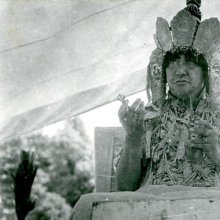
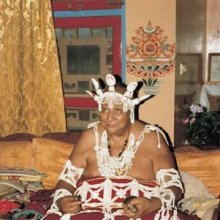
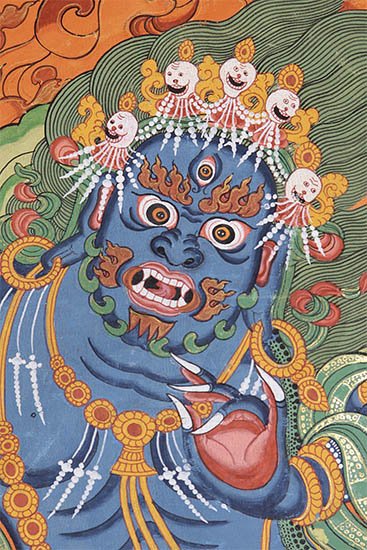
Shen (in Tibetan: gshen) — In Bön, a sacrificial officiant or “priest.” Applied more abstractly, the term also has connotations of ultimacy
Tibetan Buddhism includes schools such as Nyingma, Kadampa, Kagyu and Gelug. Their primary canon of literature is divided in two broad categories: The Kangyur, which consists of Buddha’s words, and the Tengyur, which includes commentaries from various sources. Esotericism and tantra techniques (vajrayāna) are collected indepently.
Chinese Buddhism
1) 身 [shen]—Two forms of body; there are numerous pairs, e. g. (1) (a) 分段身 [fen duan shen] The varied forms of the karmic or ordinary mortal body, or being; (b) 變易身 [bian yi shen] the transformable, or spiritual body. (2) (a) 生身 [sheng shen] The earthly body of the Buddha; (b) 化身 [hua shen] his nirmāṇakāya, which may take any form at will. (3) (a) 生身 [sheng shen] his earthly body; (b) 法身 [fa shen] his moral and mental nature—a Hīnayāna definition, but Mahāyāna takes his earthly nirmāṇakāya as the 生身 [sheng shen] and his dharmakāya or that and his saṃbhogakāya as 法身 [fa shen]. (4) 眞應二身 [zhen ying er shen] The dharmakāya and nirmāṇakāya. (5) (a) 實相身 [shi xiang shen] The absolute truth, or light, of the Buddha, i. e. the dharmakāya; (b) 爲物身 [wei wu shen] the functioning or temporal body. (6) (a) 眞身 [zhen shen] the dharmakāya and saṃbhogakāya; (b) 化身 [hua shen] the nirmāṇakāya. (7) (a) 常身 [chang shen] his permanent or eternal body; (b) 無常身 [wu chang shen] his temporal body. (8) (a) 實身 [shi shen] and 化身 [hua shen] idem 二色身 [er se shen].
2) 什 [shen]—A file of ten; sundry, what.
3) 申 [shen]—To draw out, stretch, extend, expand; notify, report: quote.
4) 身 [shen]—kāya; tanu; deha. The body; the self.
5) 甚 [shen]—What? any; very, extreme.
6) 神 [shen]—Inscrutable spiritual powers, or power; a spirit; a deva, god, or divinity; the human spirit; divine, spiritual, supernatural.
7) 深 [shen]—Deep, profound, abstruse.
8) 愼 [shen]—Careful, cautious, attentive, heedful.
9) 蜃 [shen]—Mirage; sea-serpent; frog.
10) 詵 [shen]—Talking, inquiring, buzzing, swarming.
11) 審 [shen]—To try, judge, examine.
[The following represents an unverified English translation. For all purposes consult the original Chinese text.]
神 [shen]—Shén — [Term] A general term for those with mysterious and unfathomable virtues/powers (靈妙不測之德者 [ling miao bu ce zhi de zhe]). It is commonly known as the Eight Legions (八部眾 [ba bu zhong]), encompassing heavenly gods (天 [tian]) and even Asura gods (阿修羅 [a xiu luo]), etc.
神—【術語】有靈妙不測之德者之通稱,通名八部眾。天神乃至阿修羅神等。
[shù yǔ] yǒu líng miào bù cè zhī dé zhě zhī tōng chēng, tōng míng bā bù zhòng. tiān shén nǎi zhì ā xiū luó shén děng.
[shu yu] you ling miao bu ce zhi de zhe zhi tong cheng, tong ming ba bu zhong. tian shen nai zhi a xiu luo shen deng.
1) 慎 ts = shèn p refers to [adjective] “Cautious”; Domain: Buddhism 佛教 [fu jiao] , Subdomain: Fo Guang Shan; Notes: (Glossary of Humanistic Buddhism).
2) 慎 ts = shèn p refers to [adjective] “respectability; gaurava”; Domain: Buddhism 佛教 [fu jiao]; Notes: Sanskrit equivalent: gaurava, Japanese: shin, Tibetan: zhe sar bya ba (BCSD '慎 [shen]', p. 498; Mahāvyutpatti 'gauravam'; MW 'gaurava'; SH '慎 [shen]', p. 399; Unihan '慎 [shen]')..
3) 深 ts = shēn p refers to [adjective] “deep; gambhīra”; Domain: Buddhism 佛教 [fu jiao]; Notes: Sanskrit equivalent: gambhīra, Japanese: shin, Tibetan: zab pa (BCSD '深 [shen]', p. 731; Mahāvyutpatti 'gambhīraḥ'; MW 'gambhīra'; SH '深 [shen]', p. 356; Unihan '深 [shen]')..
4) 腎 t = 肾 s = shèn p refers to [noun] “kidney; vṛkkā”; Domain: Buddhism 佛教 [fu jiao]; Notes: Sanskrit equivalent: vṛkkā, Japanese: jin, Tibetan: mkhal ma (BCSD '腎 [shen]', p. 979; Mahāvyutpatti 'vṛkkā'; MW 'vṛkkā'; Unihan '腎 [shen]')..
5) 甚 t = 什 s = shén p refers to [adverb] “very; bhṛśam”; Domain: Buddhism 佛教 [fu jiao]; Notes: Sanskrit equivalent: bhṛśam, Tibetan: rab tu te bor rab tu (BCSD '甚 [shen]', p. 830; Mahāvyutpatti 'bhṛśam'; MW 'bhṛśam'; SH '甚 [shen]', p. 308)..
6) 身 ts = shēn p refers to [noun] “body; kāya”; Domain: Buddhism 佛教 [fu jiao]; Notes: Sanskrit equivalent: kāya, Japanese: shin, or: ken, Tibetan: lus (BL 'kāya'; BCSD '身 [shen]', p. 1126; Edgerton 1953 'kāya', p. 177; FGDB '身 [shen]'; Mahāvyutpatti 'kāyaḥ'; MW 'kāya'; Unihan '身 [shen]')..
7) 申 ts = shēn p refers to [verb] “raised; utkṣipta”; Domain: Buddhism 佛教 [fu jiao]; Notes: Sanskrit equivalent: utkṣipta, Japanese: shin (BCSD '申 [shen]', p. 844; MW 'utkṣipta'; SH '申 [shen]', p. 197; Unihan '申 [shen]')..
8) 審 t = 审 s = shěn p refers to [adverb] “completely; nipuṇam”; Domain: Buddhism 佛教 [fu jiao]; Notes: Sanskrit equivalent: nipuṇam, Japanese: shin (BCSD '審 [shen]', p. 388; MW 'nipuṇa'; Unihan '審 [shen]')..
9) 神 ts = shén p refers to [noun] “spiritual powers; ṛddhi”; Domain: Buddhism 佛教 [fu jiao]; Notes: Sanskrit equivalent: ṛddhi, Pali: iddhi, Japanese: shin, or: jin (BCSD '神 [shen]', p. 894; Edgerton 1953 'ṛddhi', p. 151; MW 'ṛddhi'; SH '神 [shen]', p. 334; Unihan '神 [shen]')..
10) 伸 ts = shēn p refers to [verb] “extend; prasāraṇa”; Domain: Buddhism 佛教 [fu jiao]; Notes: Sanskrit equivalent: prasāraṇa, Tibetan: brkyang ba (BCSD '伸 [shen]', p. 107; Mahāvyutpatti 'prasāraṇam'; MW 'prasāraṇa')..
Chinese Buddhism (漢傳佛教, hanchuan fojiao) is the form of Buddhism that developed in China, blending Mahayana teachings with Daoist and Confucian thought. Its texts are mainly in Classical Chinese, based on translations from Sanskrit. Major schools include Chan (Zen), Pure Land, Tiantai, and Huayan. Chinese Buddhism has greatly influenced East Asian religion and culture.
Languages of India and abroad
Chinese-English dictionary
[The following represents an unverified English translation. For all purposes consult the original Chinese text.]
身 [shēn] [shen]—
See the entry for 'Shēndú' (毒 [du]).
身:參見「身毒」條。
shēn: cān jiàn “shēn dú” tiáo.
shen: can jian "shen du" tiao.
[The following represents an unverified English translation. For all purposes consult the original Chinese text.]
姺 [shēn] [shen]—
(Noun) Name of a state (國名 [guo ming]). One of the feudal states (封國 [feng guo]) of the Shang Dynasty (商朝 [shang chao]). Its former site (故址 [gu zhi]) is traditionally believed to be in today's Xinzhaiji (莘塜集 [shen zhong ji]), north of Cao County (曹縣 [cao xian]), Shandong (山東 [shan dong]). Also known as 'You Shen Shi (有侁氏 [you shen shi])' or 'You Shen Shi (有莘氏 [you shen shi])'.
姺:[名]
國名。商朝封國之一,故址相傳在今山東曹縣北方的莘塜集。也稱為「有侁氏」或「有莘氏」。
shēn:[míng]
guó míng. shāng cháo fēng guó zhī yī, gù zhǐ xiāng chuán zài jīn shān dōng cáo xiàn běi fāng de shēn zhǒng jí. yě chēng wèi “yǒu shēn shì” huò “yǒu shēn shì” .
shen:[ming]
guo ming. shang chao feng guo zhi yi, gu zhi xiang chuan zai jin shan dong cao xian bei fang de shen zhong ji. ye cheng wei "you shen shi" huo "you shen shi" .
[The following represents an unverified English translation. For all purposes consult the original Chinese text.]
莘 [shēn] [shen]—
Another pronunciation of 一 [yi].
莘:(一)之又音。
shēn:(yī) zhī yòu yīn.
shen:(yi) zhi you yin.
[The following represents an unverified English translation. For all purposes consult the original Chinese text.]
椹 [shèn] [shen]—
Same as '砧 [zhen]' (zhēn).
椹:同「砧」。
shèn: tóng “zhēn” .
shen: tong "zhen" .
[The following represents an unverified English translation. For all purposes consult the original Chinese text.]
娠 [shēn] [shen]—
Another pronunciation of 一 [yi] (yī).
娠:(一)之又音。
shēn:(yī) zhī yòu yīn.
shen:(yi) zhi you yin.
[The following represents an unverified English translation. For all purposes consult the original Chinese text.]
蜄 [shèn] [shen]—
[Verb]
To vibrate; to shake. In Jiyun (集韻 [ji yun]), "Qu" tone (去聲 [qu sheng]), "Zhen" rhyme (震韻 [zhen yun]): "(shèn), to move/act." In Shiji (史記 [shi ji]), Volume 25, "Treatise on the Calendar" (律書 [lu shu]): "辰 [chen] (chén) refers to the vibration/movement of all things (萬物 [wan wu])."
蜄:[動]
振動。《集韻.去聲.震韻》:「蜄,動也。」《史記.卷二五.律書》:「辰者,言萬物之蜄也。」
shèn:[dòng]
zhèn dòng. < jí yùn. qù shēng. zhèn yùn>: “shèn, dòng yě.” < shǐ jì. juǎn èr wǔ. lǜ shū>: “chén zhě, yán wàn wù zhī shèn yě.”
shen:[dong]
zhen dong. < ji yun. qu sheng. zhen yun>: "shen, dong ye." < shi ji. juan er wu. lu shu>: "chen zhe, yan wan wu zhi shen ye."
[The following represents an unverified English translation. For all purposes consult the original Chinese text.]
什 [shén] [shen]—
Noun
1. Numeral (數目字 [shu mu zi]). Same as "十 [shi]" (shí, ten). For example: `佰 [bai]` (shíbǎi, tens and hundreds), `家 [jia]` (shíjīa, ten families).
2. In The Book of Songs (《詩經 [shi jing]》), the Ya (雅 [ya]) and Song (頌 [song]) sections are compiled into volumes of ten poems (十篇 [shi pian]) each. Therefore, poems (詩篇 [shi pian]) are called "篇 [pian]" (piānshí), abbreviated as "" (shí). For example: `佳 [jia]` (jiāshí, excellent poems), `篇 [pian]` (piānshí, poetic works).
3. Surname (姓 [xing]). For example, `翼犍 [yi jian]` (Shíyìjiān) in the Later Wei (後魏 [hou wei]) dynasty.
Adjective
Numerous and of various kinds (數多品雜 [shu duo pin za]). From "Biography of Xuan Bing" (宣秉傳 [xuan bing chuan]), Volume 27, Book of Later Han (《後漢書 [hou han shu]》): "Immediately bestowed cloth and silk (布帛 [bu bo]), tents and curtains (帳帷 [zhang wei]), and miscellaneous items (物 [wu])."
什:[名]
1.數目字。同「十」。如:「什佰」、「什家」。
2.《詩經》中的雅、頌以十篇為一卷,故稱詩篇為「篇什」,簡稱為「什」。如:「佳什」、「篇什」。
3.姓。如後魏有什翼犍。
[形]
數多品雜。《後漢書.卷二七.宣秉傳》:「即賜布帛帳帷什物。」
shén:[míng]
1. shù mù zì. tóng “shí” . rú: “shén bǎi” ,, “shén jiā” .
2. < shī jīng> zhōng de yǎ,, sòng yǐ shí piān wèi yī juǎn, gù chēng shī piān wèi “piān shén” , jiǎn chēng wèi “shén” . rú: “jiā shén” ,, “piān shén” .
3. xìng. rú hòu wèi yǒu shén yì jiān.
[xíng]
shù duō pǐn zá. < hòu hàn shū. juǎn èr qī. xuān bǐng chuán>: “jí cì bù bó zhàng wéi shén wù.”
shen:[ming]
1. shu mu zi. tong "shi" . ru: "shen bai" ,, "shen jia" .
2. < shi jing> zhong de ya,, song yi shi pian wei yi juan, gu cheng shi pian wei "pian shen" , jian cheng wei "shen" . ru: "jia shen" ,, "pian shen" .
3. xing. ru hou wei you shen yi jian.
[xing]
shu duo pin za. < hou han shu. juan er qi. xuan bing chuan>: "ji ci bu bo zhang wei shen wu."
[The following represents an unverified English translation. For all purposes consult the original Chinese text.]
什 [shén] [shen]—
Another pronunciation (又音 [you yin]) of 二 [er] (二 [er]).
什:(二)之又音。
shén:(èr) zhī yòu yīn.
shen:(er) zhi you yin.
[The following represents an unverified English translation. For all purposes consult the original Chinese text.]
甚 [shén] [shen]—
Another pronunciation (又音 [you yin]) of (二 [er]).
甚:(二)之又音。
shén:(èr) zhī yòu yīn.
shen:(er) zhi you yin.
[The following represents an unverified English translation. For all purposes consult the original Chinese text.]
申 [shēn] [shen]—
[動 [dong]]
1. To state, to explain. For example: 诉 [su] (shēnsù, to appeal, to petition). From Chu Ci (楚辞 [chu ci]), Qu Yuan (屈原 [qu yuan]), Jiuzhang (九章 [jiu zhang]), Chousi (抽思 [chou si]): "道卓远而日忘兮 [dao zhuo yuan er ri wang xi],愿自而不得 [yuan zi er bu de]。" (The path is distant and forgotten day by day, I wish to state myself but cannot.)
2. To stretch, to extend. Interchangeable with 伸 [shen] (shēn). From Han (汉 [han]) dynasty, Huan Kuan (桓宽 [huan kuan]), Yantielun (盐铁论 [yan tie lun]), Liyi (利议 [li yi]): "乃安得鼓口舌 [nai an de gu kou she],颜眉 [yan mei],预前论议是非国家之事也 [yu qian lun yi shi fei guo jia zhi shi ye]。" (How then can one flap their tongue, stretch their face and brows, and presumptuously discuss the right and wrong of state affairs?) From Wen Xuan (文选 [wen xuan]), Cao Zhi (曹植 [cao zhi]), Luoshenfu (洛神赋 [luo shen fu]): "礼防以自持 [li fang yi zi chi]。" (To uphold ritual defenses to maintain oneself.)
[名 [ming]]
1. The ninth of the Earthly Branches (地支 [de zhi]).
2. Name of a time period. Approximately 3 PM to 5 PM.
3. Name of a state (国名 [guo ming]). Its ancient site is approximately north of Nanyang County (南阳县 [nan yang xian]), Henan Province (河南省 [he nan sheng]), mainland China today.
4. A surname (姓 [xing]). For example, Shen Buhai (不害 [bu hai]) of the State of Han (韩 [han]) during the Warring States period (战国 [zhan guo]).
[副 [fu]]
Again, repeatedly. From Wen Xuan (文选 [wen xuan]), Lu Ji (陆机 [lu ji]), Bianwanglun (辩亡论 [bian wang lun]): "而加之以笃固 [er jia zhi yi du gu],之以节俭 [zhi yi jie jian]。" (And to add steadfastness, to reiterate frugality.) From Zizhi Tongjian (资治通鉴 [zi zhi tong jian]), Vol. 115, Jin Ji 37, An Di Yixi 6: "卿且一战 [qing qie yi zhan],死复何晚 [si fu he wan]!" (You should fight one more battle; what's the rush to die!)
申:[動]
1.陳述、說明。如:「申訴」。《楚辭.屈原.九章.抽思》:「道卓遠而日忘兮,願自申而不得。」
2.舒展。通「伸」。漢.桓寬《鹽鐵論.利議》:「乃安得鼓口舌,申顏眉,預前論議是非國家之事也。」《文選.曹植.洛神賦》:「申禮防以自持。」
[名]
1.地支的第九位。
2.時辰名。約當下午三時至五時。
3.國名。故址約於今大陸地區河南省南陽縣北方。
4.姓。如戰國時韓有申不害。
[副]
再、重複。《文選.陸機.辯亡論》:「而加之以篤固,申之以節儉。」《資治通鑑.卷一一五.晉紀三十七.安帝義熙六年》:「卿且申一戰,死復何晚!」
shēn:[dòng]
1. chén shù,, shuō míng. rú: “shēn sù” . < chǔ cí. qū yuán. jiǔ zhāng. chōu sī>: “dào zhuō yuǎn ér rì wàng xī, yuàn zì shēn ér bù dé.”
2. shū zhǎn. tōng “shēn” . hàn. huán kuān < yán tiě lùn. lì yì>: “nǎi ān dé gǔ kǒu shé, shēn yán méi, yù qián lùn yì shì fēi guó jiā zhī shì yě.” < wén xuǎn. cáo zhí. luò shén fù>: “shēn lǐ fáng yǐ zì chí.”
[míng]
1. de zhī de dì jiǔ wèi.
2. shí chén míng. yuē dāng xià wǔ sān shí zhì wǔ shí.
3. guó míng. gù zhǐ yuē yú jīn dà lù de qū hé nán shěng nán yáng xiàn běi fāng.
4. xìng. rú zhàn guó shí hán yǒu shēn bù hài.
[fù]
zài,, zhòng fù. < wén xuǎn. lù jī. biàn wáng lùn>: “ér jiā zhī yǐ dǔ gù, shēn zhī yǐ jié jiǎn.” < zī zhì tōng jiàn. juǎn yī yī wǔ. jìn jì sān shí qī. ān dì yì xī liù nián>: “qīng qiě shēn yī zhàn, sǐ fù hé wǎn! ”
shen:[dong]
1. chen shu,, shuo ming. ru: "shen su" . < chu ci. qu yuan. jiu zhang. chou si>: "dao zhuo yuan er ri wang xi, yuan zi shen er bu de."
2. shu zhan. tong "shen" . han. huan kuan < yan tie lun. li yi>: "nai an de gu kou she, shen yan mei, yu qian lun yi shi fei guo jia zhi shi ye." < wen xuan. cao zhi. luo shen fu>: "shen li fang yi zi chi."
[ming]
1. de zhi de di jiu wei.
2. shi chen ming. yue dang xia wu san shi zhi wu shi.
3. guo ming. gu zhi yue yu jin da lu de qu he nan sheng nan yang xian bei fang.
4. xing. ru zhan guo shi han you shen bu hai.
[fu]
zai,, zhong fu. < wen xuan. lu ji. bian wang lun>: "er jia zhi yi du gu, shen zhi yi jie jian." < zi zhi tong jian. juan yi yi wu. jin ji san shi qi. an di yi xi liu nian>: "qing qie shen yi zhan, si fu he wan! "
[The following represents an unverified English translation. For all purposes consult the original Chinese text.]
伸 [shēn] [shen]—
[Verb]
1. To make limbs (肢體 [zhi ti]) or an elastic object (彈性物體 [dan xing wu ti]) straighten or lengthen from a bent or short state. For example: to stretch oneself (懶腰 [lan yao]), to straighten (直 [zhi]), to lengthen (長 [zhang]).
2. To express, to state. Interchangeable with 「申 [shen] (shēn)」. For example: to redress a wrong (冤 [yuan]), to clarify (白 [bai]). From Li Bai's (李白 [li bai]) "Preface to a Feast in the Peach and Plum Garden on a Spring Night" (春夜宴從弟桃李園序 [chun ye yan cong di tao li yuan xu]) from the Tang (唐 [tang]) Dynasty: "If there are no good works, how can one express one's elegant sentiments?" (不有佳作 [bu you jia zuo],何雅懷 [he ya huai]?).
伸:[動]
1.使肢體或彈性物體由彎、短的狀態變直或變長。如:「伸懶腰」、「伸直」、「伸長」。
2.表白、陳述。通「申」。如:「伸冤」、「伸白」。唐.李白〈春夜宴從弟桃李園序〉:「不有佳作,何伸雅懷?」
shēn:[dòng]
1. shǐ zhī tǐ huò dàn xìng wù tǐ yóu wān,, duǎn de zhuàng tài biàn zhí huò biàn zhǎng. rú: “shēn lǎn yāo” ,, “shēn zhí” ,, “shēn zhǎng” .
2. biǎo bái,, chén shù. tōng “shēn” . rú: “shēn yuān” ,, “shēn bái” . táng. lǐ bái 〈chūn yè yàn cóng dì táo lǐ yuán xù〉: “bù yǒu jiā zuò, hé shēn yǎ huái?”
shen:[dong]
1. shi zhi ti huo dan xing wu ti you wan,, duan de zhuang tai bian zhi huo bian zhang. ru: "shen lan yao" ,, "shen zhi" ,, "shen zhang" .
2. biao bai,, chen shu. tong "shen" . ru: "shen yuan" ,, "shen bai" . tang. li bai
[The following represents an unverified English translation. For all purposes consult the original Chinese text.]
呻 [shēn] [shen]—
[Verb]
1. To chant or recite. From Liji: Xueji (《禮記 [li ji].學記 [xue ji]》): "Those who teach nowadays (今之教者 [jin zhi jiao zhe]) chant their bamboo slips/notes (其佔畢 [qi zhan bi]) and provide many explanations (多其訊 [duo qi xun])."
2. To emit sounds from the mouth due to physical or mental pain (身心痛苦 [shen xin tong ku]). For example: '吟 [yin]' (to groan or moan), '呼 [hu]' (to groan or cry out in pain).
呻:[動]
1.吟誦、吟詠。《禮記.學記》:「今之教者,呻其佔畢,多其訊。」
2.因身心痛苦而由口中發出聲音。如:「呻吟」、「呻呼」。
shēn:[dòng]
1. yín sòng,, yín yǒng. < lǐ jì. xué jì>: “jīn zhī jiào zhě, shēn qí zhàn bì, duō qí xùn.”
2. yīn shēn xīn tòng kǔ ér yóu kǒu zhōng fā chū shēng yīn. rú: “shēn yín” ,, “shēn hū” .
shen:[dong]
1. yin song,, yin yong. < li ji. xue ji>: "jin zhi jiao zhe, shen qi zhan bi, duo qi xun."
2. yin shen xin tong ku er you kou zhong fa chu sheng yin. ru: "shen yin" ,, "shen hu" .
[The following represents an unverified English translation. For all purposes consult the original Chinese text.]
氠 [shēn] [shen]—
A chemical element (化學元素 [hua xue yuan su]). An old translation of Xenon (氙 [xian]).
氠:[名]
化學元素。氙的舊譯。
shēn:[míng]
huà xué yuán sù. xiān de jiù yì.
shen:[ming]
hua xue yuan su. xian de jiu yi.
[The following represents an unverified English translation. For all purposes consult the original Chinese text.]
胂 [shèn] [shen]—
[Noun]
Meat beside the spine (夾脊肉 [jia ji rou]). In the "Meat Radical Section" (肉部 [rou bu]) of the Shuowen Jiezi (《說文解字 [shuo wen jie zi]》), it states: "(shèn), is the meat beside the spine (夾脊肉 [jia ji rou])." Duan Yucai (段玉裁 [duan yu cai]), in his commentary, citing Wang Bi (王弼 [wang bi]), said: "It is the meat in the middle of the spine (當中脊之肉 [dang zhong ji zhi rou])." In the "Treatise on Acupuncture for Lumbar Pain" (刺腰痛論 [ci yao tong lun]) from Volume 11 (卷一一 [juan yi yi]) of the Huangdi Neijing Suwen (《黃帝內經素問 [huang di nei jing su wen]》), it states: "For those with pain at the junction of the waist and sacrum (腰尻交 [yao kao jiao]), [puncture] above the two condyles (兩髁 [liang ke]) at the (shèn) area."
胂:[名]
夾脊肉。《說文解字.肉部》:「胂,夾脊肉也。」段玉裁注引王弼云:「當中脊之肉也。」《黃帝內經素問.卷一一.刺腰痛論》:「刺腰尻交者,兩髁胂上。」
shèn:[míng]
jiā jí ròu. < shuō wén jiě zì. ròu bù>: “shèn, jiā jí ròu yě.” duàn yù cái zhù yǐn wáng bì yún: “dāng zhōng jí zhī ròu yě.” < huáng dì nèi jīng sù wèn. juǎn yī yī. cì yāo tòng lùn>: “cì yāo kāo jiāo zhě, liǎng kē shèn shàng.”
shen:[ming]
jia ji rou. < shuo wen jie zi. rou bu>: "shen, jia ji rou ye." duan yu cai zhu yin wang bi yun: "dang zhong ji zhi rou ye." < huang di nei jing su wen. juan yi yi. ci yao tong lun>: "ci yao kao jiao zhe, liang ke shen shang."
[The following represents an unverified English translation. For all purposes consult the original Chinese text.]
砷 [shēn] [shen]—
[Noun]
(arsenic, As) A chemical element (化學元素 [hua xue yuan su]). Atomic number (原子序 [yuan zi xu]) 33. Also known as pì (砒 [pi]). It is one of the metalloid elements (類金屬元素 [lei jin shu yuan su]). It has three allotropes (同素異形體 [tong su yi xing ti]): yellow, gray, and blackish-brown. It is brittle and toxic. Its compounds can be used in aspects such as insecticides (殺蟲 [sha chong]), fungicides (殺菌 [sha jun]), and medicine (醫療 [yi liao]). Arsenic can also be made into alloys (合金 [he jin]) with lead (鉛 [qian]), copper (銅 [tong]), etc.
砷:[名]
(arsenic,As)化學元素。原子序33。即砒。類金屬元素之一。有黃、灰、黑褐三種同素異形體,質脆而有毒。其化合物可用於殺蟲、殺菌和醫療等方面。砷亦可與鉛、銅等製成合金。
shēn:[míng]
(arsenic,As) huà xué yuán sù. yuán zi xù33. jí pī. lèi jīn shǔ yuán sù zhī yī. yǒu huáng,, huī,, hēi hè sān zhǒng tóng sù yì xíng tǐ, zhì cuì ér yǒu dú. qí huà hé wù kě yòng yú shā chóng,, shā jūn hé yī liáo děng fāng miàn. shēn yì kě yǔ qiān,, tóng děng zhì chéng hé jīn.
shen:[ming]
(arsenic,As) hua xue yuan su. yuan zi xu33. ji pi. lei jin shu yuan su zhi yi. you huang,, hui,, hei he san zhong tong su yi xing ti, zhi cui er you du. qi hua he wu ke yong yu sha chong,, sha jun he yi liao deng fang mian. shen yi ke yu qian,, tong deng zhi cheng he jin.
[The following represents an unverified English translation. For all purposes consult the original Chinese text.]
紳 [shēn] [shen]—
[名 [ming]] Noun
1. A wide belt (大帶子 [da dai zi]) worn by ancient (古代 [gu dai]) officials (官員 [guan yuan]) around their waist (腰間 [yao jian]). According to Shuowen Jiezi (說文解字 [shuo wen jie zi]), Mi Bu (糸部 [mi bu]): "Shen is a wide belt (大帶 [da dai])." From The Analects of Confucius (論語 [lun yu]), Xiangdang (鄉黨 [xiang dang]) chapter: "When ill (疾 [ji]), and the ruler (君 [jun]) came to visit him (視之 [shi zhi]), he turned his face to the east (東首 [dong shou]), put on his court dress (朝服 [chao fu]), and drew his shen across him (拖 [tuo])." He Yan (何晏 [he yan]), Collected Explanations (集解 [ji jie]) from the Three Kingdoms (三國 [san guo]) period, Wei (魏 [wei]) dynasty: "Shen is a wide belt (大帶 [da dai])."
2. Retired (退職 [tui zhi]) officials (官僚 [guan liao]) or influential (有名望 [you ming wang]) people (人 [ren]) in the local (地方 [de fang]) community. Examples (如 [ru]): guanshen (官 [guan]) (official and gentry), xiangshe (鄉 [xiang]) (local gentry), tuhao lieshen (土豪劣 [tu hao lie]) (local tyrants and evil gentry).
[動 [dong]] Verb
To restrain (約束 [yue shu]); to bind (束 [shu]). From Han Feizi (韓非子 [han fei zi]), Wai Chu Shuo Zuo Shang (外儲說左上 [wai chu shuo zuo shang]) chapter: "The book (書 [shu]) says (曰 [yue]): 'Bind it, tie it (束之 [shu zhi])'; A person (人 [ren]) from Song (宋 [song]) who was skilled in governing (治者 [zhi zhe]), therefore, bound (束 [shu]) himself (自 [zi]) with a heavy belt (重帶 [zhong dai])."
紳:[名]
1.古代官員束在腰間的大帶子。《說文解字.糸部》:「紳,大帶也。」《論語.鄉黨》:「疾,君視之,東首,加朝服,拖紳。」三國魏.何晏.集解:「紳,大帶也。」
2.退職的官僚或地方上有名望的人。如:「官紳」、「鄉紳」、「土豪劣紳」。
[動]
約束。《韓非子.外儲說左上》:「書曰:『紳之束之』;宋人有治者,因重帶自紳束也。」
shēn:[míng]
1. gǔ dài guān yuán shù zài yāo jiān de dà dài zi. < shuō wén jiě zì. mì bù>: “shēn, dà dài yě.” < lùn yǔ. xiāng dǎng>: “jí, jūn shì zhī, dōng shǒu, jiā cháo fú, tuō shēn.” sān guó wèi. hé yàn. jí jiě: “shēn, dà dài yě.”
2. tuì zhí de guān liáo huò de fāng shàng yǒu míng wàng de rén. rú: “guān shēn” ,, “xiāng shēn” ,, “tǔ háo liè shēn” .
[dòng]
yuē shù. < hán fēi zi. wài chǔ shuō zuǒ shàng>: “shū yuē: ‘shēn zhī shù zhī’ ; sòng rén yǒu zhì zhě, yīn zhòng dài zì shēn shù yě.”
shen:[ming]
1. gu dai guan yuan shu zai yao jian de da dai zi. < shuo wen jie zi. mi bu>: "shen, da dai ye." < lun yu. xiang dang>: "ji, jun shi zhi, dong shou, jia chao fu, tuo shen." san guo wei. he yan. ji jie: "shen, da dai ye."
2. tui zhi de guan liao huo de fang shang you ming wang de ren. ru: "guan shen" ,, "xiang shen" ,, "tu hao lie shen" .
[dong]
yue shu. < han fei zi. wai chu shuo zuo shang>: "shu yue: 'shen zhi shu zhi' ; song ren you zhi zhe, yin zhong dai zi shen shu ye."
[The following represents an unverified English translation. For all purposes consult the original Chinese text.]
身 [shēn] [shen]—
[N]
1. A general term for the body, or specifically referring to the torso. For example: "搜 [sou]" (to frisk someone), "翻 [fan]" (to turn over in bed; to make a comeback), "隨攜帶 [sui xie dai]" (to carry on one's person), "長七尺 [zhang qi chi]" (seven chi tall). Mencius - Gaozi II: "餓其體膚 [e qi ti fu]" (starve their bodies and skin), "空乏其 [kong fa qi]" (impoverish their bodies). Chu Ci - Qu Yuan - Nine Songs - National Martyr: "首離兮心不懲 [shou li xi xin bu cheng]" (Heads and bodies separated, but hearts undaunted).
2. The center or main part of an object. For example: "車 [che]" (car body), "船 [chuan]" (hull of a boat), "機 [ji]" (aircraft fuselage; camera body).
3. Life. For example: "奮不顧 [fen bu gu]" (to act bravely without regard for one's safety), "捨救人 [she jiu ren]" (to sacrifice oneself to save others). Shi Diantou - Volume 8 - Greedy Man Sells Romance in Six Courtyards: "五臟六腑 [wu zang liu fu]" (all the internal organs), "顯出在外 [xian chu zai wai]" (exposed externally), "方才氣斷絕 [fang cai qi duan jue]" (only then did one's breath cease and life end).
4. Oneself. For example: "以作則 [yi zuo ze]" (to set an example oneself). Analects - Xue Er: "吾日三省吾 [wu ri san sheng wu]" (I examine myself on three points every day). Strategies of the Warring States - Zhao IV: "此其近者禍及 [ci qi jin zhe huo ji]" (For those close, disaster reaches their own person), "遠者及其子孫 [yuan zhe ji qi zi sun]" (for those far, it reaches their descendants).
5. Character, cultivation. For example: "修齊家 [xiu qi jia]" (to cultivate oneself and regulate one's family). Yanzi Chunqiu - Neipian - Wen Shang: "稱就位 [cheng jiu wei]" (to take up a position commensurate with one's character), "計能受祿 [ji neng shou lu]" (to receive emoluments according to one's ability).
6. Identity, status. For example: "出寒微 [chu han wei]" (of humble origin), "敗名裂 [bai ming lie]" (to be utterly discredited). Analects - Weizi: "不降其志 [bu jiang qi zhi]" (not to lower their aspirations), "不辱其 [bu ru qi]" (not to disgrace themselves).
7. A woman being pregnant is called "有 [you]" (to have a body). Classic of Poetry - Daya - Daming: "大任有 [da ren you]" (Tai Ren was pregnant), "生此文王 [sheng ci wen wang]" (and gave birth to this King Wen). Jin Ping Mei Chapter 40: "一腳躡滑了 [yi jiao nie hua le]" (slipped on one foot), "把個六 [ba ge liu]、七個月扭吊了 [qi ge yue niu diao le]" (twisted and miscarried a six or seven-month-old pregnancy).
8. Classifier. A unit for counting the number of Buddha statues. For example: "夾道兩旁有菩薩五百 [jia dao liang pang you pu sa wu bai]" (There were five hundred bodhisattva statues on both sides of the path).
9. One of the 214 radicals.
[Adv]
Personally. For example: "臨其境 [lin qi jing]" (to be personally on the scene). Mozi - Hao Ling: "伍有罪 [wu you zui]" (If a squad member commits a crime), "若能捕罪人 [ruo neng bu zui ren]" (if one can personally capture the criminal), "若告之吏 [ruo gao zhi li]" (or report them to the authorities), "皆構之 [jie gou zhi]" (they should all be brought to justice).
[Pron]
First person, equivalent to "我 [wo]" (I/me). People in the Wei and Jin dynasties often referred to themselves as "". Records of the Three Kingdoms - Volume 36 - Shu Records - Zhang Fei Biography: "是張益德也 [shi zhang yi de ye]" (I am Zhang Yide), "可來共決死 [ke lai gong jue si]" (you may come and fight to the death with me!). A New Account of the Tales of the World - Literature by Liu Yiqing of the Southern Song Dynasty: "今日當與君共談析理 [jin ri dang yu jun gong tan xi li]" (Today I shall discuss and analyze principles with you).
身:[名]
1.軀體的總稱,或專指軀幹。如:「搜身」、「翻身」、「隨身攜帶」、「身長七尺」。《孟子.告子下》:「餓其體膚,空乏其身。」《楚辭.屈原.九歌.國殤》:「首身離兮心不懲。」
2.物體的中心或主要部分。如:「車身」、「船身」、「機身」。
3.生命。如:「奮不顧身」、「捨身救人」。《石點頭.卷八.貪婪漢六院賣風流》:「五臟六腑,顯出在外,方才氣斷身絕。」
4.自己。如:「以身作則」。《論語.學而》:「吾日三省吾身。」《戰國策.趙策四》:「此其近者禍及身,遠者及其子孫。」
5.品格、修養。如:「修身齊家」。《晏子春秋.內篇.問上》:「稱身就位,計能受祿。」
6.身分、地位。如:「出身寒微」、「身敗名裂」。《論語.微子》:「不降其志,不辱其身。」
7.女子懷孕稱為「有身」。《詩經.大雅.大明》:「大任有身,生此文王。」《金瓶梅》第四○回:「一腳躡滑了,把個六、七個月身扭吊了。」
8.量詞。計算佛像數量的單位。如:「夾道兩旁有菩薩五百身。」
9.二一四部首之一。
[副]
親自。如:「身臨其境」。《墨子.號令》:「伍有罪,若能身捕罪人,若告之吏,皆構之。」
[代]
第一人稱,相當於「我」。魏、晉朝人多自稱為「身」。《三國志.卷三六.蜀書.張飛傳》:「身是張益德也,可來共決死!」南朝宋.劉義慶《世說新語.文學》:「身今日當與君共談析理。」
shēn:[míng]
1. qū tǐ de zǒng chēng, huò zhuān zhǐ qū gàn. rú: “sōu shēn” ,, “fān shēn” ,, “suí shēn xié dài” ,, “shēn zhǎng qī chǐ” . < mèng zi. gào zi xià>: “è qí tǐ fū, kōng fá qí shēn.” < chǔ cí. qū yuán. jiǔ gē. guó shāng>: “shǒu shēn lí xī xīn bù chéng.”
2. wù tǐ de zhōng xīn huò zhǔ yào bù fēn. rú: “chē shēn” ,, “chuán shēn” ,, “jī shēn” .
3. shēng mìng. rú: “fèn bù gù shēn” ,, “shě shēn jiù rén” . < shí diǎn tóu. juǎn bā. tān lán hàn liù yuàn mài fēng liú>: “wǔ zàng liù fǔ, xiǎn chū zài wài, fāng cái qì duàn shēn jué.”
4. zì jǐ. rú: “yǐ shēn zuò zé” . < lùn yǔ. xué ér>: “wú rì sān shěng wú shēn.” < zhàn guó cè. zhào cè sì>: “cǐ qí jìn zhě huò jí shēn, yuǎn zhě jí qí zi sūn.”
5. pǐn gé,, xiū yǎng. rú: “xiū shēn qí jiā” . < yàn zi chūn qiū. nèi piān. wèn shàng>: “chēng shēn jiù wèi, jì néng shòu lù.”
6. shēn fēn,, de wèi. rú: “chū shēn hán wēi” ,, “shēn bài míng liè” . < lùn yǔ. wēi zi>: “bù jiàng qí zhì, bù rǔ qí shēn.”
7. nǚ zi huái yùn chēng wèi “yǒu shēn” . < shī jīng. dà yǎ. dà míng>: “dà rèn yǒu shēn, shēng cǐ wén wáng.” < jīn píng méi> dì sì○huí: “yī jiǎo niè huá le, bǎ gè liù,, qī gè yuè shēn niǔ diào le.”
8. liàng cí. jì suàn fú xiàng shù liàng de dān wèi. rú: “jiā dào liǎng páng yǒu pú sà wǔ bǎi shēn.”
9. èr yī sì bù shǒu zhī yī.
[fù]
qīn zì. rú: “shēn lín qí jìng” . < mò zi. hào lìng>: “wǔ yǒu zuì, ruò néng shēn bǔ zuì rén, ruò gào zhī lì, jiē gòu zhī.”
[dài]
dì yī rén chēng, xiāng dāng yú “wǒ” . wèi,, jìn cháo rén duō zì chēng wèi “shēn” . < sān guó zhì. juǎn sān liù. shǔ shū. zhāng fēi chuán>: “shēn shì zhāng yì dé yě, kě lái gòng jué sǐ! ” nán cháo sòng. liú yì qìng < shì shuō xīn yǔ. wén xué>: “shēn jīn rì dāng yǔ jūn gòng tán xī lǐ.”
shen:[ming]
1. qu ti de zong cheng, huo zhuan zhi qu gan. ru: "sou shen" ,, "fan shen" ,, "sui shen xie dai" ,, "shen zhang qi chi" . < meng zi. gao zi xia>: "e qi ti fu, kong fa qi shen." < chu ci. qu yuan. jiu ge. guo shang>: "shou shen li xi xin bu cheng."
2. wu ti de zhong xin huo zhu yao bu fen. ru: "che shen" ,, "chuan shen" ,, "ji shen" .
3. sheng ming. ru: "fen bu gu shen" ,, "she shen jiu ren" . < shi dian tou. juan ba. tan lan han liu yuan mai feng liu>: "wu zang liu fu, xian chu zai wai, fang cai qi duan shen jue."
4. zi ji. ru: "yi shen zuo ze" . < lun yu. xue er>: "wu ri san sheng wu shen." < zhan guo ce. zhao ce si>: "ci qi jin zhe huo ji shen, yuan zhe ji qi zi sun."
5. pin ge,, xiu yang. ru: "xiu shen qi jia" . < yan zi chun qiu. nei pian. wen shang>: "cheng shen jiu wei, ji neng shou lu."
6. shen fen,, de wei. ru: "chu shen han wei" ,, "shen bai ming lie" . < lun yu. wei zi>: "bu jiang qi zhi, bu ru qi shen."
7. nu zi huai yun cheng wei "you shen" . < shi jing. da ya. da ming>: "da ren you shen, sheng ci wen wang." < jin ping mei> di si○hui: "yi jiao nie hua le, ba ge liu,, qi ge yue shen niu diao le."
8. liang ci. ji suan fu xiang shu liang de dan wei. ru: "jia dao liang pang you pu sa wu bai shen."
9. er yi si bu shou zhi yi.
[fu]
qin zi. ru: "shen lin qi jing" . < mo zi. hao ling>: "wu you zui, ruo neng shen bu zui ren, ruo gao zhi li, jie gou zhi."
[dai]
di yi ren cheng, xiang dang yu "wo" . wei,, jin chao ren duo zi cheng wei "shen" . < san guo zhi. juan san liu. shu shu. zhang fei chuan>: "shen shi zhang yi de ye, ke lai gong jue si! " nan chao song. liu yi qing < shi shuo xin yu. wen xue>: "shen jin ri dang yu jun gong tan xi li."
[The following represents an unverified English translation. For all purposes consult the original Chinese text.]
鯓 [shēn] [shen]—
See the entry for Kunshēn (鯤 [kun]).
鯓:參見「鯤鯓」條。
shēn: cān jiàn “kūn shēn” tiáo.
shen: can jian "kun shen" tiao.
[The following represents an unverified English translation. For all purposes consult the original Chinese text.]
侁 [shēn] [shen]—
1. The appearance of walking/marching. From Shuowen Jiezi 《說文解字 [shuo wen jie zi]》 (Radical Ren 人部 [ren bu]): "(shēn), the appearance of walking."
2. Numerous; many. From Fu Xian 傅咸 [fu xian] of the Jin Dynasty 晉 [jin], Ode to the Crown Prince's Rites of Offering 《皇太子釋奠頌 [huang tai zi shi dian song]》: "Numerous and orderly Confucian scholars 儒生 [ru sheng], many sons of officials 胄子 [zhou zi]."
侁:[形]
1.行走的樣子。《說文解字.人部》:「侁,行貌。」
2.眾多。晉.傅咸〈皇太子釋奠頌〉:「濟濟儒生,侁侁胄子。」
shēn:[xíng]
1. xíng zǒu de yàng zi. < shuō wén jiě zì. rén bù>: “shēn, xíng mào.”
2. zhòng duō. jìn. fù xián 〈huáng tài zi shì diàn sòng〉: “jì jì rú shēng, shēn shēn zhòu zi.”
shen:[xing]
1. xing zou de yang zi. < shuo wen jie zi. ren bu>: "shen, xing mao."
2. zhong duo. jin. fu xian
[The following represents an unverified English translation. For all purposes consult the original Chinese text.]
詵 [shēn] [shen]—
[Verb]
To speak, to inquire. From 《說文解字 [shuo wen jie zi].言部 [yan bu]》 (Shuowen Jiezi, Radical Yan section): "(shēn), to utter words."
[Adjective]
Refer to the entry 「」 (shēn shēn).
詵:[動]
發言、詢問。《說文解字.言部》:「詵,致言也。」
[形]
參見「詵詵」條。
shēn:[dòng]
fā yán,, xún wèn. < shuō wén jiě zì. yán bù>: “shēn, zhì yán yě.”
[xíng]
cān jiàn “shēn shēn” tiáo.
shen:[dong]
fa yan,, xun wen. < shuo wen jie zi. yan bu>: "shen, zhi yan ye."
[xing]
can jian "shen shen" tiao.
[The following represents an unverified English translation. For all purposes consult the original Chinese text.]
駪 [shēn] [shen]—
Adjective
Describing the appearance of numerous horses (馬群眾多 [ma qun zhong duo]). From Shuowen Jiezi (說文解字 [shuo wen jie zi]) · Horse Radical (馬部 [ma bu]): "(shēn), the appearance of numerous horses (馬眾多貌 [ma zhong duo mao])."
駪:[形]
馬群眾多的樣子。《說文解字.馬部》:「駪,馬眾多貌。」
shēn:[xíng]
mǎ qún zhòng duō de yàng zi. < shuō wén jiě zì. mǎ bù>: “shēn, mǎ zhòng duō mào.”
shen:[xing]
ma qun zhong duo de yang zi. < shuo wen jie zi. ma bu>: "shen, ma zhong duo mao."
[The following represents an unverified English translation. For all purposes consult the original Chinese text.]
籸 [shēn] [shen]—
1. Residue left after grain processing. 《玉篇 [yu pian]》(Yupian), '米部 [mi bu]' (Radical Rice): "(shēn) means '粉滓 [fen zi]' (powder residue)." Yuan Dynasty, '司農司 [si nong si]' (Ministry of Agriculture), 《農桑輯要 [nong sang ji yao]》(Nongsang Jiyao), Volume 7, '孳畜 [zi chu]' (Livestock), '豬 [zhu]' (Pig): "After the '閹豬子 [yan zhu zi]' (castrated piglet)'s '瘡口 [chuang kou]' (wound) has dried and healed, take two '巴豆 [ba dou]' (croton seeds), remove their shells, mash them thoroughly, and mix them with '麻 [ma]' (hemp residue), '糟糠 [zao kang]' (dregs and husks), and similar substances to '飼 [si]' (feed) it."
2. Solidified porridge. 《玉篇 [yu pian]》(Yupian), '米部 [mi bu]' (Radical Rice): "(shēn) means '粥凝 [zhou ning]' (congealed porridge)."
籸:[名]
1.糧食加工後所餘的渣滓。《玉篇.米部》:「籸,粉滓也。」元.司農司《農桑輯要.卷七.孳畜.豬》:「閹豬子待瘡口乾乎復後,取巴豆兩粒,去殼爛擣,和麻籸糟糠之類飼之。」
2.凝固的粥。《玉篇.米部》:「籸,粥凝也。」
shēn:[míng]
1. liáng shí jiā gōng hòu suǒ yú de zhā zǐ. < yù piān. mǐ bù>: “shēn, fěn zǐ yě.” yuán. sī nóng sī < nóng sāng jí yào. juǎn qī. zī chù. zhū>: “yān zhū zi dài chuāng kǒu gān hū fù hòu, qǔ bā dòu liǎng lì, qù ké làn dǎo, hé má shēn zāo kāng zhī lèi sì zhī.”
2. níng gù de zhōu. < yù piān. mǐ bù>: “shēn, zhōu níng yě.”
shen:[ming]
1. liang shi jia gong hou suo yu de zha zi. < yu pian. mi bu>: "shen, fen zi ye." yuan. si nong si < nong sang ji yao. juan qi. zi chu. zhu>: "yan zhu zi dai chuang kou gan hu fu hou, qu ba dou liang li, qu ke lan dao, he ma shen zao kang zhi lei si zhi."
2. ning gu de zhou. < yu pian. mi bu>: "shen, zhou ning ye."
[The following represents an unverified English translation. For all purposes consult the original Chinese text.]
甡 [shēn] [shen]—
[Adjective]
Numerous; many. In "Shuowen Jiezi" (說文解字 [shuo wen jie zi]), under the "Sheng" (生 [sheng]) radical: "The character 'Shen' describes the appearance of numerous living beings (眾生 [zhong sheng]) standing side by side (並立 [bing li])."
甡:[形]
眾多。《說文解字.生部》:「甡,眾生並立之貌。」
shēn:[xíng]
zhòng duō. < shuō wén jiě zì. shēng bù>: “shēn, zhòng shēng bìng lì zhī mào.”
shen:[xing]
zhong duo. < shuo wen jie zi. sheng bu>: "shen, zhong sheng bing li zhi mao."
[The following represents an unverified English translation. For all purposes consult the original Chinese text.]
娠 [shēn] [shen]—
[動 [dong]]
1. To be pregnant, to carry a fetus. From Zuo Zhuan (左傳 [zuo chuan]), Year 1 of Duke Ai (哀公元年 [ai gong yuan nian]): "Hou Min (后緡 [hou min]) was pregnant, escaped from the cave, returned to Youreng (有仍 [you reng]), and gave birth to Shaokang (少康 [shao kang])."
2. To contain, to nurture/foster. From Song Dynasty (宋 [song]) Su Shi's (蘇軾 [su shi]) "Ode to Cassia Wine" (桂酒頌 [gui jiu song]): "Water conceives gold (黃金 [huang jin]), mountains contain azurite (空青 [kong qing]); cinnabar (丹砂 [dan sha]) brightens at dawn, pearls (珠 [zhu]) glow at night." From Song Dynasty (宋 [song]) Mao Pang's (毛滂 [mao pang]) "Tasa Xing: Reflected by Bamboo, Subtly Beautiful" (踏莎行 [ta sha xing].映竹幽妍 [ying zhu you yan]) lyric: "Reflected by bamboo, subtly beautiful; beside the pond, delicately beautiful. Fragrant buds (芳苞 [fang bao]) warm early, fragrance (香 [xiang]) is newly conceived."
[名 [ming]]
Pregnancy, fetus. From Book of Han (漢書 [han shu]), Vol. 1, Annals of Emperor Gaozu (高帝紀上 [gao di ji shang]): "Subsequently, she had a pregnancy (有 [you]), and then gave birth to Gaozu (高祖 [gao zu])." From Zizhi Tongjian (資治通鑑 [zi zhi tong jian]), Vol. 83, Jin Dynasty (晉紀 [jin ji]) 5, Yuan Kang (元康 [yuan kang]) 9th Year of Emperor Hui (惠帝 [hui di]): "She also falsely claimed to be pregnant (有 [you]), and hid straw/paper objects (稿物 [gao wu]) and birthing tools (產具 [chan ju]) inside."
娠:[動]
1.懷孕、懷胎。《左傳.哀公元年》:「后緡方娠,逃出自竇,歸于有仍,生少康焉。」
2.孕含、孕育。宋.蘇軾〈桂酒頌〉:「水娠黃金山空青,丹砂晨暾珠夜明。」宋.毛滂〈踏莎行.映竹幽妍〉詞:「映竹幽妍,臨池娟靚。芳苞先暖香初娠。」
[名]
身孕、胎兒。《漢書.卷一.高帝紀上》:「已而有娠,遂產高祖。」《資治通鑑.卷八三.晉紀五.惠帝元康九年》:「又詐為有娠,內稿物、產具。」
shēn:[dòng]
1. huái yùn,, huái tāi. < zuǒ chuán. āi gōng yuán nián>: “hòu mín fāng shēn, táo chū zì dòu, guī yú yǒu réng, shēng shǎo kāng yān.”
2. yùn hán,, yùn yù. sòng. sū shì 〈guì jiǔ sòng〉: “shuǐ shēn huáng jīn shān kōng qīng, dān shā chén tūn zhū yè míng.” sòng. máo pāng 〈tà shā xíng. yìng zhú yōu yán〉 cí: “yìng zhú yōu yán, lín chí juān jìng. fāng bāo xiān nuǎn xiāng chū shēn.”
[míng]
shēn yùn,, tāi ér. < hàn shū. juǎn yī. gāo dì jì shàng>: “yǐ ér yǒu shēn, suì chǎn gāo zǔ.” < zī zhì tōng jiàn. juǎn bā sān. jìn jì wǔ. huì dì yuán kāng jiǔ nián>: “yòu zhà wèi yǒu shēn, nèi gǎo wù,, chǎn jù.”
shen:[dong]
1. huai yun,, huai tai. < zuo chuan. ai gong yuan nian>: "hou min fang shen, tao chu zi dou, gui yu you reng, sheng shao kang yan."
2. yun han,, yun yu. song. su shi
[ming]
shen yun,, tai er. < han shu. juan yi. gao di ji shang>: "yi er you shen, sui chan gao zu." < zi zhi tong jian. juan ba san. jin ji wu. hui di yuan kang jiu nian>: "you zha wei you shen, nei gao wu,, chan ju."
[The following represents an unverified English translation. For all purposes consult the original Chinese text.]
深 [shēn] [shen]—
[Adjective]
1. From top to bottom, or from the surface to the bottom, the distance is great. Opposite of "shallow" (淺 [qian]). For example: "deep sea" (海 [hai]), "abyss" (淵 [yuan]).
2. Profound, subtle, intricate. For example: "The meaning behind his words is very profound" (他這句話的用意很 [ta zhe ju hua de yong yi hen]).
3. Dense, rich, intense. For example: "deeply in love/devoted" (一往情 [yi wang qing]), "deep blue" (藍色 [lan se]).
4. Describes a long period of time or late in time. For example: "after a long time/for many years" (年日久 [nian ri jiu]).
5. Lush, luxuriant. From Du Fu's (杜甫 [du fu]) poem "Spring View" (春望 [chun wang]) from the Tang (唐 [tang]) Dynasty: "The nation is broken, but mountains and rivers remain; in spring, the city's trees and grasses are lush" (國破山河在 [guo po shan he zai],城春草木 [cheng chun cao mu]).
[Adverb]
Very, extremely. For example: "very popular/well-liked" (得人緣 [de ren yuan]), "deeply praise/highly commend" (加讚美 [jia zan mei]).
深:[形]
1.從高到下,從表面到底部的距離很大。與「淺」相反。如:「深海」、「深淵」。
2.高奧、精微。如:「他這句話的用意很深。」
3.濃厚。如:「一往情深」、「深藍色」。
4.形容時間的久、晚。如:「年深日久」。
5.茂盛。唐.杜甫〈春望〉詩:「國破山河在,城春草木深。」
[副]
很、非常。如:「深得人緣」、「深加讚美」。
shēn:[xíng]
1. cóng gāo dào xià, cóng biǎo miàn dào dǐ bù de jù lí hěn dà. yǔ “qiǎn” xiāng fǎn. rú: “shēn hǎi” ,, “shēn yuān” .
2. gāo ào,, jīng wēi. rú: “tā zhè jù huà de yòng yì hěn shēn.”
3. nóng hòu. rú: “yī wǎng qíng shēn” ,, “shēn lán sè” .
4. xíng róng shí jiān de jiǔ,, wǎn. rú: “nián shēn rì jiǔ” .
5. mào shèng. táng. dù fǔ 〈chūn wàng〉 shī: “guó pò shān hé zài, chéng chūn cǎo mù shēn.”
[fù]
hěn,, fēi cháng. rú: “shēn dé rén yuán” ,, “shēn jiā zàn měi” .
shen:[xing]
1. cong gao dao xia, cong biao mian dao di bu de ju li hen da. yu "qian" xiang fan. ru: "shen hai" ,, "shen yuan" .
2. gao ao,, jing wei. ru: "ta zhe ju hua de yong yi hen shen."
3. nong hou. ru: "yi wang qing shen" ,, "shen lan se" .
4. xing rong shi jian de jiu,, wan. ru: "nian shen ri jiu" .
5. mao sheng. tang. du fu
[fu]
hen,, fei chang. ru: "shen de ren yuan" ,, "shen jia zan mei" .
[The following represents an unverified English translation. For all purposes consult the original Chinese text.]
莘 [shēn] [shen]—
[形 [xing]] (Adjective)
1. The appearance of being long. 《詩經 [shi jing].小雅 [xiao ya].魚藻 [yu zao]》 (Shī Jīng, Xiǎo Yǎ, Yú Zǎo): "魚在在藻 [yu zai zai zao],有其尾 [you qi wei]" (Yú zài zài zǎo, yǒu shēn qí wěi) (Fish are among the algae, with their tails appearing long).
2. Numerous; many. For example, 「學子 [xue zi]」 (shēnshēn xuézǐ) (numerous students/scholars).
[名 [ming]] (Noun)
A surname (姓 [xing]). For example, there was 融 [rong] (Shēn Róng) during the Song Dynasty (宋代 [song dai]).
莘:[形]
1.長的樣子。《詩經.小雅.魚藻》:「魚在在藻,有莘其尾。」
2.眾多。如:「莘莘學子」。
[名]
姓。如宋代有莘融。
shēn:[xíng]
1. zhǎng de yàng zi. < shī jīng. xiǎo yǎ. yú zǎo>: “yú zài zài zǎo, yǒu shēn qí wěi.”
2. zhòng duō. rú: “shēn shēn xué zi” .
[míng]
xìng. rú sòng dài yǒu shēn róng.
shen:[xing]
1. zhang de yang zi. < shi jing. xiao ya. yu zao>: "yu zai zai zao, you shen qi wei."
2. zhong duo. ru: "shen shen xue zi" .
[ming]
xing. ru song dai you shen rong.
[The following represents an unverified English translation. For all purposes consult the original Chinese text.]
蔘 [shēn] [shen]—
[名 [ming]]
Ginseng (人參 [ren can]). Guangyun (廣韻 [guang yun]), Pingsheng (平聲 [ping sheng]), Qin Yun (侵韻 [qin yun]): "Shen, ginseng (人參 [ren can]), a medicine." During the Song Dynasty (宋 [song]), Shen Kuo's (沈括 [chen kuo]) Brush Talks from Dream Brook (夢溪筆談 [meng xi bi tan]), Volume 9, Affairs 1: "Wang Jinggong (王荊公 [wang jing gong]) suffered from asthma. The medicine required Purple Cluster Mountain ginseng (紫團山人 [zi tuan shan ren]), but it was unobtainable."
[形 [xing]]
Describing the appearance of a tree trunk standing upright or towering. Records of the Grand Historian (史記 [shi ji]), Volume 117, Biography of Sima Xiangru (司馬相如傳 [si ma xiang ru chuan]): "In a chaotic and dense manner, tall and upright (紛容蕭 [fen rong xiao]), swaying gracefully with the wind (旖旎從風 [yi ni cong feng])."
蔘:[名]
人參。《廣韻.平聲.侵韻》:「蔘,人蔘,藥也。」宋.沈括《夢溪筆談.卷九.人事一》:「王荊公病喘,藥用紫團山人蔘,不可得。」
[形]
樹幹直立或高聳的樣子。《史記.卷一一七.司馬相如傳》:「紛容蕭蔘,旖旎從風。」
shēn:[míng]
rén cān. < guǎng yùn. píng shēng. qīn yùn>: “shēn, rén shēn, yào yě.” sòng. chén kuò < mèng xī bǐ tán. juǎn jiǔ. rén shì yī>: “wáng jīng gōng bìng chuǎn, yào yòng zǐ tuán shān rén shēn, bù kě dé.”
[xíng]
shù gàn zhí lì huò gāo sǒng de yàng zi. < shǐ jì. juǎn yī yī qī. sī mǎ xiāng rú chuán>: “fēn róng xiāo shēn, yǐ nǐ cóng fēng.”
shen:[ming]
ren can. < guang yun. ping sheng. qin yun>: "shen, ren shen, yao ye." song. chen kuo < meng xi bi tan. juan jiu. ren shi yi>: "wang jing gong bing chuan, yao yong zi tuan shan ren shen, bu ke de."
[xing]
shu gan zhi li huo gao song de yang zi. < shi ji. juan yi yi qi. si ma xiang ru chuan>: "fen rong xiao shen, yi ni cong feng."
[The following represents an unverified English translation. For all purposes consult the original Chinese text.]
棽 [shēn] [shen]—
See also the entry for "".
棽:參見「棽棽」條。
shēn: cān jiàn “shēn shēn” tiáo.
shen: can jian "shen shen" tiao.
[The following represents an unverified English translation. For all purposes consult the original Chinese text.]
燊 [shēn] [shen]—
[Adjective]
Blazing prosperity, flourishing, vigorous.
Shuowen Jiezi (說文解字 [shuo wen jie zi]), Yan radical section (焱部 [yan bu]): "(shēn), the appearance of flourishing/prosperity (盛貌 [sheng mao])."
燊:[形]
熾盛、興盛。《說文解字.焱部》:「燊,盛貌。」
shēn:[xíng]
chì shèng,, xìng shèng. < shuō wén jiě zì. yàn bù>: “shēn, shèng mào.”
shen:[xing]
chi sheng,, xing sheng. < shuo wen jie zi. yan bu>: "shen, sheng mao."
[The following represents an unverified English translation. For all purposes consult the original Chinese text.]
什 [shén] [shen]—
See the entry (條 [tiao]) for '么 [me]'.
什:參見「什麼」條。
shén: cān jiàn “shén me” tiáo.
shen: can jian "shen me" tiao.
[The following represents an unverified English translation. For all purposes consult the original Chinese text.]
甚 [shén] [shen]—
See the entry for '麼 [me]'.
甚:參見「甚麼」條。
shén: cān jiàn “shén me” tiáo.
shen: can jian "shen me" tiao.
[The following represents an unverified English translation. For all purposes consult the original Chinese text.]
神 [shén] [shen]—
[名 [ming]] (Noun)
1. The creator and ruler of all things in heaven and earth is called '' (shén, god/deity). E.g., '山 [shan]' (shānshén, mountain god), '天 [tian]' (tiānshén, sky god), '海 [hai]' (hǎishén, sea god).
2. The spirit of a sage, a virtuous person, or someone worshipped after death is also called '' (shén, spirit/deity). From 'Book of the Later Han', Volume 44, 'Biography of 張禹 [zhang yu] (Zhāng Yǔ)': "中土皆以江有子胥之 [zhong tu jie yi jiang you zi xu zhi],難於濟涉 [nan yu ji she]。" (The central plains all believed that the river possessed the spirit of 子胥 [zi xu] (Zǐ Xū), making it difficult to cross.)
3. Human spirit, vitality, or attention. E.g., '留 [liu]' (liúshén, to be careful/watch out), '傷 [shang]' (shāngshén, to be mentally exhausting/to hurt one's mind), '聚精會 [ju jing hui]' (jùjīnghuìshén, to concentrate intently).
4. A surname. E.g., 曜 [yao] (Shén Yào) existed during the Han Dynasty.
[形 [xing]] (Adjective)
Rare, mysterious, extraordinary. E.g., '童 [tong]' (shéntóng, child prodigy), '機妙算 [ji miao suan]' (shénjīmiàosuàn, brilliant stratagem/divine foresight).
神:[名]
1.天地萬物的創造者與主宰者稱為「神」。如:「山神」、「天神」、「海神」。
2.聖賢或所崇拜的人死後的精靈也稱為「神」。《後漢書.卷四十四.張禹傳》:「中土皆以江有子胥之神,難於濟涉。」
3.人的精氣或注意力。如:「留神」、「傷神」、「聚精會神」。
4.姓。如漢代有神曜。
[形]
稀奇、玄妙、不平凡的。如:「神童」、「神機妙算」。
shén:[míng]
1. tiān de wàn wù de chuàng zào zhě yǔ zhǔ zǎi zhě chēng wèi “shén” . rú: “shān shén” ,, “tiān shén” ,, “hǎi shén” .
2. shèng xián huò suǒ chóng bài de rén sǐ hòu de jīng líng yě chēng wèi “shén” . < hòu hàn shū. juǎn sì shí sì. zhāng yǔ chuán>: “zhōng tǔ jiē yǐ jiāng yǒu zi xū zhī shén, nán yú jì shè.”
3. rén de jīng qì huò zhù yì lì. rú: “liú shén” ,, “shāng shén” ,, “jù jīng huì shén” .
4. xìng. rú hàn dài yǒu shén yào.
[xíng]
xī qí,, xuán miào,, bù píng fán de. rú: “shén tóng” ,, “shén jī miào suàn” .
shen:[ming]
1. tian de wan wu de chuang zao zhe yu zhu zai zhe cheng wei "shen" . ru: "shan shen" ,, "tian shen" ,, "hai shen" .
2. sheng xian huo suo chong bai de ren si hou de jing ling ye cheng wei "shen" . < hou han shu. juan si shi si. zhang yu chuan>: "zhong tu jie yi jiang you zi xu zhi shen, nan yu ji she."
3. ren de jing qi huo zhu yi li. ru: "liu shen" ,, "shang shen" ,, "ju jing hui shen" .
4. xing. ru han dai you shen yao.
[xing]
xi qi,, xuan miao,, bu ping fan de. ru: "shen tong" ,, "shen ji miao suan" .
[The following represents an unverified English translation. For all purposes consult the original Chinese text.]
邥 [shěn] [shen]—
Noun. A place name. A territory of the Zhou Dynasty (周朝 [zhou chao]) during the Spring and Autumn period (春秋 [chun qiu]).
邥:[名]
地名。春秋時周朝的屬地。
shěn:[míng]
de míng. chūn qiū shí zhōu cháo de shǔ de.
shen:[ming]
de ming. chun qiu shi zhou chao de shu de.
[The following represents an unverified English translation. For all purposes consult the original Chinese text.]
哂 [shěn] [shen]—
[動 [dong]] (Verb)
1. To smile.
From Analects 《論語 [lun yu].先進 [xian jin]》: "The Master 夫子 [fu zi] smiled at him."
From Chen Shidao's 陳師道 [chen shi dao] poem "Showing My Three Sons" 〈示三子 [shi san zi]〉 from the Song 宋 [song] Dynasty: "So overjoyed 喜極 [xi ji] that I couldn't speak 不得語 [bu de yu], only after my tears 淚 [lei] ran dry 盡 [jin] did I manage a smile 一 [yi]."
2. To mock, to ridicule.
From Book of Jin 《晉書 [jin shu].卷七七 [juan qi qi].蔡謨傳 [cai mo chuan]》: "If I were to become the Grand Minister 司徒 [si tu], I would be ridiculed by future generations 後代 [hou dai]; I would righteously 義 [yi] not dare 不敢 [bu gan] to accept the appointment 拜 [bai]."
哂:[動]
1.微笑。《論語.先進》:「夫子哂之。」宋.陳師道〈示三子〉詩:「喜極不得語,淚盡方一哂。」
2.譏諷、嘲笑。《晉書.卷七七.蔡謨傳》:「我若為司徒,將為後代所哂,義不敢拜也。」
shěn:[dòng]
1. wēi xiào. < lùn yǔ. xiān jìn>: “fū zi shěn zhī.” sòng. chén shī dào 〈shì sān zi〉 shī: “xǐ jí bù dé yǔ, lèi jǐn fāng yī shěn.”
2. jī fěng,, cháo xiào. < jìn shū. juǎn qī qī. cài mó chuán>: “wǒ ruò wèi sī tú, jiāng wèi hòu dài suǒ shěn, yì bù gǎn bài yě.”
shen:[dong]
1. wei xiao. < lun yu. xian jin>: "fu zi shen zhi." song. chen shi dao
2. ji feng,, chao xiao. < jin shu. juan qi qi. cai mo chuan>: "wo ruo wei si tu, jiang wei hou dai suo shen, yi bu gan bai ye."
[The following represents an unverified English translation. For all purposes consult the original Chinese text.]
矧 [shěn] [shen]—
[連 [lian]] (Conjunction)
Moreover; furthermore; besides.
晉 [jin] (Jin Dynasty) 陶淵明 [tao yuan ming] (Tao Yuanming), «勸農 [quan nong]» (Exhortation to Agriculture) (one of six poems, poem 4): "Look at those virtuous and eminent people, they still diligently work in the fields; how much more so for the common people (眾庶 [zhong shu]), who merely trail their robes (曳裾 [ye ju]) and fold their hands (拱手 [gong shou])!"
«南史 [nan shi]» (History of the Southern Dynasties), Volume 35, Biography of 顧覬之 [gu ji zhi] (Gu Jizhi): "If death is not feared, how much more so for mere punishment (刑罰 [xing fa]); if one's own body is not cherished, how much more so for one's wife and children (妻子 [qi zi])!"
[副 [fu]] (Adverb)
Also; too.
«書經 [shu jing]» (The Book of Documents), «康誥 [kang gao]» (Kang Gao): "The primary evil (元惡 [yuan e]) and great abomination (大憝 [da dui]) are also being unfilial (不孝 [bu xiao]) and unfriendly (不友 [bu you])."
[名 [ming]] (Noun)
Root of a tooth; gum. Interchangeable with "齗 [yin]" (yín).
«禮記 [li ji]» (The Book of Rites), «曲禮上 [qu li shang]» (Quli Part 1): "When laughing, do not expose the gums (); when angry, do not curse oneself (自詈 [zi li])."
漢 [han] (Han Dynasty) 鄭玄 [zheng xuan] (Zheng Xuan)'s annotation: "The base of the tooth is called ``, and it becomes visible when one laughs loudly."
矧:[連]
況且。晉.陶淵明〈勸農〉詩六首之四:「相彼賢達,猶勤壟畝;矧伊眾庶,曳裾拱手!」《南史.卷三五.顧覬之傳》:「死且不憚,矧伊刑罰;身且不愛,何況妻子。」
[副]
亦。《書經.康誥》:「元惡大憝,矧惟不孝不友。」
[名]
齒根。通「齗」。《禮記.曲禮上》:「笑不至矧,怒不自詈。」漢.鄭玄.注:「齒本曰矧,大笑則見。」
shěn:[lián]
kuàng qiě. jìn. táo yuān míng 〈quàn nóng〉 shī liù shǒu zhī sì: “xiāng bǐ xián dá, yóu qín lǒng mǔ; shěn yī zhòng shù, yè jū gǒng shǒu! ” < nán shǐ. juǎn sān wǔ. gù jì zhī chuán>: “sǐ qiě bù dàn, shěn yī xíng fá; shēn qiě bù ài, hé kuàng qī zi.”
[fù]
yì. < shū jīng. kāng gào>: “yuán è dà duì, shěn wéi bù xiào bù yǒu.”
[míng]
chǐ gēn. tōng “yín” . < lǐ jì. qū lǐ shàng>: “xiào bù zhì shěn, nù bù zì lì.” hàn. zhèng xuán. zhù: “chǐ běn yuē shěn, dà xiào zé jiàn.”
shen:[lian]
kuang qie. jin. tao yuan ming
[fu]
yi. < shu jing. kang gao>: "yuan e da dui, shen wei bu xiao bu you."
[ming]
chi gen. tong "yin" . < li ji. qu li shang>: "xiao bu zhi shen, nu bu zi li." han. zheng xuan. zhu: "chi ben yue shen, da xiao ze jian."
[The following represents an unverified English translation. For all purposes consult the original Chinese text.]
諗 [shěn] [shen]—
Verb
1. To admonish, to remonstrate.
From Zuo Zhuan, Duke Min, Year Two (左傳 [zuo chuan].閔公二年 [min gong er nian]): "In the past, Xin Bo (辛伯 [xin bo]) admonished Duke Huan of Zhou (周桓公 [zhou huan gong])."
From Xu Hongzu's (徐弘祖 [xu hong zu]) Xu Xiake's Travel Diaries, Volume 8, Part 1, Dianyou Diary 8 (徐霞客遊記 [xu xia ke you ji].卷八上 [juan ba shang].滇遊日記八 [dian you ri ji ba]): "Seeing me pass by, the father and son discussed (相 [xiang]) and persuaded me to stay for a meal."
2. To miss, to long for.
From Classic of Poetry, Minor Odes, Four Stallions (詩經 [shi jing].小雅 [xiao ya].四牡 [si mu]): "Why do I not long to return? It is for this that I make this song, to bring my mother to visit (來 [lai])."
From Handan Chun's (邯鄲淳 [han dan chun]) Stele Inscription for Chen Ji, Grand Herald of Han (漢鴻臚陳紀碑 [han hong lu chen ji bei]) in the Three Kingdoms Wei (三國魏 [san guo wei]) period: "Thinking of Gugong (古公 [gu gong]), who settled in the Bin land (邠土 [bin tu]), he did not forget to care for the country (國 [guo]), benefiting us boundlessly."
3. To inform, to tell.
From History of Song, Volume 365, Biography of Yue Fei (宋史 [song shi].卷三六五 [juan san liu wu].岳飛傳 [yue fei chuan]): "Shizhong (世忠 [shi zhong]) sent a letter to inform (來 [lai]) him, and Yue Fei (岳飛 [yue fei]) replied: 'We are both serving the country (國家 [guo jia]), why distinguish between you and me?'"
4. To know, to be aware of. Same as "讅 [shen]".
From Dai Liang's (戴良 [dai liang]) Colophon on Qian Shunju's Copy of Yan Liben's Western Regions Map (跋錢舜舉所臨閻立本西域圖 [ba qian shun ju suo lin yan li ben xi yu tu]) in the Yuan Dynasty (元 [yuan]): "As Mao Yuanli (茅元禮 [mao yuan li]) brought it to me for an inscription, I shall merely record what I have heard. A learned gentleman (博雅君子 [bo ya jun zi]) will surely be able to know (能 [neng]) it."
5. To hide, to wander around. Interchangeable with "淰 [nian]".
From Family Sayings of Confucius, Volume 7, The Movement of Rituals (孔子家語 [kong zi jia yu].卷七 [juan qi].禮運 [li yun]): "Therefore, the dragon (龍 [long]) is kept as livestock, and fish and tuna (魚鮪 [yu wei]) do not hide (不 [bu])."
諗:[動]
1.勸諫、規諫。《左傳.閔公二年》:「昔辛伯諗周桓公。」明.徐弘祖《徐霞客遊記.卷八上.滇遊日記八》:「見余過,故父子相諗而挽留余飯焉。」
2.想念、思念。《詩經.小雅.四牡》:「豈不懷歸?是用作歌,將母來諗。」三國魏.邯鄲淳〈漢鴻臚陳紀碑〉:「思齊古公,邠土是因,不忘諗國,惠我無垠。」
3.告知。《宋史.卷三六五.岳飛傳》:「世忠以書來諗,飛復曰:『均為國家,何分彼此?』」
4.知悉。同「讅」。元.戴良〈跋錢舜舉所臨閻立本西域圖〉:「因茅元禮攜至求題,姑志所聞如是,博雅君子,必有能諗之者。」
5.潛藏、四處游散。通「淰」。《孔子家語.卷七.禮運》:「故龍以為畜,而魚鮪不諗。」
shěn:[dòng]
1. quàn jiàn,, guī jiàn. < zuǒ chuán. mǐn gōng èr nián>: “xī xīn bó shěn zhōu huán gōng.” míng. xú hóng zǔ < xú xiá kè yóu jì. juǎn bā shàng. diān yóu rì jì bā>: “jiàn yú guò, gù fù zi xiāng shěn ér wǎn liú yú fàn yān.”
2. xiǎng niàn,, sī niàn. < shī jīng. xiǎo yǎ. sì mǔ>: “qǐ bù huái guī? shì yòng zuò gē, jiāng mǔ lái shěn.” sān guó wèi. hán dān chún 〈hàn hóng lú chén jì bēi〉: “sī qí gǔ gōng, bīn tǔ shì yīn, bù wàng shěn guó, huì wǒ wú yín.”
3. gào zhī. < sòng shǐ. juǎn sān liù wǔ. yuè fēi chuán>: “shì zhōng yǐ shū lái shěn, fēi fù yuē: ‘jūn wèi guó jiā, hé fēn bǐ cǐ?’ ”
4. zhī xī. tóng “shěn” . yuán. dài liáng 〈bá qián shùn jǔ suǒ lín yán lì běn xī yù tú〉: “yīn máo yuán lǐ xié zhì qiú tí, gū zhì suǒ wén rú shì, bó yǎ jūn zi, bì yǒu néng shěn zhī zhě.”
5. qián cáng,, sì chù yóu sàn. tōng “niǎn” . < kǒng zi jiā yǔ. juǎn qī. lǐ yùn>: “gù lóng yǐ wèi chù, ér yú wěi bù shěn.”
shen:[dong]
1. quan jian,, gui jian. < zuo chuan. min gong er nian>: "xi xin bo shen zhou huan gong." ming. xu hong zu < xu xia ke you ji. juan ba shang. dian you ri ji ba>: "jian yu guo, gu fu zi xiang shen er wan liu yu fan yan."
2. xiang nian,, si nian. < shi jing. xiao ya. si mu>: "qi bu huai gui? shi yong zuo ge, jiang mu lai shen." san guo wei. han dan chun
3. gao zhi. < song shi. juan san liu wu. yue fei chuan>: "shi zhong yi shu lai shen, fei fu yue: 'jun wei guo jia, he fen bi ci?' "
4. zhi xi. tong "shen" . yuan. dai liang
5. qian cang,, si chu you san. tong "nian" . < kong zi jia yu. juan qi. li yun>: "gu long yi wei chu, er yu wei bu shen."
[The following represents an unverified English translation. For all purposes consult the original Chinese text.]
審 [shěn] [shen]—
[動 [dong]] (Verb)
1. 知道 [zhi dao]、明白 [ming bai]、清楚 [qing chu] (to know, to understand, to be clear). Synonymous with 諗 [shen] (niàn) and 讅 [shen] (shěn).
《史記 [shi ji].卷二三 [juan er san].禮書 [li shu]》 (Records of the Grand Historian, Vol. 23, Book of Rites): "君子禮 [jun zi li],則不可欺以詐偽 [ze bu ke qi yi zha wei]。" (A gentleman, knowing the rites, cannot be deceived by trickery.)
《三國演義 [san guo yan yi]》 (Romance of the Three Kingdoms) Chapter 115: "臣困鄧艾於祁山 [chen kun deng ai yu qi shan],陛下連降三詔 [bi xia lian jiang san zhao],召臣回朝 [zhao chen hui chao],未聖意為何 [wei sheng yi wei he]?" (Your servant has trapped Deng Ai at Mount Qi (祁山 [qi shan]), but Your Majesty has repeatedly issued three edicts summoning your servant back to court. I do not understand what Your Majesty's (聖意 [sheng yi]) will is.)
2. 推究 [tui jiu]、分析 [fen xi] (to investigate, to analyze).
《呂氏春秋 [lu shi chun qiu].慎大覽 [shen da lan].察今 [cha jin]》 (Lüshi Chunqiu, On Caution in Great Matters, Examining the Present): "故堂下之陰 [gu tang xia zhi yin],而知日月之行 [er zhi ri yue zhi xing],陰陽之變 [yin yang zhi bian]。" (Therefore, by investigating the shadows under the hall, one can know the movement of the sun and moon and the changes of yin and yang (陰陽 [yin yang]).)
3. 偵訊訴訟案件 [zhen xun su song an jian] (to interrogate legal cases). Such as: 判 [pan] (shěnpàn - to try/judge), 訊 [xun] (shěnxùn - to interrogate).
4. 謹慎 [jin shen] (to be cautious/prudent).
宋 [song] (Song Dynasty). 蘇軾 [su shi] (Su Shi) (Epitaph for Duke Zhang Wending): "契丹遣使為言 [qi dan qian shi wei yan],卿宜處其事 [qing yi chu qi shi]。" (The Khitans (契丹 [qi dan]) sent an envoy to make a statement; you should handle the matter cautiously.)
[副 [fu]] (Adverb)
周密 [zhou mi]、詳細 [xiang xi] (thoroughly, in detail).
《聊齋志異 [liao zhai zhi yi].卷一 [juan yi].賈兒 [jia er]》 (Strange Tales from a Chinese Studio, Vol. 1, Jia Er): "顧之 [gu zhi],四肢皆如人 [si zhi jie ru ren],但尾垂後部 [dan wei chui hou bu]。" (Looking at it thoroughly, its four limbs were all like those of a human, but a tail hung from its rear.)
[名 [ming]] (Noun)
姓 [xing] (surname).
Such as during the Han dynasty (漢代 [han dai]), there was 食其 [shi qi] (Shěn Shíqí).
審:[動]
1.知道、明白、清楚。同「諗」、「讅」。《史記.卷二三.禮書》:「君子審禮,則不可欺以詐偽。」《三國演義》第一一五回:「臣困鄧艾於祁山,陛下連降三詔,召臣回朝,未審聖意為何?」
2.推究、分析。《呂氏春秋.慎大覽.察今》:「故審堂下之陰,而知日月之行,陰陽之變。」
3.偵訊訴訟案件。如:「審判」、「審訊」。
4.謹慎。宋.蘇軾〈張文定公墓誌銘〉:「契丹遣使為言,卿宜審處其事。」
[副]
周密、詳細。《聊齋志異.卷一.賈兒》:「審顧之,四肢皆如人,但尾垂後部。」
[名]
姓。如漢代有審食其。
shěn:[dòng]
1. zhī dào,, míng bái,, qīng chǔ. tóng “shěn” ,, “shěn” . < shǐ jì. juǎn èr sān. lǐ shū>: “jūn zi shěn lǐ, zé bù kě qī yǐ zhà wěi.” < sān guó yǎn yì> dì yī yī wǔ huí: “chén kùn dèng ài yú qí shān, bì xià lián jiàng sān zhào, zhào chén huí cháo, wèi shěn shèng yì wèi hé?”
2. tuī jiū,, fēn xī. < lǚ shì chūn qiū. shèn dà lǎn. chá jīn>: “gù shěn táng xià zhī yīn, ér zhī rì yuè zhī xíng, yīn yáng zhī biàn.”
3. zhēn xùn sù sòng àn jiàn. rú: “shěn pàn” ,, “shěn xùn” .
4. jǐn shèn. sòng. sū shì 〈zhāng wén dìng gōng mù zhì míng〉: “qì dān qiǎn shǐ wèi yán, qīng yí shěn chù qí shì.”
[fù]
zhōu mì,, xiáng xì. < liáo zhāi zhì yì. juǎn yī. jiǎ ér>: “shěn gù zhī, sì zhī jiē rú rén, dàn wěi chuí hòu bù.”
[míng]
xìng. rú hàn dài yǒu shěn shí qí.
shen:[dong]
1. zhi dao,, ming bai,, qing chu. tong "shen" ,, "shen" . < shi ji. juan er san. li shu>: "jun zi shen li, ze bu ke qi yi zha wei." < san guo yan yi> di yi yi wu hui: "chen kun deng ai yu qi shan, bi xia lian jiang san zhao, zhao chen hui chao, wei shen sheng yi wei he?"
2. tui jiu,, fen xi. < lu shi chun qiu. shen da lan. cha jin>: "gu shen tang xia zhi yin, er zhi ri yue zhi xing, yin yang zhi bian."
3. zhen xun su song an jian. ru: "shen pan" ,, "shen xun" .
4. jin shen. song. su shi
[fu]
zhou mi,, xiang xi. < liao zhai zhi yi. juan yi. jia er>: "shen gu zhi, si zhi jie ru ren, dan wei chui hou bu."
[ming]
xing. ru han dai you shen shi qi.
[The following represents an unverified English translation. For all purposes consult the original Chinese text.]
瀋 [shěn] [shen]—
[Noun]
1. Liquid; juice. Shuowen Jiezi, Water Radical Section: "(shěn) means `汁 [zhi]` (zhī) (liquid)." For example: "`墨 [mo]` (mò shěn) (ink) is not yet dry." Yuan Dynasty, Tao Zongyi, Nancun Chuo Geng Lu, Vol. 29, "Ink": "Therefore, Jin Dynasty people often used concave-centered inkstones, desiring to grind ink and store the `` (shěn) (liquid ink)."
2. An abbreviation for `陽市 [yang shi]` (Shěnyáng City) in mainland China. For example: "`安鐵路 [an tie lu]` (Ān-Shěn Railway)."
瀋:[名]
1.汁。《說文解字.水部》:「瀋,汁也。」如:「墨瀋未乾」。元.陶宗儀《南村輟耕錄.卷二九.墨》:「所以晉人多用凹心硯者,欲磨墨貯瀋耳。」
2.大陸地區瀋陽市的簡稱。如:「安瀋鐵路」。
shěn:[míng]
1. zhī. < shuō wén jiě zì. shuǐ bù>: “shěn, zhī yě.” rú: “mò shěn wèi gān” . yuán. táo zōng yí < nán cūn chuò gēng lù. juǎn èr jiǔ. mò>: “suǒ yǐ jìn rén duō yòng āo xīn yàn zhě, yù mó mò zhù shěn ěr.”
2. dà lù de qū shěn yáng shì de jiǎn chēng. rú: “ān shěn tiě lù” .
shen:[ming]
1. zhi. < shuo wen jie zi. shui bu>: "shen, zhi ye." ru: "mo shen wei gan" . yuan. tao zong yi < nan cun chuo geng lu. juan er jiu. mo>: "suo yi jin ren duo yong ao xin yan zhe, yu mo mo zhu shen er."
2. da lu de qu shen yang shi de jian cheng. ru: "an shen tie lu" .
[The following represents an unverified English translation. For all purposes consult the original Chinese text.]
嬸 [shěn] [shen]—
Noun
Appellation:
(1) Used to refer to the wife of a paternal uncle (叔父 [shu fu] shúfù). That is, a paternal aunt-in-law (叔母 [shu mu] shūmǔ). From 《集韻 [ji yun].上聲 [shang sheng].寑韻 [qin yun]》 (Jíyùn, Shàngshēng, Qǐn Yùn): "(Shěn) is commonly used to refer to a paternal aunt-in-law (叔母 [shu mu] shūmǔ)."
(2) Used to refer to the wife of a husband's younger brother (弟婦 [di fu] dìfù). For example, "小 [xiao](xiǎoshěn)" (younger sister-in-law).
(3) Used as a respectful address for an older married woman (女性長輩 [nu xing zhang bei] nǚxìng zhǎngbèi). For example, "大 [da](dàshěn)" (auntie/madam).
嬸:[名]
稱謂:(1)用以稱叔父的妻子。即叔母。《集韻.上聲.寑韻》:「嬸,俗謂叔母曰嬸。」(2)用以稱丈夫的弟婦。如:「小嬸」。(3)用以尊稱結過婚的女性長輩。如:「大嬸」。
shěn:[míng]
chēng wèi:(1) yòng yǐ chēng shū fù de qī zi. jí shū mǔ. < jí yùn. shàng shēng. qǐn yùn>: “shěn, sú wèi shū mǔ yuē shěn.” (2) yòng yǐ chēng zhàng fū de dì fù. rú: “xiǎo shěn” .(3) yòng yǐ zūn chēng jié guò hūn de nǚ xìng zhǎng bèi. rú: “dà shěn” .
shen:[ming]
cheng wei:(1) yong yi cheng shu fu de qi zi. ji shu mu. < ji yun. shang sheng. qin yun>: "shen, su wei shu mu yue shen." (2) yong yi cheng zhang fu de di fu. ru: "xiao shen" .(3) yong yi zun cheng jie guo hun de nu xing zhang bei. ru: "da shen" .
[The following represents an unverified English translation. For all purposes consult the original Chinese text.]
讅 [shěn] [shen]—
[Verb] To know, to be aware of, to be thoroughly informed. Same as 「審 [shen]」 (shěn).
Qing Dynasty. Xu Ke, "Qing Bai Lei Chao (Classified Anecdotes from the Qing Dynasty)" - "Fraudulent Schemes" - "Impersonating a Prince to Deceive": "The monk (僧 [seng]) quickly informed the Salt Commissioner (鹽政 [yan zheng]). The Salt Commissioner (鹽政 [yan zheng]) had indeed thoroughly examined/verified the appearance (狀貌 [zhuang mao]) of that particular prince/nobleman (某邸 [mou di]), and also knew that he had requested leave (請假 [qing jia]). Therefore, he accompanied the monk (僧 [seng]) to the temple (寺 [si])."
讅:[動]
知悉、詳知。同「審」。清.徐珂《清稗類鈔.棍騙類.飾為某王以行騙》:「僧急白鹽政,鹽政固讅某邸狀貌,又知其請假也,因偕僧赴寺。」
shěn:[dòng]
zhī xī,, xiáng zhī. tóng “shěn” . qīng. xú kē < qīng bài lèi chāo. gùn piàn lèi. shì wèi mǒu wáng yǐ xíng piàn>: “sēng jí bái yán zhèng, yán zhèng gù shěn mǒu dǐ zhuàng mào, yòu zhī qí qǐng jiǎ yě, yīn xié sēng fù sì.”
shen:[dong]
zhi xi,, xiang zhi. tong "shen" . qing. xu ke < qing bai lei chao. gun pian lei. shi wei mou wang yi xing pian>: "seng ji bai yan zheng, yan zheng gu shen mou di zhuang mao, you zhi qi qing jia ye, yin xie seng fu si."
[The following represents an unverified English translation. For all purposes consult the original Chinese text.]
瞫 [shěn] [shen]—
[Verb]
To look deeply (深視 [shen shi]). "Shuowen Jiezi" (《說文解字 [shuo wen jie zi]》), Eye Radical Section (目部 [mu bu]): "Shen, to look deeply (深視 [shen shi])."
瞫:[動]
深視。《說文解字.目部》:「瞫,深視也。」
shěn:[dòng]
shēn shì. < shuō wén jiě zì. mù bù>: “shěn, shēn shì yě.”
shen:[dong]
shen shi. < shuo wen jie zi. mu bu>: "shen, shen shi ye."
[The following represents an unverified English translation. For all purposes consult the original Chinese text.]
甚 [shén] [shen]—
[Adverb]
1. Very, extremely. For example: 多 [duo] (very many), 好 [hao] (very good), 佳 [jia] (excellent).
2. Excessive, over-the-top. For example: 欺人太 [qi ren tai](to go too far in bullying others).
甚:[副]
1.很、非常。如:「甚多」、「甚好」、「甚佳」。
2.過分、過度。如:「欺人太甚」。
shén:[fù]
1. hěn,, fēi cháng. rú: “shén duō” ,, “shén hǎo” ,, “shén jiā” .
2. guò fēn,, guò dù. rú: “qī rén tài shén” .
shen:[fu]
1. hen,, fei chang. ru: "shen duo" ,, "shen hao" ,, "shen jia" .
2. guo fen,, guo du. ru: "qi ren tai shen" .
[The following represents an unverified English translation. For all purposes consult the original Chinese text.]
椹 [shèn] [shen]—
1. The fruit of the 桑樹 [sang shu] (mulberry tree). Quote from 晉 [jin] (Jin Dynasty) 曹毗 [cao pi] (Cao Pi)'s 〈涉江賦 [she jiang fu]〉 (Ode to Crossing the River): "紫蓮被翠波而抗英 [zi lian bei cui bo er kang ying],碧乘天岸而星懸 [bi cheng tian an er xing xuan]。" (Purple lotuses are covered by emerald waves and rise up; 碧 [bi](green/jade-colored mulberry fruit) hang like stars from the heavenly bank.)
2. Fungi (菌類 [jun lei]) that grow on 木頭 [mu tou] (wood). Quote from 北周 [bei zhou] (Northern Zhou Dynasty) 庾信 [yu xin] (Yu Xin)'s 〈對雨詩 [dui yu shi]〉 (Poem on Rain): "濕楊生細 [shi yang sheng xi],爛草變初螢 [lan cao bian chu ying]。" (Wet willows grow 細 [xi](small fungi); rotting grass transforms into the first fireflies.)
椹:[名]
1.桑樹的果實。晉.曹毗〈涉江賦〉:「紫蓮被翠波而抗英,碧椹乘天岸而星懸。」
2.木頭上所生的菌類。北周.庾信〈對雨詩〉:「濕楊生細椹,爛草變初螢。」
shèn:[míng]
1. sāng shù de guǒ shí. jìn. cáo pí 〈shè jiāng fù〉: “zǐ lián bèi cuì bō ér kàng yīng, bì shèn chéng tiān àn ér xīng xuán.”
2. mù tóu shàng suǒ shēng de jūn lèi. běi zhōu. yǔ xìn 〈duì yǔ shī〉: “shī yáng shēng xì shèn, làn cǎo biàn chū yíng.”
shen:[ming]
1. sang shu de guo shi. jin. cao pi
2. mu tou shang suo sheng de jun lei. bei zhou. yu xin
[The following represents an unverified English translation. For all purposes consult the original Chinese text.]
脤 [shèn] [shen]—
Noun.
Raw meat used by ancient emperors for sacrifices.
From Yupian (玉篇 [yu pian]), "Meat Section" (肉部 [rou bu]): "By means of the shènfán ritual (膰之禮 [fan zhi li]), to treat states of fraternal kinship (兄弟之國 [xiong di zhi guo]) as all receiving the meat for the altars of earth and grain (社稷 [she ji]) and ancestral temples (宗廟 [zong miao])."
From Zuo Zhuan (左傳 [zuo chuan]), "Duke Min, Year 2" (閔公二年 [min gong er nian]): "He who commands the army (帥師者 [shuai shi zhe]) receives his orders at the ancestral temple (受命於廟 [shou ming yu miao]), and receives the sacrificial raw meat (受 [shou]) at the altar of the earth (於社 [yu she])."
脤:[名]
古代帝王祭祀用的生肉。《玉篇.肉部》:「以脤膰之禮,親兄弟之國,皆社稷宗廟之肉也。」《左傳.閔公二年》:「帥師者,受命於廟,受脤於社。」
shèn:[míng]
gǔ dài dì wáng jì sì yòng de shēng ròu. < yù piān. ròu bù>: “yǐ shèn fán zhī lǐ, qīn xiōng dì zhī guó, jiē shè jì zōng miào zhī ròu yě.” < zuǒ chuán. mǐn gōng èr nián>: “shuài shī zhě, shòu mìng yú miào, shòu shèn yú shè.”
shen:[ming]
gu dai di wang ji si yong de sheng rou. < yu pian. rou bu>: "yi shen fan zhi li, qin xiong di zhi guo, jie she ji zong miao zhi rou ye." < zuo chuan. min gong er nian>: "shuai shi zhe, shou ming yu miao, shou shen yu she."
[The following represents an unverified English translation. For all purposes consult the original Chinese text.]
蜃 [shèn] [shen]—
A large type of clam (蛤蜊 [ha li]). From Discourses of the States (《國語 [guo yu]》), "Jin Language, Book 9" (晉語九 [jin yu jiu]): "Sparrows (雀 [que]) entering the sea become clams (蛤 [ha]); pheasants (雉 [zhi]) entering the Huai River (淮 [huai]) become shèn." Wei Zhao's (韋昭 [wei zhao]) commentary (注 [zhu]) from the Wu Kingdom (三國吳 [san guo wu]) of the Three Kingdoms period states: "Small ones are called gé (蛤 [ha]); large ones are called shèn. Both are shelled creatures (介物 [jie wu]), belonging to the mollusk (蚌類 [bang lei]) category."
蜃:[名]
一種大的蛤蜊。《國語.晉語九》:「雀入于海為蛤,雉入于淮為蜃。」三國吳.韋昭.注:「小曰蛤,大曰蜃。皆介物,蚌類。」
shèn:[míng]
yī zhǒng dà de há lí. < guó yǔ. jìn yǔ jiǔ>: “què rù yú hǎi wèi há, zhì rù yú huái wèi shèn.” sān guó wú. wéi zhāo. zhù: “xiǎo yuē há, dà yuē shèn. jiē jiè wù, bàng lèi.”
shen:[ming]
yi zhong da de ha li. < guo yu. jin yu jiu>: "que ru yu hai wei ha, zhi ru yu huai wei shen." san guo wu. wei zhao. zhu: "xiao yue ha, da yue shen. jie jie wu, bang lei."
[The following represents an unverified English translation. For all purposes consult the original Chinese text.]
腎 [shèn] [shen]—
[Noun]
One of the internal organs (內臟 [nei zang]) of the human body (人體 [ren ti]). Located in the lumbar region (腰部 [yao bu]), on both sides of the lumbar vertebrae (腰椎 [yao chui]), it is kidney-bean shaped (蠶豆狀 [can dou zhuang]). There are two in total, one on each side, with the left one positioned higher than the right. It has the function of filtering waste (廢料 [fei liao]) from the blood (血液 [xue ye]) to form urine (尿液 [niao ye]), and is one of the main excretory organs (排泄器官 [pai xie qi guan]) in the human body. Also known as "kidney" (臟 [zang]).
腎:[名]
人體的內臟之一。位於腰部,在腰椎的兩側,呈蠶豆狀,左右共二枚,左高右低;有過濾血液中的廢料為尿液的功能,是人體中主要的排泄器官之一。也稱為「腎臟」。
shèn:[míng]
rén tǐ de nèi zàng zhī yī. wèi yú yāo bù, zài yāo chuí de liǎng cè, chéng cán dòu zhuàng, zuǒ yòu gòng èr méi, zuǒ gāo yòu dī; yǒu guò lǜ xuè yè zhōng de fèi liào wèi niào yè de gōng néng, shì rén tǐ zhōng zhǔ yào de pái xiè qì guān zhī yī. yě chēng wèi “shèn zàng” .
shen:[ming]
ren ti de nei zang zhi yi. wei yu yao bu, zai yao chui de liang ce, cheng can dou zhuang, zuo you gong er mei, zuo gao you di; you guo lu xue ye zhong de fei liao wei niao ye de gong neng, shi ren ti zhong zhu yao de pai xie qi guan zhi yi. ye cheng wei "shen zang" .
[The following represents an unverified English translation. For all purposes consult the original Chinese text.]
滲 [shèn] [shen]—
Liquid slowly permeates or leaks out. E.g., 透 [tou] (seep, permeate); 水到土裡去了 [shui dao tu li qu le] (The water seeped into the soil).
滲:[動]
液體慢慢的浸透或漏出。如:「滲透」、「水滲到土裡去了。」
shèn:[dòng]
yè tǐ màn màn de jìn tòu huò lòu chū. rú: “shèn tòu” ,, “shuǐ shèn dào tǔ lǐ qù le.”
shen:[dong]
ye ti man man de jin tou huo lou chu. ru: "shen tou" ,, "shui shen dao tu li qu le."
[The following represents an unverified English translation. For all purposes consult the original Chinese text.]
慎 [shèn] [shen]—
To be careful, cautious. For example: 謹 [jin](jǐnshèn) (cautious, prudent). From The Analects, "Xue Er" (《論語 [lun yu].學而 [xue er]》): "Be diligent in your work and cautious in your speech; seek out those who possess the Way and let them correct you. This can be said to be fond of learning." From A New Account of the Tales of the World, "Virtuous Conduct" (南朝宋 [nan chao song].劉義慶 [liu yi qing]《世說新語 [shi shuo xin yu].德行 [de xing]》) by Liu Yiqing of the Southern Dynasties Song: "King Wen of Jin (晉文王 [jin wen wang]) praised Ruan Sizong (阮嗣宗 [ruan si zong]) as extremely cautious; whenever he spoke with him, his words were always profound and distant, and he never criticized or evaluated people."
To attach importance to, to value. From Xunzi, "Strengthening the State" (《荀子 [xun zi].彊國 [jiang guo]》): "One must attach importance to rites and righteousness, and strive for loyalty and trustworthiness; only then can it be possible."
Used in conjunction with 勿 [wu] (wù), 無 [wu] (wú), 毋 [wu] (wú), etc., to express commands or admonitions. From Records of the Grand Historian, Volume 7, "Annals of Xiang Yu" (《史記 [shi ji].卷七 [juan qi].項羽本紀 [xiang yu ben ji]》): "Guard Chenggao (成皋 [cheng gao]) carefully; if Han wants to challenge, be sure not to fight them."
A surname. For example, in the Jin Dynasty, there was Shen Xiu (修 [xiu]).
慎:[動]
1.小心。如:「謹慎」。《論語.學而》:「敏於事而慎於言,就有道而正焉,可謂好學也已。」南朝宋.劉義慶《世說新語.德行》:「晉文王稱阮嗣宗至慎,每與之言,言皆玄遠,未嘗臧否人物。」
2.重視。《荀子.彊國》:「必將慎禮義、務忠信然後可。」
[副]
與「勿」、「無」、「毋」等連用,表示吩咐告誡的話。《史記.卷七.項羽本紀》:「謹守成皋,則漢欲挑戰,慎勿與戰。」
[名]
姓。如晉代有慎修。
shèn:[dòng]
1. xiǎo xīn. rú: “jǐn shèn” . < lùn yǔ. xué ér>: “mǐn yú shì ér shèn yú yán, jiù yǒu dào ér zhèng yān, kě wèi hǎo xué yě yǐ.” nán cháo sòng. liú yì qìng < shì shuō xīn yǔ. dé xíng>: “jìn wén wáng chēng ruǎn sì zōng zhì shèn, měi yǔ zhī yán, yán jiē xuán yuǎn, wèi cháng zāng fǒu rén wù.”
2. zhòng shì. < xún zi. jiàng guó>: “bì jiāng shèn lǐ yì,, wù zhōng xìn rán hòu kě.”
[fù]
yǔ “wù” ,, “wú” ,, “wú” děng lián yòng, biǎo shì fēn fù gào jiè de huà. < shǐ jì. juǎn qī. xiàng yǔ běn jì>: “jǐn shǒu chéng gāo, zé hàn yù tiāo zhàn, shèn wù yǔ zhàn.”
[míng]
xìng. rú jìn dài yǒu shèn xiū.
shen:[dong]
1. xiao xin. ru: "jin shen" . < lun yu. xue er>: "min yu shi er shen yu yan, jiu you dao er zheng yan, ke wei hao xue ye yi." nan chao song. liu yi qing < shi shuo xin yu. de xing>: "jin wen wang cheng ruan si zong zhi shen, mei yu zhi yan, yan jie xuan yuan, wei chang zang fou ren wu."
2. zhong shi. < xun zi. jiang guo>: "bi jiang shen li yi,, wu zhong xin ran hou ke."
[fu]
yu "wu" ,, "wu" ,, "wu" deng lian yong, biao shi fen fu gao jie de hua. < shi ji. juan qi. xiang yu ben ji>: "jin shou cheng gao, ze han yu tiao zhan, shen wu yu zhan."
[ming]
xing. ru jin dai you shen xiu.
[The following represents an unverified English translation. For all purposes consult the original Chinese text.]
蔘 [shēn] [shen]—
Adjective
绥 [sui] (shēn suí): (1) Vast and expansive. Han Dynasty, 揚雄 [yang xiong] (Yáng Xióng), 《方言 [fang yan]》 (Fāngyán) Volume 2: "绥 [sui] (shēn suí)... means both broad and large... In the region of 東甌 [dong ou] (Dōng'ōu), it is called 绥 [sui] (shēn suí)." (2) A drooping appearance. 《廣韻 [guang yun]》 (Guǎngyùn), Ping Sheng, Tan Yun: "(shēn), 绥 [sui] (shēn suí), a drooping appearance."
蔘:[形]
蔘綏:(1)廣大的。漢.揚雄《方言》卷二:「蔘綏,……言既廣又大也。……東甌之間謂之蔘綏。」(2)下垂的樣子。《廣韻.平聲.覃韻》:「蔘,蔘綏,垂貌。」
shēn:[xíng]
shēn suī:(1) guǎng dà de. hàn. yáng xióng < fāng yán> juǎn èr: “shēn suī,……yán jì guǎng yòu dà yě.……dōng ōu zhī jiān wèi zhī shēn suī.” (2) xià chuí de yàng zi. < guǎng yùn. píng shēng. tán yùn>: “shēn, shēn suī, chuí mào.”
shen:[xing]
shen sui:(1) guang da de. han. yang xiong < fang yan> juan er: "shen sui,......yan ji guang you da ye.......dong ou zhi jian wei zhi shen sui." (2) xia chui de yang zi. < guang yun. ping sheng. tan yun>: "shen, shen sui, chui mao."
[The following represents an unverified English translation. For all purposes consult the original Chinese text.]
昚 [shèn] [shen]—
Variant form of "慎 [shen]" (shèn).
昚:「慎」的異體字。
shèn: “shèn” de yì tǐ zì.
shen: "shen" de yi ti zi.
[The following represents an unverified English translation. For all purposes consult the original Chinese text.]
愼 [shèn] [shen]—
Variant form of "慎 [shen]" (shèn).
愼:「慎」的異體字。
shèn: “shèn” de yì tǐ zì.
shen: "shen" de yi ti zi.
[The following represents an unverified English translation. For all purposes consult the original Chinese text.]
㕥 [shēn] [shen]—
Variant form of "以 [yi]" (yǐ).
㕥:「以」的異體字。
shēn: “yǐ” de yì tǐ zì.
shen: "yi" de yi ti zi.
1) 㕥 ts = shēn p refers to “old variant of 呻 [shen1]”.
2) 㕥 t = 以 s = shēn p refers to “old variant of 以 [yi3]”..
3) 深 t = 深 s = shēn p refers to “old variant of 深 [shen1]”..
4) 什 ts = shén p refers to “what”..
5) 什 ts = shén p refers to “ten (used in fractions, writing checks etc)/assorted/miscellaneous”..
6) 伸 ts = shēn p refers to “to stretch/to extend”..
7) 侁 ts = shēn p refers to “large crowd”..
8) 兟 ts = shēn p refers to “to advance”..
9) 呻 ts = shēn p refers to “(literary) to recite; to chant; to intone/(bound form) groan”..
10) 哂 ts = shěn p refers to “(literary) to smile/to sneer”..
11) 妽 ts = shēn p refers to “(used in female names)”..
12) 姺 ts = shēn p refers to “name of an ancient state”..
13) 娠 ts = shēn p refers to “pregnant”..
14) 嬸 t = 婶 s = shěn p refers to “wife of father's younger brother”..
15) 審 t = 审 s = shěn p refers to “to examine/to investigate/carefully/to try (in court)”..
16) 屾 ts = shēn p refers to “(literary) two mountains standing next to each other”..
17) 愼 ts = shèn p refers to “variant of 慎 [shen4]”..
18) 慎 ts = shèn p refers to “careful/cautious”..
19) 昚 t = 慎 s = shèn p refers to “old variant of 慎 [shen4]”..
20) 曑 ts = shēn p refers to “old variant of 參 | 参 [shen1]/(constellation)”..
21) 椹 ts = shèn p refers to “variant of 葚 [shen4]”..
22) 榊 ts = shén p refers to “(Japanese kokuji) sakaki (Cleyera japonica), evergreen tree used in Shinto to decorate sacred spaces”..
23) 氠 ts = shēn p refers to “xenon (chemistry) (old)”..
24) 深 ts = shēn p refers to “deep (lit. and fig.)”..
25) 渖 ts = shěn p refers to “old variant of 瀋 | 沈 [shen3]”..
26) 滲 t = 渗 s = shèn p refers to “to seep/to ooze/to horrify”..
27) 瀋 t = 沈 s = shěn p refers to “short name for 瀋陽 | 沈阳 [Shen3 yang2]”..
28) 瀋 t = 沈 s = shěn p refers to “(literary) juice”..
29) 燊 ts = shēn p refers to “brisk/vigorous (of fire)”..
30) 珅 ts = shēn p refers to “a kind of jade”..
31) 甚 ts = shén p refers to “variant of 什 [shen2]”..
32) 甚 ts = shén p refers to “excessive; undue/to exceed; to be more than/very; extremely/(dialect) what; whatever (Taiwan pr. [shen2])”..
33) 甡 ts = shēn p refers to “multitude/crowd”..
34) 申 ts = shēn p refers to “old name for Shanghai 上海 [Shang4 hai3]/surname Shen”..
35) 申 ts = shēn p refers to “to extend/to state/to explain/9th earthly branch: 3-5 p.m., 7th solar month (7th August-7th September), year of the Monkey/ancient Chinese compass point: 240°”..
36) 瘮 t = 瘆 s = shèn p refers to “to terrify”..
37) 瞫 ts = shěn p refers to “surname Shen”..
38) 矧 ts = shěn p refers to “(interrog.)”..
39) 砷 ts = shēn p refers to “arsenic (chemistry)”..
40) 神 ts = shén p refers to “God”..
41) 神 ts = shén p refers to “god; deity/supernatural; magical; mysterious/spirit; mind; energy/lively; expressive/look; expression/(coll.) awesome; amazing”..
42) 籸 ts = shēn p refers to “crushed grain”..
43) 紳 t = 绅 s = shēn p refers to “member of gentry”..
44) 胂 ts = shèn p refers to “arsine”..
45) 脤 ts = shèn p refers to “sacrificial meat (raw)”..
46) 腎 t = 肾 s = shèn p refers to “kidney”..
47) 莘 ts = shēn p refers to “surname Shen”..
48) 莘 ts = shēn p refers to “long/numerous”..
49) 莘 ts = shēn p refers to “Asarum/Wild ginger/also 細辛 | 细辛 [xi4 xin1]”..
50) 葠 t = 参 s = shēn p refers to “variant of 參 | 参 [shen1]”..
51) 蓡 t = 参 s = shēn p refers to “variant of 參 | 参 [shen1]”..
52) 蔘 ts = shēn p refers to “ginseng”..
53) 蜃 ts = shèn p refers to “giant clam/(mythology) clam-monster said to breathe out a vapor that forms a mirage of buildings”..
54) 詵 t = 诜 s = shēn p refers to “to inform/to inquire”..
55) 諗 t = 谂 s = shěn p refers to “to know/to reprimand/to urge/to long for/to tell/to inform”..
56) 讅 t = 谉 s = shěn p refers to “to investigate/to try (in court)”..
57) 身 ts = shēn p refers to “body/life/oneself/personally/one's morality and conduct/the main part of a structure or body/pregnant/classifier for sets of clothes: suit, twinset/Kangxi radical 158”..
58) 駪 t = 𬳽 s = shēn p refers to “large crowd”..
59) 鰺 t = 鲹 s = shēn p refers to “carangid (zoology)”..
1) 慎 ts = shèn p refers to [verb] “to be cautious; to be careful; to be attentive”; Domain: Literary Chinese 文言文 [wen yan wen]; Notes: In the sense of 小心 [xiao xin] (CC-CEDICT '慎 [shen]'; Guoyu '慎 [shen]' v 1; Kroll 2015 '慎 [shen]' 1, p. 407; Unihan '慎 [shen]').
2) 慎 ts = shèn p refers to [adverb] “must not”; Domain: Literary Chinese 文言文 [wen yan wen]; Notes: In this sense 慎 [shen] is synonymous with 勿 [wu] or 莫 [mo] (Guoyu '慎 [shen]' adv; Kroll 2015 '慎 [shen]' 3, p. 407)..
3) 慎 ts = shèn p refers to [verb] “to take seriously; to value”; Domain: Literary Chinese 文言文 [wen yan wen]; Notes: In the sense of 重视 [zhong shi] (Guoyu '慎 [shen]' v 2)..
4) 慎 ts = shèn p refers to [adverb] “in fact; in reality”; Domain: Literary Chinese 文言文 [wen yan wen]; Notes: (Kroll 2015 '慎 [shen]' 2, p. 407)..
5) 慎 ts = shèn p refers to [proper noun] “Shen”; Domain: Modern Chinese 现代汉语 [xian dai han yu] , Subdomain: Names , Concept: Surname 姓氏 [xing shi]; Notes: (Guoyu '慎 [shen]' n)..
6) 深 ts = shēn p refers to [adjective] “deep”; Domain: Modern Chinese 现代汉语 [xian dai han yu]; Notes: As in deep water (ABC 'shēn' 深 [shen] sv 1; GHC '深 [shen]' 1; Guoyu '深 [shen]' adj 1; Kroll 2015 '深 [shen]' 1; NCCED '深 [shen]' 1; Unihan '深 [shen]')..
7) 深 ts = shēn p refers to [adjective] “profound; penetrating”; Domain: Modern Chinese 现代汉语 [xian dai han yu]; Notes: In the sense of 深入 [shen ru] (ABC 'shēn' 深 [shen] sv 2; GHC '深 [shen]' 2; Guoyu '深 [shen]' adj 2; Kroll 2015 '深 [shen]' 4; NCCED '深 [shen]' 4)..
8) 深 ts = shēn p refers to [adjective] “dark; deep in color”; Domain: Modern Chinese 现代汉语 [xian dai han yu] , Subdomain: Color; Notes: (ABC 'shēn' 深 [shen] sv 4; GHC '深 [shen]' 6; Kroll 2015 '深 [shen]' 5; NCCED '深 [shen]' 6)..
9) 深 ts = shēn p refers to [adjective] “remote in time”; Domain: Modern Chinese 现代汉语 [xian dai han yu] , Subdomain: Time; Notes: In the sense of 时间久 [shi jian jiu] (GHC '深 [shen]' 7; Kroll 2015 '深 [shen]' 3)..
10) 深 ts = shēn p refers to [noun] “depth”; Domain: Modern Chinese 现代汉语 [xian dai han yu] , Subdomain: Measurement and Control; Notes: (ABC 'shēn' 深 [shen] n; NCCED '深 [shen]' 2; Unihan '深 [shen]')..
11) 深 ts = shēn p refers to [adjective] “far”; Domain: Literary Chinese 文言文 [wen yan wen]; Notes: (Kroll 2015 '深 [shen]' 2)..
12) 深 ts = shēn p refers to [adjective] “to withdraw; to recede”; Domain: Literary Chinese 文言文 [wen yan wen]; Notes: (Kroll 2015 '深 [shen]' 2a)..
13) 深 ts = shēn p refers to [adjective] “thick; lush”; Domain: Modern Chinese 现代汉语 [xian dai han yu]; Notes: In the sense of 茂盛 [mao sheng] (Guoyu '深 [shen]' adj 5)..
14) 深 ts = shēn p refers to [adjective] “intimate; close”; Domain: Modern Chinese 现代汉语 [xian dai han yu]; Notes: (ABC 'shēn' 深 [shen] sv 3; NCCED '深 [shen]' 5)..
15) 深 ts = shēn p refers to [adjective] “late”; Domain: Modern Chinese 现代汉语 [xian dai han yu] , Subdomain: Time; Notes: At night (ABC 'shēn' 深 [shen] sv 5; Guoyu '深 [shen]' adj 4; NCCED '深 [shen]' 7)..
16) 深 ts = shēn p refers to [adjective] “great”; Domain: Modern Chinese 现代汉语 [xian dai han yu] , Subdomain: Comparison; Notes: In the sense of a great difference between top and botton or between inner and outer (GHC '深 [shen]' 2)..
17) 深 ts = shēn p refers to [adjective] “grave; serious”; Domain: Modern Chinese 现代汉语 [xian dai han yu]; Notes: (ABC 'shēn' 深 [shen] sv 6)..
18) 深 ts = shēn p refers to [adverb] “very”; Domain: Modern Chinese 现代汉语 [xian dai han yu] , Subdomain: Comparison; Notes: In the sense of 很多 [hen duo] (Guoyu '深 [shen]' adv; NCCED '深 [shen]' 8; Unihan '深 [shen]')..
19) 深 ts = shēn p refers to [verb] “to dig; to go deep into; to be well versed in”; Domain: Modern Chinese 现代汉语 [xian dai han yu]; Notes: (Kroll 2015 '深 [shen]' 6)..
20) 深 ts = shēn p refers to [verb] “to survey; to probe”; Domain: Literary Chinese 文言文 [wen yan wen]; Notes: In the sense of 探测 [tan ce] (GHC '深 [shen]' 8)..
21) 腎 t = 肾 s = shèn p refers to [noun] “kidney”; Domain: Modern Chinese 现代汉语 [xian dai han yu]; Notes: (CC-CEDICT '腎 [shen]'; Guoyu '腎 [shen]' n; Unihan '腎 [shen]')..
22) 腎 t = 肾 s = shèn p refers to [noun] “testes; gizzard”; Domain: Modern Chinese 现代汉语 [xian dai han yu]; Notes: (Unihan '腎 [shen]')..
23) 昚 ts = shèn p refers to [proper noun] “Shen”; Domain: Modern Chinese 现代汉语 [xian dai han yu] , Subdomain: Names , Concept: Name 名字 [ming zi] ..
24) 甚 t = 什 s = shén p refers to [pronoun] “what”; Domain: Literary Chinese 文言文 [wen yan wen]; Notes: Traditional and simplified: 甚 [shen], also pronounced shèn; synonymous with 什么 [shen me] in this sense (Guoyu '甚 [shen]' shén; Han Dian '甚 [shen]' shén pronoun 1; Kroll 2015 '甚 [shen]' shèn 3, p. 408; XHZD '甚 [shen]' shèn 1, p. 669)..
25) 甚 t = 什 s = shén p refers to [adjective] “mixed; miscellaneous”; Domain: Literary Chinese 文言文 [wen yan wen]; Notes: Traditional: 什 [shen] (Guoyu '什 [shen]' adj; Han Dian '什 [shen]' adj 1; Unihan '什 [shen]')..
26) 甚 t = 什 s = shén p refers to [adverb] “extremely”; Domain: Literary Chinese 文言文 [wen yan wen]; Notes: Traditional and simplified: 甚 [shen]; in the sense of 很 [hen] or 非常 [fei chang] (Guoyu '甚 [shen]' shèn adv 1; Han Dian '甚 [shen]' shèn adv 1; Kroll 2015 '甚 [shen]' shèn 2, p. 408; XHZD '甚 [shen]' shèn 1, p. 669)..
27) 甚 t = 什 s = shén p refers to [adverb] “excessive; more than”; Domain: Literary Chinese 文言文 [wen yan wen]; Notes: Traditional: 甚 [shen]; synonymous with 过分 [guo fen] in this sense (Guoyu '甚 [shen]' shèn adv 2; Kroll 2015 '甚 [shen]' shèn 1, p. 408; XHZD '甚 [shen]' shèn 2, p. 669)..
28) 甚 t = 什 s = shén p refers to [adjective] “a group of ten sections in the Shijing”; Domain: Literary Chinese 文言文 [wen yan wen]; Notes: Traditional: 什 [shen]; in the senes of 篇什 [pian shen], in the 诗经 [shi jing] ”Book of Songs” (Guoyu '什 [shen]' n 2; Han Dian '什 [shen]' number 9)..
29) 甚 t = 什 s = shén p refers to [proper noun] “Shi”; Domain: Modern Chinese 现代汉语 [xian dai han yu] , Subdomain: Names; Notes: Traditional: 什 [shen] (Guoyu '什 [shen]' n 3)..
30) 甚 t = 什 s = shén p refers to [adjective] “tenfold”; Domain: Literary Chinese 文言文 [wen yan wen]; Notes: Traditional: 什 [shen]; in the sense of 十倍 [shi bei] (Han Dian '什 [shen]' number 4)..
31) 甚 t = 什 s = shén p refers to [adjective] “one hundred percent”; Domain: Literary Chinese 文言文 [wen yan wen]; Notes: Traditional: 什 [shen]; in the sense of 十成 [shi cheng] (Han Dian '什 [shen]' number 7)..
32) 甚 t = 什 s = shén p refers to [pronoun] “why?”; Domain: Literary Chinese 文言文 [wen yan wen]; Notes: Traditional: 甚 [shen]; synonymous with 为什么 [wei shen me] in this sense (Han Dian '甚 [shen]' shén pronoun 2; Kroll 2015 '甚 [shen]' shèn 3, p. 408; )..
33) 甚 t = 什 s = shén p refers to [adverb] “extremely”; Domain: Literary Chinese 文言文 [wen yan wen] ..
34) 甚 t = 什 s = shén p refers to [noun] “ten”; Domain: Literary Chinese 文言文 [wen yan wen]; Notes: Traditional: 什 [shen]; in the sense of 十 [shi] (Guoyu '什 [shen]' n 1; Han Dian '什 [shen]' n 2; Unihan '什 [shen]')..
35) 甚 t = 什 s = shén p refers to [adverb] “definitely; certainly”; Domain: Literary Chinese 文言文 [wen yan wen]; Notes: Traditional: 甚 [shen]; in the sense of 真 [zhen] (Han Dian '甚 [shen]' shèn adv 3; Kroll 2015 '甚 [shen]' shèn 2a, p. 408; )..
36) 身 ts = shēn p refers to [noun] “human body; torso”; Domain: Modern Chinese 现代汉语 [xian dai han yu]; Notes: (Guoyu '身 [shen]' n 1; Unihan '身 [shen]')..
37) 身 ts = shēn p refers to [noun] “Kangxi radical 158”; Domain: Modern Chinese 现代汉语 [xian dai han yu] , Subdomain: Radicals; Notes: Body (ABC back cover; GHC p. 7; Guoyu '身 [shen]' n 9; Unihan '身 [shen]')..
38) 身 ts = shēn p refers to [measure word] “measure word for clothes”; Domain: Modern Chinese 现代汉语 [xian dai han yu] , Subdomain: Quantity; Notes: (Guoyu '身 [shen]' n 8)..
39) 身 ts = shēn p refers to [noun] “self”; Domain: Literary Chinese 文言文 [wen yan wen]; Notes: 身 [shen] may function as a reflexive pronoun in Literary Chinese, in the sense of 自己 [zi ji] (Guoyu '身 [shen]' n 4; Pulleyblank 1995, p. 83)...
40) 身 ts = shēn p refers to [noun] “life”; Domain: Literary Chinese 文言文 [wen yan wen]; Notes: In this sense 身 [shen] is the same as 生命 [sheng ming] or 性命 [xing ming] (Guoyu '身 [shen]' n 3)..
41) 身 ts = shēn p refers to [noun] “an object”; Domain: Literary Chinese 文言文 [wen yan wen]; Notes: (Guoyu '身 [shen]' n 2)..
42) 身 ts = shēn p refers to [noun] “a lifetime”; Domain: Modern Chinese 现代汉语 [xian dai han yu]; Notes: In this sense 身 [shen] is the same as 辈子 [bei zi]..
43) 身 ts = shēn p refers to [adverb] “personally”; Domain: Literary Chinese 文言文 [wen yan wen]; Notes: In this sense in Literary Chinese 身 [shen] is the same as 亲身 [qin shen] or 亲自 [qin zi] in modern Chinese (Guoyu '身 [shen]' adv; Pulleyblank 1995, p. 137). For example, 彼身織屨 [bi shen zhi ju],妻辟纑 [qi pi lu],以易之也 [yi yi zhi ye]。'He himself weaves sandals of hemp, and his wife twists and dresses threads of hemp to sell or exchange them.' (Mengzi: 6.10/35/19, translation by Legge)..
44) 身 ts = shēn p refers to [noun] “moral character”; Domain: Literary Chinese 文言文 [wen yan wen]; Notes: In the sense of 品格 [pin ge] (Guoyu '身 [shen]' n 5)..
45) 身 ts = shēn p refers to [noun] “status; identity; position”; Domain: Literary Chinese 文言文 [wen yan wen]; Notes: In the sense of 身分 [shen fen] or 地位 [de wei] (Guoyu '身 [shen]' n 6)..
46) 身 ts = shēn p refers to [noun] “pregnancy”; Domain: Literary Chinese 文言文 [wen yan wen]; Notes: In the sense of 有身 [you shen] (Guoyu '身 [shen]' n 7)..
47) 身 ts = shēn p refers to [proper noun] “India”; Domain: Literary Chinese 文言文 [wen yan wen]; Notes: Abbreviation for 身毒 [shen du] (Guoyu '身 [shen]' juān)..
48) 申 ts = shēn p refers to [verb] “to extend”; Domain: Modern Chinese 现代汉语 [xian dai han yu]; Notes: In the sense of 舒展 [shu zhan]; same as 伸 [shen] (Guoyu '申 [shen]' v 2; Unihan '申 [shen]')..
49) 申 ts = shēn p refers to [proper noun] “Shen”; Domain: Modern Chinese 现代汉语 [xian dai han yu] , Subdomain: Names , Concept: Surname 姓氏 [xing shi]; Notes: (Guoyu '申 [shen]' n 4; NCCED 3 '申 [shen]' 2, p. 1699)..
50) 申 ts = shēn p refers to [proper noun] “Ninth earthly branch”; Domain: Modern Chinese 现代汉语 [xian dai han yu] , Subdomain: Time , Concept: Earthly Branch 地支 [de zhi]; Notes: (Guoyu '申 [shen]' n 1; NCCED 2 '申 [shen]', p. 1699; Unihan '申 [shen]'; XHZD '申 [shen]' 1, p. 665)..
51) 申 ts = shēn p refers to [noun] “3-5 p.m.”; Domain: Literary Chinese 文言文 [wen yan wen] , Subdomain: Time; Notes: In Chinese traditional time keeping (Guoyu '申 [shen]' n 2; XHZD '申 [shen]' 2, p. 665)..
52) 申 ts = shēn p refers to [noun] “Kangxi radical 102”; Domain: Modern Chinese 现代汉语 [xian dai han yu] , Subdomain: Radicals; Notes: Alternate form for 田 [tian] (ABC back cover; GHC p. 7)..
53) 申 ts = shēn p refers to [verb] “to state; to explain”; Domain: Literary Chinese 文言文 [wen yan wen]; Notes: In the sense of 陈书 [chen shu] (Guoyu '申 [shen]' v 1; NCCED 1 '申 [shen]', p. 1699; Unihan '申 [shen]'; XHZD '申 [shen]' 3, p. 665)..
54) 申 ts = shēn p refers to [verb] “to apply”; Domain: Literary Chinese 文言文 [wen yan wen]; Notes: (Unihan '申 [shen]')..
55) 申 ts = shēn p refers to [proper noun] “Shanghai”; Domain: Places 地方 [de fang] , Subdomain: China , Concept: City 城市 [cheng shi]; Notes: Another name for 上海 [shang hai] Shanghai (NCCED 3 '申 [shen]' 1, p. 1699; XHZD '申 [shen]' 4, p. 665)..
56) 申 ts = shēn p refers to [proper noun] “Shen”; Domain: History 历史 [li shi] , Subdomain: China , Concept: State 国家 [guo jia]; Notes: A historic state in the vicinity of present-day Henan (Guoyu '申 [shen]' n 3)..
57) 申 ts = shēn p refers to [adverb] “again”; Domain: Literary Chinese 文言文 [wen yan wen] , Subdomain: Time; Notes: (Guoyu '申 [shen]' adv; XHZD '申 [shen]' 2, p. 665)..
58) 審 t = 审 s = shěn p refers to [verb] “to examine; to investigate; to analyze to judge”; Domain: Literary Chinese 文言文 [wen yan wen]; Notes: In the sense of 分析 [fen xi] (Guoyu '審 [shen]' v 2; Unihan '審 [shen]')..
59) 審 t = 审 s = shěn p refers to [verb] “to understand”; Domain: Literary Chinese 文言文 [wen yan wen]; Notes: In the sense of 明白 [ming bai] (Guoyu '審 [shen]' v 1)..
60) 審 t = 审 s = shěn p refers to [verb] “to try in a court of law”; Domain: Modern Chinese 现代汉语 [xian dai han yu]; Notes: (Guoyu '審 [shen]' v 3)..
61) 審 t = 审 s = shěn p refers to [verb] “to be cautious; to be prudent”; Domain: Literary Chinese 文言文 [wen yan wen]; Notes: In the sense of 谨慎 [jin shen] (Guoyu '審 [shen]' v 4)..
62) 審 t = 审 s = shěn p refers to [adverb] “minutely”; Domain: Literary Chinese 文言文 [wen yan wen]; Notes: In the sense of 详细 [xiang xi] (Guoyu '審 [shen]' adv)..
63) 審 t = 审 s = shěn p refers to [proper noun] “Shen”; Domain: Modern Chinese 现代汉语 [xian dai han yu] , Subdomain: Names , Concept: Surname 姓氏 [xing shi]; Notes: (Guoyu '審 [shen]' n)..
64) 神 ts = shén p refers to [adjective] “divine; mysterious; magical; supernatural”; Domain: Modern Chinese 现代汉语 [xian dai han yu] , Subdomain: Religion; Notes: In the sense of 玄妙 [xuan miao] (CCD '神 [shen]' 3; Giles 1892 '神 [shen]'; Guoyu '神 [shen]' adj; NCCED '神 [shen]' 2)..
65) 神 ts = shén p refers to [noun] “a deity; a god; a spiritual being”; Domain: Modern Chinese 现代汉语 [xian dai han yu] , Subdomain: Religion; Notes: In the sense of 天神 [tian shen]; for example, 山神 [shan shen] 'mountain god' (CCD '神 [shen]' 1; Giles 1892 '神 [shen]'; Guoyu '神 [shen]' n 1; NCCED '神 [shen]' 1)..
66) 神 ts = shén p refers to [noun] “spirit; will; attention”; Domain: Modern Chinese 现代汉语 [xian dai han yu]; Notes: In the sense of 精神 [jing shen]; for example, 伤神 [shang shen] 'loose spirit' (Guoyu '神 [shen]' n 3)..
67) 神 ts = shén p refers to [noun] “soul; spirit; divine essence”; Domain: Modern Chinese 现代汉语 [xian dai han yu] , Subdomain: Religion; Notes: (CCD '神 [shen]' 4; Giles 1892 '神 [shen]'; Guoyu '神 [shen]' n 2; NCCED '神 [shen]' 3)..
68) 神 ts = shén p refers to [noun] “expression”; Domain: Literary Chinese 文言文 [wen yan wen]; Notes: 神 [shen] is synonymous with 表情 [biao qing] in this sense (CCD '神 [shen]' 5; Han Dian '神 [shen]' 10; NCCED '神 [shen]' 4)...
69) 神 ts = shén p refers to [noun] “a portrait”; Domain: Literary Chinese 文言文 [wen yan wen]; Notes: 神 [shen] is synonymous with 肖像 [xiao xiang] in this sense (Han Dian '神 [shen]' 12)..
70) 神 ts = shén p refers to [noun] “a person with supernatural powers”; Domain: Modern Chinese 现代汉语 [xian dai han yu] , Subdomain: Religion; Notes: (CCD '神 [shen]' 2)..
71) 神 ts = shén p refers to [proper noun] “Shen”; Domain: Modern Chinese 现代汉语 [xian dai han yu] , Subdomain: Names , Concept: Surname 姓氏 [xing shi]; Notes: (CCD '神 [shen]' 6; Guoyu '神 [shen]' n 4)..
72) 伸 ts = shēn p refers to [verb] “to extend; to stretch out; to open up”; Domain: Modern Chinese 现代汉语 [xian dai han yu]; Notes: (Unihan '伸 [shen]')..
73) 伸 ts = shēn p refers to [verb] “to trust”; Domain: Literary Chinese 文言文 [wen yan wen]; Notes: (Unihan '伸 [shen]')..
1) 身 [shēn] refers to: “body”.
身 is further associated with the following language/terms:
[Related Chinese terms] 儀體; 提訶; 舍利身; 葛耶; 身體; 躰; 軀; 體; 支分; 支節; 聖體; 自身.
[Sanskrit] aṅga-pratyaṅga; dhātu-vigraha; kaḍebara; kaḍevara; kāyendriya; svabhāva-vigraha; tad-deha; śarīrika.
[Vietnamese] thān.
[Korean] 신 / sin.
[Japanese] シン / shin.
2) 愼 [shèn] refers to: “careful”.
愼 is further associated with the following language/terms:
[Related Chinese terms] 無放逸; 無縱逸; 離諸放逸.
[Vietnamese] thận.
[Korean] 신 / sin.
[Japanese] シン / shin.
3) 申 [shēn] refers to: “extend”.
申 is further associated with the following language/terms:
[Related Chinese terms] 惻; 抒; 遍滿; 展舒; 釋; 問訊; 言; 請言.
[Sanskrit] prasārayati; prasāraṇa; pravartayatām; ā√lap; śarīra-prakāśa.
[Tibetan] rkyong bar byed pa.
[Vietnamese] thān.
[Korean] 신 / sin.
[Japanese] シン / shin.
4) 甚 [shén] refers to: (1) “extreme”; (2) “what”.
甚 is further associated with the following language/terms:
[Related Chinese terms] 什; 何; 何所; 所可; 諸所可; 豈.
[Tibetan] ha cang; khyad par du 'phags pa; shin tu.
[Vietnamese] thậm.
[Korean] 심 / sim.
[Japanese] ナニ / nani.
5) 詵 [shēn] refers to: “inquire”.
詵 is further associated with the following language/terms:
[Related Chinese terms] 問訊.
[Vietnamese] săn.
[Korean] 선 / seon.
[Japanese] シン / shin.
6) 審 [shěn] refers to: “performing”.
審 is further associated with the following language/terms:
[Vietnamese] thẩm.
[Korean] 심 / sim.
[Japanese] シン / shin.
7) 深 [shēn] refers to: “profound”.
深 is further associated with the following language/terms:
[Related Chinese terms] 冲; 深奥; 深妙; 深秘; 深遠; 玄; 善; 大; 最; 極; 殷勤; 猛盛; 過; 久遠; 深入; 甚深.
[Sanskrit] atyartham; bhṛśatara; dūrānugata; gambhīryatā; tīvram; udvedha; ūrdhve'dhaḥ.
[Vietnamese] thâm.
[Korean] 심 / sim.
[Japanese] シン / shin.
8) 神 [shén] refers to: “psychic power”.
神 is further associated with the following language/terms:
[Sanskrit] ṛddhika.
[Tibetan] rdzu 'phrul.
[Vietnamese] thần.
[Korean] 신 / sin.
[Japanese] ジン / shin.
9) 蜃 [shèn] refers to: “shellfish”.
蜃 is further associated with the following language/terms:
[Vietnamese] thận.
[Korean] 신 / sin.
[Japanese] シン / shin.
10) 伸 [shēn] refers to: “stretching or spreading not”.
伸 is further associated with the following language/terms:
[Tibetan] brkyang ba.
[Vietnamese] thān.
[Korean] 신 / sin.
[Japanese] シン / shin.
11) 什 [shén] refers to: “what”.
什 is further associated with the following language/terms:
[Related Chinese terms] 何; 何所; 所可; 甚; 諸所可; 豈.
[Vietnamese] thập.
[Korean] 집 / sip.
[Japanese] ナニ / ジュウ.
12) 腎 [shèn] refers to: “kidney(s)”.
腎 is further associated with the following language/terms:
[Sanskrit] vṛkkā.
[Tibetan] mkhal ma.
[Vietnamese] thận.
[Korean] 신 / sin.
[Japanese] ジン / jin.
Chinese language.
See also (Relevant definitions)
Starts with (+28): Chen, Duna, Sena, Shen cha, Shen cha shu, Shen di huang, Shen huang dou, Shen lien, Shen lu shan long yan, Shen shan han xiao, Shen tsao, Shen xiang cao, Shen ye da wan hua, Shen ye shan zhu ca, Shen ye xi xin, Shen zi mu lan, Shen-chandanam, Shen-kottai, Shen-shandanam, Shen-thanaku.
Full-text (+121617): Shen-Shen, Shen shi, Shi, Shen zhi, Shi shen, Shen du, Shen yi, Fu shen, Jin shen, Bu shen, Jing shen, Yi, Shen li, Shishi, Shen yu, Ji, Shen jing, Shen jie, Shen yuan, Shen chu.
Relevant text
Search found 126 books and stories containing Shen, Shēn, Shén, Shèn, Shěn, Shens, Shí, Shi, 什, 伸, 侁, 兟, 呻, 哂, 妽, 姺, 娠, 婶, 嬸, 审, 審, 屾, 愼, 慎, 昚, 曑, 棽, 椹, 榊, 氠, 深, 渖, 渗, 滲, 瀋, 燊, 珅, 甚, 甡, 申, 瘆, 瘮, 瞫, 矧, 砷, 神, 籸, 紳, 绅, 肾, 胂, 脤, 腎, 莘, 葠, 蓡, 蔘, 蜃, 蜄, 詵, 諗, 讅, 诜, 谂, 谉, 身, 邥, 駪, 鯓, 鰺, 鲹, 㕥; (plurals include: Shens, Shēns, Shéns, Shèns, Shěns, Shenses, Shís, Shis). You can also click to the full overview containing English textual excerpts. Below are direct links for the most relevant articles:
Taisho: Chinese Buddhist Canon
Part 135 - Discourse on Strong Men Trying to Move a Mountain < [Agama Section (Volume 1-2)]
Sutta 43: Shana and the King of Kashi < [Part 152 - Discourse of the Collection of the Six Perfections]
Chapter 110: Venerated by the Heavenly Kings < [Part 190 - The Abhinishkramana-sutra]
The Liturgy of Funerary Offerings (by E. A. Wallis Budge)
Chapter 4.23: The Sixtieth Ceremony
Chapter 4.16: The Fifty-third Ceremony
Syncretism in Miao Healing < [Volume 15, Issue 3 (2024)]
Smuggled Hinduism—From Dōgen’s Viewpoint < [Volume 14, Issue 1 (2023)]
In Search of Qi Immortality < [Volume 16, Issue 3 (2025)]
Association between Land Surface Temperature and Green Volume in Bochum, Germany < [Volume 14, Issue 21 (2022)]
Social Hotspot Analysis and Trade Policy Implications of the Use of... < [Volume 10, Issue 9 (2018)]
Combining Soil Immobilization and Dressing Techniques for Sustaining the... < [Volume 16, Issue 8 (2024)]
Tibet (Myth, Religion and History) (by Tsewang Gyalpo Arya)
6. Religious Revival < [Chapter 6 - Tonpa Shenrab Mibo and Bon Religion]
5. Zhangzhung Script < [Chapter 2 - Zhangzhung Civilization]
9. Zhangzhung sMar yig as the Source < [Chapter 5 - Tibetan Language and Writing System]
International Journal of Environmental Research and Public Health (MDPI)
Early Referral to Nephrological Care and the Uptake of Peritoneal Dialysis.... < [Volume 18, Issue 16 (2021)]
Hemodialysis and Peritoneal Dialysis in Germany from a Health Economic... < [Volume 19, Issue 21 (2022)]
Socioeconomic Determinants of Smoking in the Kingdom of Saudi Arabia < [Volume 18, Issue 11 (2021)]