Shasanadevi, Śāsanadevī: 3 definitions
Introduction:
Shasanadevi means something in Hinduism, Sanskrit, the history of ancient India. If you want to know the exact meaning, history, etymology or English translation of this term then check out the descriptions on this page. Add your comment or reference to a book if you want to contribute to this summary article.
The Sanskrit term Śāsanadevī can be transliterated into English as Sasanadevi or Shasanadevi, using the IAST transliteration scheme (?).
Images (photo gallery)
India history and geography
Śāsanadevī.—(IA 18), divine female messenger of a Jain Arhat; same as Śāsana-sundarī. Note: śāsanadevī is defined in the “Indian epigraphical glossary” as it can be found on ancient inscriptions commonly written in Sanskrit, Prakrit or Dravidian languages.
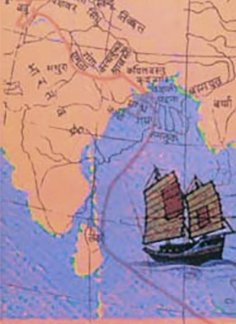
The history of India traces the identification of countries, villages, towns and other regions of India, as well as mythology, zoology, royal dynasties, rulers, tribes, local festivities and traditions and regional languages. Ancient India enjoyed religious freedom and encourages the path of Dharma, a concept common to Buddhism, Hinduism, and Jainism.
Languages of India and abroad
Sanskrit dictionary
Śāsanadevī (शासनदेवी):—[=śāsana-devī] [from śāsana > śās] f. (with Jainas) the female messenger of an Arhat, [Hemacandra’s Pariśiṣṭaparvan]
Śāsanadevī (शासनदेवी):—f. dass. [Śatruṃjayamāhātmya 1, 7.]
Sanskrit, also spelled संस्कृतम् (saṃskṛtam), is an ancient language of India commonly seen as the grandmother of the Indo-European language family (even English!). Closely allied with Prakrit and Pali, Sanskrit is more exhaustive in both grammar and terms and has the most extensive collection of literature in the world, greatly surpassing its sister-languages Greek and Latin.
See also (Relevant definitions)
Partial matches (+0): Shasana, Devi.
Full-text (+0): Jvalamalini, Padmavati, Kushmandini, Kurkutahi, Ambika, Yakshini, Darpishta, Patalika, Kadamba, Kumara, Vasupujya, Jvalini, Pracanda, Canda, Mahajvala, Bhrikuti.
Relevant text
Search found 9 books and stories containing Shasanadevi, Śāsana-devī, Sasana-devi, Śāsanadevī, Sasanadevi, Shasana-devi; (plurals include: Shasanadevis, devīs, devis, Śāsanadevīs, Sasanadevis). You can also click to the full overview containing English textual excerpts. Below are direct links for the most relevant articles:
Sidelights on History and Culture Of Orissa (by Manmath Nath Das)
Chapter 41 - Rock-cut monuments of Bhubaneswar < [Part 3 - Monuments, Art and Architecture]
Chapter 40 - Archaeological sites and monuments of Orissa—a brief survey < [Part 3 - Monuments, Art and Architecture]
Temples of Purushottama Kshetra Puri (by Ratnakar Mohapatra)
5.6. Jaina Images in Odisha art < [Chapter 2 - Characteristics features of Orissan Temples]
Jainism in Odisha (Orissa) (by Ashis Ranjan Sahoo)
Iconography of Sasanadevis < [Chapter 6]
Jaina Temples at Subei (Koraput) < [Chapter 3: Survey of Jaina Antiquities in Odisha]
Jaina images of Jamunda at Jeypore District Museum < [Chapter 3: Survey of Jaina Antiquities in Odisha]
Jain Remains of Ancient Bengal (by Shubha Majumder)
Śāsanadevīs or Yakṣiṇīs from Ancient Bengal < [Chapter 6 - Iconographic Study of Jaina Sculptural Remains]
Tīrthaṅkara Mahāvīra (Introduction) < [Chapter 6 - Iconographic Study of Jaina Sculptural Remains]
Ancient Habitational Complexes or Beneath the Trees < [Chapter 5 - Jaina Architectural and Sculptural Remains]
Indian Antiquary (a journal of oriental research) (by Jas Burgess)
Papers on Satrunjaya (2) The Tirthankaras or Jinas < [Volume 2 (1873)]
Papers on Satrunjaya (1) Kathiawad and the Jainas < [Volume 2 (1873)]
Trishashti Shalaka Purusha Caritra (by Helen M. Johnson)
Part 9: Kapila’s incarnation as Aśanighoṣa < [Chapter I - Five previous incarnations]
Appendix 5.2: new and rare words < [Appendices]