Sarvatman, Sarvātman, Sarvatma, Sarva-atman, Sarvātmā: 12 definitions
Introduction:
Sarvatman means something in Hinduism, Sanskrit, Marathi, Hindi. If you want to know the exact meaning, history, etymology or English translation of this term then check out the descriptions on this page. Add your comment or reference to a book if you want to contribute to this summary article.
In Hinduism
Purana and Itihasa (epic history)
Sarvātman (सर्वात्मन्) refers to the “soul of everyone” and is used to describe Śiva, in the Śivapurāṇa 2.2.15. Accordingly as Brahmā narrated to Nārada:—“[...] On arrival there, after paying respects to the lord [Śiva] with great excitement we lauded Him with various hymns with palms joined in reverence. The Devas said: [...] We have sought refuge at His feet who is the supreme Brahman, who is the soul of everyone (sarvātman), who is the greatest witness with unbarred vision and who assumes various forms”.
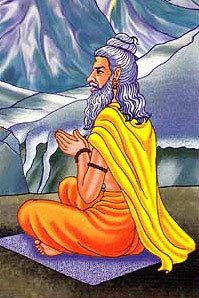
The Purana (पुराण, purāṇas) refers to Sanskrit literature preserving ancient India’s vast cultural history, including historical legends, religious ceremonies, various arts and sciences. The eighteen mahapuranas total over 400,000 shlokas (metrical couplets) and date to at least several centuries BCE.
Shaktism
Sarvātman (सर्वात्मन्) refers to “(one who is) all things” and is used to describe Bhairava, according to the second recension of the Yogakhaṇḍa of the Manthānabhairavatantra, a vast sprawling work that belongs to a corpus of Tantric texts concerned with the worship of the goddess Kubjikā.—Accordingly, as the Goddess said to Bhairava: “[...] O god, the (liberated) skyfaring state arises by worshipping (that one reality whose) body is without stain. You are all things (sarvātman) and, ever free, you are not bound by Karma. The murderer of Brahmins, women and cows, the thief, one who sleeps in the teacher's bed (with his wife) and those other extremely cruel people who commit very terrible sins, as many as a heap as great as Meru in this ocean of fettered existence, are free from all sins by just remembering you”.
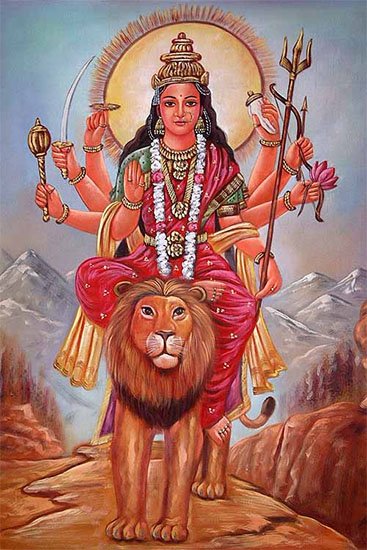
Shakta (शाक्त, śākta) or Shaktism (śāktism) represents a tradition of Hinduism where the Goddess (Devi) is revered and worshipped. Shakta literature includes a range of scriptures, including various Agamas and Tantras, although its roots may be traced back to the Vedas.
Languages of India and abroad
Marathi-English dictionary
Sarvātmā (सर्वात्मा).—m (S) The spirit, soul, or life of all. A title of the Deity.
Sarvātmā (सर्वात्मा).—m The spirit, soul, or life of all.
Marathi is an Indo-European language having over 70 million native speakers people in (predominantly) Maharashtra India. Marathi, like many other Indo-Aryan languages, evolved from early forms of Prakrit, which itself is a subset of Sanskrit, one of the most ancient languages of the world.
Sanskrit dictionary
Sarvātman (सर्वात्मन्).—m.
1) the whole soul; (sarvātmanā entirely, completely, thoroughly.).
2) Name of Śiva.
Sarvātman is a Sanskrit compound consisting of the terms sarva and ātman (आत्मन्).
Sarvātman (सर्वात्मन्) or Sarvvātman.—m.
(-tmā) 1. The supreme or universal spirit. 2. All beings collectively. E. sarva, and ātman self or spirit.
Sarvātman (सर्वात्मन्).—1. [masculine] the whole person or essence; the universal spirit (ph.), [instrumental] with all the heart, thoroughly, perfectly.
--- OR ---
Sarvātman (सर्वात्मन्).—2. sarvātman [adjective] perfect of person or nature.
--- OR ---
Sarvātman (सर्वात्मन्).—[adjective] perfect of person or nature.
1) Sarvātman (सर्वात्मन्):—[from sarva] m. the whole person (nā ind. ‘with all one’s soul’), [Śatapatha-brāhmaṇa; Manu-smṛti; Mahābhārata] etc.
2) [v.s. ...] the universal Soul, [Upaniṣad; Mahābhārata; Rāmāyaṇa] etc.
3) [v.s. ...] the wh° being or nature (nā ind. ‘entirely, completely’), [Kādambarī; Nyāyamālā-vistara [Scholiast or Commentator]]
4) [v.s. ...] a Jina, [Hemacandra’s Yoga-śāstra]
5) [v.s. ...] Name of Śiva, [Mahābhārata]
6) [v.s. ...] (sarv or vat) mfn. entire in person or nature, [Atharva-veda; Brāhmaṇa; Āśvalāyana-śrauta-sūtra]
Sarvātman (सर्वात्मन्):—[sarvā+tman] (tmā) 5. m. Universal spirit.
Sarvātman (सर्वात्मन्):—1. m.
1) die ganze Person: sarvātmabhūtaye zum Heil der ganzen Person [Manu’s Gesetzbuch 3, 91.] manmathāviṣṭa adj. [Rāmāyaṇa 5, 2, 20.] instr. sarvātmanā mit der ganzen Person, mit ganzer Seele, auf das Angelegentlichste [The Śatapathabrāhmaṇa 11, 5, 6, 4.] saṃbhūya sarvairasmābhiḥ kāryaḥ sa vadhaḥ [Mahābhārata 1, 7662.] [Harivaṃśa 7493.] [Rāmāyaṇa 3, 22, 30.] sa sītā mārgitavyā [4, 41, 36.] rāmaṃ sarvātmanāśritā [5, 57, 8. 81, 38. 85, 22.] [Spr. (II) 1603.] kāmaḥ sa heyaḥ [1653. 6674.] [Bhāgavatapurāṇa 2, 2, 36. 7, 42. 3, 20, 3. 22, 11. 4, 11, 27. 21, 38. 6, 16, 63. 7, 10, 19.] Diese Bed. von sarvātman ist unter sarvasaṃnāha [Halāyudha 5, 15] gemeint. Vgl. sarvabhāva und sarvahṛd . —
2) die Seele von Allem, die Weltseele [ŚVETĀŚV. Upakośā 3, 21.] [NṚS. TĀP. Upakośā] in [Weber’s Indische Studien 9, 143.] [Mahābhārata 12, 1672.] [Rāmāyaṇa 4, 44, 120.] [Suśruta 1, 249, 11.] [MUIR, Stenzler 4, 31. 217. 325.] [Bhāgavatapurāṇa 1, 9, 21. 2, 1, 5. 35. 7, 52. 3, 18, 26. 4, 7, 49. 11, 13. 12, 11. 19, 3. 5, 17, 3. 18, 5. 6, 9, 38. 7, 11, 12. 8, 7, 40. 20, 30. 23, 8. 9, 2, 11.] [PAÑCAR. 1, 13, 34.]
--- OR ---
Sarvātman (सर्वात्मन्):—2. adj. vollständig an Person, - Wesen, - Leiblichkeit [Atharvavedasaṃhitā 5, 6, 11.] [Aitareyabrāhmaṇa 2, 6.] [Aśvalāyana’s Śrautasūtrāni 1, 7, 8.] parox. [Taittirīyabrāhmaṇa 3, 7, 5, 7.]
--- OR ---
Sarvātman (सर्वात्मन्):—
2) Bez. Jina's [Hemacandra] [Yogaśāstra 1, 45.]
Sanskrit, also spelled संस्कृतम् (saṃskṛtam), is an ancient language of India commonly seen as the grandmother of the Indo-European language family (even English!). Closely allied with Prakrit and Pali, Sanskrit is more exhaustive in both grammar and terms and has the most extensive collection of literature in the world, greatly surpassing its sister-languages Greek and Latin.
Hindi dictionary
Sarvātmā (सर्वात्मा):—(nm) the Universal Soul; the All-Pervading; ~[tma]([tmaka])[vāda] animism; ~[tma] ([tmaka])[vādī] an animist; animistic.
...
See also (Relevant definitions)
Partial matches (+0): Sharva, Carva, Atman.
Starts with (+0): Sarvatmana.
Full-text (+0): Sarvatmabhuti, Sarvatmatva, Sarvatmadrish, Sarvatmatvadarshana, Sarvatmana, Sarvvatmabhuti, Sarvatmya, Sarvasamnaha, Sarvvatman, Sarvahrid, Krip, Sarvatmaka, Sarvabhava, Kripay, Pitritirtha, Sharva.
Relevant text
Search found 43 books and stories containing Sarvatman, Sarvātman, Sarvatma, Sarva-atman, Sarvātmā, Sarva-ātman, Sarvātma; (plurals include: Sarvatmans, Sarvātmans, Sarvatmas, atmans, Sarvātmās, ātmans, Sarvātmas). You can also click to the full overview containing English textual excerpts. Below are direct links for the most relevant articles:
Dictionaries of Indian languages (Kosha)
Page 370 < [Hindi-English-Nepali (1 volume)]
A Descriptive Catalogue of the Sanskrit Manuscripts, Madras (by M. Seshagiri Sastri)
Garga Samhita (English) (by Danavir Goswami)
Verse 6.8.22 < [Chapter 8 - The Marriages of All the Queens]
Bhajana-Rahasya (by Srila Bhaktivinoda Thakura Mahasaya)
Text 11 < [Chapter 1 - Prathama-yāma-sādhana (Niśānta-bhajana–śraddhā)]
Text 6 < [Chapter 1 - Prathama-yāma-sādhana (Niśānta-bhajana–śraddhā)]
Brahma Archana Paddhati (text and translation) (by Prabhunath Dwivedi)
Chapter 17 - Srirama-krita Brahma-shatanama-stotra
Chapter 12 - Narada-krita Brahmastuti (The Prayer of Brahma done by Narada)
Shat-cakra-nirupana (the six bodily centres) (by Arthur Avalon)
Verse 42 < [Section 7]